
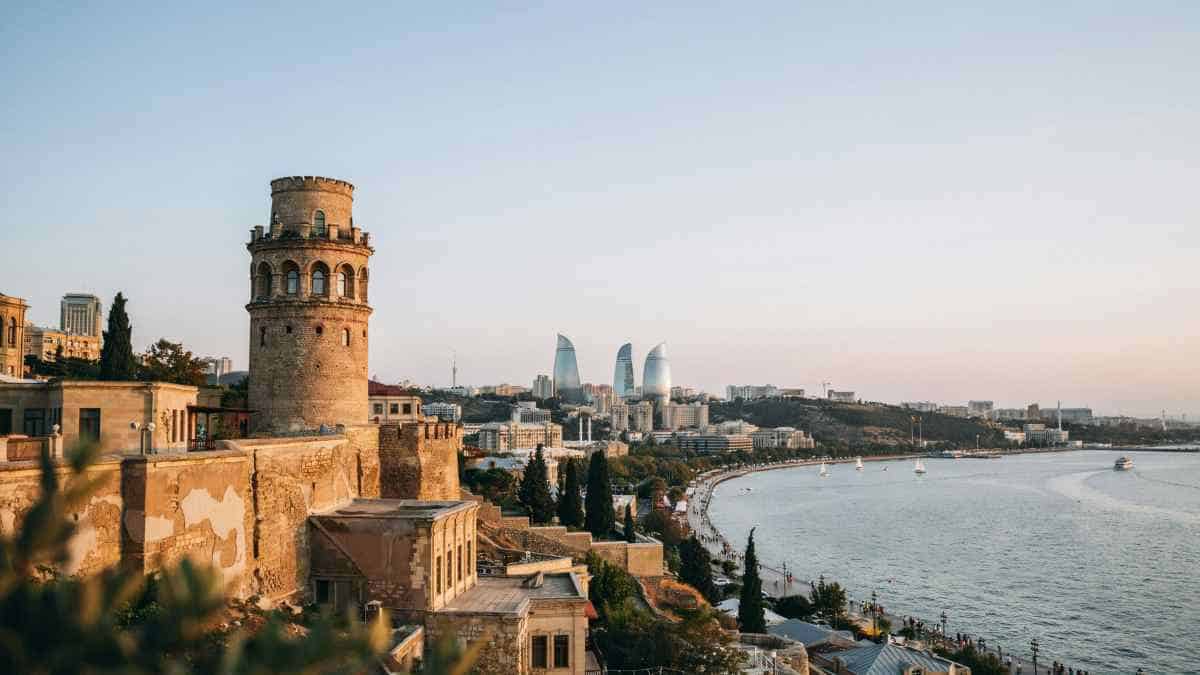
Image generated with Ai
Azerbaijan is reinforcing its position as one of the fastest-evolving tourism destinations in the Caucasus after welcoming 1.09 million international visitors from 189 countries during the first half of 2026. The latest figures from the State Border Service reflect not only the country’s growing appeal across neighbouring markets but also a noticeable expansion in arrivals from Europe, signalling that Azerbaijan’s tourism strategy is successfully diversifying beyond its traditional visitor base.
The figures also underline the growing importance of Baku as the country’s international gateway. With more than seven in ten foreign visitors arriving by air, the capital continues to serve as the primary entry point for travellers exploring Azerbaijan’s blend of modern urban attractions, UNESCO-listed heritage, mountain landscapes and Caspian Sea experiences.
Advertisement
According to the latest State Border Service data, 1.09 million foreign visitors representing 189 countries travelled to Azerbaijan during the first six months of 2026.
The milestone reflects continued momentum for the country’s tourism industry as it expands its international reach through improved air connectivity, destination marketing and diversified tourism experiences.
Advertisement
Advertisement
From Baku’s futuristic skyline and cultural institutions to the ancient streets of the Old City (Icherisheher), the vineyards of the countryside and the mountain villages of the Greater Caucasus, Azerbaijan continues to broaden its appeal among leisure, business and cultural travellers alike.
The diversity of source markets also demonstrates the country’s growing visibility across multiple regions.
Regional travel remains the backbone of Azerbaijan’s tourism industry.
The Russian Federation accounted for 28.1% of all international arrivals during the first half of 2026, maintaining its position as Azerbaijan’s largest tourism source market.
Advertisement
Advertisement
Türkiye followed with 21.0%, reflecting the close economic, cultural and transport links between the two countries.
Other major markets included:
These neighbouring countries continue to support year-round tourism through relatively short travel times, strong business connections and growing leisure demand.
One of the most encouraging developments for Azerbaijan’s tourism sector is the growth in European visitors.
Arrivals from Europe increased by 9.3% compared with the first half of 2025, highlighting growing awareness of Azerbaijan as a destination that combines history, architecture, gastronomy, outdoor recreation and cultural experiences.
The increase also reflects broader efforts to position Azerbaijan as an accessible destination for European travellers seeking alternatives to more established tourism markets.
As airlines continue expanding international connections and tourism promotion reaches wider audiences, Europe is becoming an increasingly important contributor to Azerbaijan’s visitor economy.
The latest figures also demonstrate the central role of aviation in Azerbaijan’s tourism development.
71.1% of international visitors entered the country by air, making Heydar Aliyev International Airport (GYD) in Baku the dominant gateway for inbound tourism.
The airport connects Azerbaijan with destinations across Europe, the Middle East, Central Asia and neighbouring countries, supporting both direct leisure travel and international transit traffic.
Strong air connectivity also makes it easier for visitors to explore not only Baku but also the country’s expanding network of cultural, wellness, adventure and eco-tourism destinations.
For most international visitors, the journey begins in Baku, a city where centuries-old heritage stands alongside striking contemporary architecture.
Travellers often explore landmarks such as the Old City (Icherisheher), the Maiden Tower, the Palace of the Shirvanshahs, the Flame Towers and the scenic Baku Boulevard before venturing to other parts of the country.
From the capital, visitors can easily access destinations including Gobustan National Park, the Absheron Peninsula, Sheki, Gabala, Ganja, Lahij and mountain resorts in the Greater Caucasus.
This combination of urban culture and regional diversity is helping Azerbaijan encourage longer visitor stays and higher tourism spending.
The latest visitor statistics suggest Azerbaijan is becoming less dependent on any single tourism market.
While neighbouring countries continue to provide the largest share of arrivals, increasing European interest demonstrates broader international recognition.
Diversified visitor markets can improve tourism resilience by reducing reliance on seasonal or regional travel patterns while supporting sustained growth across accommodation, aviation, hospitality and cultural attractions.
Visitors planning a trip to Azerbaijan should check visa requirements before departure, as eligibility varies by nationality.
Most international travellers arrive through Heydar Aliyev International Airport (GYD), which offers convenient access to Baku and onward domestic transport.
Spring and autumn are widely regarded as ideal seasons for exploring the country, although summer remains popular for mountain escapes and Caspian Sea experiences.
How many international visitors did Azerbaijan receive in early 2026?
The country welcomed 1.09 million foreign visitors from 189 countries during the first half of 2026.
Which countries send the most tourists to Azerbaijan?
The leading source markets are Russia, Türkiye, Iran, Georgia and Kazakhstan.
How do most international travellers enter Azerbaijan?
More than 71% of visitors arrive by air, primarily through Heydar Aliyev International Airport (GYD) in Baku.
Azerbaijan’s first-half tourism performance in 2026 reflects a destination that is steadily expanding its international reach while maintaining strong regional demand. With 1.09 million visitors from 189 countries, rising European arrivals and robust air connectivity through Heydar Aliyev International Airport, the country is building a more diversified and resilient tourism sector. As Baku continues serving as the gateway to Azerbaijan’s cultural heritage, mountain landscapes and Caspian coastline, the latest figures highlight the country’s growing influence as a year-round destination in the Caucasus.
Advertisement
Tags: Azerbaijan, Azerbaijan aviation, Azerbaijan tourism 2026, Azerbaijan travel, Azerbaijan visitor arrivals
Advertisement
Advertisement













Saturday, September 5, 2026

Friday, September 4, 2026

Saturday, September 5, 2026

Friday, September 4, 2026

Thursday, September 3, 2026

Wednesday, September 2, 2026

Friday, September 4, 2026