
NASA Reaches New Heights with Extraordinary Space Accomplishments in 2024

Published
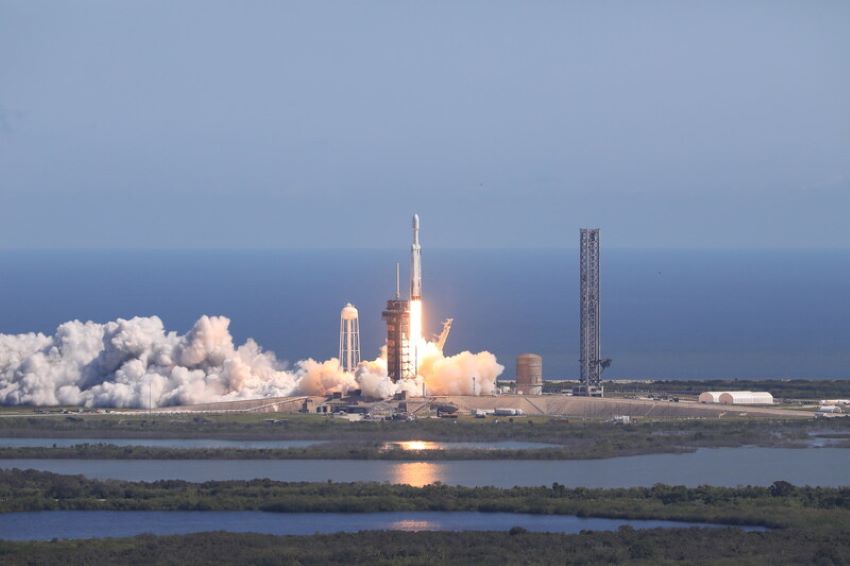 Image generated with Ai
As 2024 draws to a close, NASA reflects on an extraordinary year marked by groundbreaking achievements that have pushed the frontiers of space exploration and technology. This year, the agency celebrated historic milestones that have shaped the future of space science and its potential for humanity.
For the first time, NASA successfully facilitated the landing of new science and technology on the Moon with the help of an American company. This achievement marked a significant step forward in lunar exploration, paving the way for future missions under the Artemis program. In addition, NASA launched a daring mission to study Europa, one of Jupiter’s icy moons, expanding our understanding of the solar system’s most intriguing destinations.
Advertisement
Advertisement
The International Space Station (ISS) continued to be a cornerstone of NASA’s efforts, with the agency marking 24 years of continuous human exploration beyond Earth. This ongoing presence in low Earth orbit has been a testament to humanity’s resilience and ambition to explore and understand the cosmos.
NASA also unveiled its highly anticipated supersonic quiet aircraft, a game-changing advancement in aviation technology that promises to benefit humanity by reducing noise pollution in air travel.
Advertisement
Advertisement
Throughout the year, the agency delighted the public by sharing the wonder of a total eclipse with millions of Americans, giving them an unforgettable celestial experience. On Mars, NASA conducted the final flight of its Ingenuity helicopter, a historic achievement in interplanetary aviation.
In space communications, NASA demonstrated its pioneering laser communications capability in deep space, marking a critical step toward faster, more efficient data transmission across vast distances. The agency also tested the next-generation solar sail, which promises to revolutionize propulsion for future space missions.
Advertisement
Advertisement
NASA’s James Webb Space Telescope continued to deliver awe-inspiring discoveries, opening new windows into the universe with its high-resolution imaging and spectroscopy capabilities. On Earth, the agency successfully completed a year-long Mars simulation, providing valuable insights into long-duration space travel and preparing for future missions to the Red Planet.
The excitement didn’t stop there. NASA announced the newest class of Artemis Generation astronauts, inspiring a new wave of explorers ready to lead the charge on humanity’s return to the Moon and eventual journey to Mars.
With each milestone, NASA continues to push the boundaries of exploration, technology, and discovery. As we look toward the future, the agency remains committed to making the impossible possible and bringing the wonders of space closer to home for all of humanity.
“In 2024, NASA made leap after giant leap to explore, discover, and inspire – all while bringing real, tangible, and substantial benefits to the American people and to all of humanity,” said NASA Administrator Bill Nelson. “We deepened the commercial and international partnerships that will help NASA lead humanity back to the Moon and then to the red sands of Mars. We launched new missions to study our solar system and our universe in captivating new ways. We observed our changing Earth through our eyes in the sky – our ever-growing fleet of satellites and instruments – and shared that data with all of humanity. And we opened the doors to new possibilities in aviation, new breakthroughs on the International Space Station, and new wonders in space travel.”
In 2024, NASA continued to make significant strides in its Moon to Mars exploration approach, advancing the ambitious Artemis campaign with remarkable progress. The agency made headway toward its first crewed mission around the Moon in over 50 years, and plans to explore more of the lunar surface than ever before are quickly taking shape. This year, NASA also saw growing international collaboration, with 15 countries signing the Artemis Accords, committing to the safe, transparent, and responsible exploration of space alongside the United States.
In its efforts to monitor and combat climate change, NASA launched several new satellites designed to track and study the Earth’s changing climate. The agency also opened its second Earth Information Center, a key initiative to make valuable environmental data accessible to a broader audience, ensuring a greater global understanding of the planet’s health.
Advertisement
Advertisement
Additionally, NASA released its latest Economic Impact Report, highlighting the agency’s profound contribution to the U.S. economy. With a total impact of $75.6 billion, the report underscored NASA’s significant value to society and the impressive return on investment it provides to taxpayers. Through innovation, international partnerships, and its dedication to both space exploration and climate research, NASA is shaping a more sustainable and technologically advanced future.
“To invest in NASA is to invest in American workers, American innovation, the American economy, and American economic competitiveness. Through continued investments in our workforce and our infrastructure, NASA will continue to propel American leadership on Earth, in the skies, and in the stars,” said Nelson.
Advertisement
