
Barcelona, Rome and More Lead Europe’s Cruise Boom as Millions Set Sail

Updated
Published
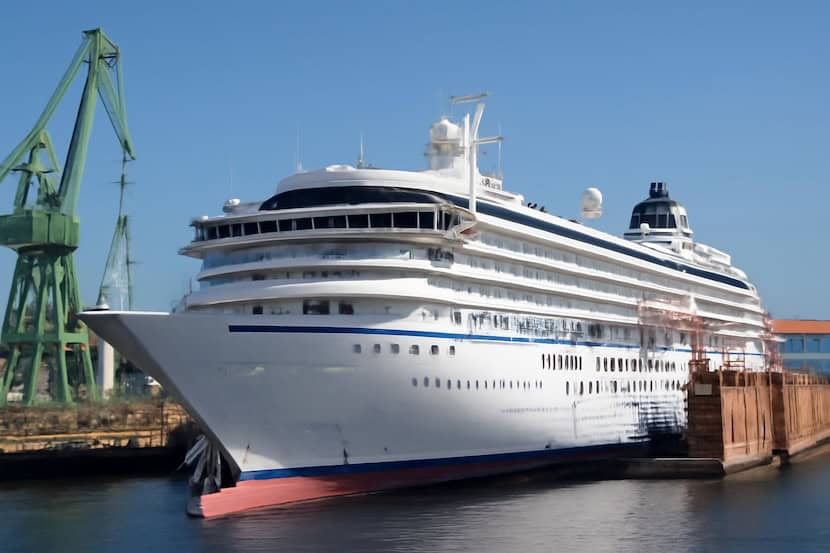
Image generated with Ai
`Barcelona and Rome are rapidly strengthening Europe’s cruise boom, while Southampton and other major gateways also welcome millions of cruise travellers. Barcelona, Rome and Europe now stand at the centre of this expanding cruise story, with millions choosing these gateways for Mediterranean and wider European journeys. Moreover, these cruise hubs connect travellers with iconic cities, islands and coastal destinations in one holiday. The growth also gives travellers more choices when planning their next cruise. Therefore, Travel And Tour World urges readers to read the entire story, because Barcelona, Rome and Europe’s cruise boom reveal important opportunities for travellers seeking smarter, more exciting European holidays.
10 Of Europe’s Most Popular Cruise Departure Ports: The Data, Passenger Trends and What Travellers Need to Know
Europe’s cruise network is much broader than a simple list of famous ports. The leading departure gateways differ significantly in passenger volume, turnaround activity, cruise season and the destinations they connect.
Advertisement
Advertisement
A key caution is necessary when comparing figures. European ports do not use one identical passenger-counting methodology. Some report total cruise passenger movements, including transit visitors, while others separately identify embarkations, disembarkations and transit passengers. UK government statistics, for example, exclude passengers making transit calls but can count a round-trip passenger at both ends of a UK journey.
For that reason, the table below should be read as a port-by-port data guide, rather than a strict mathematical ranking.
Advertisement
Advertisement
Europe’s Leading Cruise Departure Ports at a Glance
| Cruise departure port | Country | Latest key figure | Latest year | Particularly important for |
|---|---|---|---|---|
| Southampton | UK | 2.6 million cruise passengers | 2025 | British, Northern European and Atlantic cruises |
| Barcelona | Spain | Around 3.6 million passenger movements | 2025 | Western Mediterranean |
| Civitavecchia | Italy | 3,556,559 cruise passenger movements | 2025 | Rome and Mediterranean |
| Hamburg | Germany | More than 1.4 million cruise passengers | 2025 | Norway, Baltic and Northern Europe |
| Piraeus | Greece | Around 1.86 million cruise movements | 2025 | Athens, Greek islands, Eastern Mediterranean |
| Copenhagen | Denmark | Almost 866,500 passengers | 2025 | Scandinavia and Baltic |
| Marseille | France | Around 1.85 million cruise passengers | 2025 | Western Mediterranean |
| Kiel | Germany | 1,106,505 cruise passengers | 2025 | Baltic and Scandinavia |
| Lisbon | Portugal | 763,752 cruise passengers | 2024 | Atlantic and Western European itineraries |
| Genoa | Italy | 1,531,406 passengers at Genoa terminal | 2024 | Western Mediterranean and MSC departures |
Important: These figures are not directly interchangeable. For example, Genoa’s figure is for the Stazioni Marittime terminal, while Civitavecchia’s published number represents passenger movements.
Advertisement
Advertisement
1. Southampton, United Kingdom
Southampton remains one of Europe’s most important cruise embarkation gateways. UK government data recorded 3.1 million international cruise passengers across British ports in 2025. Southampton handled 2.6 million, or 86%, of the national total. Dover handled 102,000, while Liverpool, London and Portsmouth recorded 70,000, 131,000 and 61,000 respectively.
The port is particularly important for travellers seeking British Isles, Northern European, Atlantic and longer European voyages.
Its cruise terminals also serve major international operators. For overseas visitors, adding a London or Southampton hotel night before sailing can provide valuable protection against flight delays.
2. Barcelona, Spain
Barcelona is one of Europe’s largest cruise gateways and combines strong turnaround activity with exceptional city-break appeal.
The Port of Barcelona says its cruise infrastructure can accommodate more than three million passengers annually through its international terminals. Its official passenger-evolution system specifically tracks passengers embarking and disembarking in Barcelona.
Advertisement
Advertisement
The port also reported that cruise passenger numbers increased 20% between 2018 and 2024. The city and port subsequently agreed to reduce cruise terminals from seven to five by 2030 as part of wider visitor-management measures.
For travellers, Barcelona is particularly valuable because a cruise can be combined with several nights exploring Catalonia.
3. Civitavecchia, Italy
Civitavecchia is the major cruise gateway for Rome and one of Europe’s most significant Mediterranean embarkation points.
The port recorded 3,556,559 cruise passenger movements in 2025, including 1,726,858 embarkation and disembarkation movements.
The distinction is important. A traveller beginning a cruise from Civitavecchia should not treat the port as if it were located in central Rome.
Advertisement
Advertisement
Allowing at least one pre-cruise night gives international visitors time to explore Rome while creating additional protection against transport disruptions.
4. Hamburg, Germany
Hamburg is increasingly important for Northern European cruise travellers.
The latest figures cited for the port show more than 1.4 million cruise passengers in 2025, compared with approximately 1.3 million in 2024.
Hamburg is well positioned for Norway, Scandinavia, the British Isles and longer North Atlantic itineraries.
The port is also developing cleaner cruise infrastructure. During 2025, 162 cruise ships used shore-side electricity, while all three cruise terminals were scheduled to have shore-power capability from 2026.
Advertisement
Advertisement
That makes Hamburg relevant for travellers who consider environmental infrastructure when selecting an embarkation city.
5. Piraeus, Greece
Piraeus is the principal cruise gateway for Athens and an important homeport for Eastern Mediterranean voyages.
The port recorded approximately 1.86 million cruise passenger movements in 2025, with about 1.09 million homeport passengers. The number of homeport passengers was already above one million in 2024.
Piraeus operates three passenger terminals and has 11 berthing positions, including facilities capable of accommodating the largest cruise ships.
For travellers, the combination of Athens and Greek island cruising is the major attraction. A pre-cruise stay can include Athens before continuing towards destinations such as Santorini, Mykonos, Rhodes or Crete.
Advertisement
Advertisement
6. Copenhagen, Denmark
Copenhagen offers an important gateway into Scandinavia and the Baltic region.
The city recorded almost 866,500 cruise passengers across 316 calls in 2025. Of those calls, 111 were turnaround calls, indicating operations involving passengers beginning or ending their cruises there.
For international travellers, Copenhagen’s greatest advantage is its destination appeal. Visitors can combine their cruise with several days of sightseeing rather than treating the city solely as a boarding point.
7. Marseille, France
Marseille is France’s leading cruise port and one of the Mediterranean’s major passenger gateways.
The Port of Marseille Fos describes itself as France’s leading cruise port and among the Mediterranean’s leading cruise ports. Its recent figures identify cruise passenger activity of roughly 1.85 million passengers.
Advertisement
Advertisement
The port is also developing shore-to-ship electricity infrastructure. This is designed to allow vessels to reduce engine use while alongside and lower emissions close to the urban area.
For travellers, Marseille is especially useful for Western Mediterranean cruises connecting France, Spain, Italy and other destinations.
8. Kiel, Germany
Kiel is a particularly important northern European cruise gateway.
Official 2025 statistics show 1,106,505 cruise passengers, up 53,838 passengers or 5.1% from 2024. The port’s overall passenger traffic reached 2,771,180, including ferry passengers.
Kiel also recorded 1.187 million cruise passengers across 214 calls in 2023, while 2024 produced approximately 1.1 million passengers across 184 cruise calls.
Advertisement
Advertisement
Its location makes Kiel particularly valuable for Baltic and Scandinavian itineraries.
9. Lisbon, Portugal
Lisbon has become a significant Atlantic cruise gateway.
The Port of Lisbon reported a record 763,752 cruise passengers in 2024, surpassing the previous record of 758,328 in 2023. It also recorded 369 cruise calls, 110 turnaround calls and 133 cruise ships.
Transit passengers reached 591,796, while cruise crew numbers reached 288,049.
The port’s official statistics archive provides annual cruise information for 2021, 2022, 2023, 2024 and 2025, alongside monthly cruise statistics for newer periods.
Advertisement
Advertisement
Lisbon therefore offers a strong option for travellers combining Portugal with Atlantic, Iberian and Western European voyages.
10. Genoa, Italy
Genoa is another major Italian cruise gateway, particularly important for Western Mediterranean itineraries.
The Ports of Genoa reported that Genoa and Savona together handled 2.3 million cruise passengers across 440 calls in 2024. At Genoa’s Stazioni Marittime terminal, 304 calls generated 1,531,406 passengers, including 600,011 passengers who began their cruise in Genoa.
Savona, another part of the same port system, recorded 133 calls and 753,000 passengers in 2024.
The combined system is particularly important for Western Mediterranean travellers, with direct connections towards destinations across the Mediterranean.
Advertisement
Advertisement
Five-Year Data: What Can Actually Be Compared?
A major problem with creating a single five-year, month-by-month table for all ten ports is that the port authorities do not publish a consistent monthly dataset using the same definition.
The available official information is much stronger for annual comparisons.
| Port | 2021 | 2022 | 2023 | 2024 | 2025 |
|---|---|---|---|---|---|
| Southampton | Pandemic-affected | Published UK series | Published UK series | 2.7m | 2.6m |
| Barcelona | Official series available | Official series available | Official series available | Growth reported | Official 2025 data |
| Civitavecchia | Official port series | Official port series | Official port series | Official port series | 3,556,559 |
| Hamburg | Pandemic-affected | Recovery | Recovery | ~1.3m | >1.4m |
| Piraeus | 2021 baseline | 2022 recovery | 1.48m | Strong growth | ~1.86m |
| Copenhagen | Pandemic-affected | Recovery | Strong recovery | Published port data | ~866,500 |
| Marseille | >1.3m | Recovery | Official annual data | Official annual data | ~1.85m |
| Kiel | Pandemic-affected | 836,000 | 1,187,148 | ~1.1m | 1,106,505 |
| Lisbon | Official annual archive | Official annual archive | 758,328 | 763,752 | Official archive available |
| Genoa | Pandemic-affected | Recovery | >2.5m Genoa/Savona | 2.3m Genoa/Savona | Latest figures vary by reporting period |
These figures demonstrate why a fabricated monthly table would be misleading. Lisbon, for example, maintains detailed annual and monthly statistical resources, while other ports publish different combinations of annual, quarterly or operational information.
Monthly Cruise Seasonality Across Europe
Although a directly comparable five-year monthly passenger dataset is unavailable, the published port information reveals a broad seasonal pattern.
| Month | Typical European cruise activity | Traveller implication |
|---|---|---|
| January | Low at many European departure ports | Better for selected winter Mediterranean voyages |
| February | Generally low | Fewer European departures |
| March | Season begins strengthening | Useful shoulder-season period |
| April | Mediterranean activity rises | Strong spring cruising |
| May | Major seasonal expansion | Excellent choice for Mediterranean sightseeing |
| June | High season | More ships and departure options |
| July | High season | Strong demand and potentially higher prices |
| August | High Mediterranean demand | Very busy major destinations |
| September | Strong activity | Often attractive shoulder-season conditions |
| October | High-to-moderate activity | Good Mediterranean transition period |
| November | Activity declines in northern Europe | Mediterranean options remain more relevant |
| December | Seasonal and holiday cruises | More specialised departure choices |
Barcelona’s official cruise information identifies April to November as a particularly important period for its cruise activity, illustrating the stronger Mediterranean season.
Advertisement
Advertisement
Northern European ports such as Hamburg and Kiel naturally have a different seasonal profile, with cruise activity concentrated around the warmer sailing season.
What the Data Means for Cruise Travellers
The most important lesson is that passenger volume alone should not determine the best departure port.
Southampton offers exceptional British cruise connectivity. Barcelona combines cruising with one of Europe’s major city destinations. Civitavecchia opens the door to Rome, while Piraeus links Athens with the Greek islands.
Hamburg and Kiel are powerful northern gateways. Copenhagen adds Scandinavia and the Baltic. Marseille provides extensive Western Mediterranean access, while Lisbon brings an Atlantic dimension.
Genoa and Savona offer another major Italian cruise cluster.
Advertisement
Advertisement
Europe’s broader cruise market is also expanding. CLIA reports that Europe produced 8.9 million ocean-cruise source passengers in 2025, up 5.3% from 8.4 million in 2024. The average European cruise lasted 8.6 days, compared with 8.8 days the previous year.
For global travellers, the strongest strategy is therefore to choose the itinerary, departure-city experience, airport connectivity and pre-cruise accommodation together.
The cruise holiday does not really begin when the ship leaves the harbour. It begins when the traveller arrives in the departure city.
Conclusion
Barcelona, Rome and other leading European gateways are reshaping the continent’s cruise travel landscape. Millions of passengers now use these ports to begin, end or extend their holidays. Moreover, each destination offers travellers a different experience before stepping aboard. Barcelona delivers Mediterranean energy, Rome adds extraordinary history, while Southampton, Piraeus, Hamburg, Copenhagen and other gateways open routes across Europe. Therefore, travellers should compare departure ports, itineraries, transport links and pre-cruise stays before booking. Ultimately, Europe’s cruise boom offers more than a voyage at sea. It creates an opportunity to discover celebrated cities and coastal destinations as part of one memorable journey.
Advertisement
