
Spain’s Zaragoza Festival Brings Nine Days of Culture and Tourism

Published
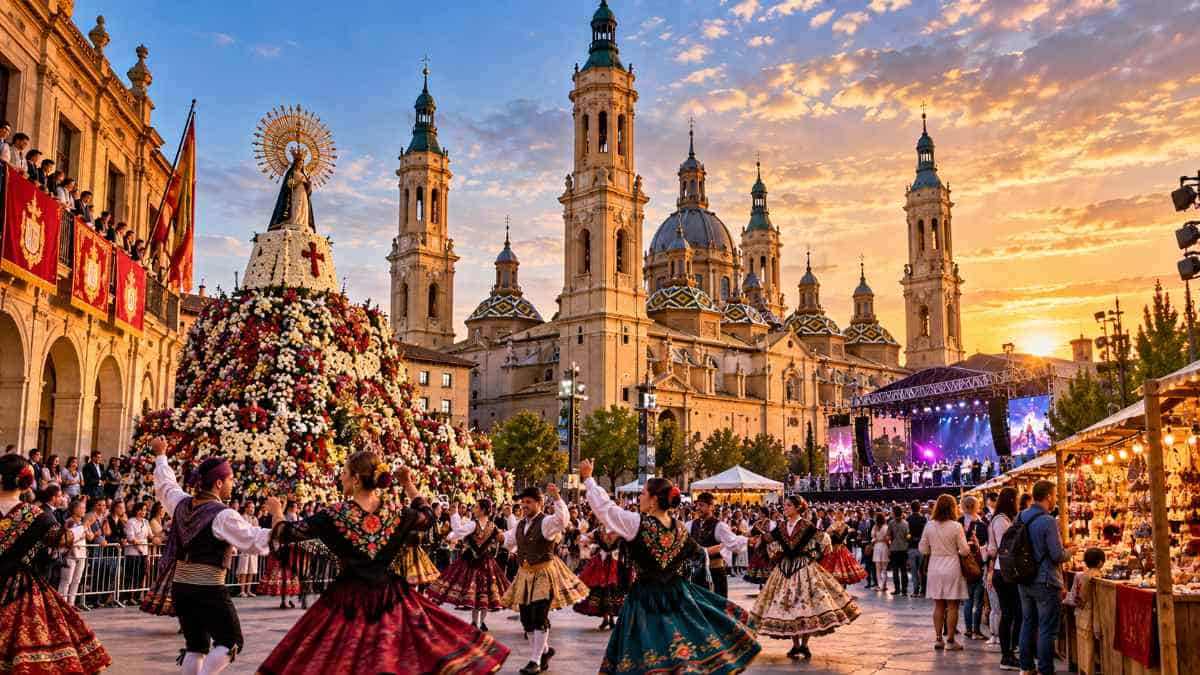
Zaragoza, located in Spain, is celebrating one of the most important annual cultural festivals – the Fiestas del Pilar 2026, which will be celebrated between October 10 and 18. The celebration of this festival is known to have the status of a Festival of International Tourist Interest. This festival celebrates the Virgin of the Pillar, who is the patron saint of Zaragoza, while at the same time offering a great attraction of autumn tourism for tourists both within and outside the country. The programme of the festival opened on October 10 with the traditional pregón – a proclamation of the start of the festival from the balcony of Zaragoza City Hall in Plaza del Pilar. Thus, the opening ceremony became a symbol of the start of nine days of celebration, when the streets, squares and cultural venues of Zaragoza became places of meeting for its residents and guests. For Zaragoza, such a festival is a chance to demonstrate its cultural identity, at the same time assisting the development of various business activities related to accommodation, catering, transportation and leisure.
The Flower Offering Remains the Festival’s Central Attraction
One of the most recognised events of Fiestas del Pilar is the Ofrenda de Flores, or Flower Offering, scheduled for October 12. Thousands of participants, many wearing traditional regional clothing, carry flowers through designated routes towards Plaza del Pilar, where they are placed on a large structure representing the Virgin Mary.
The event is a defining moment in Zaragoza’s annual calendar. Its scale and visual character attract visitors interested in Spanish religious traditions, regional heritage and public celebrations.
The programme also includes the Ofrenda de Frutos on October 13, when participants present agricultural products as part of another traditional offering. The Rosario de Cristal, a procession featuring illuminated glass lanterns and ceremonial floats, adds another distinctive element to the celebrations.
Advertisement
Advertisement
These traditions give visitors a chance to experience Aragonese culture beyond museums and historic buildings. They also create opportunities for local guides, restaurants, craft businesses and accommodation providers to reach audiences looking for experiences connected to regional identity.
Music and Public Events Extend the Visitor Experience
Fiestas del Pilar is not limited to religious ceremonies. Its programme includes concerts, theatre, dance, comedy, children’s entertainment, exhibitions, sporting activities and food-related events.
Advertisement
Advertisement
For 2026, the city has expanded its cultural programme across several locations. Plaza del Pilar, Jardín de Invierno, Estación del Norte and Espacio Zity are among the venues hosting performances and activities.
The announced music programme includes Spanish and international performers across pop, rock, electronic music, jazz and regional styles. This variety helps the festival appeal to different age groups and visitor interests, encouraging people to explore more than one event during their stay.
The expansion of activities across neighbourhoods also spreads visitor movement beyond the central festival area. For local businesses, this can create opportunities in districts that may receive less attention during ordinary sightseeing visits.
High-Speed Rail Makes Zaragoza Accessible
Zaragoza’s position between Madrid and Barcelona gives the city an important advantage for domestic tourism. Its railway connections make it possible for visitors to reach the Aragonese capital without relying exclusively on road or air travel.
Zaragoza-Delicias railway station is served by high-speed services connecting the city with major Spanish destinations. Operators including Renfe, Ouigo and Iryo serve routes on Spain’s high-speed network, although schedules, frequencies and available connections vary.
The railway station is linked to the city centre by local buses, taxis and other transport services. Visitors arriving by train can plan onward journeys to central hotels and Plaza del Pilar, where many of the festival’s principal activities take place.
Advertisement
Advertisement
Madrid and Barcelona also provide international airport connections for travellers arriving from overseas. Zaragoza Airport offers another option, although its scheduled passenger network is more limited and visitors should check available routes before booking.
Rail access is a useful part of the festival’s travel proposition, particularly for visitors making short trips from other Spanish cities. However, there is no verified evidence establishing that the 2026 festival generated a specific increase in high-speed rail passengers or avoided pressure on regional roads and aviation.
Hotels and Local Businesses Prepare for Festival Demand
Large cultural celebrations can bring additional demand for accommodation, restaurants, transport operators and entertainment businesses. Fiestas del Pilar has the potential to generate spending across these sectors because visitors often combine performances and ceremonies with sightseeing, shopping and dining.
The claim that hotel occupancy exceeded 90 per cent during the opening weekend has not been independently confirmed through an official 2026 tourism report. Actual performance will depend on accommodation availability, visitor numbers, booking patterns and the distribution of events across the city.
For hotel operators, the festival provides an opportunity to attract domestic visitors, international cultural travellers and people returning to Zaragoza to celebrate with family. Restaurants and bars can benefit from increased activity around central squares and entertainment venues, while local retailers and craft businesses can reach visitors seeking regional products.
The wider economic contribution will depend not only on attendance but also on how long visitors stay and how much activity extends into the city’s neighbourhoods.
Zaragoza Offers Visitors More Than Festival Entertainment
Travellers who are attending Fiestas del Pilar can visit many of the city’s cultural spots when there are no events taking place. The Basilica of Our Lady of the Pillar is located on the central square and is one of the main cultural landmarks of the city. Another landmark of historical architecture is La Seo Cathedral, which is located close to the Basilica. The Aljafería Palace is another cultural spot of interest for those travellers who are interested in the complex history of Spain. Travellers can see Zaragoza from another angle by visiting the Ebro River, which has many walking paths where tourists can admire Zaragoza bridges and skyline. In addition, travellers can enjoy traditional Aragonese food in local restaurants. Thus, from the point of view of Spain’s tourism industry, Fiestas del Pilar is a good example of how an already existing cultural event can be utilised to promote tourism in autumn and provide a destination with a unique identity.
Advertisement
