
Türkiye Outpaces Singapore, UAE and Others as Istanbul Airport Tops World’s Best Airports 2026 Rankings With a 94.29 Score

Published
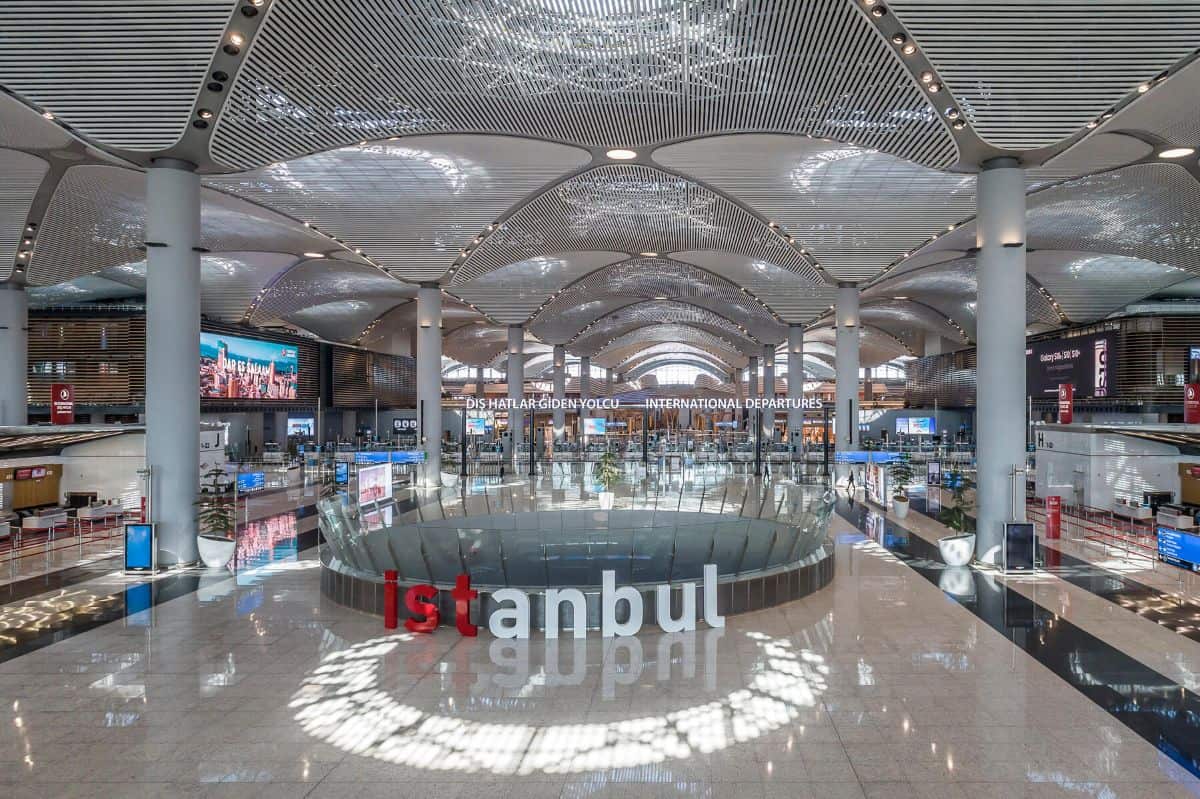
Türkiye has emerged ahead of Singapore, the United Arab Emirates, Denmark and Switzerland in the World’s Best Airports 2026 rankings. Istanbul Airport secured first place in Condé Nast Traveller UK’s Readers’ Choice Awards, scoring 94.29 out of 100. Singapore Changi followed with 93.92, while Dubai International claimed third place with 93.18. Copenhagen Airport and Zurich Airport completed the leading five, scoring 93.13 and 91.79 respectively. Announced on 6 October 2026, the results highlight growing competition between international aviation gateways. Beyond passenger satisfaction, the five airports represent contrasting approaches to connectivity, infrastructure, premium services and tourism development. Their performance offers valuable insights for travellers planning international connections and airlines evaluating global aviation networks.
Five International Gateways Reshape Global Airport Rankings
The 2026 Readers’ Choice Awards reveal an exceptionally competitive contest among the world’s leading aviation gateways. Istanbul’s winning margin over Singapore Changi reached just 0.37 points, while Dubai narrowly surpassed Copenhagen by 0.05 points.
Advertisement
Advertisement
The close results illustrate how established aviation centres compete for international passenger preference. However, the survey reflects readers’ assessments rather than independently measured operational performance.
Top Five Airports in the 2026 Readers’ Choice Awards
| Global Rank | Airport | Country | IATA Code | Score |
|---|---|---|---|---|
| 1 | Istanbul Airport | Türkiye | IST | 94.29 |
| 2 | Singapore Changi Airport | Singapore | SIN | 93.92 |
| 3 | Dubai International Airport | UAE | DXB | 93.18 |
| 4 | Copenhagen Airport | Denmark | CPH | 93.13 |
| 5 | Zurich Airport | Switzerland | ZRH | 91.79 |
The five airports span three important aviation regions, including Europe, Southeast Asia and the Middle East. Their geographical distribution demonstrates how international travel infrastructure supports tourism, commerce and long-distance passenger movement.
Advertisement
Advertisement
Istanbul leads the group through its extensive international network, while Singapore combines aviation services with destination-style attractions. Dubai emphasises high-volume global transfers, whereas Copenhagen and Zurich offer strong European connectivity and integrated ground transport.
Istanbul’s Global Connectivity Strengthens Türkiye’s Aviation Ambitions
Istanbul Airport’s first-place finish coincides with another significant achievement in international aviation connectivity. Aviation intelligence company OAG ranked Istanbul as the world’s most internationally connected airport in 2026, moving it above London Heathrow.
Advertisement
Advertisement
OAG’s Megahubs 2026 assessment identified 89,456 potential connections across 337 destinations. Turkish Airlines accounted for approximately 80% of the airport’s scheduled capacity within the study’s measurement framework.
The findings underline Istanbul’s strategic position between Europe, Asia and other international markets. Its geographical location allows airlines to connect passengers travelling between destinations that might otherwise require less convenient routings.
Advertisement
Advertisement
Istanbul’s International Aviation Performance
| Aviation Indicator | Latest Verified Figure |
|---|---|
| Condé Nast Traveller ranking | 1st globally |
| Readers’ Choice score | 94.29 |
| OAG international connectivity ranking | 1st globally |
| Destinations in OAG assessment | 337 |
| Potential international connections | 89,456 |
| Turkish Airlines capacity share | 80% |
| Total passengers in 2025 | 84.44 million |
| Passenger growth in 2025 | 5.5% |
Airports Council International recorded 84,437,710 passengers at Istanbul Airport during 2025. This represented approximately 5.5% annual growth and placed Istanbul eighth globally for total passenger traffic.
The airport’s expansion also reflects Türkiye’s wider ambition to strengthen Istanbul’s role as an international aviation crossroads. For inbound tourism, extensive air connections can improve access to Istanbul and destinations throughout the country.
However, passengers should distinguish network size from individual journey convenience. Istanbul’s large terminal complex can involve considerable walking distances, particularly when departure gates sit far apart.
Travellers should therefore examine their connecting flight arrangements carefully. A convenient itinerary requires sufficient transfer time, appropriate baggage arrangements and realistic allowances for movement between gates.
Advertisement
Advertisement
Singapore Changi Transforms Airport Waiting Into Destination Experiences
Singapore Changi Airport retained a leading international position with a Readers’ Choice score of 93.92. Its second-place finish reflects the continued prominence of an airport known for combining passenger facilities with leisure attractions.
Changi handled 69.98 million passenger movements in 2025, according to Changi Airport Group. This represented approximately 3.5% growth compared with the previous year.
The airport’s appeal extends beyond its flight network. Its Jewel complex combines shopping, restaurants, landscaped indoor spaces and the internationally recognised HSBC Rain Vortex.
Unlike conventional terminal facilities, Jewel functions as a visitor attraction accessible from the airport’s public areas. Consequently, some travellers incorporate an airport visit into their Singapore itinerary.
However, Jewel is not located within the secure international transit area. Connecting passengers must meet Singapore’s entry requirements and clear arrival immigration before visiting.
This distinction matters particularly for travellers with short connections. Passengers who cannot enter Singapore should instead explore facilities available within their departure terminal’s transit area.
Advertisement
Advertisement
Changi’s terminal arrangements also require attention. Terminals 1, 2 and 3 offer Skytrain connections, while Terminal 4 relies on shuttle services for inter-terminal transfers.
According to Changi Airport’s guidance, journeys between Terminals 1, 2 and 3 generally take five to ten minutes by Skytrain or on foot. Terminal 4 transfers require additional time, depending on the route and shuttle arrangements.
For international passengers, Changi offers a compelling combination of aviation infrastructure and leisure-oriented facilities. Nevertheless, travellers should prioritise their departure gate and immigration obligations over sightseeing opportunities.
Dubai International Combines Record Traffic With Global Reach
Dubai International Airport secured third place with 93.18 points, reinforcing its position among the leading international aviation gateways. Its ranking comes after another record-breaking year for passenger traffic.
Dubai Airports reported 95.2 million passengers in 2025, representing a 3.1% increase compared with 2024. Airports Council International also ranked Dubai second worldwide for total passenger traffic, behind Atlanta.
More significantly, Dubai retained its position as the world’s busiest airport for international passengers. Its extensive airline network connects major tourism, commercial and aviation markets across several continents.
Advertisement
Advertisement
Dubai Airports identifies 291 destinations and 108 international carriers within its network information. These figures demonstrate the airport’s considerable reach, although route availability changes with airline schedules.
Dubai International’s Record-Breaking Aviation Performance
| Performance Indicator | 2025 Result |
|---|---|
| Annual passenger traffic | 95.2 million |
| Annual passenger growth | 3.1% |
| Total aircraft movements | 454,800 |
| Aircraft movement growth | 3.3% |
| Busiest month | December |
| December passenger traffic | 8.7 million |
| Fourth-quarter passenger traffic | 25.1 million |
| Global international passenger ranking | 1st |
Dubai’s December traffic increased 6.1% year on year, reaching 8.7 million passengers. Meanwhile, fourth-quarter traffic reached 25.1 million, illustrating sustained demand during the final months of 2025.
The airport’s commercial infrastructure supports extensive international transfer activity. Emirates operates from Terminal 3, while other carriers use facilities across the airport’s terminal system.
For travellers, however, Dubai’s scale makes terminal identification particularly important. Passengers should confirm their operating airline, arrival terminal and onward departure arrangements before travelling.
Dubai’s wider aviation strategy also includes the development of Al Maktoum International Airport. Authorities have outlined a US$35 billion expansion programme, with long-term capacity ambitions reaching 260 million passengers annually.
The development represents a substantial investment in future aviation capacity. Nevertheless, passengers should not assume that services will transfer immediately between Dubai’s two airports.
Advertisement
Advertisement
Copenhagen Challenges Aviation Giants Through Efficient Connectivity
Copenhagen Airport delivered one of the ranking’s most striking results, finishing fourth with 93.13 points. Its score placed it only 0.05 points behind Dubai International despite operating on a considerably smaller passenger scale.
The Danish airport welcomed 32.4 million passengers in 2025, establishing a new annual traffic record. Passenger numbers increased approximately 9% compared with 2024.
Copenhagen Airport’s annual report identified 367 direct routes serving 191 destinations during 2025. The airport also recorded 47 newly opened routes, strengthening Denmark’s international air connections.
Its operational performance offers another useful comparison. Copenhagen’s published 2025 figures recorded an average security waiting time of four minutes and 14 seconds.
Furthermore, the airport reported that 99.4% of security waiting times remained within 15 minutes. These historical results provide useful operational context, although they cannot guarantee equivalent waiting times on individual travel dates.
Copenhagen Airport’s Passenger Experience Indicators
| Indicator | 2025 Performance |
|---|---|
| Annual passengers | 32.4 million |
| Passenger growth | Approximately 9% |
| Direct routes | 367 |
| Destinations served | 191 |
| Average security waiting time | 4 minutes 14 seconds |
| Security waits within 15 minutes | 99.4% |
| Transfer passenger share | 22% |
| Metro transport share | 31% |
| Train transport share | 31% |
Copenhagen’s ground transport integration provides additional benefits for arriving visitors. Airport statistics show that metro and rail services each accounted for 31% of passenger ground transport journeys.
Advertisement
Advertisement
Together, these modes represented 62% of the recorded transport distribution. Such connectivity helps travellers reach central Copenhagen and continue journeys across Denmark and neighbouring Sweden.
The airport also plays an important role in Scandinavian tourism. Its network supports access to Copenhagen, southern Sweden and onward destinations throughout Northern Europe.
For travellers, Copenhagen presents an alternative to larger continental connecting hubs. However, passengers should still verify flight frequencies, terminal procedures and onward transport schedules.
Zurich Strengthens Switzerland’s Position Through Integrated Transport
Zurich Airport completed the leading five with a Readers’ Choice score of 91.79. Its performance reflects the importance of a well-connected international gateway serving both business and leisure markets.
The airport handled 32,593,966 passengers in 2025, representing growth of 4.5% compared with 2024. This established a new annual passenger record.
Zurich Airport’s official statistics recorded 270,116 aircraft movements during the year. Meanwhile, passenger traffic exceeded its 2019 level by approximately 3.4%.
Advertisement
Advertisement
The airport’s network served 163 destinations across 71 countries in 2025. Its aviation development information also highlights the possibility of minimum connections as short as 40 minutes on eligible itineraries.
However, minimum connection times depend on airline arrangements and passenger circumstances. Travellers should never treat a published minimum as a universal recommendation.
Zurich’s strongest practical advantage lies in its integration with Switzerland’s wider public transport network. Rail, tram and bus services connect the airport with Zurich and destinations throughout the country.
The airport reports hundreds of daily departures across these transport modes. This infrastructure supports journeys towards Swiss cities, Alpine resorts and international rail connections.
Zurich Airport’s Operational and Transport Profile
| Indicator | Verified Figure |
|---|---|
| Annual passengers in 2025 | 32.59 million |
| Annual passenger growth | 4.5% |
| Aircraft movements | 270,116 |
| Transfer passengers | 9.31 million |
| Destinations served | 163 |
| Countries connected | 71 |
| Minimum eligible connection | From 40 minutes |
| Passenger traffic versus 2019 | 3.4% higher |
Zurich’s transfer passenger total reached approximately 9.31 million in 2025. This represented around 28.6% of its overall passenger traffic.
The airport therefore serves two complementary markets: travellers visiting Switzerland and passengers connecting between international destinations. Its rail integration adds further value for visitors continuing beyond Zurich itself.
Advertisement
Advertisement
Passenger Volumes Reveal Five Different Aviation Models
Although the five airports achieved closely grouped satisfaction scores, their passenger volumes vary substantially. Dubai handled almost three times Copenhagen’s annual traffic during 2025.
Istanbul also operated on a considerably larger scale than Zurich and Copenhagen. Singapore occupied an intermediate position, combining substantial international traffic with leisure-focused terminal infrastructure.
Comparing Passenger Traffic Across the Five Airports
| Airport | 2025 Passengers | Annual Growth |
|---|---|---|
| Dubai International | 95.19 million | 3.1% |
| Istanbul Airport | 84.44 million | 5.5% |
| Singapore Changi | 69.98 million | 3.5% |
| Zurich Airport | 32.59 million | 4.5% |
| Copenhagen Airport | 32.4 million | Approximately 9% |
The figures reveal why passenger volume alone cannot determine airport quality. Copenhagen ranked fourth despite handling significantly fewer travellers than Dubai, Istanbul or Singapore.
Similarly, Zurich maintained a leading satisfaction position without matching the traffic volumes of the larger intercontinental hubs. Its performance illustrates the relevance of connectivity, airport layout and passenger facilities.
The distinction matters for airlines, tourism authorities and airport investors. Capacity growth creates commercial opportunities, but passenger experience remains an important consideration when travellers compare international journeys.
Global Aviation Rankings Measure Different Passenger Priorities
The 2026 Readers’ Choice Awards should not be confused with technical aviation performance assessments. Condé Nast Traveller’s results represent reader preferences, while other industry studies examine measurable operational characteristics.
Advertisement
Advertisement
OAG’s Megahubs Index evaluates international connectivity using scheduled airline data. Airports Council International, meanwhile, publishes passenger traffic rankings that measure aviation activity rather than traveller satisfaction.
Consequently, Istanbul’s first-place positions in the Readers’ Choice Awards and OAG’s connectivity assessment represent separate achievements. One reflects reader opinion, while the other measures scheduled connection opportunities.
Dubai’s international passenger leadership provides another distinct measure of success. Copenhagen’s security statistics and Zurich’s ground transport infrastructure offer additional evidence of differing operational strengths.
For travellers, combining these indicators provides a more informative assessment than relying on a single ranking. However, no aggregate comparison can replace checking the requirements of an individual itinerary.
Practical Airport Comparisons for International Travellers
Each of the five airports offers particular advantages depending on the journey. Istanbul provides extensive international connectivity, while Singapore appeals to passengers interested in airport leisure facilities.
Dubai offers a substantial international transfer network, whereas Copenhagen provides convenient Scandinavian access. Zurich combines European aviation connections with Switzerland’s extensive public transport infrastructure.
Advertisement
Advertisement
Which Airport Best Matches Different Travel Needs?
| Traveller Priority | Airport Worth Considering | Principal Advantage |
|---|---|---|
| Extensive international connections | Istanbul | Large global route network |
| Leisure facilities during longer layovers | Singapore Changi | Jewel and terminal attractions |
| Major intercontinental transfers | Dubai | Extensive international services |
| Scandinavian city access | Copenhagen | Metro and rail integration |
| Swiss rail and Alpine journeys | Zurich | Integrated public transport |
These comparisons identify practical strengths rather than guaranteeing the best itinerary. Actual convenience depends on schedules, airline partnerships, connection arrangements and individual travel requirements.
Passengers should also consider whether their booking uses a single ticket or separate reservations. Separate tickets can create additional baggage, immigration and missed-connection risks.
For travellers planning longer stopovers, entry requirements deserve particular attention. Airport transit permission does not necessarily allow passengers to enter the surrounding country.
Infrastructure Investment Signals the Next Competitive Phase
The airport rankings arrive amid substantial investment in global aviation infrastructure. Dubai’s Al Maktoum expansion represents one of the most ambitious long-term capacity projects.
Zurich Airport has also increased infrastructure investment while modernising facilities for future demand. Its operator reported consolidated earnings of CHF 346 million for 2025, alongside continued development expenditure.
Copenhagen’s recent route expansion demonstrates another approach to strengthening competitiveness. Rather than relying solely on terminal scale, the airport has expanded connectivity and improved access to international markets.
Advertisement
Advertisement
Singapore continues to distinguish its passenger proposition through leisure facilities and terminal connectivity. Meanwhile, Istanbul’s extensive network supports its role as a major international transfer centre.
These developments reveal an increasingly diverse aviation marketplace. Airports compete through network reach, passenger facilities, infrastructure efficiency and connections with surrounding destinations.
What Travellers Should Check Before Departure
International passengers should compare their complete journey rather than selecting an airport solely because of its ranking. Connection duration, airline schedules and terminal arrangements often determine the practical quality of a trip.
Travellers should verify immigration requirements before planning airport sightseeing or overnight stopovers. They should also check baggage arrangements, security procedures and the latest airline instructions.
For families, passengers requiring assistance and travellers carrying substantial luggage, additional connection time can provide greater flexibility. Meanwhile, business travellers may prioritise reliable schedules and convenient onward transport.
Airport awards provide useful guidance, but individual circumstances remain decisive. A highly rated terminal cannot compensate for an unsuitable connection or an itinerary that fails to meet entry requirements.
Advertisement
Advertisement
Five Airports Redefine the International Journey
Istanbul’s 2026 victory places Türkiye at the forefront of a closely contested global airport ranking. Singapore, Dubai, Copenhagen and Zurich remain formidable competitors, each offering distinct advantages for international travellers.
The results also reveal that airport excellence cannot be measured through passenger numbers alone. Connectivity, convenience, terminal facilities and ground transport all influence how travellers experience major aviation gateways. For tourism businesses, the findings highlight the importance of accessible and efficient international connections. For passengers, they provide a valuable starting point when comparing routes and stopovers. Ultimately, the most suitable airport remains the one that best supports the traveller’s complete journey, rather than simply holding the highest award score.
Advertisement
