
Air India Breaks Ground on New MRO Hangar at Delhi Airport to Strengthen Aircraft Maintenance

Published
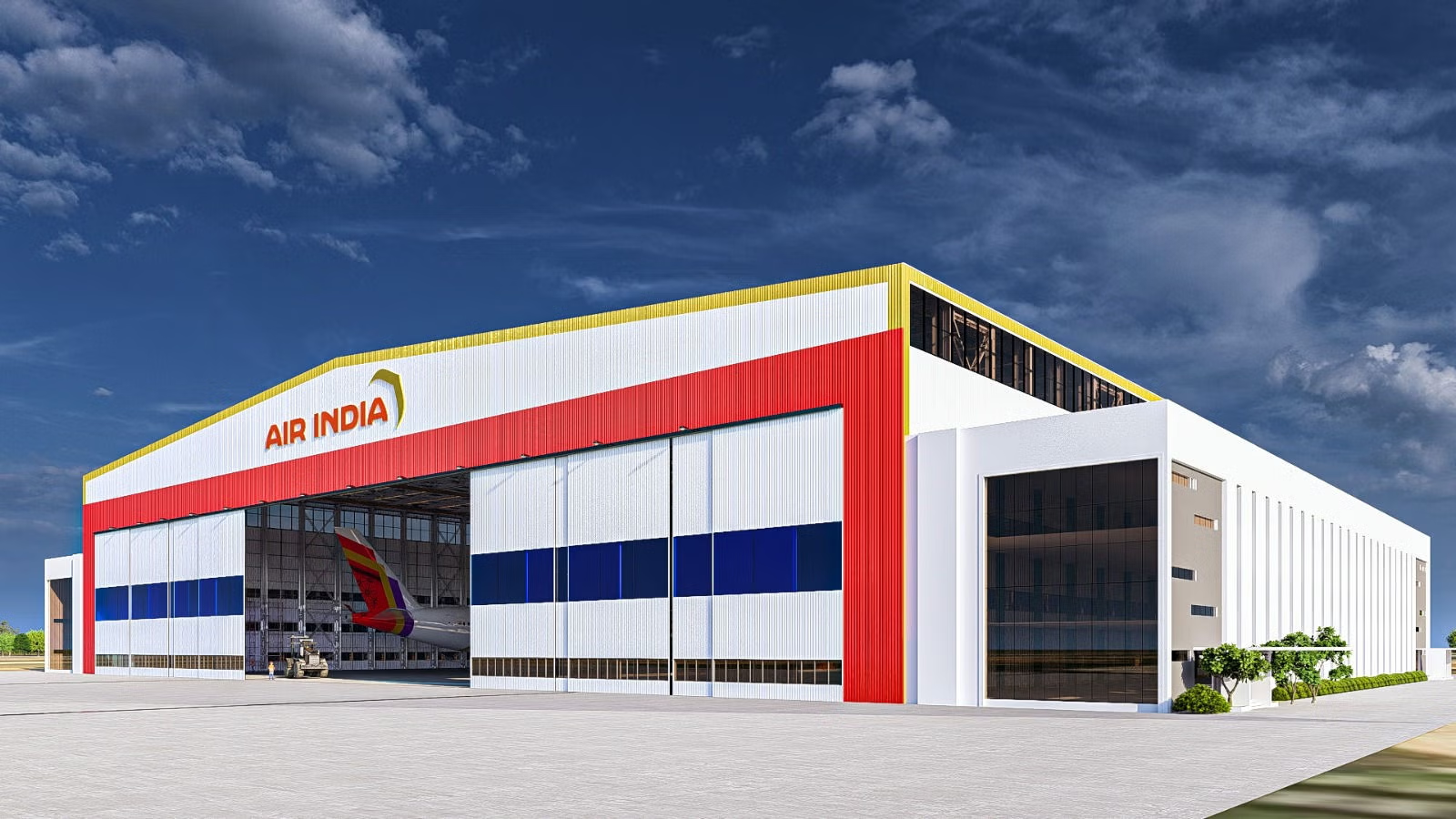
Air India breaks ground on new MRO hangar at Delhi Airport to strengthen aircraft maintenance, marking an important step in India’s aviation development. The nine-acre facility will accommodate widebody and narrowbody aircraft simultaneously, improve maintenance efficiency, reduce operational delays and support the airline’s growing focus on engineering capabilities and self-reliance.
Air India Begins Construction of Advanced Aircraft Maintenance Facility
Air India has broken ground on a new Maintenance, Repair and Overhaul (MRO) hangar at Indira Gandhi International Airport in New Delhi. The development marks another step in the airline’s efforts to strengthen its engineering operations and improve aircraft reliability.
Announced on 22 October 2026, the project will occupy nine acres at the airport, which serves as Air India’s largest operational hub.
The proposed facility will be the first hangar in Delhi designed to accommodate one widebody and one narrowbody aircraft simultaneously. This capability will allow engineering teams to undertake maintenance activities on different aircraft types within the same complex.
Advertisement
Advertisement
The investment forms part of Air India’s wider transformation programme, which includes modernising its fleet, improving operational performance and developing stronger internal technical capabilities.
Nine-Acre Hangar to Support Widebody and Narrowbody Aircraft
The new facility will feature a 25-metre clear height and large column-free spans, providing sufficient space for aircraft maintenance and engineering activities.
Advertisement
Advertisement
Its design will accommodate next-generation aircraft while allowing flexibility for future operational requirements.
The hangar will bring together aircraft inspections, engineering offices, spare parts storage and cabin maintenance operations.
Centralising these functions is expected to reduce the need to move aircraft components and equipment between separate maintenance locations.
For an airline operating domestic and international services, efficient maintenance infrastructure is essential. Aircraft must undergo regular inspections and technical checks to meet safety requirements and remain available for scheduled flights.
By consolidating these activities, Air India aims to strengthen maintenance coordination and improve the use of its engineering resources.
New MRO Facility Expected to Reduce Aircraft Downtime
One of the project’s main objectives is to reduce the time aircraft spend on the ground for maintenance.
Advertisement
Advertisement
The facility will support routine inspections, cabin upkeep and the correction of technical defects.
An integrated warehouse will provide engineering teams with easier access to spare parts, potentially reducing delays associated with component movement and logistical coordination.
The complex will also include a dedicated Cabin Shop for repairing aircraft interiors.
This will allow Air India to address cabin-related defects more quickly while reducing its dependence on external maintenance providers for selected activities.
The airline expects these improvements to support better fleet availability and more consistent operational performance.
Faster Technical Repairs Could Improve Passenger Experience
Aircraft maintenance has a direct influence on airline punctuality and service reliability.
Advertisement
Advertisement
Technical defects can occasionally prevent an aircraft from operating until engineers complete the required checks and repairs.
Air India’s new hangar is intended to improve the speed at which technical teams respond to such situations.
Having engineers, maintenance equipment and spare parts in one location should support faster troubleshooting and aircraft recovery.
For passengers, the potential benefits include fewer maintenance-related disruptions and improved cabin conditions.
However, the actual effect on flight punctuality will depend on the facility’s operational performance after commissioning.
Project Supports India’s Aviation Self-Reliance
The development also reflects India’s efforts to expand domestic aircraft maintenance capabilities.
Advertisement
Advertisement
Airlines require specialised facilities, skilled engineers, technical equipment and reliable spare parts supply chains to maintain modern aircraft fleets.
Developing these resources within India can help strengthen the country’s aviation services industry.
For Air India, greater in-house maintenance capacity could improve oversight of engineering activities and reduce reliance on external providers for certain services.
The project could also support demand for aviation engineering skills and specialised technical services as India’s airline industry continues to develop.
Green Building Standards Included in Hangar Design
Environmental considerations form part of the proposed facility’s design.
According to Air India, the hangar will follow Indian Green Building Council (IGBC) green building norms, with provisions focused on energy efficiency and water conservation.
Advertisement
Advertisement
Advanced fire protection systems will also form part of the infrastructure.
These measures are intended to support safer operations and more responsible resource management across the maintenance complex.
Senior Air India and Delhi Airport Executives Attend Ceremony
The ground-breaking ceremony was attended by Air India Chief Executive Officer and Managing Director Tewolde Gebremariam and senior representatives of Delhi International Airport Limited.
Participants included Air India executives P Balaji, Basil Kwauk and Jeremy Yew, alongside DIAL representatives Manomay Rai, Vijay K Sharma and Deepika Sharma.
Their participation highlighted the coordination required between the airline and airport operator to develop major aviation infrastructure.
Air India’s new MRO hangar at Delhi Airport represents an important investment in aircraft maintenance infrastructure. By bringing engineering services, spare parts and cabin repairs together, the airline aims to improve fleet availability and operational reliability. The project also supports India’s broader ambition to develop stronger domestic aviation maintenance capabilities.
Advertisement
