
Qatar Proves Why Regional Partnership Consistently Carves A Tourism Growth Pathway For Global Travelers

Published
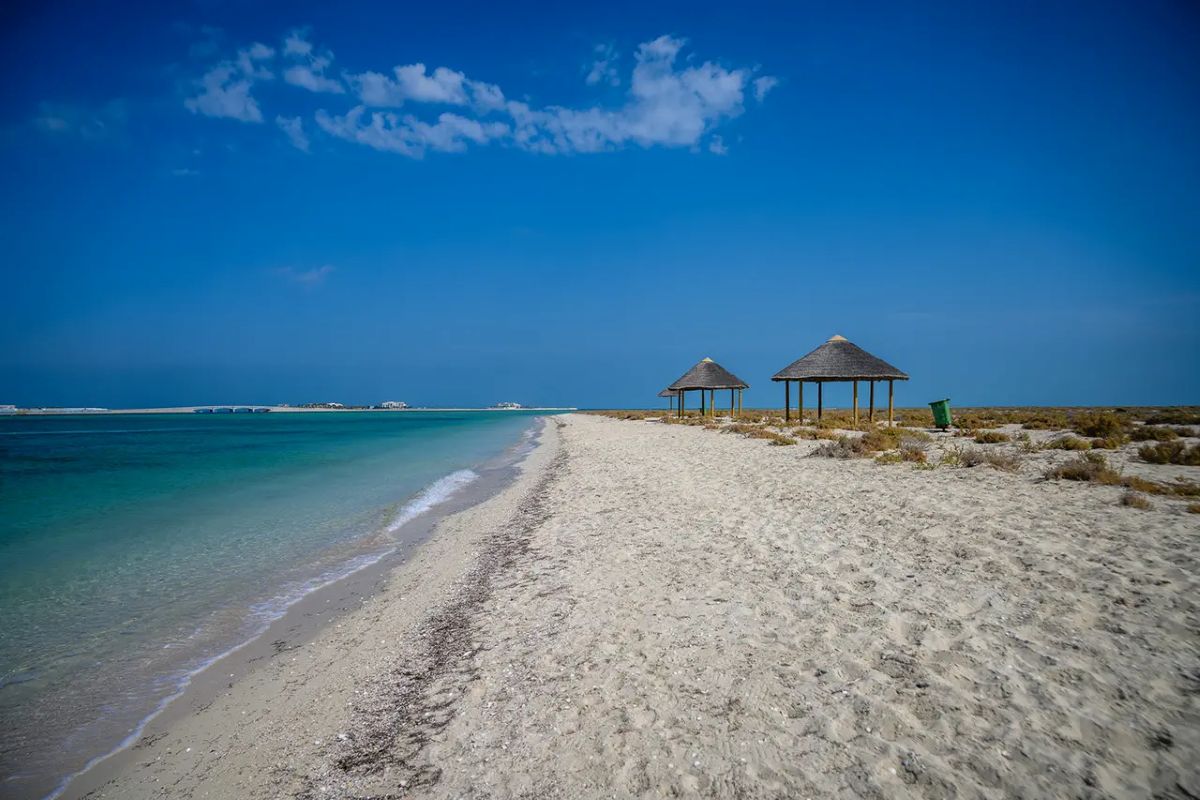
The air in Doha now feels electric. The sun pours down on a sanctuary that blends the Gulf soul with bold futuristic ambition. Walking through Souq Waqif as dusk settles I can literally taste the energy that fills the air. It is the scent of rich cardamom coffee swirling beside the untamed dreams of an entire nation.
Qatar is no just growing. Qatar is completely reimagining how the world travels, how the world connects and how the world falls in love, with the Arabian Peninsula. Every gleaming skyline and quiet desert dune tells a story. The story is one of belonging, resilience and a boundless horizon.
How Is Qatar Governance Transforming Its National Tourism Framework Under NDS3 in Doha?
Qatar’s dynamic tourism governance operates under institutional oversight designed to streamline foreign direct investment and fast-track regulatory processes across Doha. The establishment of Qatar Tourism centralized national promotion, event licensing, and hotel classification systems under one cohesive body to boost efficiency. Working alongside the Government Communications Office, tourism executives ensure seamless alignment with Qatar National Vision 2030 and the Third National Development Strategy.
Advertisement
Advertisement
To support these macro targets, administrative bodies introduced an automated e-licensing ecosystem managed by dedicated investment promotions units. This system accelerates setup times for international hotel operators and eco-tourism ventures, lowering entry barriers for foreign investors entering the market. Consequently, Qatar has improved its competitive positioning significantly while delivering a massive surge in overall travel price competitiveness.
What Role Does the Unified GCC Tourist Visa Play in Unlocking Regional Mobility Across Lusail and Saudi Arabia?
Advertisement
Advertisement
The endorsement of the Unified GCC Tourist Visa represents a major milestone for Middle Eastern travel coordination involving Lusail and Saudi Arabia. Similar to international travel agreements found elsewhere, this forward-thinking policy allows global visitors to journey across all six Gulf Cooperation Council nations under a single authorization. This borderless structure fundamentally shifts international travel habits by making multi-destination Arabian Gulf itineraries highly practical for long-haul visitors.
Rather than visiting just one localized city, travelers from North America and Europe can explore regional circuits that link dynamic urban hubs with neighboring capitals. For Qatar, this integration increases the average length of stay and drives higher in-destination spending per visitor throughout peak holiday seasons. Regional cooperation thus transforms individual national attractions into an interconnected, highly lucrative multi-country tourism corridor.
Advertisement
Advertisement
How Is Cross-Border Transport Infrastructure Driving Inbound Visitor Growth at Abu Samra Border Crossing and Hamad International Airport?
Integrated transportation links serve as the mechanical engine of Qatar’s regional expansion via the Abu Samra border crossing and Hamad International Airport. Overland access centers on the expanded Abu Samra border crossing, which connects Qatar directly to neighboring Saudi Arabia with modern highway capacity. This vital road arterial handles significant visitor volume for short-haul weekend stays and multi-country road trips originating across the Arabian Peninsula.
Air and maritime transport routes expand this reach through Hamad International Airport and the upgraded Doha Port cruise terminal. Hamad International Airport serves as a premier transit hub connecting regional short-haul flights with global long-haul routes, while luxury passenger liners reinforce maritime connectivity. These multi-modal transport networks guarantee smooth, uninterrupted arrivals for millions of international guests year-round.
What Do Official Demographic Statistics Reveal About Qatar Visitor Market Share Distribution Across Asia and Europe?
Advertisement
Advertisement
Official inbound tourism figures confirm a highly diversified visitor base originating from key global territories including dynamic parts of Asia and Europe. Regional markets lead visitor volume, with neighboring GCC states generating over forty percent of total international arrivals through land and air corridors. This high regional share highlights the ongoing success of targeted marketing campaigns and simplified cross-border travel arrangements.
At the same time, Asia and Oceania contribute roughly one-fifth of overall arrivals, closely followed by strong European tourism delegations. This balanced market distribution protects Qatar’s tourism economy from localized downturns and maintains consistent occupancy rates across luxury hotel tiers throughout the year. Strategic diversification ensures long-term financial resilience for all stakeholders operating within the hospitality sector.
How Are Digital Transformation and Open Visa Policies Positioning Souq Waqif as an Accessible Destination?
Digital innovation remains central to Qatar’s destination strategy, enhancing visitor experiences around historic cultural assets like Souq Waqif. The Hayya Digital Platform functions as an all-in-one visitor management and visa processing portal designed to eliminate traditional bureaucratic hurdles. The platform links entry permits directly to hotel bookings and event tickets, streamlining arrival logistics for international guests.
Combined with visa-free entry for citizens of over one hundred countries, Qatar ranks among the most accessible travel destinations globally. Technology successfully converts casual international interest into confirmed travel bookings while ensuring frictionless border clearance. Travelers experience maximum convenience from the moment they submit their digital applications until their departure.
How Does the Expansion of MICE and Corporate Infrastructure Impact Economic Diversification Across the Qatar National Convention Centre?
Advertisement
Advertisement
Meetings, Incentives, Conferences, and Exhibitions form a crucial business pillar within the broader economic diversification strategy managed at the Qatar National Convention Centre. Venues like the convention center and exhibition halls position Qatar as a regional base for high-value corporate travel and global networking summits. By hosting large-sclae international gatherings, Qatar successfully fills hotel capacity during traditional off-peak leisure periods.
Corporate delegates spend significantly more per day than average leisure tourists, accelerating progress toward non-hydrocarbon revenue targets outlined by national leaders. Business tourism anchors economic stability while showcasing state-of-the-art corporate facilities to international investors and industry leaders. Professional event coordination continues to elevate Doha’s reputation on the global corporate stage.
What Cultural Landmarks and Eco-Tourism Destinations at Al Zubarah Fort and Khor Al Adaid Are Driving Heritage Appeal?
Qatar brilliantly balances modern infrastructure investments with destination preservation across historic sites like Al Zubarah Fort and Khor Al Adaid. Key cultural locations in the capital include traditional markets and world-class museums that celebrate regional artistry and Islamic heritage. Outside the capital, the UNESCO World Heritage site Al Zubarah Fort provides profound insight into the peninsula’s rich coastal history.
In the southern reaches, environmental marvels such as Khor Al Adaid—where ocean waters meet majestic desert dunes—offer extraordinary eco-tourism destinations. These natural wonders seamlessly complement the ultra-modern luxury urban developments found at The Pearl-Qatar and surrounding coastal districts. Travelers enjoy an authentic blend of ancient tradition and contemporary architectural splendor.
How Is the Expansion of Hospitality Infrastructure Driving Total Keys Beyond 41,000 Rooms in Doha?
Advertisement
Advertisement
Qatar’s expanding accommodation sector has successfully pushed total hotel room inventory beyond 41,300 room keys, accommodating a surge of international visitors across diverse travel tiers. Five-star luxury properties account for 19,854 keys, representing roughly 48% of the total supply, while four-star properties hold 8,188 keys. Additionally, deluxe serviced apartments contribute 8,986 units, and one-to-three-star categories account for approximately 3,160 keys to meet budget-conscious demand.
Full-market hospitality revenue reached QAR 8.3 billion, with Average Daily Rate figures stabilizing around QAR 448 to QAR 457 and annual room nights sold surpassing 10.8 million. Major hospitality developments are heavily concentrated in prime waterfront and commercial districts like West Bay, Lusail Marina, Al Dafna, and The Pearl-Qatar. Strategic investments across these luxury and mid-scale segments ensure consistent market competitiveness and exceptional service standards throughout the year.
How Is Maritime Cruise Tourism Transforming Grand Terminal at Old Doha Port into a Regional Gateway?
Maritime infrastructure growth has turned the waterfront district surrounding the Grand Terminal at Old Doha Port into a thriving regional cruise hub. Old Doha Port welcomed over 7 million total visitors to its picturesque maritime district, while the dedicated cruise terminal recorded over 200,000 incoming passengers and crew members. The active maritime season hosted 72 scheduled cruise ship calls, which included 15 full turnaround calls where passengers began or ended their voyages in Doha, alongside 40 partial turnaround calls.
Maritime arrivals currently account for 7% of total international visitor arrivals entering the state, proving the increasing appeal of regional Gulf itineraries. The Mina District and the nearby Doha Corniche provide international travelers with immediate access to local heritage, dining, and scenic waterfront promenades. Expanded port regeneration projects continue to position Doha as an essential stopover for luxury maritime liners navigating Middle Eastern waters.
How Is the Hamad International Airport Phase B Expansion Accelerating Aviation Transit and Air Passenger Volume?
Advertisement
Advertisement
Air transit serves as the primary gateway to the country, accounting for 61% of all international visitor arrivals entering Qatar. Driven by continuous infrastructure development, Hamad International Airport has increased its overall passenger handling capacity to over 60 million travelers annually. Inbound international arrivals by air climbed significantly to 3.13 million annually, representing a strong 12.5% year-over-year increase.
The ongoing expansion projects within the airside district, alongside the famous Orchard Indoor Tropical Garden, enhance the overall transit experience for global passengers. Strategic air connectivity links key origin pathways from major international capitals straight to Doha, converting transit passengers into enthusiastic point-to-point tourists. World-class aviation facilities guarantee seamless processing for millions of travelers arriving from every corner of the globe.
How Are Mega Sporting Events and Cultural Festivals Impacting Seasonal Peak Occupancy in Doha?
Major sporting events and cultural celebrations create substantial seasonal surge dynamics, driving record-breaking visitor arrivals and event-driven revenue spikes. Peak winter months, such as December, recorded 674,144 international arrivals in a single month, heavily supported by high-profile regional sports tournaments like the FIFA Arab Cup. During these peak periods, full-market accommodation occupancy rates soar to an impressive 84.1%.
Furthermore, the robust business travel and sports events sector welcomed over 1.0 million international business delegates within a single operational year. Iconic venues such as Lusail Stadium, Khalifa International Stadium, the Qatar National Convention Centre, and the Doha Exhibition and Convention Center serve as epicenters for these gatherings. Event-driven tourism successfully maximizes hotel yield and showcases the nation’s capacity to host massive international spectacles.
How Is Eco-Tourism and Sustainable Heritage Development Transforming Desert Reserves in Khor Al Adaid and Ras Abrouq?
Advertisement
Advertisement
Qatar carefully balances modern urban expansion with rigorous heritage preservation and low-impact eco-tourism development across its most striking natural reserves. Khor Al Adaid, also known as The Inland Sea, spans approximately 120 square kilometres of protected marine and desert ecosystems where ocean waters meet majestic desert dunes. For historical preservation, the UNESCO World Heritage Site Al Zubarah Archaeological Site covers a 60-hectare walled coastal town featuring an active 18th-century fort museum.
At the same time, low-density luxury eco-resorts and glamping camps across the Ras Abrouq Peninsula maintain strict environmental conservation caps to protect native wildlife like the Arabian Oryx and gazelles. Additional environmental assets like the Al Thakira Mangroves offer visitors immersive nature experiences away from the bustling capital. Sustainable tourism frameworks ensure these delicate desert and coastal ecosystems remain pristine for future generations of travelers.
How Are High-Yield Business Travelers and Corporate Delegate Spending Boosting Economic Returns in West Bay?
High-value corporate tourism and professional exhibition infrastructure generate exceptional economic returns, supporting long-term financial diversification goals. Business and MICE delegates spend an estimated 2.5 to 3 times more per day, averaging over QAR 1,200 to QAR 1,500 daily compared to standard short-haul leisure visitors. This lucrative corporate segment directly contributes toward pushing tourism’s total economic contribution from 2.86% up to 12% of national GDP.
Key commercial hubs in the West Bay Business District, alongside massive exhibition spaces at the Doha Exhibition and Convention Center in Al Dafna and the Qatar National Convention Centre in Education City, host over 100 major international expos annually. Premium conference facilities attract global industry leaders, corporate executives, and high-net-worth delegates. Professional business tourism solidifies Doha’s reputation as a premier destination for international trade and corporate networking.
How Is Modern Urban Regeneration and Smart Infrastructure Transforming Msheireb Downtown and Lusail City?
Advertisement
Advertisement
Multi-billion-dollar urban master plans have redefined the architectural landscape through smart city technologies, sustainable transport, and luxury lifestyle precincts. Msheireb Downtown Doha covers 31 hectares featuring over 100 LEED-certified buildings, while Lusail City spans 38 square kilometres designed to accommodate 450,000 residents and visitors. Advanced electrified transit networks, including the Lusail Tram and Msheireb Tram fully integrated with the Doha Metro’s 37 stations across the Red, Gold, and Green lines, handle over 50 million passenger journeys annually.
These dynamic urban precincts, complete with retail destinations like Place Vendôme Qatar and cultural hubs like Katara Cultural Village, draw over 35% of total inbound leisure excursions. Smart infrastructure investments combine environmental sustainability with high-end urban living, offering visitors a futuristic yet culturally grounded metropolitan experience. Modern regeneration projects continue to elevate the aesthetic and functional appeal of Qatar’s premier urban centers.
How Is Source Market Diversification Shifting Inbound Travel Demographics from Europe, Asia, and the Americas?
Geographical source market diversification has successfully expanded inbound travel demographics, balancing regional proximity with strong long-haul growth. While neighboring GCC nations lead overall volume with over 40% of total arrivals, non-GCC long-haul travel now represents nearly 60% of total visitors. Asia and Oceania contribute 20.9% of total international visitors, while Europe generates 20.8% of inbound tourism, led by key markets in the United Kingdom, Germany, and France.
Top individual country markets, including Saudi Arabia, India, the United Kingdom, Germany, and the United States, rank consistently as Qatar’s top five inbound source countries. Direct flight connectivity linking major international aviation hubs straight to Doha facilitates seamless travel for long-haul vacationers. Targeted promotional campaigns across diverse global territories ensure a resilient, multi-source visitor base that supports steady tourism growth year-round.
The Final Verdict
Advertisement
Advertisement
There is something touching about watching a country write its own next chapter with such calm amazing confidence. Behind the numbers, shiny buildings and smooth transportation systems Qatar’s real success is how nicely it keeps its beating heart—asking the world not just to come and see but to feel truly welcome. As the sun goes down behind the sands of Khor Al Adaid you understand this is not a place that is getting bigger on a map. It is a call to slow down build strong connections and watch an old Arabian tradition growing into a bright shared future.
Frequently Asked Questions (FAQ)
What is Qatar’s primary tourism goal under the Third National Development Strategy (NDS3)?
Under NDS3, Qatar aims to welcome 6 million international visitors annually, increase total tourism spending, and raise the sector’s overall economic contribution to 12% of national GDP by 2030.
How does the Unified GCC Tourist Visa benefit travelers visiting Qatar?
The Unified GCC Tourist Visa enables foreign tourists to travel across all six GCC countries using a single permit, making multi-destination Gulf travel simpler and more affordable.
Advertisement
Advertisement
Why is Doha’s designation as the GCC Tourism Capital 2026 significant?
The designation highlights Doha’s role as a leader in regional tourism innovation, enabling Qatar to host major cultural events while leading joint promotional initiatives across the Gulf.
Which international visitor markets drive the largest volume to Qatar?
Visitors from neighboring GCC nations form the largest market segment at over 40% of total arrivals, followed closely by Asia, Oceania, and European source markets.
What key cultural and historical sites are featured in Qatar’s tourism strategy?
Major cultural locations include the UNESCO World Heritage site Al Zubarah Fort, Souq Waqif, the Museum of Islamic Art, and natural coastal reserves like Khor Al Adaid.
Advertisement
