
Planning to Fly to Europe? Here’s Why You Need to Know About the New Liquid Regulations

Updated
Published
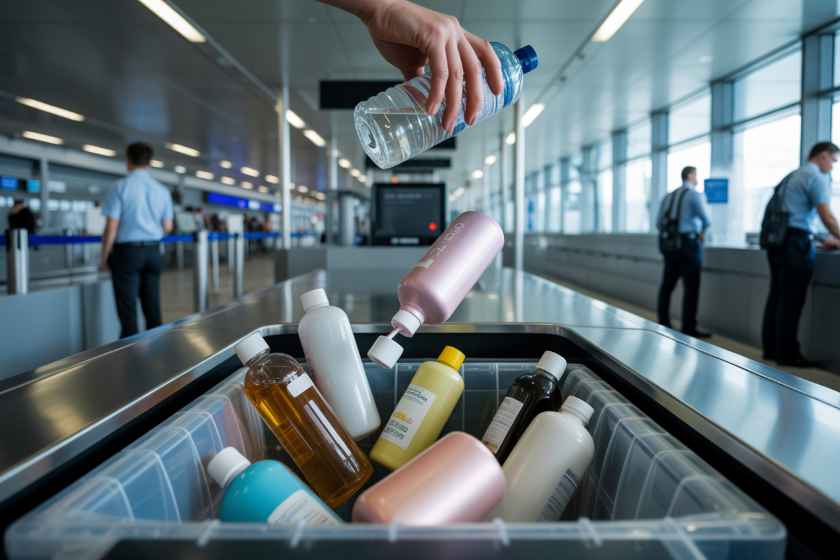 Image generated with Ai
European airports are rolling out new technology that’s revolutionising the airport security process and lifting the long-standing 100ml liquid limit in cabin baggage. The change, introduced in 2026, is already being implemented in select airports across Europe, enabling travelers to carry full-sized liquids through security—something that has long been a restriction for air passengers.
This shift marks a major change to the security process that dates back to 2006, when the liquid ban was introduced after a thwarted terrorist plot involving liquid explosives. Over the years, the 100ml rule became a familiar and often frustrating aspect of air travel, leading many travelers to decant toiletries and other liquids into tiny bottles. However, with advancements in security technology, these restrictions are starting to be relaxed, opening the door to easier and more convenient travel.
Advertisement
Advertisement
The Rise of Advanced Security Technology
The relaxation of the 100ml rule is largely due to new CT scanners that have been introduced at major airports across Europe. These scanners are capable of producing detailed 3D images of the contents of passengers’ bags, allowing security personnel to see exactly what is inside—without the need for passengers to remove liquids or unpack their bags. This cutting-edge technology can also detect liquid explosives in a way that ensures security standards remain as high as before.
The European Commission has confirmed that it is working towards removing the 100ml limit across the EU, with gradual upgrades happening at airports over the next few years. The initiative is expected to streamline security processes and improve the passenger experience, particularly for those with multiple liquids in their hand luggage.
Advertisement
Advertisement
UK Airports Lead the Way
Among the first European countries to introduce the new policy, the UK has taken a significant step forward in easing liquid restrictions. London Heathrow Airport, one of Europe’s busiest airports, has now implemented the change, allowing passengers to carry up to two liters of liquid per container through security. This new rule is in place across all terminals at Heathrow, marking a major departure from the past restrictions.
Other UK airports including London Gatwick, Birmingham, Belfast International, and Edinburgh are following suit, adopting the new CT scanners and relaxing the liquid rules. London Stansted, London City, and London Luton airports have also made progress, with liquids no longer needing to be removed from bags, though the 100ml limit still applies in certain circumstances.
Advertisement
Advertisement
This development means that travelers flying from the UK to destinations like New York, Tokyo, and Sydney no longer have to worry about limiting their liquids to tiny bottles, making their journeys more comfortable and less stressful.
Other European Airports Adopting the Change
In Germany, Munich Airport has introduced the new scanners at selected checkpoints, allowing passengers to carry larger liquids through security. However, Frankfurt Airport and Berlin Brandenburg Airport are still in the process of fully implementing the new rules, with some checkpoints still enforcing the 100ml limit.
Italy has made significant strides, particularly in anticipation of the Winter Olympics. Passengers flying from Rome Fiumicino, Milan Linate, and Milan Malpensa (Terminal 1) can already bring larger containers of liquids through security. Turin Airport is also participating in the change for fast-track passengers, marking a clear shift toward easier travel in Southern Europe.
Meanwhile, Ireland’s Dublin Airport, Prague Airport, and Vilnius Airport have also fully implemented the new policy, making travel between countries in Europe smoother and faster for travelers.
Delayed Adoptions and Remaining Restrictions
Despite the growing trend, not all European airports have adopted the new rules. Amsterdam Schiphol and Barcelona El Prat are still following EU regulations, and have not yet confirmed when the two-liter limit will be implemented. Similarly, Paris Charles de Gaulle, Madrid Barajas, Athens International, and Lisbon airports are still maintaining the 100ml rule, with Athens planning to upgrade in 2027 and Paris aiming for full readiness closer to 2030.
While these airports are not yet part of the change, they are expected to follow the EU’s guidelines in the coming years. Travelers departing from these airports will still need to adhere to the 100ml rule and may experience delays when passing through security.
Advertisement
Advertisement
What This Means for Travelers
For tourists and business travelers heading to and from Europe, this shift in security regulations is a welcome change. It reduces the hassle of packing liquids into tiny bottles and allows for more flexibility in carrying essential items, from shampoos to water bottles. The transition to full-sized liquids will undoubtedly enhance the travel experience, especially for those with long-haul flights or multiple stops.
What’s Next for European Air Travel
As European airports continue to modernize their security measures, passenger convenience will continue to improve. With the 100ml liquid limit expected to be phased out gradually, Europe’s travel experience is becoming more streamlined, creating a more enjoyable and less stressful journey for travelers.
Advertisement
