
New York and Los Angeles Ignite US Tourism Education Revolution with AI and Sustainable Hospitality in 2026

Published
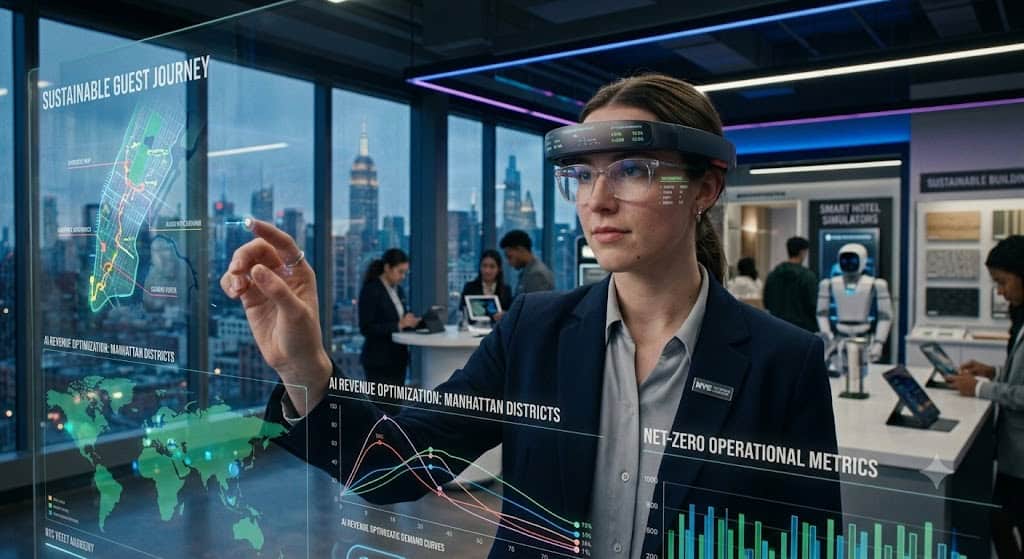
The US tourism education revolution is transforming workforce development across major metropolitan hubs. In 2026, educational institutions, public sector authorities, and municipality leaders in New York and Los Angeles are implementing high-tech academic frameworks to address shifting global travel patterns. By embedding generative artificial intelligence, real-time analytics, and circular economy principles directly into hospitality curricula, these state initiatives aim to elevate operational efficiency and environmental stewardship. Understanding this policy shift is vital, as it redefines professional qualifications, drives economic resilience, and establishes new international benchmarks for urban destination management and workforce readiness.
Background: The Need for Educational Reform in US Tourism
The structure of hospitality and travel education across the United States has historically relied on conventional vocational models, focusing heavily on manual operations, physical front-desk administration, and traditional service standards. However, the post-pandemic recovery revealed structural vulnerabilities within the national workforce, including labor market contractions, evolving guest expectations, and accelerating climate compliance demands.
Advertisement
Advertisement
By early 2026, federal data from the U.S. Travel Association and the U.S. Department of Commerce underscored that while domestic travel expenditure remained stable, international visitor expectations had shifted sharply toward tech-integrated, eco-certified destinations. Municipalities in high-density tourism regions recognized that traditional service training alone could no longer support the complex data infrastructure, dynamic pricing models, and decarbonization mandates required by modern visitor economies.
New York and Los Angeles—representing the nation’s largest eastern and western urban travel gateways—subsequently initiated targeted educational overhauls. These public-private partnerships aim to bridge the gap between academic output and industry requirement, positioning sustainable hospitality training and artificial intelligence in travel at the core of higher education and professional certification programmes.
Advertisement
Advertisement
+-----------------------------------------------------------------------------------+
|               EVOLUTION OF US TOURISM EDUCATION FRAMEWORKS (2020–2026)             |
+-----------------------------------------------------------------------------------+
|  Period    | Primary Curriculum Focus          | Technological Integration        |
+------------+-----------------------------------+----------------------------------+
| 2020–2022  | Crisis Management & Hygiene       | basic remote booking systems     |
| 2023–2024  | Service Recovery & Staff Retention| Standard Property Mgmt Systems   |
| 2025–2026+ | AI Literacy & Regenerative Travel | Agentic AI, Predictive Analytics |
+-----------------------------------------------------------------------------------+
Latest Official Developments in New York and Los Angeles
In 2026, municipal education departments and public university networks in both New York State and California formally introduced updated higher education standards for hospitality management degrees and vocational diplomas.
In New York, public policy directives aligned state university systems with urban tourism authorities to launch specialized modules focused on automated revenue optimization, smart city visitor management, and urban decarbonization. The initiative establishes dedicated research units aimed at studying tourist flow density across Manhattan, Brooklyn, and outer boroughs using privacy-compliant location intelligence.
Advertisement
Advertisement
Concurrently, Los Angeles public institutions and regional tourism workforce councils launched integrated curriculum frameworks designed specifically to address large-scale event readiness, zero-waste hotel operations, and AI-driven multilingual guest relations. These regional developments ensure that upcoming cohorts entering the workforce possess direct technical competency in managing automated hotel ecosystems while upholding strict municipal environmental standards.
Key Components of the 2026 Educational Directive
- Predictive Operations Management: Academic training in predictive guest demand forecasting using agentic AI algorithms.
- Net-Zero Facility Auditing: Hands-on coursework evaluating building energy management systems, water conservation tech, and circular supply chain logistics.
- Algorithmic Revenue Optimization: Advanced instruction on real-time pricing algorithms that adjust dynamically to local traffic, event calendars, and carbon offset costs.
Government Announcements and Public Policy Directives
Official policy releases issued by state economic development agencies confirm significant public investment allocated toward workforce upskilling in the travel sector.
The policy framework mandates that public vocational training programs receive dedicated funding to establish immersive learning environments. These environments include smart-hotel simulators equipped with property management software (PMS), central reservation systems (CRS), and operational guest AI engines.
                                +-----------------------------------+
                                | State Workforce Innovation Grants |
                                +-----------------------------------+
                                                  |
                                                  v
                  +-------------------------------+-------------------------------+
                  |                                                               |
                  v                                                               v
+-----------------------------------+                           +-----------------------------------+
|  New York Tech Infrastructure     |                           | Los Angeles Green Transition      |
|  - Smart Hotel Simulation Labs    |                           | - Zero-Waste Certification        |
|  - AI Data Privacy Protocols      |                           | - EV Fleet Management Curricula   |
+-----------------------------------+                           +-----------------------------------+
State governments have emphasized that modern tourism policy updates must prioritize digital literacy alongside environmental compliance. Under these mandates, state-funded institutions are required to offer stackable micro-credentials in sustainable hospitality training and AI in hotel operations. This allows active industry workers to complete short-term upskilling certificates without leaving the labor pool.
Official Statistics and Tourism Sector Metrics
Data gathered from public sector tourism research centers and national statistical repositories highlight the shifting operational landscape that prompted these educational initiatives.
| Benchmark Metric | Official 2026 Value | Primary Sector Impact | Source Alignment |
| US Travel Expenditure Growth | Moderate Positive Growth | Increased reliance on high-yield international visitors | U.S. Travel Forecast |
| AI Adoption in Guest Operations | High Enterprise Penetration | Automated check-ins, automated housekeeping scheduling | Hotel Tech Report 2026 |
| Sustainability Program Enrollment | Expanded Public Enrollment | Surge in micro-credentialing among municipal hospitality workers | EHL Hospitality Outlook |
| Global Travel Economy Contribution | Expanded Multi-Trillion Value | Heightened international competition for smart destination status | UN Tourism Metrics |
These figures demonstrate that technology integration is no longer an optional luxury for private operators, but a core structural requirement across urban tourism economies.
Advertisement
Advertisement
Policy Implications for Higher Education and Local Municipalities
The rollout of these revised academic programs carries wide-reaching policy implications for local municipal authorities, state education boards, and accredited university systems.
Historically, accreditation bodies evaluated hospitality programs based on traditional culinary metrics, room inventory auditing, and general business administration. Under the new guidelines, state boards require accredited institutions to prove that their coursework covers data security, ethical AI usage, waste diversion reporting, and smart grid building management.
+---------------------------------------------------------------------------------+
|                    MUNICIPAL POLICY IMPLEMENTATION TIMELINE                      |
+---------------------------------------------------------------------------------+
|  Phase 1: Curriculum Standardization  | Mandating AI & Eco-modules in state colleges |
|  Phase 2: Industry Collaboration      | Establishing live-data sharing with hotels   |
|  Phase 3: Micro-credentialing Launch  | Enabling worker upskilling pathways          |
|  Phase 4: Multi-Year Impact Audit     | Evaluating carbon and efficiency metrics     |
+---------------------------------------------------------------------------------+
Furthermore, municipal authorities in New York and Los Angeles are linking hotel operating permits and tourism tax incentives directly to verified workforce sustainability metrics. Properties that employ certified sustainability auditors trained under state-approved university programs qualify for municipal green business tax rebates.
Industry Impact: Transforming Hotel and Destination Operations
The practical impact on private industry operators across major US travel hubs is immediate and structural. Hotel chains, boutique properties, regional transportation networks, and event venues are adapting their human resources models to integrate graduates skilled in AI-driven hotel management.
Key Operational Shifts
- Autonomous Operations Oversight: Front-desk operations are increasingly managed via agentic AI platforms that handle check-ins, multilingual inquiries, and personalized upsells, allowing staff to focus on complex guest experiences.
- Predictive Housekeeping & Maintenance: Real-time room status systems dynamically dispatch cleaning crews and maintenance teams based on checkout notifications and energy usage sensors.
- Data-Driven F&B Procurement: Automated inventory systems analyze historical dining preferences and event schedules to place precise food orders, significantly reducing food waste.
+-----------------------------------------------------------------------------------+
|                  TRADITIONAL VS. AI-INTEGRATED HOSPITALITY WORKFLOWS              |
+-----------------------------------------------------------------------------------+
| Task                  | Traditional Approach          | 2026 AI-Integrated Model  |
+-----------------------+-------------------------------+---------------------------+
| Guest Check-In        | Manual desk queuing           | Automated conversational  |
| Room Allocation       | Static manual assignment      | Real-time dynamic PMS     |
| Energy Management     | Fixed heating/cooling schedules| Sensor-driven smart grids |
| Staff Dispatching     | Shift-based fixed routes      | Real-time task queuing    |
+-----------------------------------------------------------------------------------+
Economic Implications for Metropolitan Tourism Economies
The economic benefits of reforming tourism education extend beyond institutional walls. By equipping graduates with data analysis skills and sustainable operational knowledge, municipalities can directly control operational costs and protect local natural resources.
- Cost Reduction Through Waste Diversion: Hotels implementing full circular economy models report reduced municipal waste disposal fees and improved energy efficiency.
- Increased Direct Revenue via AI Conversational Booking: Properties utilizing direct AI booking flows reduce third-party agency commissions, retaining higher margins per available room.
- Workforce Retention and Upward Mobility: Upskilling hospitality labor from entry-level administrative tasks to technical data oversight increases wage stability and lowers industry turnover.
+---------------------------------------------------------------------------------+
|                       ECONOMIC VALUE CREATION CYCLE                             |
+---------------------------------------------------------------------------------+
| Higher Education Reform -> Technical Workforce Competency -> Higher Operational |
| Margins -> Decreased Environmental Footprint -> Sustainable Municipal Growth   |
+---------------------------------------------------------------------------------+
Tourism, Business, and Public Impact
For international visitors and local residents, the modernization of hospitality training produces noticeable improvements in urban living standards and visitor experiences.
Advertisement
Advertisement
Residents in high-volume tourism zones benefit from smart destination management frameworks that mitigate neighborhood congestion, reduce noise pollution, and balance municipal resource allocation. Visitors experience frictionless travel journeys, marked by personalized itineraries, seamless mobile check-ins, and verified eco-friendly accommodations.
“The shift toward regenerative hospitality and digital intelligence represents a fundamental evolution in how destinations build lasting value for both communities and global visitors.” — UN Tourism Global Educational Summit Insights
Expert and Official Statements
International institutions and global hospitality academic councils have validated the strategic importance of the initiatives taking place in New York and Los Angeles.
According to published analysis from UN Tourism regarding digital agendas and skill development, integrating technology directly into regional training frameworks is crucial for maintaining global travel competitiveness. Academic leaders at major institutions emphasize that future hospitality professionals must balance digital proficiency with authentic human empathy.
Consensus Principles from Published Academic Frameworks
- Tech-Enabled Personalization: Technology must streamline back-of-house operations to allow staff more time for high-value human connection.
- Regenerative Focus: Sustainability models must shift from simple harm reduction to active environmental and local community restoration.
- Human-Centric Leadership: Modern management programs must cultivate empathy, cross-cultural communication, and ethical decision-making alongside technical skills.
Future Outlook: The Next Phase of US Hospitality Training
Looking beyond 2026, the educational models pioneered in New York and Los Angeles are expected to serve as blueprints for other major metropolitan areas across North America.
As municipal regulations surrounding carbon emissions tighten and generative AI agents become standard across global booking platforms, standardized educational qualifications in sustainable tourism management and AI hospitality applications will become compulsory. The ongoing evolution of this workforce revolution ensures that US tourism infrastructure remains resilient, technologically advanced, and environmentally sustainable for generations to come.
Advertisement
