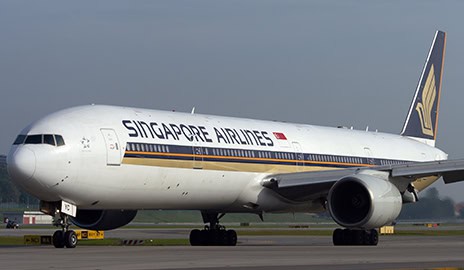
Image generated with Ai
Singapore Airlines and All Nippon Airways have been granted interim authorisation to plan a deeper commercial partnership covering passenger journeys between Australia and Japan. Through the proposed airline joint venture, greater Australia Japan travel connectivity, coordinated schedules and more seamless passenger services could eventually be delivered.
The interim decision has been issued by the Australian Competition and Consumer Commission as part of its continuing assessment of the proposed cooperation. Although an important regulatory step has been completed, the arrangement has not yet been cleared for full implementation. Planning and confidential discussions may be undertaken, but coordinated fares, schedules, capacity and sales cannot yet be introduced.
For travellers, the distinction remains critical. No immediate change to tickets, flight frequencies or available routes has been created by the interim authorisation. However, the regulatory development has brought Singapore Airlines and All Nippon Airways closer to a much wider partnership that could reshape one-stop and nonstop journeys linking Australian cities with destinations across Japan.
An interim authorisation has been provided so that preparatory discussions between Singapore Airlines and All Nippon Airways can be conducted while the substantive application is being considered. Legal protection has therefore been supplied for limited planning activity that might otherwise raise concerns under Australian competition law.
Advertisement
Full commercial coordination has not been permitted at this stage. Joint fares cannot yet be launched for the Australian market. Flight schedules cannot be jointly controlled. Passenger inventory cannot be coordinated, and shared capacity decisions cannot be implemented.
The interim approval should therefore be regarded as a planning clearance rather than a final operational endorsement. Work may be undertaken behind the scenes, but passenger-facing changes must be withheld until a final determination has been issued.
Under the proposed joint venture, selected passenger revenue would be shared by Singapore Airlines and All Nippon Airways. Commercial decisions involving fares, schedules, sales, marketing, inventory and customer handling could also be coordinated.
A metal-neutral structure has been proposed. Under this model, less commercial importance would be attached to which partner physically operates an eligible flight. Revenue would instead be distributed under an agreed formula, allowing itineraries to be planned around passenger demand and network efficiency.
For travellers, greater flexibility could be created across the two airline systems. More journeys could be assembled by combining the Australian network of Singapore Airlines with the Japanese domestic and international network of All Nippon Airways.
Connections through Singapore Changi Airport could be timed more effectively. Transfers between eligible services could be made more convenient. Through check-in, baggage handling and passenger support could also be aligned more closely.
Nevertheless, those improvements remain prospective. They have not been introduced through the interim authorisation itself.
Limited direct overlap between the two airlines was identified by the Australian Competition and Consumer Commission. Singapore Airlines does not compete with All Nippon Airways through nonstop Australia–Japan services, reducing concerns that direct competition would be removed from key routes.
On the Sydney–Tokyo market, All Nippon Airways continues to be challenged by Qantas and Japan Airlines. On Perth–Tokyo, the convenience offered by a nonstop flight was considered materially different from a one-stop journey through Singapore.
Competition was also identified across connecting markets. Australian passengers travelling to Japanese cities such as Osaka, Nagoya, Fukuoka and Sapporo can be carried by several other airlines through regional hubs. Alternative journeys may be offered through Hong Kong, Seoul, Kuala Lumpur, Bangkok, Manila and Taipei.
As a result, competitive pressure is expected to remain present even if selected commercial activity between Singapore Airlines and All Nippon Airways is eventually coordinated.
The preliminary assessment does not indicate that every airline partnership will be approved. Instead, the specific route structure, limited nonstop overlap and presence of competing carriers have been examined.
Lower ticket prices have not been guaranteed by the draft determination or the interim authorisation. Although more fare combinations and coordinated products may eventually be offered, no conclusion has been reached that average fares will automatically be reduced.
Efficiencies could be created through joint network planning. Flights may be timed around connecting demand, duplicated commercial work may be reduced, and seats could be managed across a broader combined network. Those efficiencies might support more competitive travel products, but their effect on individual ticket prices would depend on demand, capacity, seasonality and competition.
Travellers should therefore avoid interpreting the decision as an immediate airfare announcement. Existing tickets, booking systems and independently determined commercial arrangements remain in place for the Australian market.
Any future joint fare would need to be introduced only after the required regulatory permissions had been secured.
However, the full increase was not accepted as an Australia-specific benefit by the Australian Competition and Consumer Commission. Many of those combinations could already be generated through the existing Singapore–Japan cooperation between Singapore Airlines and All Nippon Airways.
Even so, some improvements could still be delivered for Australian travellers. Better departure choices may be created, connections may be shortened, and journeys involving regional Japanese destinations may be simplified.
The strongest value may be experienced by passengers beginning trips outside Sydney and Perth. Travellers from Adelaide, Brisbane, Cairns, Darwin and Melbourne could be given more coordinated one-stop options through Singapore, while access to the domestic network of All Nippon Airways could be expanded.
Passenger handling has been included within the proposed areas of cooperation. Through check-in procedures could be improved, baggage tracing could be coordinated, and claims handling could be managed more consistently across eligible journeys.
Airport processes may also be aligned. Supporting information technology, staff training and customer assistance could be developed jointly. Greater consistency could consequently be provided when disruption, missed connections or baggage problems are experienced.
Loyalty arrangements may also be strengthened over time. Singapore Airlines operates KrisFlyer, while All Nippon Airways operates ANA Mileage Club. Enhanced reciprocal benefits have previously been pursued through the broader partnership, although specific new Australian benefits have not been confirmed by the interim decision.
Corporate travel programmes could also be aligned. Business travellers requiring flexible schedules across Australia, Singapore and Japan may eventually be offered a more unified network proposition.
Consultation must be completed before a final decision can be issued. Submissions from travellers, competitors, airports, tourism organisations and other interested parties may be considered by the Australian Competition and Consumer Commission.
The regulator may confirm the proposed five-year authorisation, impose conditions, modify the permitted conduct or refuse final approval. Interim authorisation may also be revoked if circumstances change.
Until a final determination takes effect, implementation must remain restricted. Singapore Airlines and All Nippon Airways may prepare for possible cooperation, but coordinated products cannot be offered to travellers merely because the draft decision has been released.
For the travel sector, the development carries strategic significance. Australia, Singapore and Japan are being connected through increasingly integrated airline networks. Tourism flows, stopover demand and regional connections could be supported if the partnership is ultimately authorised.
However, the immediate outcome remains procedural. Planning has been enabled, while implementation continues to await final regulatory clearance.
[Source:- ch-aviation]
Image Credit:- Singapore Airlines
Advertisement
Advertisement
Advertisement












Thursday, September 3, 2026

Thursday, September 3, 2026

Thursday, September 3, 2026

Thursday, September 3, 2026

Wednesday, September 2, 2026

Wednesday, September 2, 2026

Thursday, September 3, 2026

Thursday, September 3, 2026



