
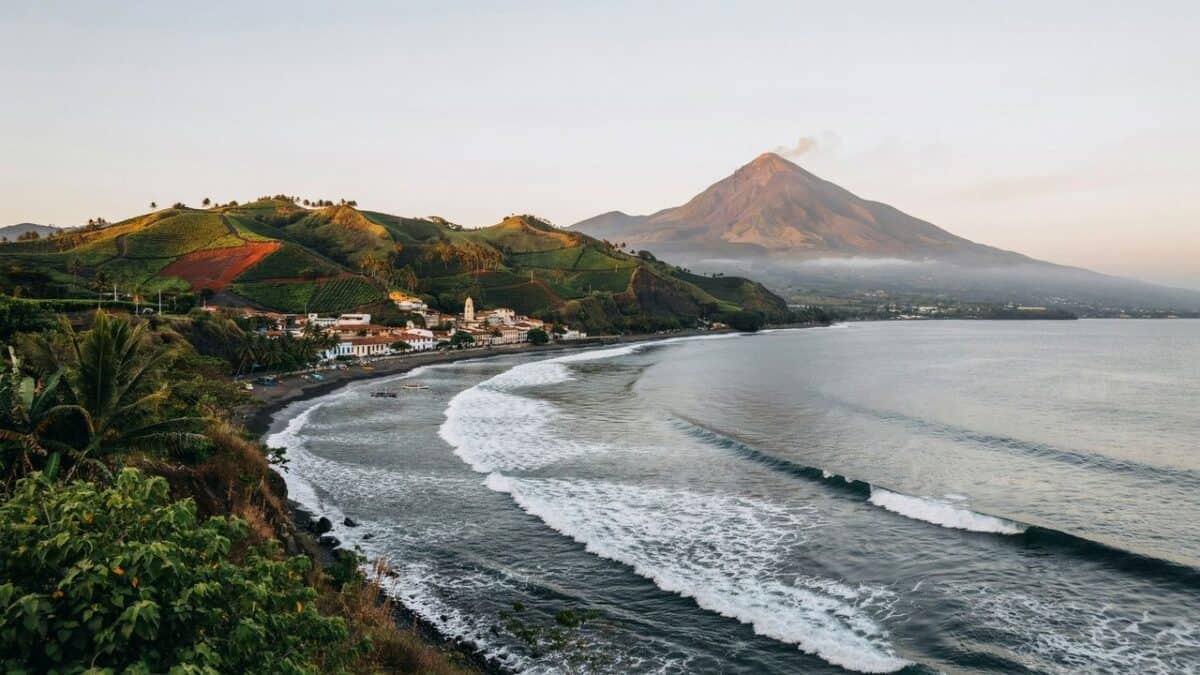
Image generated with Ai
El Salvador is becoming one of Central America’s most exciting travel destinations because it offers many different experiences in a small space. Visitors can surf on the Pacific coast, see a volcanic lake, walk through colourful mountain towns, learn about Maya history and enjoy fresh local food in one journey. The country is not just a beach break or a stop between bigger destinations. It is a complete holiday choice for travellers who want nature, culture, adventure and local life.
The country’s tourism offer is built around Surf City, nature, cities, archaeological parks and wellness experiences. Its compact size is a major strength. Travellers do not need long internal flights to move from the coast to volcano country. A morning can begin near the Pacific Ocean and end beside a crater lake or in a cool coffee-growing village. This easy movement gives El Salvador a strong advantage for short breaks and multi-stop Central American travel.
Surf City is the best-known part of El Salvador’s tourism story. The Pacific coastline includes surf and beach communities such as El Tunco, El Sunzal, El Majahual, San Blas and San Diego. These places attract experienced surfers, beginners, young travellers and visitors looking for a sunny coastal stay.
El Tunco is the most recognised name for beach nightlife, surf lessons and a social travel atmosphere. It suits visitors who want busy restaurants, accommodation choices and easy access to the water. El Sunzal is also important for surf travellers. The coastline has helped make El Salvador more visible on the global surf map.
However, the best travel story goes beyond the surfboard. The coast can become the start of a larger journey. Visitors can spend the morning in the water, enjoy seafood for lunch and then travel inland for volcano views, coffee experiences or heritage sites. This gives El Salvador a travel style that is fast, flexible and full of contrast.
Advertisement
Western El Salvador offers one of the country’s most powerful nature experiences. Santa Ana Volcano, also called Ilamatepec, is part of the Los Volcanes complex. The volcano has a crater and wide views across the surrounding landscape. It is a popular choice for visitors who want a guided outdoor adventure.
Nearby Lake Coatepeque gives the region a softer and calmer mood. This blue volcanic caldera lake is popular for views, relaxation and water activities such as kayaking. The lake and volcano can be combined into one memorable travel day. A visitor can explore the mountain landscape and later enjoy peaceful water views.
Cerro Verde Nature Park adds another layer to this area. Its viewpoints look towards Lake Coatepeque, nearby volcanoes and towns in the distance. Together, Santa Ana Volcano, Cerro Verde and Lake Coatepeque give El Salvador a strong “volcano and water” tourism identity. It is a destination for people who want more than sand and sea.
Visitors should always check current access rules, weather conditions and guide requirements before attempting a volcano hike. Using a registered local guide is the safer and more responsible choice.
El Salvador has one UNESCO World Heritage site, and it offers a very different kind of history. Joya de Cerén is an archaeological site in La Libertad. It was once a pre-Hispanic farming village. A volcanic eruption covered the settlement in ash during the seventh century AD.
The site is important because it shows everyday life. It is not only about giant pyramids, kings or temples. Joya de Cerén helps visitors understand how ordinary Maya families lived, farmed, stored food and built their homes. This makes the place deeply human and easy to connect with.
Travellers can pair Joya de Cerén with San Andrés Archaeological Park, which was a larger pre-Hispanic centre. They can also visit Tazumal in Chalchuapa, where Maya structures, temples and a ball court remain. Casa Blanca Archaeological Park adds another cultural link through traditional indigo dyeing.
This heritage circuit gives El Salvador a special tourism angle. It connects ancient history with living crafts, local food and volcanic landscapes. It also helps travellers move beyond the idea that Central American archaeology is found only in neighbouring countries.
Advertisement
Advertisement
The Ruta de las Flores is one of El Salvador’s most attractive road-trip experiences. It crosses the western highlands between Sonsonate and Ahuachapán. The route is known for coffee farms, mountain views, small towns, crafts, food and nature.
Ataco is loved for colourful streets, murals and artisan shops. Apaneca offers a highland setting and coffee-country feel. Juayúa attracts food-loving visitors and gives access to nearby natural areas. Nahuizalco, Salcoatitán and Ahuachapán each add their own local character.
Coffee is a major part of this route, but the experience should not be limited to a short tasting. The real appeal is the journey between villages, farms, markets and viewpoints. Visitors can learn how coffee shapes the landscape and supports local livelihoods. They can also spend money with small businesses rather than staying only in large resorts.
The Ruta de las Flores works well for couples, families, food travellers and people who enjoy gentle adventure. It is also a strong choice for tourists seeking cooler temperatures after time on the coast.
Suchitoto offers a quieter side of El Salvador. The town is known for colonial-style streets, cultural activity and its setting near Lake Suchitlán. It suits visitors who want to walk slowly, see art, eat local food and stay in a place with a strong sense of history.
The town also gives travellers a chance to discover añil, known in English as indigo. This natural blue dye has an important place in local craft traditions. Workshops and artisan experiences can help visitors understand the skills behind the textiles and handmade goods they see.
Suchitoto is ideal for a slower overnight stop after a busy coast or volcano itinerary. Its value lies in its atmosphere. It lets travellers spend time with art, craft and local stories instead of rushing between famous sights.
El Salvador’s eastern coast deserves more attention. El Cuco, Punta Mango, San Miguel, the Gulf of Fonseca and Conchagua Volcano appear in the official Wild East itinerary. This region offers a more rural and quieter alternative to the busiest surf communities.
Los Cóbanos is another valuable coastal destination. It is promoted for diving around its volcanic reef, where visitors can see marine life and shipwrecks. Barra de Santiago offers mangrove and estuary experiences. These places can support more responsible marine and nature tourism when visitors use knowledgeable local guides and respect wildlife.
El Salvador’s tourism future does not depend on one beach or one town. Its strongest promise is variety. Surf City may bring visitors in, but volcanoes, Maya history, coffee routes, crafts, lakes and quieter coastlines give them reasons to stay longer and return.
Advertisement
Advertisement
Advertisement
Advertisement
Advertisement













Saturday, September 5, 2026

Friday, September 4, 2026
Saturday, September 5, 2026

Saturday, September 5, 2026

Thursday, September 3, 2026

Wednesday, September 2, 2026

Saturday, September 5, 2026

Saturday, September 5, 2026


