
Image generated with Ai
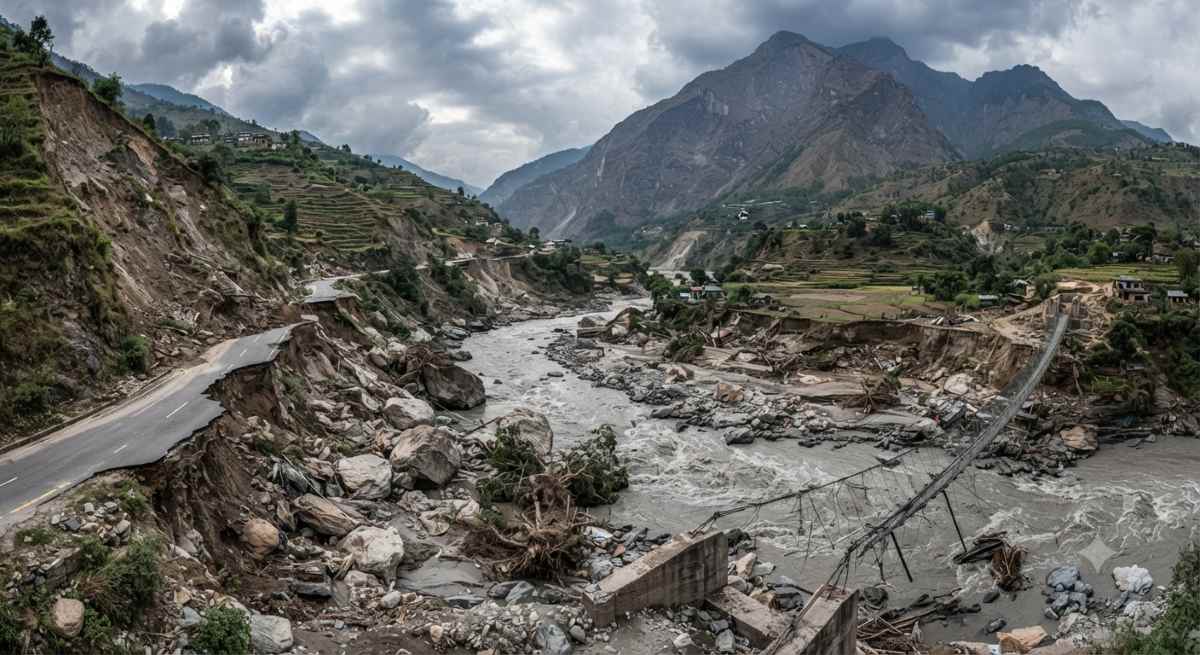
The Himalayan nation of Nepal has long been recognized for its majestic peaks, deep valleys, and rich cultural heritage, yet the region remains exceptionally vulnerable to environmental shifts. Recently, a catastrophic event unfolded along the border area between Nepal and China, where a massive climate change phenomenon manifested as a sudden glacial collapse.
This destructive occurrence unleashed an overwhelming volume of water and debris down steep river valleys, severely impacting local communities and critical transport routes. Scientific assessments indicate that the area is warming at an accelerated pace compared to other parts of the world, largely driven by human activities. Consequently, extreme weather episodes, including unseasonal heavy downpours, rapid ice melt, and unexpected avalanches, have transformed the topography of the region, creating unprecedented hazards for inhabitants and visitors alike.
The sudden nature of the disaster caught numerous tourists, workers, and pilgrims completely unawares, leading to a massive mobilization of international and local rescue operations. Many foreign nationals, including travelers from India, the United States, Australia, Britain, and Canada, were reported missing while journeying through remote trekking circuits or participating in traditional pilgrimages toward sacred sites such as Mount Kailash.
Transportation networks suffered extensive damage, with numerous bridges swept away and vital roadways blocked by thick layers of mud and rock. Travel itineraries were abruptly halted, leaving tourists stranded in isolated pockets while embassies and international bodies scrambled to account for the safety of their citizens. The psychological and physical toll on visitors highlights the unpredictable dangers of undertaking journeys in high-altitude environments during periods of heightened environmental instability.
Advertisement
Advertisement
Experts in disaster risk reduction and environmental science point out that traditional risk assessment models are no longer sufficient for managing tourism and infrastructure in the Hindu Kush Himalaya region. According to specialized research groups, the rate of glacial ice loss has doubled over recent decades, escalating the frequency of catastrophic outbursts and debris flows.
Organizations focused on resilient infrastructure emphasize that billions of dollars in economic assets—including hydropower installations, roads, and hospitality facilities—are at continuous risk unless comprehensive adaptation strategies are implemented. Tourism boards and local authorities are being urged to integrate advanced early-warning systems, real-time satellite tracking, and climate-resilient engineering into future development plans to safeguard both local livelihoods and the international tourism economy.
Navigating high-risk mountainous terrain requires rigorous adherence to safety precautions, especially as climate volatility increases the frequency of natural disasters.
Dos for Travellers:
Don’ts for Travellers:
Travelers planning journeys to Nepal are advised to secure comprehensive travel insurance policies that specifically cover emergency medical evacuation, natural disasters, and trip interruptions. Communication can often be disrupted in remote mountain districts, making it essential to carry physical copies of emergency contacts, passport details, and insurance credentials.
Liaison with established trekking agencies that prioritize safety protocols and maintain active communication lines with regional authorities is strongly recommended. Furthermore, visitors should remain flexible with their travel schedules, allowing ample buffer time for unforeseen road closures or flight suspensions caused by sudden weather shifts.
In comparison to historical protocols that primarily focused on post-disaster relief and temporary reconstruction, modern frameworks emphasize proactive resilience and preemptive risk mitigation. Past policies often treated environmental disruptions as isolated anomalies, leading to the repeated rebuilding of vulnerable infrastructure in hazardous zones without adequate adaptation measures.
Contemporary strategies, supported by international funding mechanisms such as the United Nations climate loss and damage funds alongside regional coalitions, increasingly prioritize climate-resilient engineering, community-based early warning networks, and the strategic relocation of critical infrastructure to protect human lives against accelerating environmental threats.
Advertisement
Advertisement
Advertisement













Saturday, September 5, 2026

Friday, September 4, 2026

Saturday, September 5, 2026

Saturday, September 5, 2026

Thursday, September 3, 2026

Wednesday, September 2, 2026

Saturday, September 5, 2026

Saturday, September 5, 2026


