
Sweden Launches Introvert Travel Agency, Offering Quiet Escapes With No Small Talk

Published
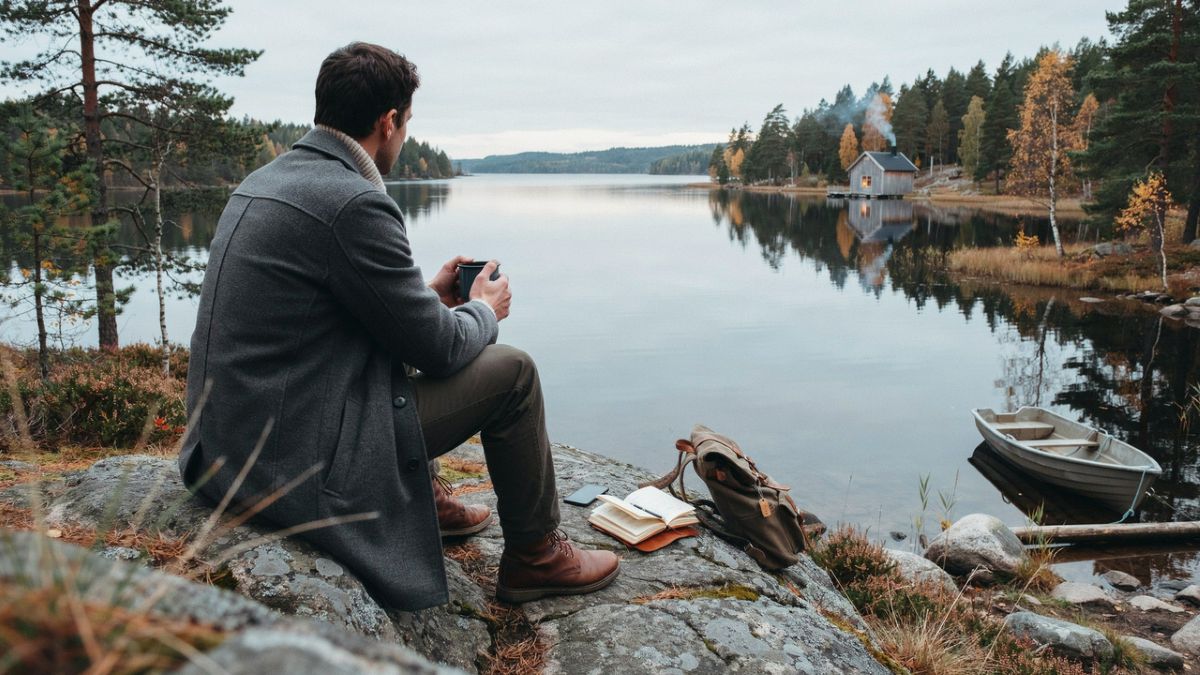
Image generated with Ai
Sweden is putting a different idea of a holiday at the centre of its latest tourism campaign: the freedom to travel without feeling obliged to constantly talk, socialize or follow a packed itinerary. On September 29, 2026, Visit Sweden launched The Introvert Travel Agency, a new tourism concept designed around personal space, lower social pressure and independent exploration.
For travelers who have returned from a holiday feeling like they need another holiday to recover, the idea may sound familiar. Instead of filling every hour with group excursions, busy attractions and conversations with strangers, the Swedish concept encourages visitors to experience the destination at their own pace.
Advertisement
Advertisement
Sweden Builds a Tourism Concept Around Personal Space
The new service allows travelers to explore curated Swedish trips and experiences centered on quieter forms of tourism. These include island escapes, nature stays, self-guided city experiences and accommodations designed to provide a calmer environment.
The campaign does not suggest that introverts want to avoid people altogether. Instead, its central idea is giving travelers greater control over when they interact with others and when they retreat into their own space.
Advertisement
Advertisement
That distinction is important as the travel industry increasingly looks beyond traditional sightseeing and towards experiences designed around individual preferences.
New Research Highlights Demand for Quieter Travel
Visit Sweden commissioned YouGov to examine how people approach social interaction while traveling. The research covered 9,212 adults aged 18 and above across Denmark, Finland, France, Germany, the Netherlands, Norway, Sweden, the United Kingdom and the United States.
Advertisement
Advertisement
The findings point toward a sizeable audience for lower-pressure travel. Across the research, 41% of respondents identified as introverts, while another 45% described themselves as a mixture of introvert and extrovert.
The UK showed particularly strong interest in the profile targeted by the campaign, with 48% of respondents identifying primarily as introverted. In the United States, 44% identified as introverts and 45% as a combination of both.
Advertisement
Advertisement
Travelers Are Looking for More Control Over Their Holidays
The research also examined what travelers actually want from their accommodation and holiday experience.
In the United States, 57% of respondents said they often or always look for calm accommodations, while 48% prioritize having time to themselves during travel. In the UK, 79% said they feel recharged after spending time alone, while 72% said social situations can become draining after a while.
The research also found that half of respondents in both the US and UK sometimes feel they need a “vacation from their vacation” to recover after traveling.
For the tourism industry, those findings point toward a broader demand for holidays that leave room for rest rather than turning every day into a checklist of activities.
Advertisement
Advertisement
Sweden’s Nature Makes the Concept Possible
Sweden has a natural advantage when promoting this style of tourism. The country offers extensive forests, lakes, islands, coastlines and countryside where travelers can spend time away from dense urban environments.
Another important element is Sweden’s right of public access, known as allemansrätten. According to Sweden’s Environmental Protection Agency, this allows people to enjoy much of the country’s outdoors, including hiking and other recreational activities, provided they respect nature, wildlife, landowners and other visitors.
The right does not mean visitors can enter private areas without restriction. Travelers must observe rules concerning homes, cultivated land, sensitive environments and responsible outdoor behavior.
For independent travelers, however, the system provides an important framework for exploring Sweden’s natural landscapes without requiring every experience to be organized around a group.
Even Swedish City Travel Can Be Taken Slowly
The campaign also presents solitude as something that can exist within cities.
A traveler can sit alone in a café, visit museums independently, walk through neighborhoods or spend time near Sweden’s waterways without needing to turn every activity into a social experience.
Advertisement
Advertisement
The country’s fika culture also offers an interesting contrast. Coffee and something sweet can be enjoyed socially, but taking a quiet break alone is equally compatible with the idea of slowing down.
This gives Sweden an opportunity to market introvert-friendly tourism without reducing the country to remote wilderness alone.
London, Paris and Berlin Will Host the Campaign
The Introvert Travel Agency will exist online while also appearing as a physical pop-up experience in three European cities.
The campaign is scheduled to visit Berlin from October 14 to 17, followed by Paris from October 21 to 24 and London from October 28 to 31, 2026.
At these locations, travelers can explore Swedish destinations and experiences and receive personalized travel consultations in spaces designed around the campaign’s quieter approach.
Visitors outside these cities will also be able to explore the concept online through Visit Sweden.
Advertisement
Advertisement
A Wider Shift Toward Slower Tourism
The launch comes as destination marketers increasingly look at travel fatigue, overtourism and crowded itineraries as issues affecting the visitor experience.
Sweden has already used previous campaigns to promote its islands, nature and slower forms of travel. The introvert campaign builds on that positioning by turning personal space itself into part of the tourism proposition.
Rather than asking travelers to see as much as possible, the message is closer to allowing them to decide what they actually want from their trip.
Sweden’s New Message to Travelers
For some visitors, the appeal of Sweden may not be another packed itinerary or another long list of attractions. It may simply be the ability to wake up, step outside, find a quiet place and spend the day without being expected to constantly participate.
That is ultimately what makes the campaign notable. Sweden is not just promoting a destination; it is promoting a particular way of traveling—one where solitude, silence and personal choice can be part of the holiday rather than something travelers have to escape to find.
Advertisement
