
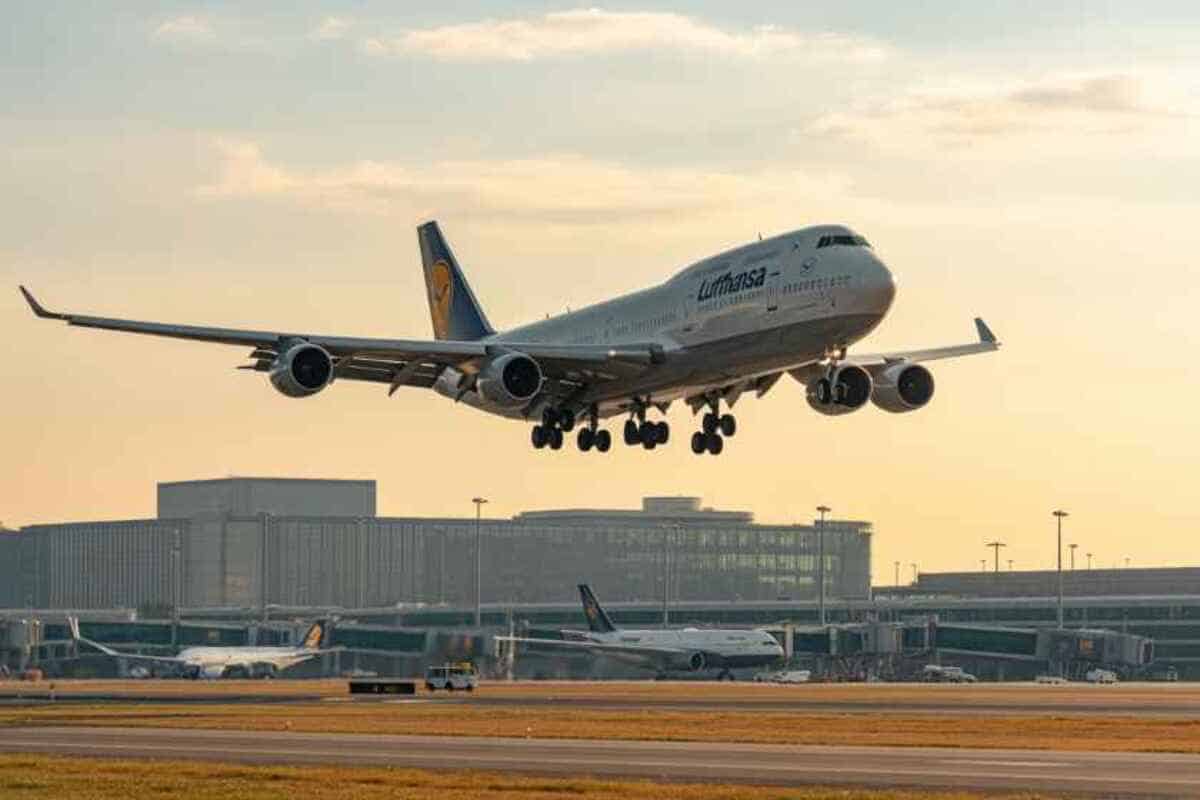
Image generated with Ai
Lufthansa and more airlines are driving a New Distribution Capability shift, as the travel industry reinvents airline retailing with smarter technology, richer offers and a new era of digital booking.
Lufthansa and more airlines are driving a major New Distribution Capability shift as the travel industry reinvents airline retailing at remarkable speed. First, airlines want richer content and smarter distribution. Meanwhile, technology is transforming how fares, seats and ancillary products reach customers. Therefore, NDC is becoming a powerful force across global travel and tourism. Lufthansa, Emirates, Qatar Airways and Singapore Airlines are among carriers advancing modern distribution strategies. However, this transformation goes beyond technology alone. It is changing competition, customer choice and airline partnerships. As a result, travel sellers face a rapidly evolving retail landscape where personalised offers and digital connectivity increasingly shape airline retailing.
Major airlines worldwide are accelerating the adoption of New Distribution Capability, or NDC, to deliver richer content, more personalised offers, dynamic pricing and improved access to airline products, reshaping how the global travel and tourism industry sells and services flights.
Airlines across Europe, the Middle East and Asia-Pacific are steadily moving towards NDC-based distribution, with Lufthansa Group, Emirates, Qatar Airways and Singapore Airlines among carriers that have publicly documented their work on modern airline retailing, direct connectivity and richer digital distribution for the travel industry.
Advertisement
The shift matters not only to airlines and travel agencies, but also to corporate travellers and the wider tourism economy, because the technology is designed to improve how air products are displayed, priced, bundled, booked and serviced across multiple channels.
Lufthansa and more airlines are accelerating the New Distribution Capability shift across global travel, transforming how fares, products and services are distributed. NDC is helping airlines pursue richer content, personalised offers and stronger digital connectivity as airline retailing moves beyond traditional distribution systems. Emirates, Qatar Airways and Singapore Airlines are also advancing modern distribution strategies, signalling a wider transformation across international aviation. The change affects airlines, travel agencies, corporate buyers and tourism businesses as technology reshapes booking, pricing, ancillary sales and customer choice. As digital retailing expands, New Distribution Capability is becoming an increasingly important force behind the future of global airline distribution and travel.
Lufthansa Group has positioned NDC at the centre of its distribution strategy, with official announcements covering NDC distribution through major technology and travel retailing partners, including agreements involving Lufthansa, SWISS, Austrian Airlines, Brussels Airlines and Air Dolomiti. Its partnerships have enabled the distribution of NDC content through major platforms while supporting broader efforts around continuous pricing, ancillary services and modern airline retailing for customers across the global travel market.
The group’s NDC strategy has continued to evolve, and in August 2025 Lufthansa Group said NDC remained central to its global distribution strategy, while selected Economy Class fares from Singapore to certain joint-venture home markets became available exclusively through NDC or direct channels from September 2025. This development demonstrates how airline distribution is increasingly becoming a strategic part of the customer proposition, potentially influencing how travel agencies, corporate travel buyers and tourism businesses access fares and airline products.
Corporate travel remains resilient, artificial intelligence is becoming an increasingly important part of the customer journey, and network expansion continues to shape future growth plans at Lufthansa Group, according to Frank Naeve, SVP Global Markets & Stations at Lufthansa Group.
Speaking exclusively with Travel And Tour World during day two of the GBTA Conference in Chicago, Naeve discussed the airline group’s outlook for business travel, its focus on distribution and NDC, the potential of AI across the travel journey, and opportunities to strengthen connectivity between North America, Europe and emerging markets.
According to Naeve, GBTA 2026 Chicago remains one of the most important events in Lufthansa Group’s annual calendar because it brings together customers, partners and other stakeholders from across the corporate travel ecosystem.
He said the conference provides a valuable opportunity for the airline group to engage directly with the business travel community and gather feedback from customers.
For Lufthansa Group, the event in Chicago also offers an important platform to understand evolving corporate travel expectations while strengthening relationships across the wider industry.
Naeve said corporate travel continues to demonstrate resilience, with Lufthansa Group seeing healthy demand from business travellers.
The group is closely monitoring its network to ensure that the destinations it serves continue to match customer demand. Alongside network planning, Lufthansa Group is also introducing new products and focusing on distribution capabilities designed to create value for corporate customers.
Naeve highlighted the role of New Distribution Capability, or NDC, as an important part of this strategy. The focus is on ensuring that Lufthansa Group’s distribution approach can respond to changing customer requirements and support the needs of the corporate travel sector.
Artificial intelligence is one of the major technology areas being explored by Lufthansa Group, although Naeve stressed that the subject covers a broad range of possibilities.
The group is examining the customer journey from end to end, with particular attention being given to the search and booking process. Lufthansa Group is exploring how AI can be used in practical ways to improve this experience for customers, including corporate travellers, working alongside its partners.
Servicing is another important area of focus. Naeve said Lufthansa Group believes AI will play an important role in improving the servicing experience, while access to inventory is also being examined as part of the wider technology and distribution strategy.
Rather than presenting AI as a single solution, the approach described by Naeve centres on identifying concrete areas across the travel journey where the technology can improve the experience.
Lufthansa Group is continuing to adapt its network according to changing demand patterns, with North America expected to remain a central part of its network in the years ahead.
Naeve said the North American market will continue to serve as a backbone for Lufthansa Group, while the company is simultaneously investing in new markets and looking for opportunities to provide a broader network for customers.
As one example of this expansion, he said Lufthansa Group will operate to Kuala Lumpur effective October. He did not provide further operational details during the interview.
The strategy reflects the group’s focus on maintaining strong connectivity in established markets while also pursuing opportunities in new destinations as demand evolves.
Naeve emphasised the importance of direct customer feedback, particularly at major industry events such as GBTA.
He said Lufthansa Group believes its position as the fourth-largest airline group in the world enables it to address a wide range of customer needs, but customer engagement remains essential to understanding how those needs continue to change.
The feedback received from customers and industry partners during the conference can therefore play an important role in shaping the group’s future approach to products, services, technology and connectivity.
As the GBTA Conference continued in Chicago, Lufthansa Group’s message was clear: corporate travel demand remains resilient, North America continues to be strategically important, and the company is focusing on technology, distribution and network development to respond to the changing expectations of business travellers.
For Naeve, the conference is ultimately about connecting directly with the people Lufthansa Group serves and using those conversations to support its continued evolution across the global corporate travel market.
Emirates has developed the Emirates Gateway as a suite of connectivity options for trade partners, with the airline confirming that the platform was developed using IATA’s NDC standards to provide access to rich content and services. The Dubai-based carrier said the technology was intended to address limitations in legacy distribution systems and create a more flexible environment in which new products and services could be developed and delivered to travel partners.
For the wider travel and tourism sector, this approach illustrates why airlines are investing in NDC: traditional distribution systems were largely built around standardised product displays, while modern retailing increasingly requires airlines to present differentiated products and services across digital channels. Emirates’ strategy therefore reflects a broader airline industry effort to give sellers and customers access to more detailed content while improving the ability to develop new retail propositions.
Qatar Airways launched Oryx Connect as its NDC programme for trade partners, building the platform around IATA’s NDC data transmission standard and giving travel agencies access to richer content, tailored travel options and ancillary products. The airline has continued developing the programme, with its official trade portal showing connectivity through multiple aggregators and access to fare families, baggage, seat selection and other capabilities for participating travel partners.
The airline has also moved NDC into areas such as dynamic pricing, announcing a phased global rollout in 2024 that made additional price points for flights and selected ancillaries accessible through its NDC programme, while its current trade information confirms continued NDC development and support. Qatar Airways says NDC access is available across all markets, demonstrating how the technology is becoming an operational distribution channel rather than merely an experimental digital project within global travel and tourism.
Singapore Airlines publicly announced its first NDC connection with Skyscanner in 2018, allowing customers to book Singapore Airlines flights through a more direct connection rather than being referred elsewhere to complete the transaction. The airline said the NDC standard could help address limitations in existing inventory distribution by creating a more agile and efficient system and improving the offering available to customers booking through third-party channels.
This early move highlighted a major objective behind NDC adoption across the airline industry: narrowing the gap between what customers can see on an airline’s own digital channels and what is available through external travel sellers. As online travel, corporate booking and international tourism continue to depend on increasingly complex digital ecosystems, direct and standardised connectivity can become an important tool for improving consistency in airline product distribution.
The airline-by-airline evidence shows that NDC is being used for several interconnected objectives, including richer product content, more personalised retailing, ancillary services, dynamic pricing, direct connectivity and wider access through travel technology platforms. The scale of activity across major international airlines suggests that NDC has become an important component of the industry’s longer-term transition towards modern airline retailing, with implications for travel agencies, corporations, technology providers, business travel and global tourism.
“The global move towards New Distribution Capability represents a positive transformation for the travel and tourism industry, because airlines are increasingly investing in technology that can make booking more intelligent, product information richer and customer choice more transparent. Lufthansa Group, Emirates, Qatar Airways and Singapore Airlines demonstrate that modern airline retailing is becoming a practical commercial priority rather than a distant ambition, while stronger digital connectivity can help travel agencies and corporate buyers access more relevant offers. As these systems mature, NDC has the potential to support a more flexible, innovative and customer-focused future for international travel and tourism.” — Anup Kumar Keshan, Editor-in-Chief, Travel And Tour World. \
The cause behind the New Distribution Capability revolution is the airline industry’s need to move beyond traditional distribution systems and create more flexible digital retailing. The answer is increasingly clear: NDC gives airlines greater ability to distribute richer content, personalised offers and additional products across connected travel channels. The reason airlines are investing is commercial as well as technological, because modern travellers and tourism businesses expect faster access to relevant choices and better product information. Lufthansa and more global airlines are therefore expanding NDC capabilities to strengthen connectivity, support modern retailing and improve distribution. Ultimately, this shift reflects changing customer expectations and the industry’s digital transformation.
Lufthansa and more major airlines are pushing New Distribution Capability from an industry concept into an increasingly important part of airline retailing. The transformation is changing how airlines distribute fares, services and richer product content across the global travel ecosystem. Technology partners, travel agencies and corporate buyers are becoming increasingly important participants in this evolving distribution model. As airlines develop personalised offers, dynamic pricing and stronger digital connectivity, the potential impact on travel and tourism could continue to grow. The direction is clear: airline retailing is becoming more digital, flexible and customer-focused, with NDC playing an increasingly significant role in its future.
New Distribution Capability, commonly known as NDC, is an IATA-developed industry standard designed to improve digital communication and product distribution between airlines and travel sellers. It can support richer airline content and more flexible retailing across travel channels.
Official airline information confirms significant NDC activity at Lufthansa Group, Emirates, Qatar Airways and Singapore Airlines, with each carrier or group using NDC-based connectivity or distribution initiatives in different ways. Their programmes range from travel trade connectivity and richer content to dynamic pricing and direct booking connections.
NDC can enable airlines and travel sellers to present more detailed fare options, ancillary products and other services through connected channels, although the precise customer experience depends on the airline, travel agency and technology platform involved. For travel and tourism consumers, the long-term objective is generally to create more flexible and information-rich booking experiences.
Corporate travel depends heavily on access to airline content through agencies, booking tools and technology platforms, making distribution connectivity particularly important for corporate buyers and travel managers. Lufthansa Group’s NDC strategy, including agreements with major distribution partners, illustrates how NDC is increasingly relevant to the business travel ecosystem.
The official airline announcements indicate an ongoing transition rather than an immediate universal replacement, with some airlines continuing to maintain traditional distribution alongside NDC-based channels. Lufthansa Group, for example, has described arrangements in which existing EDIFACT content remains available while NDC content is added through newer distribution interfaces.
Advertisement
Advertisement
Advertisement













Saturday, September 5, 2026

Friday, September 4, 2026

Saturday, September 5, 2026

Friday, September 4, 2026

Thursday, September 3, 2026

Wednesday, September 2, 2026

Friday, September 4, 2026



