
Bermuda Cruise Travel Sees Busy Port Window Across Dockyard and Hamilton as St George’s Ferry Capacity Grows

Published
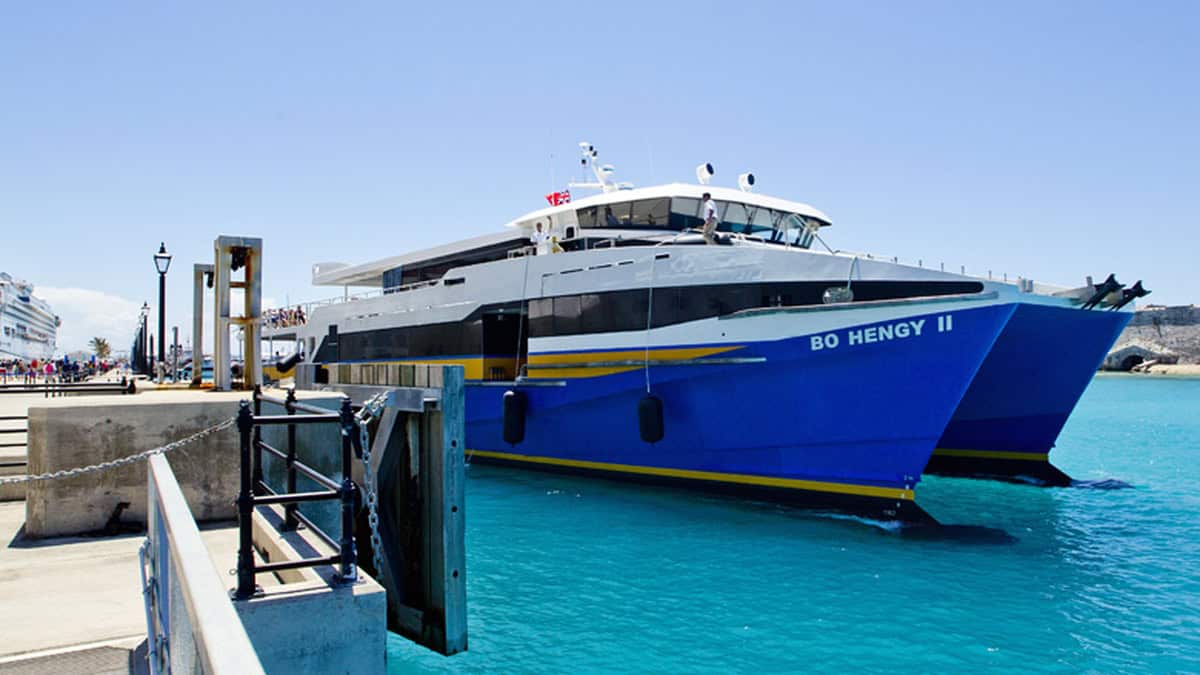
Bermuda is approaching an unusually revealing cruise-transport test. On 5 November, three cruise ships are scheduled to be in Bermuda simultaneously for five-and-a-half hours, occupying Heritage Wharf, King’s Wharf and Hamilton. The convergence comes after first-half cruise arrivals rose 11.5% to 235,179 and after Bermuda increased round-trip ferry capacity between Royal Naval Dockyard and St George’s by 133%. The combination will test whether upgraded maritime transport can spread cruise visitors more effectively beyond Dockyard while preserving reliable return journeys to ships.
Bermuda’s Cruise Challenge Is Shifting From Attracting Ships to Moving Their Passengers
Bermuda’s 2026 cruise story increasingly concerns what happens after passengers step ashore.
According to the Bermuda Tourism Authority’s latest published tourism measures, 235,179 cruise arrivals were recorded during the first half of 2026, up 24,232, or 11.5%, from 210,947 during the corresponding 2025 period. Second-quarter cruise traffic alone reached 217,485 visitors, increasing 10.1%.
That growth has major implications for ground and water transport. BTA recorded 299,367 total leisure visitors during the first half, of whom 235,179 arrived by cruise. Calculated from those official totals, cruise passengers represented approximately 78.6% of Bermuda’s first-half leisure visitation. This is why transport capacity between Dockyard, Hamilton and St George’s is not a peripheral public-transport issue. It is increasingly part of Bermuda’s core cruise infrastructure.
Advertisement
Advertisement
Official cruise-call forecasts have also remained fluid, which makes passenger management more useful than simply concentrating on annual ship totals.
| 2026 cruise indicator | Official position | Why it matters to the travel trade |
|---|---|---|
| Initial deployment outlook | 199 calls and an estimated 575,000 passengers were included in 2026 deployment bookings in the December 2024 government outlook. | Bermuda was planning transport infrastructure for materially larger cruise volumes well before the current season. |
| March 2026 operating outlook | 194 cruise calls were expected from March through November, weather permitting. | Ferry expansion was explicitly connected with increasing cruise traffic. |
| April 2026 snapshot | The season began with 194 calls, gained another call, then four weather diversions left 191 on the schedule at that point. | Call counts remain operationally fluid and cannot be treated as fixed inventory. |
| Current 2026 schedule | Marine and Ports currently lists 193 projected visits, including 120 regular-caller visits. | The latest schedule is the more useful operational reference for agents. |
| First-half cruise arrivals | 235,179, up 11.5%. | Actual passenger growth raises pressure on ferries, tours and return-to-ship planning. |
| 2027 forward pipeline | 210 cruise calls are already scheduled. | Lessons from 2026 could become more important next season. |
Why 5 November Creates a Rare Three-Ship Cruise Dispersal Test
The most significant under-reported detail appears deep inside Bermuda’s current Marine and Ports cruise schedule.
Advertisement
Advertisement
On Thursday, 5 November, Celebrity Xcel is scheduled at Heritage Wharf from 08:00 until 15:30. Norwegian Breakaway is due at King’s Wharf from 09:00 on 5 November until 15:00 on 6 November. Seven Seas Mariner is scheduled at Hamilton 5/6 from 10:00 on 5 November until 16:00 the following day.
That creates a scheduled period from 10:00 until 15:30 on 5 November when all three vessels are simultaneously in Bermuda. In other words, the current timetable creates a five-and-a-half-hour window in which both principal Dockyard cruise berths and a Hamilton berth are occupied at the same time.
Advertisement
Advertisement
| Vessel | Arrival | Departure | Bermuda berth | Simultaneous period on 5 November |
|---|---|---|---|---|
| Celebrity Xcel | 08:00, 5 Nov | 15:30, 5 Nov | Heritage Wharf | 10:00–15:30 |
| Norwegian Breakaway | 09:00, 5 Nov | 15:00, 6 Nov | King’s Wharf | 10:00–15:30 |
| Seven Seas Mariner | 10:00, 5 Nov | 16:00, 6 Nov | Hamilton 5/6 | 10:00–15:30 |
All times and berth assignments above derive from the current official 2026 cruise schedule.
For cruise retailers and destination-management companies, the significant issue is not simply three ships being present. It is where passengers can be channelled during those overlapping hours.
St George’s 133% Ferry Expansion Becomes a Cruise Capacity Tool
According to the Government of Bermuda’s 2026 Summer Ferry Schedule announcement, direct Dockyard-to-St George’s service operates Monday through Saturday and increases round-trip ferry capacity to St George’s by 133%. The government connected the expansion specifically with cruise visitor access, higher passenger volumes, congestion management and increased economic activity in St George’s.
Thursday, 5 November is particularly relevant because the published Orange Route provides four Dockyard departures on Mondays, Wednesdays, Thursdays and Saturdays.
Advertisement
Advertisement
| Orange Route operational detail | Published 2026 schedule |
|---|---|
| Dockyard departures on Mon/Wed/Thu/Sat | 09:30, 11:30, 15:00, 17:00 |
| St George’s departures | 10:30, 14:00, 16:00, 18:00 |
| Tue/Fri Dockyard departures | 09:30, 11:30, 15:00 |
| Adult cash fare | $5 |
| Adult one-day transport pass | $19 |
| Accessibility | St George’s, Hamilton and Dockyard are listed as accessible stops |
| Operational qualification | Service remains subject to change |
This produces an important scheduling intersection on 5 November. During the five-and-a-half-hour period when all three cruise ships are due to be present, the Orange Route timetable includes 11:30 and 15:00 departures from Dockyard towards St George’s. That creates a practical mechanism for shifting part of Dockyard’s visitor concentration towards Bermuda’s East End, although actual passenger utilisation has not yet been published.
Bermuda has also added a visitor-experience layer to the route. According to the Bermuda Tourism Authority, a Visitor Ambassador Programme was introduced aboard the Orange Route in May 2026, supporting cruise and other visitors travelling from Dockyard to the historic town.
That destination is commercially important because St George’s is not simply another transport stop. UNESCO identifies the historic town, founded in 1612, and its related fortifications as a World Heritage property. Ferry-led dispersal therefore gives cruise sellers a way to convert transport capacity into a heritage-focused shore day rather than keeping spending concentrated around the West End.
Hamilton Gives Bermuda a Second Cruise Node During the November Convergence
Hamilton adds another dimension that makes the 5 November pattern unusual.
Seven Seas Mariner is scheduled to berth directly at Hamilton 5/6, while Celebrity Xcel and Norwegian Breakaway occupy the two Dockyard cruise facilities.
Hamilton is also directly connected with Royal Naval Dockyard through Bermuda’s Blue Route ferry network. The published summer timetable provides repeated weekday services between the two points, giving Bermuda a transport structure in which cruise activity can be distributed between the West End, the capital and St George’s rather than being treated as a single-port visitor flow.
Advertisement
Advertisement
That matters for shore-excursion planning. A destination that can disperse cruise traffic across several commercial and heritage zones potentially has greater scope to extend visitor dwell time and distribute tourism expenditure. Bermuda’s own Seatrade Cruise Global programme in April identified passenger time ashore, visitor spending, cultural connections and port infrastructure as priority areas for maximising cruise-call value.
December Exposes a Different Late-Season Transport Risk for Cruise Sellers
There is another detail travel agents should not overlook.
The current Marine and Ports schedule no longer ends with November traffic. It lists Norwegian Pearl at King’s Wharf from 10:00 on 20 December until 15:00 on 21 December, operating from and back to Philadelphia. The current schedule therefore extends Bermuda’s 2026 cruise activity beyond the March-to-November planning window referenced when the expanded ferry service was announced.
However, Bermuda Tourism Authority’s 2026 visitor transport information identifies ferry service to St George’s as operating from April to November.
That creates a clear travel-trade distinction. The 133% St George’s ferry increase is highly relevant to the November cruise convergence, but agents should not assume that December cruise passengers will receive the same direct Dockyard-to-St George’s service. Any December shore programme should be built against the timetable actually in force at the time and should retain alternative land-transport options.
Bermuda Has Invested Beyond Ferries to Prepare for Larger Cruise Traffic
The passenger-distribution strategy sits alongside substantial cruise infrastructure investment.
Advertisement
Advertisement
The Government of Bermuda awarded a $19.5 million contract for two new 40-metre fast ferries, each designed for 550 passengers. Government specifications state that the new vessels should reduce carbon dioxide emissions by approximately 25% per passenger-mile against the high-speed ferries they replace. They also include wheelchair spaces, Wi-Fi readiness and Shorelink-compatible fare infrastructure.
At Dockyard, King’s Wharf was also designated for a 200-foot extension, comprising 100 feet on either side of the terminal building. The infrastructure programme was designed to bring the pier into line with Heritage Wharf and improve larger-vessel handling and passenger embarkation and disembarkation.
Taken together, the investment is significant: Bermuda has been expanding both the infrastructure that receives cruise ships and the transport system that moves their passengers once ashore.
What the New Data Reveals Beyond the Original Ferry Announcement
The deeper industry issue is that cruise-port capacity and destination capacity are not the same thing.
A destination may accommodate more vessels at its berths yet still lose economic value if visitors remain concentrated within walking distance of the terminal, encounter overloaded transport, abandon distant excursions or face return-to-ship uncertainty. Bermuda’s November schedule provides an unusually clear real-world test of the opposite model.
On 5 November, two vessels are scheduled at Dockyard while another is positioned directly in Hamilton. At the same time, the enhanced Orange Route offers scheduled movement from Dockyard towards St George’s. This effectively creates three different cruise-tourism zones: the West End arrival hub, the capital and the historic East End.
Advertisement
Advertisement
The critical metric will therefore not be the number of ferries alone. The more revealing measures would be how many cruise visitors use the St George’s service, whether return capacity matches outbound demand, how passenger traffic changes around Dockyard during peak overlap, and whether businesses outside the West End capture a greater proportion of cruise activity.
Those measurements have not yet been published. That is precisely why 5 November deserves attention as an operational benchmark rather than another routine port-call date.
Critical Operational Takeaways for Travel Agents and Tour Operators
- Build 5 November excursions around berth-specific timings. Three ships are currently scheduled to overlap between 10:00 and 15:30, so transport demand should not be assessed from a single vessel in isolation.
- Use the Orange Route strategically for St George’s products. Thursday service includes Dockyard departures at 09:30, 11:30, 15:00 and 17:00, but excursion planners must match these with ship all-aboard requirements.
- Protect the return journey. Marine and Ports states that ferry service is subject to change, making adequate return buffers essential for independent and packaged shore programmes.
- Treat Hamilton as an active cruise node on 5 November. Seven Seas Mariner is scheduled there while both Dockyard berths are simultaneously occupied.
- Do not carry the summer St George’s ferry assumption into December. BTA visitor information places St George’s ferry operation between April and November, while Norwegian Pearl is currently scheduled at King’s Wharf on 20–21 December.
- Recheck official schedules immediately before travel. Weather diversions have already altered Bermuda’s 2026 call count, demonstrating the need for live operational verification rather than reliance on season-opening projections.
Bermuda’s 2026 Experiment Could Become More Important in 2027
Bermuda’s cruise growth is moving the destination towards a more complex model in which the quality of passenger distribution may matter as much as the number of ships arriving.
The Government of Bermuda already lists 210 cruise calls for 2027, while deployment information for 2028 has begun arriving from contractual partners.
That makes the remainder of 2026 consequential. If expanded ferry lift can reliably move larger volumes from Royal Naval Dockyard towards St George’s while Hamilton simultaneously supports direct calls, Bermuda will have a practical blueprint for spreading cruise activity across a geographically constrained island. If bottlenecks, timetable gaps or seasonal service limitations emerge, those issues can inform 2027 transport planning before call volumes increase again.
For travellers, the benefit is potentially straightforward: more viable ways to experience Bermuda beyond the cruise terminal. For cruise lines, agents and destination operators, the challenge is more technical. Every itinerary must connect berth time, ferry capacity, shore-product availability and a safe return margin. The five-and-a-half-hour convergence on 5 November 2026 could provide one of the clearest tests yet of whether Bermuda’s expanded transport system is ready to convert cruise growth into wider destination value.
Advertisement
