
Image generated with Ai
Fajardo Unites San Juan, Ponce, Rincón, Rio Grande and More Leading Puerto Rico Cities In A Booming Air Routes And Tourism Surge That Is Rapidly Transforming The Caribbean Travel Industry as Puerto Rico cities explode into a new era of global tourism power. Suddenly, booming air routes are reshaping Puerto Rico cities faster than experts predicted. Fajardo, San Juan, Ponce, Rincón, and Rio Grande are no longer isolated tourism hotspots. Instead, these leading Puerto Rico cities are now connected through a powerful tourism surge driving the Caribbean travel industry into unprecedented growth. Meanwhile, airlines are expanding aggressively.
Luxury resorts are rising rapidly. Cruise tourism is surging again. Adventure tourism is booming across Puerto Rico cities. As a result, travelers are flooding into Fajardo, San Juan, Ponce, Rincón, Rio Grande, and more leading Puerto Rico cities searching for culture, nightlife, beaches, eco-tourism, and luxury escapes. Travel And Tour World urges readers to read the entire story because this booming air routes and tourism surge is rapidly transforming the Caribbean travel industry and redefining the future of Puerto Rico cities worldwide.
Advertisement
The reason behind this extraordinary transformation is a rare combination of aggressive air expansion, tourism diversification, and regional collaboration across Puerto Rico cities. Fajardo, San Juan, Ponce, Rincón, Rio Grande, and more leading Puerto Rico cities are creating a seamless tourism network that keeps travelers moving across the island instead of remaining in one destination. Consequently, hotel demand is rising. Airline capacity is increasing. Cruise tourism is accelerating. Local businesses are expanding. The Caribbean travel industry is now witnessing one of the fastest tourism growth cycles in recent years.
The answer lies in Puerto Rico’s ability to combine luxury tourism, cultural tourism, eco-tourism, adventure travel, nightlife, and business travel into one connected visitor experience. Fajardo strengthens nautical tourism and island adventures. San Juan dominates business travel and nightlife. Rincón fuels surf tourism and eco-tourism. Rio Grande captures luxury travelers and resort demand. Ponce delivers heritage tourism and cultural depth. Together, these leading Puerto Rico cities are transforming the Caribbean travel industry through stronger air routes, modern hospitality investment, and authentic travel experiences.
Advertisement
Advertisement
Therefore, Puerto Rico cities are no longer competing with individual Caribbean destinations alone. Instead, they are collectively building one of the most powerful tourism ecosystems in the region. This booming tourism surge is rapidly turning Puerto Rico into the Caribbean’s ultimate multi-city travel powerhouse while positioning the island as a long-term global tourism leader.
The Boricua Renaissance: Why the Puerto Rico Tourism Sector is Ablaze with Unprecedented Global Glory
The air across the Caribbean has shifted, and at the heart of this atmospheric transformation lies an archipelago that is no longer merely recovering but is fundamentally redefining the very essence of global travel. Puerto Rico, a vibrant tapestry of emerald peaks, sapphire waters, and a soul-stirring cultural heritage, has officially entered a golden era of prosperity. To describe the current state of tourism on the island as merely successful would be a profound understatement; the sector is quite literally on fire. For the fifth consecutive year, this resilient destination has shattered its own historical benchmarks, evolving into a titan of the visitor economy that commands respect from every corner of the globe. Image generated with Ai
As we move through the mid-point of 2025, the island is not just attracting visitors; it is captivating them with a curated, authentic philosophy known as Live Boricua. This isn’t a mere marketing slogan; it is a movement that invites the world to experience the island through the eyes of its people. According to the latest official metrics, the island has successfully transitioned from a seasonal getaway to a year-round powerhouse of economic activity. The sheer velocity of growth across every major vertical from the roaring engines of the airline sector to the sophisticated luxury of new hospitality developments suggests that Puerto Rico is currently the most compelling comeback story in the history of international tourism.
The impact of this surge is felt in the very heartbeat of the island’s residents. It is seen in the bustling plazas of San Juan, the quiet, artisanal streets of Ponce, and the sun-drenched coastlines of Rincón. This is a comprehensive, multi-city charge led by local communities and visionary planners who have understood that the future of travel lies in authenticity. This report serves as a deep-dive analytical exploration into how a combination of strategic air-connectivity, a revitalised cruise industry, and a world-class hospitality infrastructure has created a fiscal furnace that generated over fifteen billion dollars in total economic impact. Join us as we traverse the seven cities leading this charge and dissect the mechanics of a tourism boom that shows no signs of cooling down.
The Fiscal Furnace: Analysing the Multi-Billion Pound Economic Impact on Puerto Rico
When we examine the sheer scale of the wealth being generated within the borders of Puerto Rico, the numbers are nothing short of staggering. The economic engine of the island is no longer a singular piston; it is a complex, high-performance machine. In 2024, offshore visitor spending reached an incredible seven point one billion dollars, but the trajectory remains aggressively upward, with projections for the end of 2025 sitting at a monumental seven point eight billion dollars. This represents a direct injection of foreign capital into the local veins of the economy, supporting everything from vital infrastructure to public education.
However, the true story of tourism on fire is found in the fifteen billion dollar total revenue figure, which accounts for the local spending and the powerful multiplier effects that travel inherently creates. Every pound spent by a traveller at a boutique hotel in Rio Grande or a local eatery in Bayamón ripples through the community, supporting a record-breaking one hundred and two thousand, three hundred jobs in the leisure and hospitality sector. This represents a historic high, proving that the tourism sector is the primary architect of modern Puerto Rican prosperity. The four per cent increase in employment over the last twelve months signifies a stable, growing middle class that is directly tied to the island’s ability to enchant the world.
San Juan: The Metropolitan Powerhouse and the M.I.C.E. Revolutionary Hub
The charge is undoubtedly led by the capital, San Juan, a city that masterfully balances its five-hundred-year-old colonial history with a cutting-edge future in business and events. San Juan has become the undisputed champion of the Meetings, Incentives, Conferences, and Exhibitions sector, known globally as M.I.C.E. . In 2025, the city achieved a breathtaking record of two hundred and sixty-two thousand, seven hundred and seventy-nine room night bookings specifically for the business segment. This is a crucial development because it unlocks mid-week travel, ensuring that the city’s world-class hotels and restaurants remain vibrant even when the weekend leisure crowds have departed.
The strategy in San Juan has been one of sophisticated diversification. While tourists still flock to the blue-tinted cobblestone streets of Old San Juan, the business district and the Puerto Rico Convention Centre have become magnets for global innovators. This sector alone contributed two hundred and seven million dollars to the economy in 2025, proving that the island is now viewed as a serious hub for global commerce, blending professional excellence with the irresistible allure of the Caribbean.
Ponce and the Cultural Gateway: Preserving the Artistic Soul of the South
Moving south, the city of Ponce, known affectionately as the Pearl of the South, is leading the Caribbean Gate region with a renewed focus on cultural heritage. Unlike the fast-paced energy of the capital, Ponce offers a sophisticated, museum-based tourism experience that appeals to the high-value traveller. The city’s neoclassical architecture and the world-renowned Museo de Arte de Ponce serve as anchors for a sector that prioritises depth and intellectual engagement over speed and volume. Image generated with Ai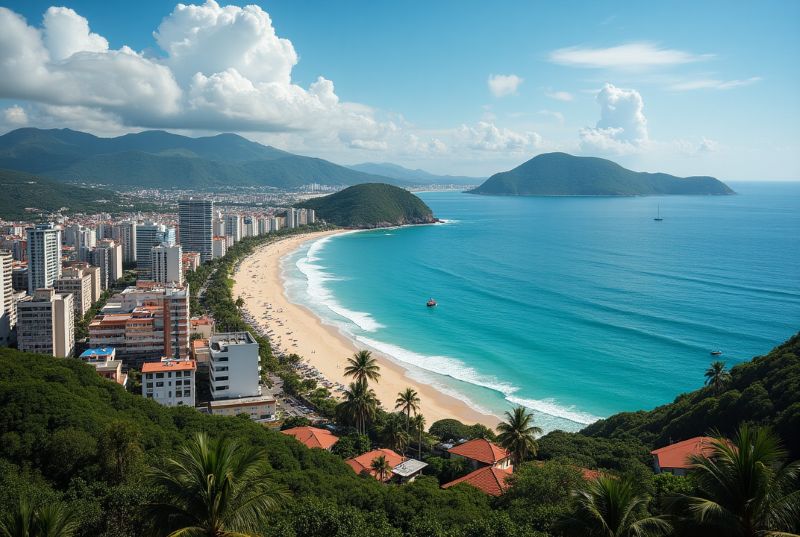
The leadership in Ponce has understood that modern travellers are seeking more than just a beach; they are seeking a story that resonates. By investing in the preservation of its historical heart and promoting its unique artistic identity, Ponce has carved out a niche that ensures the island’s tourism boom is distributed geographically, preventing the over-tourism seen in other global destinations while elevating the island’s intellectual profile.
Rincón and the Sun Gate: The Epicentre of Eco-Lodging and Surf Culture
On the western tip of the island, the city of Rincón continues to dominate the Sun Gate region. Historically known as a pilgrimage site for the world’s elite surfers, Rincón has evolved into a powerhouse for boutique eco-lodging. This city is leading the charge in sustainable, high-impact travel, where the focus is on harmony with the natural environment rather than massive concrete developments that detract from the landscape.
The fire in Rincón is fuelled by a global desire for wellness, mindfulness, and digital disconnection. By maintaining its laid-back, artisanal vibe while upgrading its hospitality offerings to meet international luxury standards, Rincón has become a vital contributor to the island’s record-breaking occupancy rates. It serves as a reminder that Puerto Rico offers a diverse range of experiences, from the high-octane urbanity of the north to the tranquil, sunset-chasing lifestyle of the west.
The Secluded Luxury of Culebra and Vieques: Driving the High-Spend Economy
Perhaps no other part of the archipelago contributes more to the luxury-seclusion vertical than the offshore islands of Culebra and Vieques. These pristine locations are the primary drivers of the island’s high average daily spend. Here, the tourism model is not about volume, but about exceptional value. Travellers seeking the world’s best beaches such as the iconic Flamenco Beach are willing to invest heavily in the exclusive, private experiences these islands provide.
The impact of tourism in Culebra and Vieques is profound and requires careful management. It has necessitated a delicate balance between environmental protection and economic growth. By positioning these islands as the pinnacle of Caribbean nature-based tourism, Puerto Rico has successfully attracted a demographic of travellers who prioritise environmental stewardship as much as luxury, ensuring that the fire of the economy does not consume the natural beauty that sparks it in the first place.
Fajardo and the East: The Essential Gateway to the Nautical Frontier
In the east, Fajardo has solidified its position as the essential gateway for the catamaran and water-activity sector. As the primary hub for excursions to the surrounding keys and the world-famous bioluminescent bays, Fajardo is central to the island’s adventure tourism vertical. The city has seen a massive surge in private charter demand and organised nautical tours, catering to the millions of visitors who arrive via the capital and seek an immediate, visceral connection with the sea.
Fajardo represents the logistical backbone of the eastern tourism region. Its marinas are bustling with activity, and the local economy has been transformed by the high demand for aquatic experiences. This city proves that the tourism boom is not just about where people sleep, but about the activities that keep them engaged and spending throughout their entire journey across the archipelago.
Bayamón and Rio Grande: Pioneering the New Frontiers of Sport and Luxury
The analytical report would be incomplete without mentioning the surprising and strategic rise of Bayamón and Rio Grande. Bayamón has emerged as a sports and urban tourism centre, leveraging its proximity to the metropolitan area to host events that draw a different breed of visitor the sports enthusiast and the urban explorer. This diversification is key to the island’s long-term resilience, ensuring that tourism is not dependent on any single demographic or travel trend. Image generated with Ai
Meanwhile, Rio Grande has ascended to the highest echelons of global luxury. With the opening and renovation of prestigious properties such as the Four Seasons Resort, Rio Grande has elevated the profile of Puerto Rico for high-net-worth individuals. These developments are not just hotels; they are anchors for a luxury ecosystem that includes world-class golf courses and exclusive wellness retreats, ensuring that the island can compete with destinations like the French Riviera or the Maldives on the world stage.
The Leading Seven: Puerto Rico’s Key Cities Driving Tourism Growth
The following data represents the core of the island’s $15 billion visitor economy. From urban business hubs to secluded luxury escapes, these areas have seen unprecedented growth in revenue, occupancy, and international interest throughout 2025 and into 2026.City/Region Primary Economic Driver 2025 Growth Metric Occupancy Peak Essential Traveller Insight San Juan MICE & Historic Culture 262,779 Room Nights 92% The island’s heartbeat; the premier hub for global business and colonial history. Ponce Heritage & Art 6% Revenue Increase 74% Known as the “Pearl of the South”; famous for neoclassical architecture and museums. Rincón Surf & Eco-Tourism 8% Booking Rise 81% The western “Sun Gate”; leading the charge in sustainable, boutique eco-lodging. Rio Grande Ultra-Luxury & Golf 9% Segment Value 85% Home to world-class resorts; the primary destination for high-net-worth travellers. Fajardo Nautical & Adventure 12% Sector Growth 79% The gateway for catamaran tours, sailing, and bioluminescent bay excursions. Bayamón Sports & Urban Travel 5% Employment Growth 70% A rising star in sports tourism, leveraging its proximity to the metropolitan core. Culebra & Vieques Nature & Seclusion 10% Spend Increase 88% Off-shore islands driving the high-spend vertical with world-renowned beaches.
The Boricua Burn: Puerto Rico’s Bold New Era of Global Travel Dominance
The air in the Caribbean has shifted, and at the heart of this atmospheric transformation lies an archipelago that is no longer merely recovering but is fundamentally redefining the essence of global travel. Puerto Rico, a vibrant tapestry of emerald peaks, sapphire waters, and a soul-stirring cultural heritage, has officially entered a golden era of prosperity. To describe the current state of tourism on the island as merely “successful” would be a profound understatement; the sector is quite literally on fire. For the fifth consecutive year, this resilient destination has shattered its own historical benchmarks, evolving into a titan of the visitor economy that commands respect from every corner of the globe.
As we move through 2026, the island is not just attracting visitors it is captivating them with a curated, authentic philosophy known as “Live Boricua.” This isn’t a marketing slogan; it is a movement. According to the latest official metrics from Discover Puerto Rico and the Foundation for Puerto Rico, the island has successfully transitioned from a seasonal getaway to a year-round powerhouse of economic activity. The sheer velocity of growth across every major vertical from the roaring engines of the airline sector to the sophisticated luxury of new hospitality developments suggests that Puerto Rico is currently the most compelling comeback story in the history of international tourism.
The impact of this surge is felt in the very heartbeat of the island’s residents. It is seen in the bustling plazas of San Juan, the quiet, artisanal streets of Ponce, and the sun-drenched coastlines of Rincón. This is a comprehensive, multi-city charge led by local communities and visionary planners who have understood that the future of travel lies in authenticity. This report serves as a deep-dive analytical exploration into how a combination of strategic air-connectivity, a revitalised cruise industry, and a world-class hospitality infrastructure has created a fiscal furnace that generated over $15 billion in total economic impact.
Airlines and the Skyward Surge: Connecting the Boricua Spirit to the World
The fundamental engine behind this entire explosion of growth is undoubtedly the airline sector. Without the record-breaking performance of Luis Muñoz Marín International Airport, the “Tourism on Fire” narrative would simply not exist. In 2025, the airport received over 6.8 million passenger arrivals, representing a 3% increase over the previous record-breaking year. This influx of visitors acts as the primary oxygen for the island’s economic flame, bringing in diverse global demographics ready to immerse themselves in the local culture.
What is most impressive, however, is the strategic expansion of global routes. Puerto Rico has successfully reduced its historical reliance on the United States mainland by establishing direct connections to European and South American hubs. The introduction of direct flights to Madrid, Bogotá, and Medellín has opened the floodgates for international travellers who bring different spending patterns and longer stay durations. This connectivity is the lifeline of the island, turning a Caribbean archipelago into a global crossroads of culture and commerce, ensuring that the “Boricua Spirit” is accessible to every corner of the map.
The Hospitality Revolution: Shattering Records in San Juan and Beyond
The hospitality sector in Puerto Rico is currently operating at a level of efficiency and demand that is the envy of the entire Caribbean region. In 2025, nearly 7.9 million hotel nights were booked, an 8% increase year-over-year. This demand has pushed combined revenue from hotels and short-term rentals to a staggering $1.99 billion. The surge is led by the metropolitan powerhouse of San Juan, which has become the undisputed champion of the M.I.C.E. (Meetings, Incentives, Conferences, and Exhibitions) sector, recording over 262,779 room night bookings for business travel alone. Image generated with Ai
Occupancy rates tell the story of a destination in extremely high demand. Maintaining an average occupancy of 78% throughout 2024 and peaking at a phenomenal 92% during the high season indicates that the island is effectively at capacity during its most popular months. This has led to a surge in investment for new room inventory, from the luxury towers of Rio Grande to the boutique eco-lodges of Rincón, ensuring that the fire of the industry has plenty of room to grow. The shift toward a mix of luxury hotels and high-end rentals has allowed Puerto Rico to capture a wider range of the market, from the budget-conscious adventurer to the billionaire seeking a private sanctuary.
Cruising into a New Era: The Port Expansion and Local Economic Impact
The cruise sector has entered a “new growth cycle” that is bringing renewed energy to the island’s historic ports. After years of recalibration and infrastructure upgrades, the ports of Puerto Rico welcomed over 1.6 million cruise passengers in 2025, an 8% increase from the previous year. This is particularly vital for local commerce, as these passengers contribute a high-velocity impact, spending an average of $100 per port visit on food, souvenirs, and local tours.
The resurgence of the cruise industry ensures that the ports of San Juan and beyond remain vibrant hubs of economic activity. It provides a steady stream of foot traffic to local artisans and small business owners, spreading the “fire” of the tourism economy to those on the ground who represent the true heart of the island. This sector acts as a gateway, often providing visitors with their first taste of the island’s hospitality, prompting many to return for longer, land-based stays in the future.
Essential Travel Intelligence & Regional Highlights
This table provides the qualitative data necessary for a broad understanding of the “Live Boricua” experience. It outlines the specific appeal and logistical advantages of each city for the modern traveller.City/Region Best Known For Infrastructure Highlight Traveller Spend Type Strategic Advantage San Juan 500-year history & Nightlife Convention Centre & LMM Airport High-Volume / Business Global connectivity crossroads Ponce Neoclassical architecture Museo de Arte de Ponce Cultural / Intellectual Sophisticated, slower-paced travel Rincón World-class surfing Renewable energy eco-stays Mid-Range / Wellness Epicentre of sustainable tourism Rio Grande Elite Golf & Rainforests El Yunque National Forest Access Ultra-Luxury / VIP Proximity to nature and luxury Fajardo Bioluminescent Bays Largest Marina in the Caribbean Adventure / Nautical Essential for island-hopping Bayamón Science & Urban Sports Integrated Metro/Train access Local / Athletic Low-cost urban exploration Culebra & Vieques Pristine “White Sand” beaches Small aircraft/Ferry connectivity Premium / Seclusion Peak nature-based immersion
The Bright Future of the Puerto Rican Flame
As we look toward the remainder of 2026, the trajectory for Puerto Rico is undeniably clear. This is no longer a destination on the rise it is a destination that has arrived and is now setting the pace for the rest of the world. Through the strategic leadership of cities like San Juan, Ponce, and Rio Grande, and the incredible resilience and warmth of its people, the island has built a tourism infrastructure that is both powerful and sustainable. Image generated with Ai
The impact of this boom is more than just fiscal it is a profound matter of national pride. The Live Boricua spirit is being shared with millions of people from every corner of the planet, and in return, the world is investing in the future of this incredible archipelago. With records being shattered in the air, on the sea, and in the halls of its historic hotels, Puerto Rico stands as a shining example of how travel and tourism can set a nation’s economy, and its spirit on fire. The flame of Puerto Rican tourism is burning brighter than ever, illuminating a path of prosperity that will define the island for generations to come.
A Sustainable Beacon of Global Tourism Excellence
The surge of the Puerto Rican visitor economy represents a monumental triumph of regional collaboration and visionary planning. By weaving together the distinct threads of its urban centers and coastal hideaways, the island has crafted an irresistible tapestry that appeals to the modern, conscious traveler. This evolution from a traditional seasonal getaway to a high-performance, year-round global titan is the direct result of a “Live Boricua” philosophy that prioritizes depth, heritage, and high-value experiences. Fajardo Unites San Juan, Ponce, Rincón, Rio Grande And More Leading Puerto Rico Cities In A Booming Air Routes And Tourism Surge That Is Rapidly Transforming The Caribbean Travel Industry
As we look toward the future, the stability of this multi-billion dollar framework ensures that the island will remain the gold standard for the Caribbean. The expansion of global flight paths and the revitalization of the maritime sector have created a sustainable ecosystem where economic prosperity and cultural preservation coexist. For the explorer seeking more than just a destination, Puerto Rico offers a soul-stirring journey through a nation that has successfully set its own spirit on fire. The Boricua flame is not just a temporary spark it is a permanent beacon of hospitality and innovation illuminating the entire world stage.
Advertisement
Advertisement
Advertisement













Saturday, September 5, 2026

Friday, September 4, 2026

Saturday, September 5, 2026
Friday, September 4, 2026

Thursday, September 3, 2026

Wednesday, September 2, 2026
Friday, September 4, 2026