
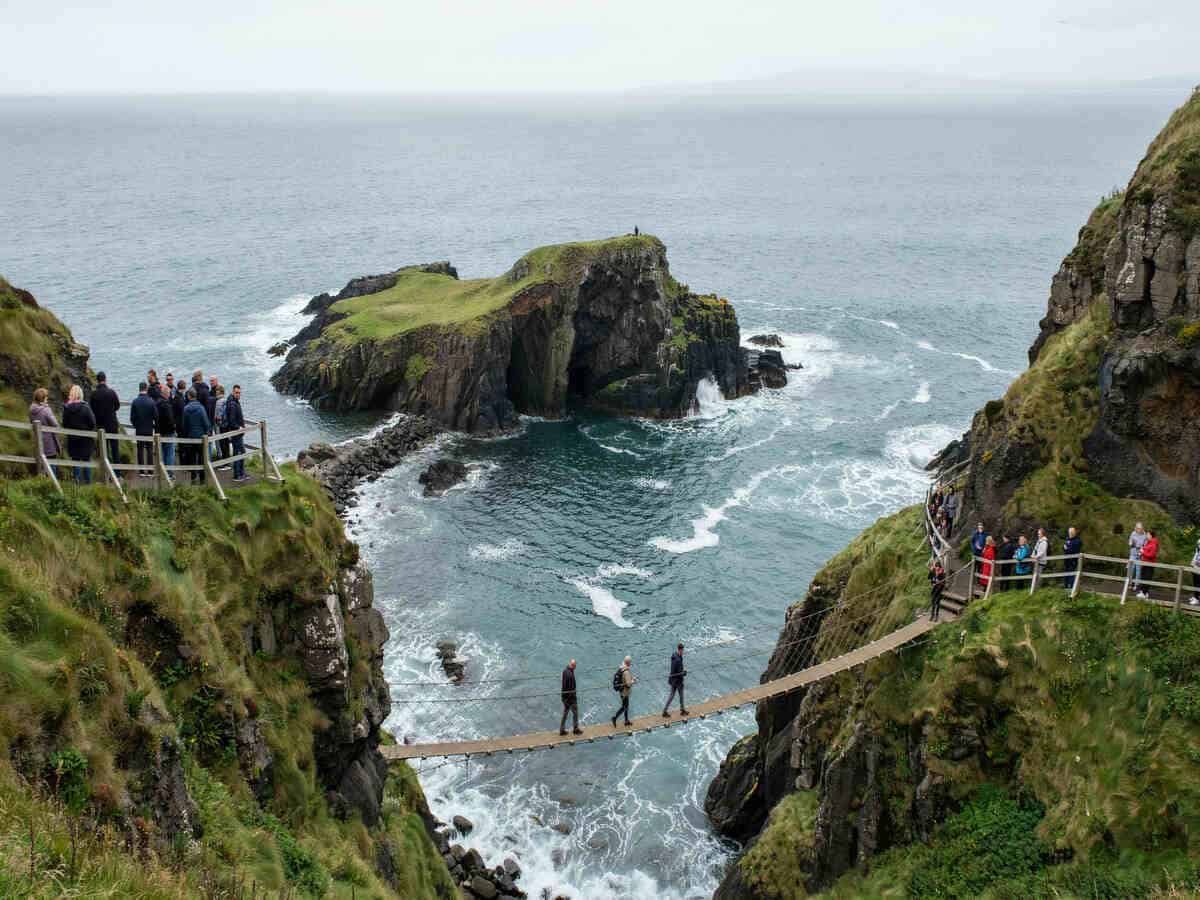
Image generated with Ai
Ireland and UK transform border tourism through joint travel, shared heritage and connected routes. The Ireland-UK border will undergo significant changes as of January 2026. Both nations intend to develop this area as a tourist destination. Both nations are planning to develop the area as a tourist destination. By creating a cross-border tourism region and sharing ancient and connected routes, their joint border will become a focal point of attention. By establishing a cross-border tourism and sharing historic and connected routes, their joint border will become a center of attention.
The Republic of Ireland has only one land neighbour, the United Kingdom, through Northern Ireland. This makes the border one of the most distinctive frontiers in Europe. Stretching across the northern part of the island, it connects communities, landscapes and cultures while offering visitors a rare opportunity to explore different destinations without traditional border barriers.
Advertisement
For decades, the Ireland–UK border was associated with political challenges and conflict. However, its role has changed dramatically over time. Today, the border is increasingly being presented as a symbol of cooperation, cultural connection and shared experiences.
The open nature of the border has become a major advantage for tourism. Travellers can move between the Republic of Ireland and Northern Ireland with ease, often noticing only small changes such as road signs, speed limits or currency.
Advertisement
This unusual experience allows tourists to combine destinations that were once viewed separately. A visitor can explore Dublin, continue towards Belfast, discover Derry’s historic landscapes, experience Donegal’s wild coastline and travel through rural border communities as part of one itinerary.
Tourism authorities are now focusing on extending visitor stays by encouraging travellers to explore beyond major cities and discover lesser-known border destinations.
A major part of the border tourism transformation is the development of shared tourism experiences across the island of Ireland.
The focus is on creating stronger connections between major tourism routes and encouraging visitors to see the island as one connected destination.
One of the most important tourism links is between:
Both routes showcase some of the most dramatic landscapes on the island, including rugged coastlines, historic locations, natural attractions and rural communities.
By promoting these experiences together, Ireland and the UK are creating a stronger tourism product that encourages international visitors to spend more time exploring both sides of the border.
The connection between Ireland’s western coastline and Northern Ireland’s northern coast has created new possibilities for adventure and scenic tourism.
The Wild Atlantic Way attracts visitors with its dramatic ocean views, remote landscapes and cultural experiences. Meanwhile, the Causeway Coastal Route offers spectacular coastal scenery, historic landmarks and unique visitor attractions.
Together, these destinations provide travellers with a diverse holiday experience combining:
The strategy behind these connected routes is simple: encourage visitors to travel further, stay longer and spend more across local communities.
Instead of visiting only famous locations, travellers are being encouraged to discover hidden towns, villages and landscapes located near the border.
Border tourism growth is also being supported through investment in visitor infrastructure and tourism facilities.
The aim is to improve how travellers experience destinations by creating more engaging attractions, stronger storytelling and better facilities.
Investment priorities include:
These improvements are especially important for smaller communities that depend on tourism income.
By strengthening attractions outside major urban areas, border tourism can support local businesses, accommodation providers, restaurants, guides and experience operators.
Sustainability has become a key part of the future of border tourism.
Ireland and Northern Ireland are increasingly focusing on outdoor experiences that allow visitors to explore landscapes responsibly.
Walking routes, cycling trails and greenways are helping create new tourism opportunities while promoting environmentally friendly travel.
Border regions are particularly suited for this type of tourism because they offer:
Slow tourism is becoming increasingly popular among international travellers who want meaningful experiences rather than short visits.
For local communities, sustainable tourism provides an opportunity to attract visitors throughout the year and reduce dependence on seasonal tourism.
The history of the Ireland–UK border has become an important part of its tourism identity.
The border is not only a geographical line. It represents a story of political change, cultural identity, conflict resolution and cooperation.
The transformation following the Good Friday Agreement has allowed the region to develop new forms of heritage tourism.
Visitors are increasingly interested in understanding:
This creates a tourism experience that goes beyond sightseeing. It allows travellers to understand the people, history and events that shaped the island.
One of the biggest benefits of stronger border tourism is the opportunity for economic growth in smaller communities.
Many rural areas along the border have traditionally remained outside the main tourism spotlight. New tourism strategies are changing this by promoting local experiences and encouraging visitors to explore beyond traditional destinations.
Local businesses can benefit through:
This approach helps distribute tourism revenue more evenly and creates stronger connections between visitors and local communities.
For international travellers, the biggest attraction of the Ireland–UK border is the ability to experience two destinations in one journey.
A holiday can combine:
This seamless travel experience gives the island of Ireland a competitive advantage in the global tourism market.
Instead of presenting the border as a separation point, tourism leaders are increasingly presenting it as a gateway to discovery.
The future of Ireland and UK border tourism is built around connection rather than division.
Through shared routes, heritage experiences, sustainable travel projects and stronger cooperation, the border region is becoming one of Europe’s most distinctive tourism landscapes.
The Ireland–UK border offers something few destinations can match: the chance to experience different cultures, histories and landscapes within one connected journey.
Ireland and UK are set to turn border tourism upside down in 2026, as they transform this historic border into a connected corridor of discovery where people are able to experience an array of unique heritage, scenic and cultural treasures and make their way from one island to the other.
In 2026, this border will no longer be seen as an edge but rather as a connection between communities, attracting visitors from around the world and uncovering the secrets of the island of Ireland.
Advertisement
Advertisement
Advertisement













Saturday, September 5, 2026

Friday, September 4, 2026

Saturday, September 5, 2026

Friday, September 4, 2026

Thursday, September 3, 2026

Wednesday, September 2, 2026

Friday, September 4, 2026