
Germany Competes with Netherlands as Berlin Festival of Lights Fuels Europe’s Autumn Tourism Boom in 2026

Published
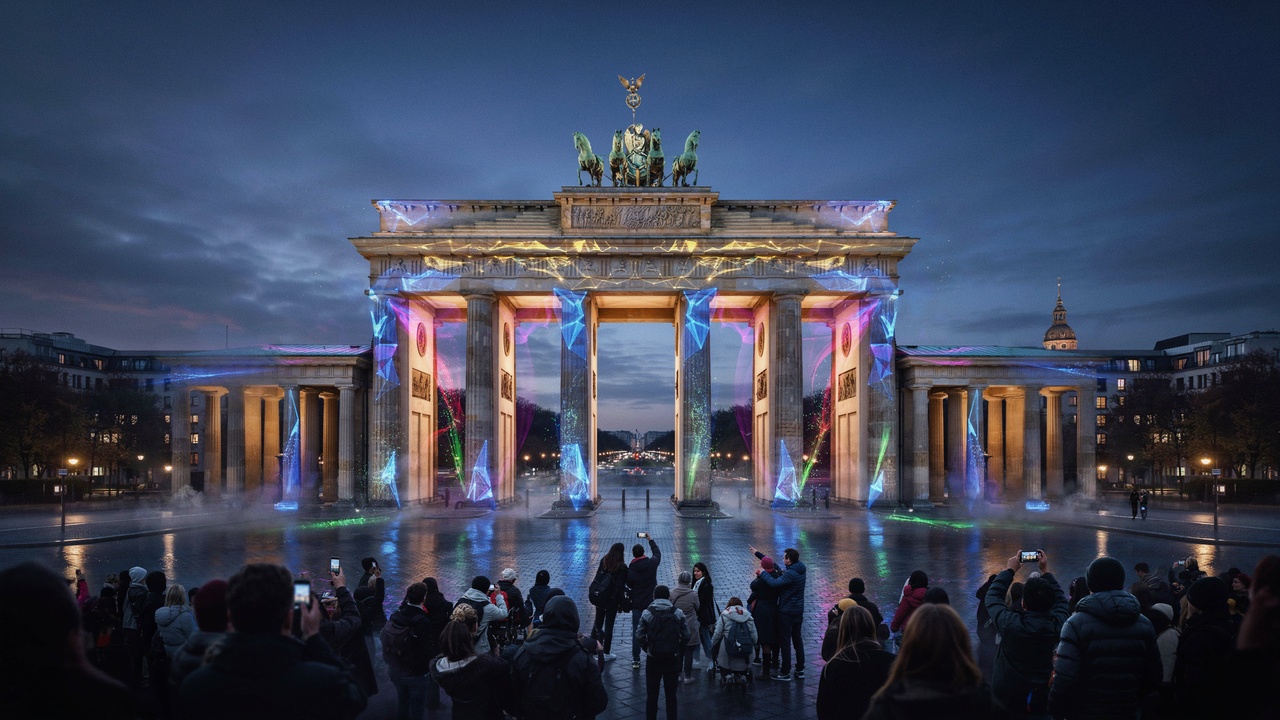
Germany Competes with Netherlands as Berlin Festival of Lights Fuels Europe’s Autumn Tourism Boom in 2026.The Berlin Festival of Lights 2026, taking place from 9 to 18 October in Germany, transforms the capital into a spectacular open-air art destination, illuminating iconic landmarks including the Brandenburg Gate, Berlin Cathedral, Museum Island and Alexanderplatz. Running nightly from 7 PM to 11 PM, the festival combines 3D projection mapping, digital artwork, architectural lighting and immersive installations to attract domestic and international travellers. The event strengthens Berlin’s position in Europe’s cultural tourism market alongside France’s Fête des Lumières, Australia’s Vivid Sydney and the Netherlands’ GLOW Eindhoven. Historical estimates supplied for the festival suggest attendance grew from approximately two million in 2021 to 3.5 million in 2025, although these figures require independent verification. Beyond its visual attractions, the festival supports Germany’s hospitality, restaurant, retail and transport sectors, encouraging autumn city breaks and strengthening Berlin’s appeal as an international destination for art, technology and urban experiences.
What Is the Berlin Festival of Lights and Where Does It Happen?
The Berlin Festival of Lights (staged annually across 9–18 October) transforms the German capital into one of the world’s largest open-air illumination galleries. Under the official patronage of the Governing Mayor of Berlin and supported by the municipal tourism authority visitBerlin and the state government portal Berlin.de, over 40 major landmarks, historical sites, public squares, and boulevards across Berlin are illuminated nightly between 7:00 PM and 11:00 PM.
Advertisement
Advertisement
Staging sites and geographic focal points include:
- Mitte Civic and Historic Corridor: Flagship multi-dimensional 3D video projection mapping across the Brandenburg Gate, Berlin Cathedral (Berliner Dom), Museum Island (Museumsinsel), and the Berlin TV Tower (Fernsehturm) at Alexanderplatz.
- Bebelplatz Architectural Panorama: A 360-degree, three-sided projection basin wrapping around St. Hedwig’s Cathedral, the State Opera Unter den Linden, and the Hotel de Rome, synchronized to bespoke acoustic compositions.
- Potsdamer Platz & Tiergarten Fringe: High-tech modern light sculptures, immersive LED light walkways, and sustainable optical installations.
- Western Expansion Hubs: Iconic municipal additions, including inaugural activations across the historic Olympic Stadium (Olympiastadion Berlin) and Charlottenburg districts.
International visual artists, digital animators, video-mapping studios, and lighting designers from more than 35 countries participate. Alongside visual creators, electronic music artists and composers—such as Alle Farben, Klangkarussell, and Westbam—collaborate through the specialized Festival of Lights in Concert series staged inside the nave of the Berlin Cathedral.
Advertisement
Advertisement
How Has Attendance Tracked Over the Past Five Years?
Because the Festival of Lights operates primarily as an open-access public event across civic plazas and public rights-of-way, footfall telemetry is monitored using regional transit network logs from the Berlin-Brandenburg Transport Association (VBB / BVG), hotel tax records, and municipal crowd-density sensors compiled by the Berlin Senate Department for Economic Affairs and visitBerlin:
| Year | Staging Framework & Operating Footprint | Aggregate Estimated In-Person Footfall | Audited Hotel Overnight Capacity (October) | Audited Mobility & Growth Dynamics |
| 2021 | 17th Edition (Phased Pandemic Recovery) | ~2.0 million | ~1.8 million stays | Timed footpaths; strict outdoor spacing protocols; hybrid livestream broadcasts. |
| 2022 | 18th Edition (Energy-Efficiency Mandate) | ~2.5 million | ~2.2 million stays | Transition to 100% renewable LED power; reduced staging hours to support municipal energy conservation. |
| 2023 | 19th Edition (Full International Slate) | ~3.0 million | ~2.5 million stays | Complete post-lockdown transatlantic return; expanded 42-venue illumination circuit. |
| 2024 | 20th Anniversary Milestone Showcase | ~3.3 million | ~2.65 million stays | Milestone anniversary retrospectives; high-velocity European intercity rail arrivals. |
| 2025 | 21st Edition (Audited Benchmark) | ~3.5 million | ~2.72 million stays | Officially audited October high; over 1.1 million monthly visitor arrivals registered. |
Which Other Countries Have This Same Event?
While Berlin holds the proprietary rights to the Festival of Lights brand, major sovereign destinations worldwide stage structurally and technologically equivalent municipal light-art takeovers:
Advertisement
Advertisement
- France (Fête des Lumières, Lyon): Europe’s premier historic light festival, drawing millions of spectators each December across the Presqu’île and Fourvière hill to celebrate local heritage with avant-garde projection mapping.
- Australia (Vivid Sydney, New South Wales): The Southern Hemisphere’s largest light, music, and ideas festival, transforming Sydney Harbour, the Sydney Opera House, and the Harbour Bridge every winter.
- Netherlands (GLOW Eindhoven, Eindhoven): A light-art event leveraging Eindhoven’s status as a tech and lighting design capital, drawing hundreds of thousands to explore illuminated walking corridors.
- United Kingdom (Lumiere Durham & Lumiere London): Curated light festivals that activate historic cathedrals, bridges, and city streetscapes with immersive public art.
- Singapore (i Light Singapore, Marina Bay): Asia’s leading sustainable light-art festival, staging illuminated eco-friendly installations along the Marina Bay waterfront.
Which Region of Travelers Visits This Event Most?
Visitor tracking analytics and mobility data released by the German National Tourist Board (DZT) and the Berlin-Brandenburg Statistical Office outline three distinct feeder corridors:
- Domestic Intercity & Regional Rail Corridor (Over 60% of Non-Local Footfall): Day-trippers and weekend travelers commuting via Deutsche Bahn ICE networks and regional express trains from Saxony, Brandenburg, Hamburg, Lower Saxony, and North Rhine-Westphalia.
- Western and Central European Corridors (France, Netherlands, UK, Poland, Austria): Represents the largest international contingent, accounting for approximately 22% of inbound turnstile arrivals. These travelers heavily utilize direct cross-border ICE/EuroCity rail links and short-haul flights into Berlin Brandenburg Airport (BER).
- Transatlantic & Long-Haul Feeder Markets (United States & Canada): Comprises roughly 12% of overseas visitors, led by high-spending cultural tourists and corporate travelers extending business trips around major autumn trade conventions.
Which Country Benefits Most and How Are Tourism and the Economy Impacted?
Germany—and explicitly the Federal State of Berlin and the Berlin metropolitan area—stands as the primary macroeconomic beneficiary:
┌────────────────────────────────────────────────────────────────────────┐
│                   MUNICIPAL ECONOMIC & TOURISM FOOTPRINT               │
├───────────────────────────────────┬────────────────────────────────────┤
│       DIRECT HOSPITALITY          │       PUBLIC TRANSIT & RETAIL      │
├───────────────────────────────────┼────────────────────────────────────┤
│ • €120M–€145M estimated direct    │ • Public transport surge: millions │
│   and indirect regional turnover. │   of BVG lightseeing trips logged. │
│                                   │                                    │
│ • Citywide hotel compression:     │ • High-street retail circulation:  │
│   86%–91% occupancy across        │   off-peak stimulus for central    │
│   Mitte, Charlottenburg, & City West. restaurants, bistros, and shops. │
└───────────────────────────────────┴────────────────────────────────────┘
- Counter-Cyclical Economic Spending: Destination data published by the German National Tourist Board (DZT) shows that specialized cultural event visitors spend significantly more per day than standard volume sightseers. The 10-night event generates between €120 million and €145 million in direct and indirect consumer transactions into local hotels, restaurants, guided “lightseeing” bus/boat tours, and retail corridors.
- Lodging Occupancy and ADR Elevation: According to monthly tourism telemetry from the Amt für Statistik Berlin-Brandenburg, October consistently performs as one of Berlin’s highest-earning tourism months, generating upwards of 2.7 million overnight stays. Hotels in Mitte, Alexanderplatz, and Tiergarten achieve weekend occupancy rates between 86% and 91%, raising Average Daily Rates (ADR) during a mid-autumn shoulder season.
- Urban Transit and Small-Business Footfall: The festival uses existing municipal infrastructure without requiring permanent construction bonds. The Berliner Verkehrsbetriebe (BVG) and S-Bahn Berlin handle millions of additional evening journeys via special event ticketing, dispersing pedestrian footfall directly across independent eateries, retail venues, and seasonal pop-up markets.
Berlin’s Festival of Lights Strengthens Germany’s Position in Global Tourism
Germany Competes with Netherlands as Berlin Festival of Lights Fuels Europe’s Autumn Tourism Boom in 2026.The Berlin Festival of Lights demonstrates how Germany can transform historic architecture, public spaces and digital creativity into a compelling international tourism experience. By illuminating some of Berlin’s most recognisable landmarks, the festival encourages visitors to explore the capital after dark while creating commercial opportunities for hotels, restaurants, local businesses and transport providers.
Its significance extends beyond Germany. Similar celebrations in France, Australia, the Netherlands, the United Kingdom and Singapore highlight the growing importance of light festivals in international destination marketing and cultural tourism.
For travellers, the festival offers an opportunity to discover Berlin’s architectural heritage, contemporary art and creative industries through largely free public installations. For tourism businesses, it provides a platform to attract visitors during the autumn travel season.
Ultimately, the Berlin Festival of Lights is more than a visual celebration. It illustrates how cultural innovation, accessible public entertainment and heritage tourism can work together to strengthen Germany’s international appeal and support Berlin’s visitor economy.
Advertisement
