
Say Goodbye To Drivers: Riyadh Launches Autonomous Robotaxi Service

Published
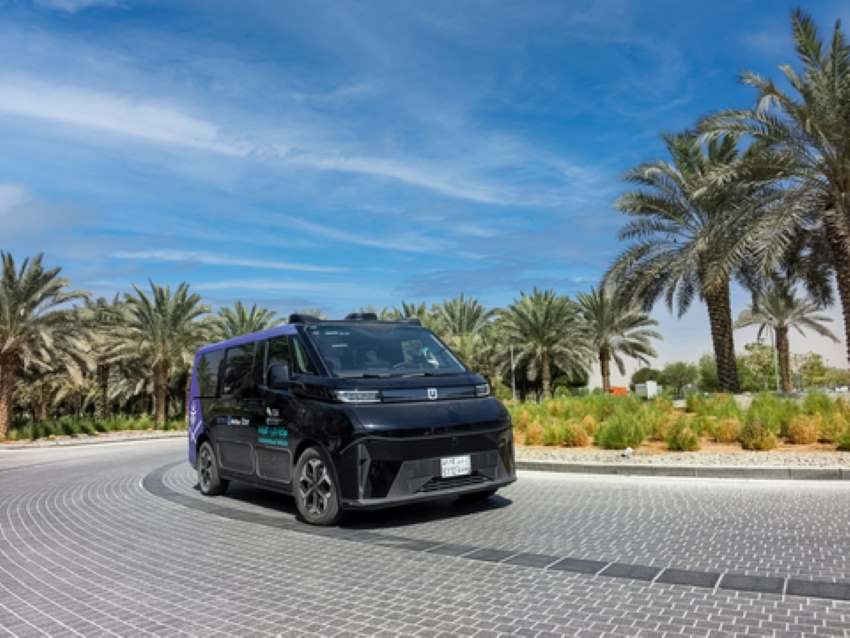
Image generated with Ai
As part of its innovative transportation strategy, Saudi Arabia’s first public autonomous robotaxi service in Riyadh has been launched by Uber in public collaboration with WeRide. The service commenced between Roshn Front and Princess Noura University and is a major component of Saudi Arabia’s Vision 2030 milestones of innovation and sustainable mobility. For Uber, the service reflects an introduction of driverless vehicles to the Uber platform in the Kingdom of Saudi Arabia, a significant advance in the partnership between the ride-hailing service and the Saudi Arabian government.
The Vision 2030 Connection
Advertisement
Advertisement
Inclusive in Vision 2030 is the desire to establish the Kingdom as a pioneer in innovative, sustainable urban mobility. To this purpose, the government is modernizing and advancing the transportation infrastructure and employing autonomous vehicles to ease traffic and greenhouse emissions. Uber and WeRide’s partnership is central to this plan and to the Vision 2030 Transport General Authority’s (TGA) focus on developing a sustainable and strong regulatory approach to autonomous vehicles (AVs) in urban centres.
Autonomous Robotaxis in Riyadh
Advertisement
Advertisement
There are regulations in place that guarantee the safe launch of the autonomous robotaxi services. An autonomous robotaxi will have an operator for the time being to supervise the operation. In the future, the autonomous robotax services will not have an operator. This initiative advances the TGA’s prior regulatory developments regarding autonomous vehicle operation, which recently granted WeRide the first autonomous driving permit in Saudi Arabia.
There are autonomous robotaxi services between Roshn Front and Princess Noura University. This route was purposefully chosen as the first to offer passengers a glimpse of autonomous robotaxi services, as it is a highly frequented area. This phase of the service is the first step before the robotaxi services are expanded throughout the city.
Advertisement
Advertisement
The Role of WeRide and Uber
WeRide is the primary technology partner in this collaboration and has become a world leader in autonomous driving technology. WeRide has tested its self-driving cars in more than 30 cities and is dedicated to innovative urban mobility improvements, including its new robotaxi offering. WeRide’s autonomous vehicles self-drive and have the ability to function at levels 2 to 4 of the 5-tier autonomous driving spectrum and navigate challenging urban landscapes without any human input.
Uber, on the other hand, provides its ride-hailing ecosystem and platforms. Uber, as a top global transportation provider, guarantees that the new service will integrate seamlessly into the Uber app. When the service is fully operational, passengers will be able to book rides in self-driving vehicles as easily as any other Uber ride.
Support and Regulatory Alignment
When it comes to autonomous taxi service development, the Saudi Arabian government has been an important stakeholder. The Transport General Authority (TGA) collaborated with WeRide and Uber to establish the regulations needed for the safe introduction of autonomous vehicles. Along with granting WeRide the country’s first autonomous driving permit, TGA also implemented a regulatory sandbox under which companies developing autonomous vehicles may test their innovations under real-world conditions before wide-scale general release.
This partnership with the private sector and government agencies illustrates, on the one hand, the importance of integrating modern sustainable transport systems and, on the other, the belief of Kingdom of Saudi Arabia in the formation of the Middle East transport technologies market.
Advertisement
Advertisement
Towards the Future of Autonomous Mobility KSA
While the first phase of the WeRide autonomous robotaxi service is still in the pilot stage, Uber is also expected to expand the service to other regions of Riyadh, as well as target additional Saudi Arabian cities. The main purpose is to transition stepwise to fully automated vehicles, which promise optimum safety, enhanced efficiency, and accessibility as compared to vehicles with human operators. In accordance with Saudi Arabia’s Vision 2030, the government is seeking new ways to incorporate autonomous vehicles in different areas like logistics, public transport, and urban planning. The desired vision is the development of ‘smart cities’ that embrace sustainability, ease traffic, and improve the overall quality of life for citizens and tourists alike.
Autonomous robotaxis Riyadh
Autonomous robotaxis in Riyadh signal the future of transport in Saudi Arabia, and are, most importantly, the first test of driverless vehicles as part of the Kingdom’s integrated mobility plan, Vision 2030. The initiative aims to transform public transport in Riyadh’s urban core, the success of which will become an example for the rest of the Kingdom as well as the region. For many, the driverless vehicles in Riyadh symbolise advanced, innovative, and sustainable technologies that the Kingdom has integrated into its vision for smart mobility.
This service, introduced in Riyadh, boasts the first unsupervised transport service that the region has seen. For many, the service will no doubt demonstrate the advanced automated transport that many enjoy in the developed world, and the integrated technologies that use actionable data to improve the environment. The introduction of autonomous transport is a game-changer in the public mobility sector and aims to change the unsupervised transport service that the region has seen.
Conclusion
Riyadh’s autonomous robotaxi service exemplifies the beginning of a new era in the Kingdom’s development towards a smart and sustainable future. Supported by the Transport General Authority, along with Uber and WeRide’s collaboration, this initiative focuses on the future of mobility in Saudi Arabia. With the adoption of these technologies by more cities, the future of transportation offers a preview of a more efficient urban environment that is safer, cleaner, and healthier.
Advertisement
