 Akash Nath Akash Nath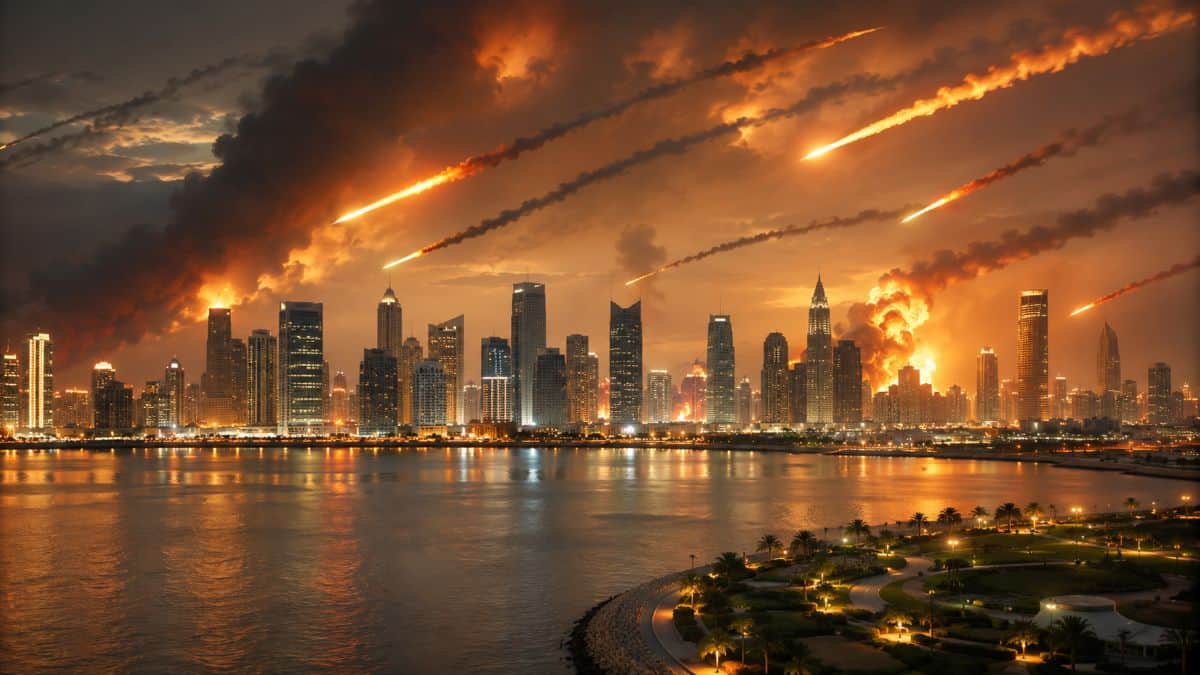
Image generated with Ai
The renewed exchange of hostilities across the Middle East has heightened concerns over regional stability, aviation security, tourism confidence, and the safety of critical infrastructure. Following another round of US military strikes on Iran, Tehran launched missile attacks targeting American military facilities located in Bahrain, Kuwait, Qatar, and Jordan. The attacks prompted swift defensive responses from the affected countries while drawing strong condemnation from the United Arab Emirates. The latest developments underscore the growing geopolitical uncertainty facing one of the world’s most important travel and aviation corridors.
The UAE’s Ministry of Foreign Affairs described the attacks as a serious violation of the sovereignty of neighboring Gulf nations and reaffirmed the country’s full solidarity with Bahrain, Kuwait, Qatar, and Jordan. While military authorities in several countries reported successful interception of incoming missiles, damage to a major electricity generation and desalination facility in Kuwait highlighted the potential consequences for essential services, transportation networks, and regional tourism should the conflict continue to escalate.
| Key Development | Details |
|---|---|
| UAE Position | Strong condemnation of Iranian attacks |
| Countries Targeted | Bahrain, Kuwait, Qatar, and Jordan |
| Official Statement | UAE reaffirmed solidarity with affected nations |
| Primary Concern | Regional security, sovereignty, and stability |
The UAE condemned the latest Iranian missile attacks, describing them as a flagrant violation of the sovereignty of Bahrain, Kuwait, Qatar, and Jordan. The Ministry of Foreign Affairs emphasized that such military actions threaten regional peace, security, and long-term stability.
The statement reaffirmed the UAE’s unwavering support for the governments and people of the affected countries while calling attention to the broader implications of military escalation across the Gulf region.
Advertisement
Advertisement
The UAE has consistently advocated diplomatic engagement, regional cooperation, and peaceful conflict resolution, positioning itself as a supporter of stability in one of the world’s busiest aviation and commercial regions.
| Infrastructure Impact | Status |
|---|---|
| Electricity Generation Units | Multiple units damaged |
| Desalination Plant | Sustained significant damage |
| Fire Incident | Reported after missile strike |
| Essential Services | Under assessment by authorities |
Kuwaiti authorities confirmed that an Iranian missile strike damaged a major electricity generation and water desalination facility.
According to Kuwait’s Ministry of Electricity, Water and Renewable Energy, the attack triggered a fire and damaged several electricity generation units. Emergency teams responded rapidly to stabilize operations and assess the extent of the destruction.
The incident has raised concerns because desalination facilities play a vital role in supplying fresh water across Gulf nations. Damage to such infrastructure can affect residents, businesses, airports, hotels, and tourism operations if disruptions become prolonged.
Authorities continue evaluating operational capacity while restoration work proceeds.
| Defence Response | Result |
|---|---|
| Missiles Intercepted | Three |
| Damage Reported | None |
| Casualties | None |
| Air Defence Status | Successfully activated |
Jordan’s armed forces confirmed that air defence systems intercepted three Iranian missiles that entered Jordanian airspace.
Military officials reported that all three projectiles were destroyed before reaching their intended targets, preventing casualties and infrastructure damage.
The successful interception demonstrated the country’s preparedness amid increasing regional tensions while helping maintain operational continuity across Jordan’s transportation and aviation sectors.
| Bahrain Response | Outcome |
|---|---|
| Air Defence Activation | Successful |
| Hostile Targets | Destroyed |
| Civilian Damage | Not reported |
| Security Measures | Heightened nationwide |
Bahrain’s armed forces announced that national air defence systems intercepted and destroyed multiple hostile aerial threats.
Officials characterized the attacks as an aggressive escalation targeting the kingdom while confirming that security forces remained on heightened alert.
Authorities continue monitoring regional developments as Gulf countries strengthen defensive coordination.
| Travel Sector | Potential Impact |
|---|---|
| Commercial Aviation | Possible route adjustments |
| Tourism Confidence | Increased uncertainty |
| Airport Operations | Enhanced security monitoring |
| Travel Planning | Higher demand for advisories |
The Gulf serves as one of the world’s most strategically important aviation corridors, connecting Europe, Asia, Africa, and Oceania.
Although airports across the UAE, Qatar, Bahrain, Kuwait, and neighboring countries continue operating, periods of heightened military activity can prompt airlines to review flight paths, adjust schedules, or temporarily avoid specific airspace depending on evolving security assessments.
Travelers are increasingly monitoring official airline notifications and government travel advisories before departure.
The broader tourism industry also closely watches regional security developments because perceptions of stability significantly influence international visitor confidence.
| Sector | Importance |
|---|---|
| Aviation | Major global connecting hub |
| Tourism | Millions of annual visitors |
| Trade | Critical international shipping routes |
| Energy | Global oil and gas exports |
The Gulf remains one of the world’s busiest international travel regions.
Major airports throughout the UAE, Qatar, Bahrain, Kuwait, and Saudi Arabia connect hundreds of destinations daily, making regional stability essential for uninterrupted passenger movement.
Any prolonged geopolitical instability has the potential to influence airline operations, insurance costs, traveler confidence, business travel, and international tourism demand.
Industry experts note that maintaining secure transportation networks remains essential for preserving economic resilience across the Middle East.
| Priority | Focus Area |
|---|---|
| Diplomacy | De-escalation efforts |
| Security | Protection of civilians |
| Infrastructure | Safeguarding essential services |
| Aviation | Maintaining safe airspace |
While military tensions remain elevated, regional governments continue emphasizing the protection of civilians, preservation of essential infrastructure, and maintenance of national security.
The UAE’s condemnation reflects broader concerns that continued escalation could increase risks to economic activity, international travel, and regional cooperation.
Diplomatic efforts aimed at reducing tensions will remain closely watched by governments, airlines, tourism authorities, and international travelers as the situation develops.
1. Why did the UAE condemn the Iranian attacks?
The UAE stated that the missile attacks violated the sovereignty of Bahrain, Kuwait, Qatar, and Jordan and threatened regional security and stability.
2. Which countries were targeted during the latest attacks?
Iranian missiles targeted Bahrain, Kuwait, Qatar, and Jordan, primarily focusing on areas associated with US military infrastructure.
3. What happened in Kuwait?
A missile strike damaged a power generation and water desalination facility, causing a fire and affecting multiple electricity generation units.
4. Did Jordan intercept the incoming missiles?
Yes. Jordan’s air defence systems intercepted and destroyed three missiles without reported casualties or property damage.
5. How did Bahrain respond?
Bahrain’s armed forces confirmed that air defence systems intercepted and destroyed multiple hostile aerial threats.
6. Are flights operating normally across the Gulf?
Most airports continue normal operations, although airlines may adjust routes or schedules depending on evolving security assessments.
7. Could the conflict affect tourism in the Gulf?
Extended regional tensions may influence traveler confidence and airline planning, although tourism activities continue in many destinations.
8. Why is Gulf stability important for international travel?
The Gulf is a major global aviation hub connecting Europe, Asia, Africa, and other regions through extensive airline networks.
9. Has the UAE called for diplomatic solutions?
The UAE has consistently supported regional stability, peaceful dialogue, and diplomatic efforts to reduce tensions.
10. What should international travelers do?
Travelers should monitor official airline updates, government travel advisories, and local authority announcements before and during their journeys.
Advertisement
Advertisement
Advertisement













Saturday, September 5, 2026

Friday, September 4, 2026

Saturday, September 5, 2026

Saturday, September 5, 2026

Thursday, September 3, 2026

Wednesday, September 2, 2026

Saturday, September 5, 2026

Saturday, September 5, 2026


