
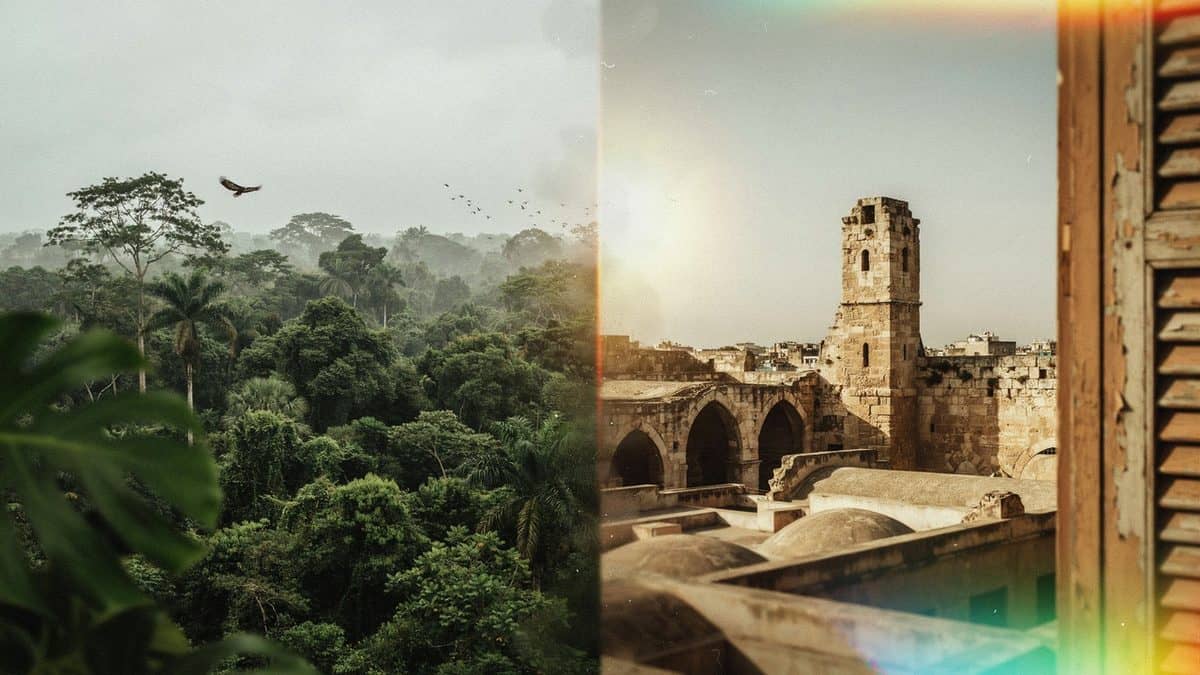
Image generated with Ai
Environmental destruction is growing at an alarming rate on our planet. From the Amazon Rainforest and other endangered sites mentioned in the text, ancient civilizations and nature are vanishing to this very day. There have been many cruel wars and mass killings of people leading to the destruction of some of the most iconic cultural sites on Earth and nature itself. Humans are running out of time to save and preserve these valuable, beautiful artifacts and creatures; they are on the verge of being lost forever unless everyone around the globe joins together to stop their deterioration.
The five most endangered locations globally are the Ancient City of Aleppo, the Amazon Rainforest, the City of Potosí, the Coral Triangle, and Everglades National Park, which all face severe systemic threats from armed conflict, climate change, industrial overexploitation, and rapid environmental degradation.
The Ancient City of Aleppo remains severely imperiled because ongoing regional warfare has structurally devastated its historic urban fabric and legendary bazaars. Years of heavy urban combat and destructive artillery exchanges have reduced large sections of this ancient Syrian settlement to crumbling rubble. International heritage monitors continue to express deep concern regarding the permanent loss of irreplaceable medieval architecture and traditional Islamic design. Local preservationists face nearly insurmountable challenges when trying to secure funding and material resources for critical post-conflict reconstruction efforts. These ongoing vulnerabilities demonstrate how modern geopolitical instability can instantly erase centuries of shared human history and architectural achievement.
Unrelenting deforestation driven by industrial agriculture, illegal logging, and wide-scale cattle ranching pushes the Amazon Rainforest dangerously close to an irreversible ecological tipping point. Global climate change has simultaneously intensified regional dry seasons, which triggers unprecedented waves of destructive wildfires across the entire basin. Scientists warn that losing this vital biome will drastically diminish global carbon absorption capabilities and accelerate worldwide climate instability. Local environmental agencies struggle to enforce protective laws across vast, remote jungle territories against powerful commercial logging syndicates. Protecting this critical ecosystem requires immediate international cooperation and rigorous enforcement of sustainable land-use policies.
Advertisement
Advertisement
Centuries of relentless, unmonitored underground mining operations have dangerously hollowed out the interior of the legendary Cerro Rico mountain in Bolivia. The internal structural integrity has deteriorated so severely that various sections of the mountain summit have recently experienced major physical collapses. This ongoing industrial degradation directly threatens both the unique colonial architectural heritage located below and the daily lives of local mining communities. Government authorities have repeatedly attempted to implement stricter stabilization protocols, but economic desperation often overrides necessary safety regulations. Balancing local economic survival with the urgent need to preserve historic mining infrastructure remains an extremely complex challenge.
“This eye-opening report brilliantly highlights the terrifying reality facing our planet’s most treasured cultural and ecological landmarks. From the crumbling stone alleyways of ancient Aleppo to the rapidly vanishing canopies of the Amazon, the sheer scale of destruction demands our immediate collective attention. We cannot afford to sit idly by while geopolitical conflict, unbridled industrial greed, and accelerating climate change erase our shared human history. Every single global citizen must actively support rigorous conservation policies and demand true accountability from world leaders before these irreplaceable wonders are lost forever.”
— Anup Kumar Keshan, Founder and Editor-in-Chief, Travel And Tour World
Ocean warming and severe acidification driven by climate change trigger widespread, recurrent coral bleaching events across the ecologically vital Coral Triangle region. These severe environmental stressors are further compounded by destructive overfishing practices, unmonitored coastal development, and massive land-based pollution runoffs. Marine biologists note that the collapse of these delicate coral ecosystems will ultimately devastate entire food webs and threaten coastal livelihoods. Regional governments must urgently establish expansive marine protected areas while simultaneously transitioning local populations toward sustainable fishing economies. Without coordinated global action to curb rising sea temperatures, the world’s greatest center of marine biodiversity faces total ecological failure.
Decades of artificial water diversion for upstream agricultural expansion and urban development have severely disrupted the natural flow of the Florida Everglades. This severe hydrological starvation is continually exacerbated by nutrient pollution, aggressive invasive species, and rising sea levels causing destructive saltwater intrusion. Environmental restoration teams work tirelessly to re-establish natural water pathways, but bureaucratic delays and funding shortages often hinder progress. Preserving this unique subtropical wilderness is crucial for protecting dozens of rare, threatened, and endangered species from permanent extinction. Restoring the natural vitality of this fragile wetland ecosystem demands enduring political commitment and science-driven conservation strategies.Location Primary Designation Core Threat Primary Mitigation Challenge Ancient City of Aleppo UNESCO World Heritage Site Armed conflict and urban warfare Severe funding shortages and post-conflict reconstruction hurdles Amazon Rainforest Global Ecological Biome Deforestation and climate-induced wildfires Enforcing protective laws across vast, remote jungle territories City of Potosí UNESCO World Heritage Site Unmonitored underground mining and mountain collapse Balancing local economic survival with strict safety regulations Coral Triangle Marine Biodiversity Hotspot Ocean warming, acidification, and overfishing Curbing global sea temperatures and stopping destructive fishing Everglades National Park UNESCO World Heritage Site Artificial water diversion and saltwater intrusion Bureaucratic delays and mitigating upstream agricultural pollution
Unchecked industrial growth, violent geopolitical clashes, and severe climate change are the major underlying factors that destroy our planet’s most cherished sites. The only viable solution is aggressive international conservation policies, strict regulatory enforcement, and heavy investment into ecological restoration projects. This is the only way it can happen, because these unique ecosystems and historical monuments act as a fundamental cornerstone for global climate stability as well as our human heritage.
It is up to everyone of us to ensure that our planet is preserved for future generations to come. We must make it a priority to prioritize ecological preservation over short term industrial profits. Every citizen holds a responsibility of raising awareness and holding the world governments accountable for preserving Earth’s natural and cultural heritage. Ultimately it is our future that depends on how quickly we take actions towards protecting the endangered global treasures.
Advertisement
Tags: Amazon Rainforest, climate change, endangered landmarks, environmental crisis, global heritage
Advertisement
Advertisement













Saturday, September 5, 2026

Friday, September 4, 2026
Saturday, September 5, 2026

Saturday, September 5, 2026

Thursday, September 3, 2026

Wednesday, September 2, 2026

Saturday, September 5, 2026

Saturday, September 5, 2026


