



































Colombia Triggers A Travel Sensation As Medellín Unveils Metrocable, Comuna 13 And El Poblado Wonders Transforming South America’s Next Must-Visit Destination
Published
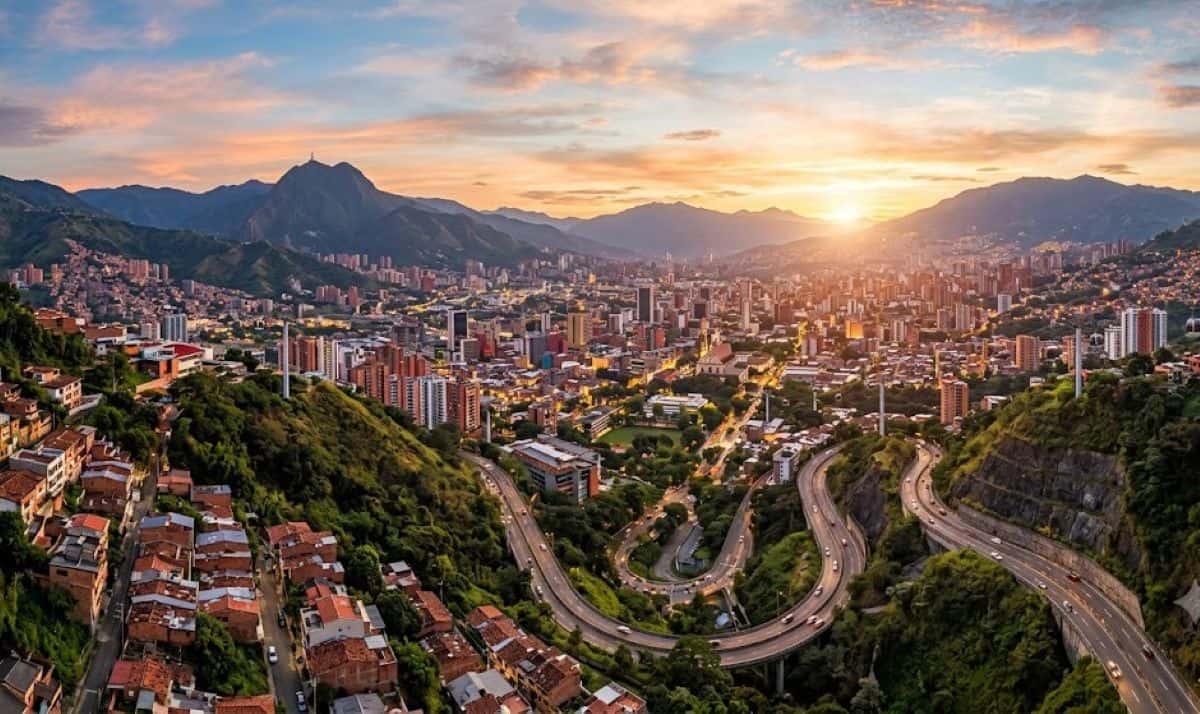
Image generated with Ai
Medellín, located within Colombia’s Aburrá Valley, has increasingly been presented as a city where dramatic natural scenery, cultural identity and modern urban development exist side by side. Known as the City of Eternal Spring, the destination has attracted travellers through its comfortable climate, hillside communities and energetic city atmosphere. The city has shown that urban life does not need to remain disconnected from nature. Instead, visitors have been encouraged to experience mountain views, public transport, street art, sculpture, dining and nightlife within one connected journey.
Moreover, Medellín has strengthened its position as a meaningful urban destination through attractions such as the Metrocable, Comuna 13, Plaza Botero and El Poblado. Together, these places have introduced travellers to the city’s geography, artistic heritage, community transformation and contemporary character. Consequently, the city has influenced how global visitors understand modern Colombia, while also creating fresh opportunities for the international travel industry.
Advertisement
Advertisement
The Aburrá Valley Gives Medellín a Dramatic Landscape and a Distinctive Urban Character
Medellín has been shaped physically and visually by the geography of the Aburrá Valley. The city has developed across a long valley floor, while residential neighbourhoods have expanded along the surrounding hillsides. This unusual setting has created an urban landscape in which buildings, roads, green spaces and mountains appear closely connected. Visitors have therefore been able to experience a major metropolitan centre without losing sight of the natural environment surrounding it.
Advertisement
Advertisement
The city’s elevated neighbourhoods have also provided travellers with broad views across the valley. From different parts of Medellín, visitors have been able to observe how densely populated districts follow the natural contours of the landscape. This relationship between geography and development has made the city visually different from destinations built across flatter terrain. As a result, the urban setting itself has become part of the travel experience rather than simply serving as a background for conventional attractions.
For the tourism industry, the Aburrá Valley has created a strong visual identity that can distinguish Medellín in the competitive international city-break market. Travellers have increasingly looked for destinations that combine cultural activity with outdoor scenery. Medellín has been able to offer both without requiring visitors to choose between a city holiday and a nature-based journey. The surrounding mountains have remained visible throughout much of the urban experience, strengthening the emotional and photographic appeal of the destination.
This landscape may also encourage longer and more varied itineraries. International visitors can explore busy neighbourhoods, public spaces and cultural attractions while continuing to experience the valley’s natural scale. Such diversity may help tourism planners present Medellín as more than a short stopover. Instead, the city can be understood as a destination where urban observation, cultural learning and scenic exploration can be combined over several days.
The City of Eternal Spring Supports Flexible Travel Beyond Traditional Holiday Seasons
Advertisement
Advertisement
The title City of Eternal Spring has reflected Medellín’s reputation for mild and comfortable weather. The climate has been described as one of the city’s most recognisable characteristics, as it supports walking, sightseeing and outdoor activity during much of the year. Travellers have therefore been encouraged to explore public squares, hillside districts and neighbourhood streets without depending entirely on one limited season.
This climatic appeal has helped shape the city’s image as an adaptable travel destination. While some places experience sharp seasonal changes that restrict outdoor itineraries, Medellín has generally been presented as suitable for different types of city visits. Visitors interested in art, urban mobility, culture or dining can plan their journeys according to personal schedules rather than being guided solely by a narrow weather window.
For the wider travel industry, year-round appeal can help reduce dependence on short periods of peak demand. Accommodation providers, restaurants and cultural attractions may benefit when visitor interest is distributed more evenly across the calendar. Tourism businesses can also develop programmes for different traveller groups, including independent visitors, cultural tourists and people seeking shorter urban breaks.
Global travellers may regard this flexibility as increasingly valuable. Holiday planning can be affected by school calendars, working patterns, airfares and personal responsibilities. A destination that remains attractive across multiple months may offer travellers greater freedom when selecting dates. Medellín’s pleasant conditions have therefore supported both its tourism identity and its potential to attract visitors outside conventional high-season travel periods.
The Metrocable Has Turned Urban Transportation into an Unforgettable Visitor Experience
The Metrocable has been highlighted as one of the most distinctive ways to experience Medellín. Travellers have been encouraged to rise above the city’s steep hillsides while observing streets, homes, roads and mountain scenery from an elevated position. The journey has allowed visitors to understand the city’s scale and geography in a way that would be difficult from ground level alone.
Rather than functioning only as a means of movement, the Metrocable has become part of the destination’s visual narrative. From its cabins, travellers can see how communities have developed across the slopes of the Aburrá Valley. The changing view reveals the relationship between the valley floor and the higher residential districts, giving visitors a clearer sense of the city’s complex topography.
The experience has also demonstrated how public infrastructure can become relevant to tourism without losing its practical purpose. Travellers increasingly seek authentic ways to observe daily urban life. The Metrocable has offered such an experience because it allows visitors to use a transport system while learning how the city has responded to difficult geographical conditions. The journey has therefore connected mobility, sightseeing and urban understanding within a single activity.
For destination planners worldwide, this model may offer an important lesson. Transport systems can influence how visitors experience and remember a place. When mobility is accessible, visually engaging and closely connected to local geography, it can strengthen a city’s international profile. In Medellín, the Metrocable has supported the image of a modern urban centre that has used innovation to improve movement while also creating a memorable perspective for travellers.
Comuna 13 Communicates Transformation Through Street Art, Community Space and Local Memory
Comuna 13 has been presented as one of Medellín’s most culturally significant neighbourhoods. Visitors have been drawn to its steep streets, colourful murals and strong visual expressions. The public art found throughout the area has been understood as more than decoration. It has reflected stories of identity, resilience, social change and community transformation.
Travellers have been encouraged to explore Comuna 13 with an awareness of the neighbourhood’s deeper meaning. Murals, creative spaces and hillside routes have communicated experiences that cannot be understood through conventional monuments alone. The area has therefore offered visitors an opportunity to engage with a living community and to recognise how art can express collective memory.
The neighbourhood’s growing visibility has also shown how community-based tourism can reshape international perceptions of a city. Visitors who may previously have viewed Medellín through a limited or outdated lens can encounter a more complex story through Comuna 13. This has allowed the destination to present itself through contemporary creativity, local voices and visible urban change.
However, the expansion of visitor interest has also underlined the need for responsible behaviour. Comuna 13 must be recognised as a living neighbourhood rather than treated only as a background for photographs. Travellers should remain respectful of residents, private spaces and community life. For the tourism industry, the area has reinforced the importance of designing experiences that protect local dignity while allowing visitors to learn from the destination’s cultural transformation.
Responsible Neighbourhood Tourism Could Influence How Global Travellers Explore Cities
The attention received by Comuna 13 has reflected a wider change in travel behaviour. Many international visitors no longer want to see only famous monuments or central commercial districts. Instead, they have shown growing interest in neighbourhoods where history, art and everyday life can be experienced directly. This shift has created opportunities for cities to present more layered and human stories.
In Medellín, neighbourhood-based tourism has helped expand the visitor itinerary beyond conventional sightseeing. Travellers can observe murals, public spaces and hillside communities while gaining a more detailed understanding of the city’s identity. Such experiences may encourage visitors to spend more time in the destination and to explore areas that were not previously included in mainstream urban travel plans.
For the travel industry, this development may support smaller-scale cultural experiences and more locally focused itineraries. However, increased visitor numbers can also place pressure on communities when tours are poorly managed. Tourism professionals must therefore balance commercial demand with respect, cultural accuracy and responsible movement through residential areas.
The global effect may be a stronger emphasis on ethical city travel. Visitors may become more conscious of how their behaviour influences local communities. The appeal of Comuna 13 has suggested that meaningful tourism should involve listening, learning and observing respectfully, rather than simply collecting images. This approach could influence how urban destinations around the world present neighbourhoods shaped by creativity and transformation.
Plaza Botero Places Fernando Botero’s Artistic Legacy at the Heart of Central Medellín
Plaza Botero has remained an important cultural attraction in central Medellín. The public square has allowed travellers to view the distinctive sculptures created by Fernando Botero, whose artistic style has become known for its exaggerated proportions and immediately recognisable forms. Visitors have been able to approach the works closely and experience them within an open urban environment.
The sculptures have given the plaza a strong and memorable identity. Their scale has made them visually powerful, while their placement in a public space has allowed art to become part of everyday city life. Travellers do not need to enter a formal gallery to encounter this aspect of Colombia’s artistic heritage. Instead, the works can be experienced while moving through the centre of Medellín.
This accessibility has strengthened the destination’s appeal to a broad range of visitors. Art specialists may appreciate the connection to Fernando Botero, while casual travellers can enjoy the sculptures without needing detailed prior knowledge. The plaza has therefore supported cultural tourism in a way that remains open, direct and approachable.
For the tourism industry, Plaza Botero can form part of walking tours, educational visits and city-centre itineraries. It may also encourage travellers to explore nearby public spaces and cultural districts. The plaza has connected Medellín’s contemporary tourism identity with one of Colombia’s most recognised artistic legacies, giving international visitors a clear cultural reference point.
Public Art Has Made Medellín’s Cultural Identity More Visible and Accessible
The importance of public art in Medellín has not been limited to a single location. Both Plaza Botero and Comuna 13 have shown how creativity can shape the way visitors understand a city. However, each place has communicated a different type of cultural experience. Plaza Botero has connected travellers with a major artistic figure, while Comuna 13 has expressed community identity and social transformation through murals.
Together, these places have demonstrated that art can be experienced outside traditional cultural institutions. Visitors can encounter sculpture and street art while moving through public areas, neighbourhoods and city-centre spaces. This accessibility may be particularly meaningful for travellers who do not normally include museums or galleries in their itineraries.
For tourism businesses, public art can support guided routes, photography-focused visits and educational experiences. It can also encourage travellers to spend more time walking through different parts of the destination. Longer exploration may contribute to greater visitor engagement with cafés, public spaces and surrounding districts.
On a global level, Medellín’s use of public art within the visitor experience may encourage other destinations to recognise local creativity as a tourism asset. However, the city’s example has also suggested that art should not be separated from its social and cultural context. Travellers gain a more meaningful experience when they understand why the work exists, what it represents and how it relates to the people who live nearby.
El Poblado Extends the Visitor Journey Through Dining, Cafés and Nightlife
El Poblado has been described as one of the most energetic parts of modern Medellín. The district has attracted travellers through its restaurants, cafés, nightlife and contemporary urban atmosphere. After spending the day exploring scenic or cultural attractions, visitors have been able to continue their city experience through evening dining and entertainment.
The neighbourhood has helped present Medellín as a destination with activity across different parts of the day. The Metrocable, Comuna 13 and Plaza Botero may shape daytime itineraries, while El Poblado offers a contrasting evening environment. This balance has allowed travellers to combine sightseeing with social experiences, food and modern city life.
For the hospitality sector, El Poblado can encourage longer stays and additional visitor spending. Travellers who remain active into the evening may use more restaurants, cafés and entertainment venues. The area may also appeal to international visitors who value convenience and prefer to find several urban experiences within one district.
Nevertheless, travellers have been advised to plan their movements sensibly and remain aware of their surroundings, as they would in any major international city. El Poblado’s importance lies in its ability to complete the Medellín itinerary by adding contemporary energy to the city’s natural, artistic and cultural attractions.
Medellín’s Combined Attractions Could Reshape Colombia’s International Tourism Image
The tourism appeal of Medellín has rested on the variety of experiences available within one city. Visitors can observe the Aburrá Valley from the Metrocable, explore social transformation in Comuna 13, encounter sculpture at Plaza Botero and experience dining and nightlife in El Poblado. Each location presents a different dimension of the destination.
This diversity may help travellers move beyond simplified perceptions of Colombia. Medellín has been presented as a city of innovation, creativity, public culture and distinctive geography. International visitors can therefore experience the country through an urban destination that combines modern development with local identity.
The wider travel industry may respond by including Medellín in more city-break and multi-destination itineraries. Travellers exploring Latin America could consider combining the city with other Colombian destinations, while those seeking shorter holidays may view it as a complete urban experience in its own right.
Medellín’s strongest tourism advantage has been its ability to connect landscape, mobility, art, neighbourhood identity and nightlife without reducing the destination to a single attraction. This integrated appeal may support stronger global interest while encouraging travellers to stay longer, explore more carefully and engage more deeply with contemporary Colombian culture.
A Connected Urban Journey Could Influence the Future of Global City Travel
Medellín has demonstrated that a city can become memorable not only through individual landmarks but also through the relationship between its different experiences. The Aburrá Valley provides the natural setting. The Metrocable reveals the city from above. Comuna 13 communicates transformation. Plaza Botero celebrates artistic identity. El Poblado adds dining, nightlife and modern energy.
For global travellers, this combination has created a journey that extends beyond a simple checklist. Visitors can examine how geography has influenced urban growth, how transport has connected hillside communities, how art has expressed identity and how contemporary districts have supported the city’s social life.
The travel industry may increasingly value destinations that offer this level of connection. Modern visitors often seek experiences that are visually appealing, culturally meaningful and easy to combine. Medellín has brought these qualities together within one coherent urban destination. As international interest in culturally immersive travel continues, the city may gain greater importance within Latin America’s tourism landscape. Its lasting appeal is likely to depend on responsible development, respectful visitor behaviour and the protection of local identity. Medellín’s story has shown that urban tourism can become more powerful when travellers are invited not only to see a city, but also to understand how its people, places, landscape and culture influence one another.
Advertisement
