
Switzerland Brings Fresh Cross Border Train Routes to Europe Holidays in 2027

Updated
Published
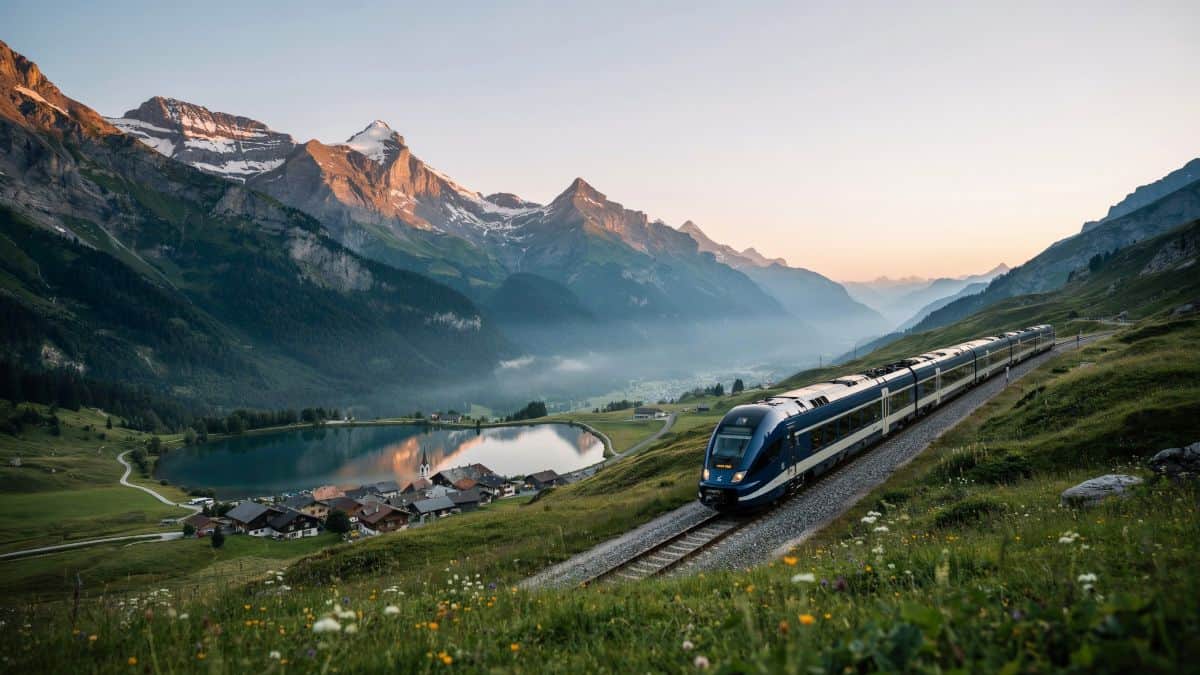
Switzerland creates possibilities for rail holidays for people planning their escapes from Europe in 2027 via new links and established ones that ease the planning of a journey. Travellers will be able to visit Alpine gateway destinations, lakeside stops, city stops and even cultural ones without viewing the rail journey as wasted time.
Nevertheless, rail holidays have to be properly planned. Different tickets might apply for a part of the trip. Reservations might be necessary for the scenic trains. On the other hand, cross-border services can be operated at different times. For this reason, people should pay attention to the transfer times, fare policies and availability when reserving hotels.
Milan and Brussels Turn One Night Train into a Bigger European Holiday
The clearest new rail-holiday hook comes from the Brussels–Milan overnight train. European Sleeper launched the direct connection on 9 September 2026. It runs three times a week from Milan, on Wednesdays, Fridays and Sundays, with return departures from Brussels on Mondays, Thursdays and Saturdays. The operator has opened bookings through September 2027.
This matters because the service does more than connect two large cities. Its route includes Como San Giovanni. That gives travellers a practical opening for Lake Como. The train also crosses Switzerland and Germany before reaching Belgium. In simple terms, the journey can become part of the holiday. A traveller may board in Brussels, sleep through part of the route and wake up closer to northern Italy’s lakes, cities and mountain gateways.
Advertisement
Advertisement
That is a powerful shift for rail tourism. A traditional city break often starts and ends in the same place. This service makes a longer, multi-stop route easier to imagine. A visitor could begin in Belgium, stop in Cologne, travel overnight towards Italy, spend time in Como, then continue to Milan. The rail journey is not merely transport between two hotel stays. It becomes a useful holiday night.
The service also creates a more flexible map for travellers arriving from nearby markets. On 13 December 2026, the route is scheduled to change to include Antwerp, Breda and Eindhoven before continuing towards Cologne and Milan. That means travellers in more cities will have a direct boarding point ahead of the 2027 holiday season.
Advertisement
Advertisement
For tourism businesses, the opportunity is clear but not guaranteed. New access may make an area easier to reach. It may encourage a visitor to add an extra overnight stay. It may support smaller local excursions. But none of these outcomes can be assumed. A train service is an access tool. Destinations still need clear local transport, bookable accommodation and easy visitor information to turn access into actual spending.
Antwerp Breda and Eindhoven Gain a New Place on the 2027 Holiday Map
The scheduled addition of Antwerp, Breda and Eindhoven gives this story a useful regional angle. These places are not simply points on a timetable. They change where a passenger can begin a holiday. A traveller may no longer need to travel first to Brussels to join the overnight route. Starting closer to home can make a cross-border rail break feel simpler.
Antwerp brings a major Belgian city into the route. Breda and Eindhoven add Dutch options. Each place can serve two roles. It can be a departure city for travellers heading south towards Lake Como and Milan. It can also become a stop that visitors from Italy, Switzerland, Germany or Belgium may choose to explore. This is how rail links can spread tourism value across several places rather than focusing only on the two headline cities.
However, passengers should treat this as a scheduled change until it has entered service. Timetables can change. Engineering work can alter a route. Train times can move. Travellers should check their individual date before paying for hotels, tours or local transport. This is especially important for overnight services, where a late change can affect a whole itinerary.
There is another practical point. A direct boarding city does not mean every journey is simple. Travellers still need to understand the train’s operating days, carriage type, sleeping arrangements and arrival time. A cheap-looking fare may not include the type of berth a traveller wants. A late arrival may affect a hotel check-in. A lake excursion or mountain train may require another booking.
The winning 2027 itinerary will be the one built with enough time. Rail holidays work best when travellers allow room for a long lunch, an extra night or a missed connection. The route opens a door. A sensible plan makes sure the door remains useful.
Advertisement
Advertisement
London Connections Make Booking Easier but Do Not Guarantee the Transfer
London adds another important layer. European Sleeper now advertises selected combined journeys from London via Eurostar to Brussels and onward by overnight train. The listed destinations include Milan, Lake Como, Berlin, Dresden, Prague and Hamburg. This gives British travellers a clearer route into continental overnight rail without having to search each segment separately.
The convenience is real. The booking tool identifies connection times that are intended to give passengers enough time to change trains in Brussels. It can reduce the time spent searching across different websites. It helps people see a longer rail holiday as one understandable journey rather than a collection of confusing steps.
But the most important detail is the one travellers must not miss. These are connecting journeys, not direct overnight sleeper trains from London. The tickets are separate. European Sleeper states that transfers are not guaranteed. If a delay causes a missed connection, replacement transport or new tickets are not automatically provided. Passenger rights, compensation and rebooking options depend on the operator and ticket conditions for each part of the trip.
This difference matters greatly. A simple booking screen does not always create a fully protected journey. Travellers should read the conditions before paying. They should also consider a longer connection in Brussels if they have an important onward plan. A hotel night near Brussels-Midi may be sensible for some people. Others may prefer a fare with more flexible conditions.
This is the central truth of cross-border rail travel in 2027. Booking may become easier before travel becomes fully seamless. The rail industry is improving the first part of the customer journey: finding a route. But the protection offered after disruption can still vary from train to train.
That does not make these trips a poor choice. It simply changes how they should be planned. A traveller should not build a tight onward cruise departure, an expensive concert ticket or a non-refundable mountain hotel around an unprotected transfer. The best rail holiday is exciting, but it also leaves space for real life.
Advertisement
Advertisement
Basel’s Planned TGV Link Could Unlock a New Swiss Rail Gateway
Basel is the next important future development. Swiss Federal Railways, known as SBB, announced a pilot extension of the Brussels–Strasbourg TGV INOUI service to Basel. The planned start is July 2027. The proposal calls for one return trip on Fridays, Saturdays and Sundays. Tickets are expected to go on sale in spring 2027.
This is not yet a daily service. It is not already bookable. It is a planned pilot. Those facts must stay clear. Yet the tourism potential is strong because Basel sits at a major meeting point between Switzerland, France and Germany. It can serve as an arrival city for travellers who want to continue by rail into Switzerland rather than treating Zurich or Geneva as the only possible gateways.
Basel can be the start of a different kind of Swiss holiday. A visitor could arrive from Brussels through Strasbourg, spend time in the city, then continue towards Lucerne, the Bernese Oberland, Chur, St Moritz or Ticino. The new international TGV link and the scenic Swiss journey are separate products. But together they create a bigger travel idea.
This is especially useful for travellers who want to build a route rather than take a return journey. They may arrive in Basel and leave from another Swiss city. They may combine cities, lakes and mountain regions. They may choose several shorter rail legs instead of one famous panoramic train.
Still, a weekend-focused service creates limits. It may not suit every holiday date. It may not connect neatly with every onward train. It may also face changes during the pilot period. Travellers should wait for ticket sales and published schedules before treating the service as a fixed part of a 2027 plan.
The wider significance is simple. Europe’s rail map is gaining more cross-border edges. Every new edge can make a regional holiday easier to build. But it does not remove the need to check times, tickets and local links.
Advertisement
Advertisement
Switzerland’s Scenic Network Turns Rail Travel Into the Holiday Itself
Switzerland already has the strongest established scenic rail story in this wider European picture. Switzerland Tourism describes the Grand Train Tour of Switzerland as a route of about 1,280 kilometres. It has eight sections, includes 11 large lakes and passes five UNESCO World Heritage Sites. Its wider network features well-known experiences such as the Glacier Express, Bernina Express and GoldenPass Express.
The key point is that this is not one train. It is a network-shaped holiday. A visitor can make choices. They can add a lakeside stop. They can stay in a small mountain town. They can link a city break with a panoramic journey. They can take a slower regional train when it suits their plan.
That flexibility gives Switzerland a strong role in the 2027 story. A new international arrival in Basel could feed into this existing scenic network. A traveller using the Milan–Brussels sleeper could also pass through Switzerland and choose a separate Swiss stay. The country’s value is not only its famous trains. It is the ability to link many rail experiences with overnight stops.
However, scenery alone does not guarantee an easy journey. Switzerland Tourism explains that the Swiss Travel Pass and Swiss Travel Pass Flex cover the Grand Train Tour, but reservation fees and surcharges can still apply. Reservations are mandatory on major services including the Glacier Express and Bernina Express.
This is where many travellers can get caught out. A pass is not always a seat. A pass may cover travel but not the required booking fee. A panoramic train can be full even when regular trains are still available. Holidaymakers should check each segment early, especially in high summer, winter ski periods and popular school breaks.
The better message is not “buy one pass and everything is solved”. It is “use the pass as one part of a plan”. Book key panoramic trains first. Then build hotel nights and local activities around confirmed seats. This approach protects the holiday and reduces costly last-minute changes.
Advertisement
Advertisement
Spain and Austria Show Why Regional Rail Stories Need More Than a New Route
Spain adds a different kind of rail-holiday appeal. Renfe’s Al Ándalus train focuses on heritage, culture and inland destinations. Its expanded Madrid–Seville programme was introduced in 2026, and 2027 itineraries have been published. This is not a mass transport service. It is a curated rail experience where the journey, accommodation and destination visits form one product.
That distinction is important. Al Ándalus shows how rail tourism can place inland heritage areas at the centre of a holiday. A traveller does not need to treat Madrid or Seville as quick gateways. The rail experience can encourage longer stays and attention to places between major city icons. It helps make regional culture part of the itinerary.
Austria offers a more practical example. The Graz–Klagenfurt Koralmbahn is operating, with the fastest advertised journey taking 41 minutes. This can support a compact holiday that connects Graz with Carinthia’s lakes and outdoor areas. The value is not only speed. It is the way shorter travel time can give visitors more usable hours in each place.
A traveller can arrive in Graz, spend time in the city, then continue towards Klagenfurt without losing much of the day. That may make a two-centre break more attractive. It may also make day trips possible for some visitors. But again, this is opportunity, not proof of tourism growth. There is no automatic link between a quicker train and higher occupancy or greater spending.
The lesson from Spain and Austria is that Europe’s rail story has several forms. One route may be a luxury heritage product. Another may be a fast regional connector. Another may be an overnight cross-border service. They can all shape travel choices, but they do so in different ways.
Ticketing Reform Is Promising but Travellers Still Need to Read the Small Print
New rail vacation options for Europe breakers are offered by Switzerland, as it opens up its picturesque railway network through new connections. Thus, there is an increase in the opportunities for combining travel routes in accordance with their interests in European vacations in 2027. Nevertheless, there are several points to consider in order not to experience any problems during the trip. It may be necessary to reserve seats on some trains, and not all trains operate every day. It is possible that one will have to purchase separate tickets, which will mean one’s own responsibility for a missed transfer.
Advertisement
