
Spain Leads Europe’s Safest City Choices for Smart Travellers

Published
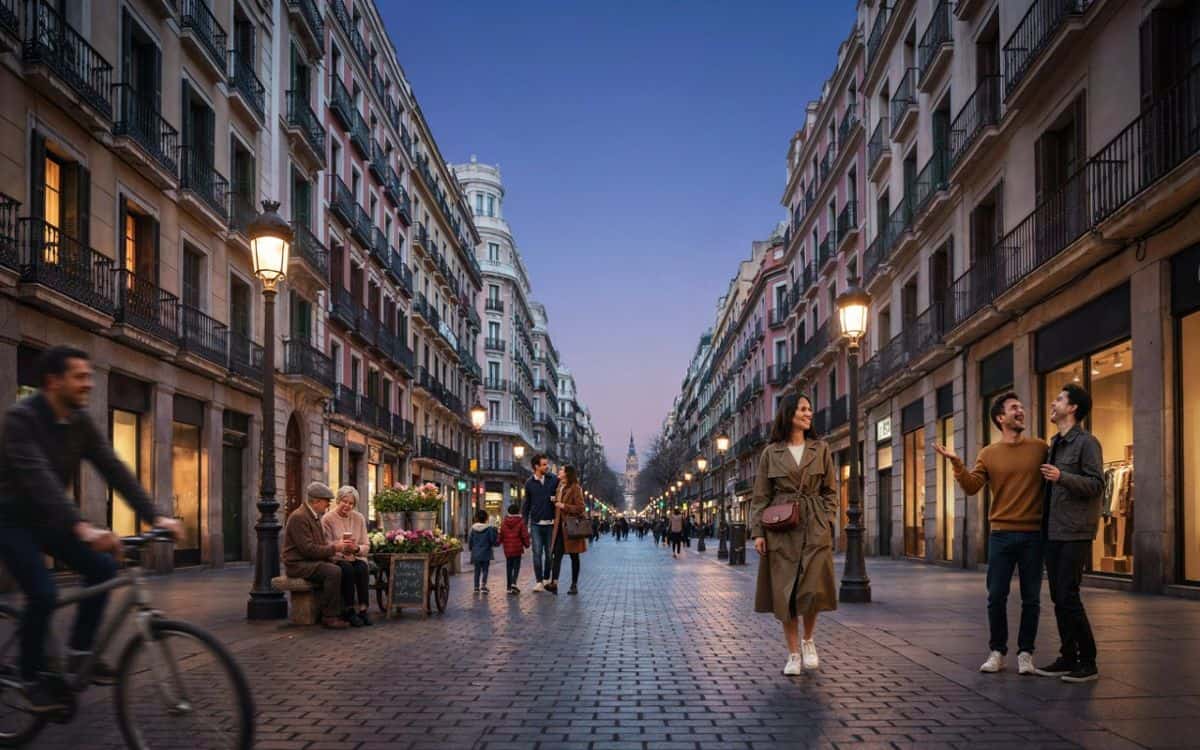
The top choice in terms of Europe’s safest cities to visit is Spain because of the fact that Madrid boasts of one of the lowest published murder rates in official statistics available on the city. On the other hand, it does not imply that all streets are risk-free. It proves that visitors to the city can rely on some facts to plan their trip. Copenhagen performs well in terms of the fact that its residents feel safe at night, and Munich has one of the lowest crime rates among big cities in Germany. Thus, Europe has a lot of options.
Why Europe Has No Single Low-Crime City Ranking
Many people want to know which European city has the lowest crime rate. It sounds easy. Find the figures. Put them in order. Pick the winner.
Real crime data is more complex.
Europe does not have one official table that ranks every city by all crimes in 2026. Full 2026 figures do not exist yet. The year is still running. Official European data also takes time to collect, check and publish.
Advertisement
Advertisement
The latest major European crime figures cover 2024. This means a report published in 2026 may still show crime recorded two years earlier.
Cities also record crime in different ways. Countries have different laws. People report offences at different rates. A stolen phone may be reported in one city but ignored in another. Insurance claims can also increase reports of theft.
Advertisement
Advertisement
Police-recorded crime only shows cases reported to police. It does not show every crime that happens. Some people do not report offences. Some reports later turn out to be incorrect.
This is why a city cannot be named Europe’s safest place by using one number alone.
Advertisement
Advertisement
The strongest picture comes from three measures. One shows homicide rates. Another shows how safe residents feel at night. A third uses recent city police reports.
Each measure tells a different story.
Madrid Has the Lowest Available Homicide Rate
Homicide is the most serious crime. It is also easier to measure than many other crimes. Deaths are more likely to be reported and counted.
The latest available city data covers intentional homicide victims during 2024. It shows rates per 100,000 residents in selected large cities.
Advertisement
Advertisement
Madrid recorded the lowest available rate in this group. It had 0.22 homicide victims per 100,000 residents. The city recorded ten victims.
Rome came next with 0.40 victims per 100,000 residents. It recorded eleven victims.
Bern came third with 0.43 victims per 100,000 residents. This figure represented one victim. Small cities need careful reading. One extra case can change their annual rate sharply.
| Rank | City | Country | Homicide victims per 100,000 residents | Recorded victims |
|---|---|---|---|---|
| 1 | Madrid | Spain | 0.22 | 10 |
| 2 | Rome | Italy | 0.40 | 11 |
| 3 | Bern | Switzerland | 0.43 | 1 |
| 4 | Budapest | Hungary | 0.89 | 15 |
| 5 | Ljubljana | Slovenia | 1.01 | 3 |
| 6 | Helsinki | Finland | 1.19 | 8 |
| 7 | Zagreb | Croatia | 1.45 | 11 |
| 8 | Amsterdam | Netherlands | 1.68 | 18 |
| 9 | Berlin | Germany | 1.77 | 65 |
| 10 | Vilnius | Lithuania | 2.32 | 14 |
| 11 | Riga | Latvia | 2.33 | 14 |
Madrid’s result grabs attention. Spain’s capital is a huge travel city. Visitors come for art, football, food, fashion, music and history. Yet it recorded the lowest published homicide rate in this selected group.
Rome also stands out. It welcomes travellers from every part of the world. Visitors fill its ancient streets, museums, churches and public squares. Its low homicide rate shows that large global tourism cities can still record low levels of the most serious crime.
But this table needs care.
Advertisement
Advertisement
It does not cover every European city. Only eleven cities had published rates in this selection. It also does not measure every kind of crime. It does not show pickpocketing, theft, scams, fraud, burglary, harassment or minor assault.
A low homicide rate does not mean a city has no risk. It means the city recorded a low rate for one very serious crime.
That is useful for travellers. But it is not the full safety picture.
Copenhagen Tops the Night-Time Safety List
Crime figures show one side of city life. People’s feelings show another.
A wide European survey asked residents whether they felt safe walking alone at night in their city. It covered 83 cities and more than 70,000 people.
Copenhagen came first.
Advertisement
Advertisement
Around 87.4% of respondents in Copenhagen said they felt safe walking alone at night. Oviedo in Spain came second with 86.7%. Ljubljana in Slovenia came third with 86.5%.
| Rank | City | Country | Residents feeling safe walking alone at night |
|---|---|---|---|
| 1 | Copenhagen | Denmark | 87.4% |
| 2 | Oviedo | Spain | 86.7% |
| 3 | Ljubljana | Slovenia | 86.5% |
| 4 | Białystok | Poland | 86.0% |
| 5 | Groningen | Netherlands | 85.7% |
| 6 | Zurich | Switzerland | 85.6% |
| 7 | Aalborg | Denmark | 84.7% |
| 8 | Braga | Portugal | 84.4% |
| 9 | Luxembourg City | Luxembourg | 82.9% |
| 10 | Oulu | Finland | 82.8% |
Copenhagen’s result is powerful. Denmark’s capital has busy streets, lively restaurants, tourist areas, public transport and major events. Yet most residents said they felt safe walking alone at night.
Oviedo also deserves attention. This city in northern Spain is smaller than Madrid or Barcelona. It has historic streets, green areas, regional food and links to the Camino de Santiago. Its high score shows how strongly smaller cities can perform.
Ljubljana gives travellers another reason to look at Slovenia. The city has a compact centre. It is easy to walk around. It also ranks highly for residents’ night-time safety and has a low homicide rate.
Białystok, Groningen, Zurich, Aalborg, Braga, Luxembourg City and Oulu also scored strongly. These cities sit across different parts of Europe. Strong safety feelings do not belong to one single region.
Smaller cities often score better for night-time safety. They may have quieter streets. They may have shorter journeys. They may have closer local communities. They may also have fewer crowded public spaces.
Advertisement
Advertisement
Still, the survey does not explain every reason why people feel safe.
Good lighting may help. Clean streets may help. Visible transport staff may help. Fast police responses may help. Local trust may also help.
Feeling Safe and Low Crime Are Different Things
A city can have low crime but still make people feel nervous. A city can also have more reports of crime but still make people feel safe.
This can happen for many reasons.
Large tourism cities have more people. They have residents, workers and visitors. A city with millions of visitors may record more reports of lost bags, stolen phones or pickpocketing. That does not always mean the city is dangerous.
Crowded stations can also change how people feel. Loud areas, poor lighting and late-night behaviour can make people uneasy. The actual crime rate may be low. But the fear can still feel real.
Advertisement
Advertisement
Women often feel less safe at night than men. Older people can also feel less safe. This happens in many cities.
That is why a good travel safety report must use more than one measure.
It should ask how much serious crime happens. It should ask what crimes affect visitors. It should ask whether people feel safe after dark. It should also ask whether police and transport staff can respond quickly.
Travellers need useful answers. They need facts they can understand. They do not need wild claims that one city is perfectly safe.
No city is free from crime. Every visitor should stay aware.
Munich Keeps Germany’s Safest Large City Title
Munich gives a newer picture of city safety.
Advertisement
Advertisement
Munich Police released their 2025 security report in March 2026. The city remained Germany’s safest city with more than 200,000 residents. It held this position for the fiftieth time.
Munich recorded 5,798 offences per 100,000 residents in 2025. This figure fell from the year before.
The city recorded 98,478 offences in 2025. This was 1.8% lower than the 100,330 offences recorded in 2024. Police also recorded a 62.9% detection rate.
Munich reported fewer than half as many offences as Berlin, Hamburg, Frankfurt, Cologne and Bremen in its comparison of major German cities.
This is a major travel result. Munich attracts visitors for Oktoberfest, football, business events, concerts, museums and Bavarian culture.
But the report also shows why people must look past one total number.
Advertisement
Advertisement
Violent crime rose slightly to 5,133 cases. Cybercrime rose to 4,093 cases. Residential burglary increased to 1,008 cases. Serious sexual offences also increased.
At the same time, robbery fell to 695 cases. Theft fell to 31,468 cases. Violence on public transport also declined.
Munich remains a strong city in Germany’s safety picture. Yet its crime trends show that city safety needs regular work. New risks can appear. Digital crime can rise. Theft can fall. Public transport conditions can improve.
Cities must keep watching the data.
Copenhagen’s New Report Shows a Change
Copenhagen topped the wider European night-time safety survey. But the city’s newer local report shows that safety feelings can move.
In 2026, 86% of Copenhagen residents said they felt safe in their neighbourhood. This was down from 88% in 2025.
Advertisement
Advertisement
Around 78% said they felt safe during evening and night-time hours. This was down from 80% in the previous year.
The city recorded 50,337 Criminal Code offences in 2025. This was equal to 75 offences per 1,000 residents. The rate was slightly lower than the 2024 figure.
Theft reports, including pickpocketing, rose a little. Burglary and violence reports stayed unchanged.
These numbers do not erase Copenhagen’s earlier strong result. They show why dates matter.
A city may lead one survey. Then people may feel less safe the next year. A new nightlife issue may appear. A transport problem may develop. A busy local area may need more police attention.
For travellers, Copenhagen remains a city where many residents feel safe. But visitors should still take basic care. Keep bags close. Watch drinks in nightlife areas. Use trusted transport. Stay alert in crowded stations.
Advertisement
Advertisement
These steps are simple. They can stop many common travel problems.
What Travellers Should Learn From Europe’s Safest Cities
The data gives travellers a clear message. Europe has many cities with strong safety signs.
Madrid has the lowest available homicide rate in the selected city group. Rome and Bern also record low rates. Copenhagen leads the night-time safety survey. Oviedo and Ljubljana follow closely. Munich remains Germany’s safest large city.
But no city can be called Europe’s safest place by using this research alone.
Madrid leads one serious-crime measure. Copenhagen leads one safety-feeling measure. Munich leads one German city comparison.
Each result is useful. Each result needs its own date and meaning.
Advertisement
Advertisement
Travellers should use rankings as one guide. They should also check official city information before travelling. They should look at local transport advice. They should check hotel locations. They should learn the emergency number.
A safe trip begins with easy habits.
- Keep passports, cash and cards secure.
- Use a hotel safe where possible.
- Keep bags close in busy places.
- Watch belongings in stations and cafés.
- Plan the journey home before going out.
- Use trusted taxis and public transport.
- Avoid quiet and dark streets late at night.
- Learn local emergency contacts.
- Stay alert in busy tourist areas.
- Tell someone where you are going if travelling alone.
These simple steps matter in every city. They matter in Madrid. They matter in Rome. They matter in Copenhagen. They matter in Munich.
Europe’s Safety Story Has More Than One Winner
The safety in European cities is presented by the latest statistics, where Madrid, Rome and Bern emerge as top contenders when it comes to low-crime homicide statistics available. On the other hand, Copenhagen deserves special mention as there is a high level of safety that people feel when walking during the nighttime, while Munich remains the safest major city of Germany. Hence, every traveler must look into all these statistics carefully. Crime statistics, resident safety and police statistics are indicators of different types of safety. All these helps in making wise choices and enjoying the trip with confidence.
Advertisement
