Published on February 7, 2026
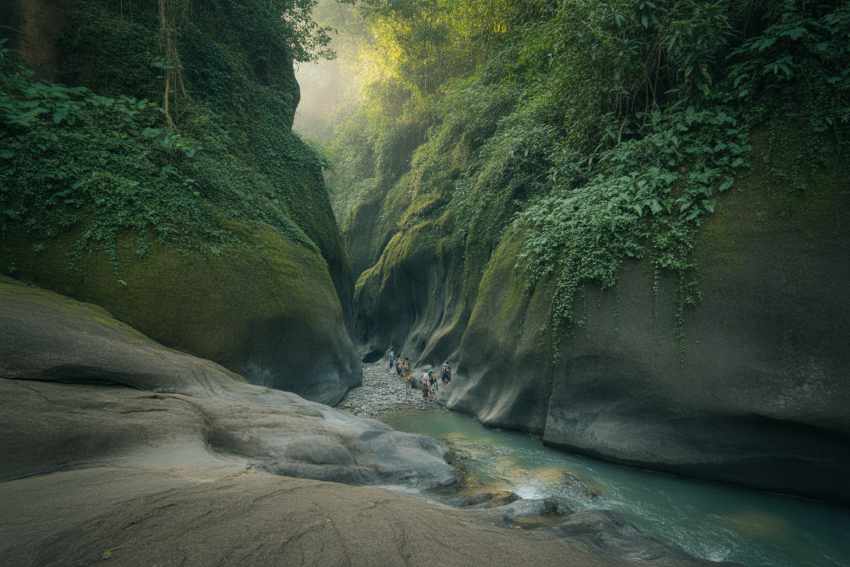
Deep within the verdant, rolling hills of Sreemangal, a geological mystery is being revealed to the world. For centuries, the ancient canyons known as Nisvarga Girikhat, Ulka Girikhat, and Baykul Girikhat were protected by dense vegetation and the rugged terrain of the Sylhet Division. These formations, which are thought to be thousands of years old, have recently emerged as a top destination for those looking for a break from traditional tourism. The landscape is defined by its dramatic geography, which includes towering cliffs and deep ravines that create an oasis of unspoiled beauty. It is a region where the insistent force of nature can be seen in every carved stone and rushing stream, providing a unique glimpse into Bangladesh’s primordial environmental history.
The linguistic roots of the region provide a window into its soul. In the local Khasi language, the term Lasuban is frequently used to describe this terrain, translating to “hilly flower” or “wild flower”. This name is a testament to the vibrant biodiversity and the lush greenery that blankets the steep walls of the gorges. Geologically, these canyons are defined as narrow, steep-sided valleys formed over millennia through the persistent process of water erosion. Unlike standard ravines, these gorges are characterized by their immense depth and the mystical, shadowed atmosphere created by the narrow gaps between the cliffs. The steady flow of rivers at the base continues to sculpt the grey stone walls, creating a striking visual contrast against the deep green canopy of the surrounding forests.
The recognition of these canyons on a national scale is a relatively recent phenomenon. The initial discovery of these sites is credited to Md Tazul Islam Zaved, the Sreemangal Upazila Coordinator for Minority Affairs, who first encountered the formations in 2000. While conducting research on the lifestyles of local ethnic groups, the remote and then-unknown depths of the forest were explored. At the time of discovery, the landscape was largely inaccessible, and the rugged terrain was navigated only by those with intimate knowledge of the hills. The isolation of the canyons was further intensified during the global pandemic in 2021, when travel restrictions limited movement. However, through persistent efforts to document and share the region’s splendour, the canyons have slowly gained prominence as a significant ecological and adventurous landmark.
The canyons are located within the ancestral lands of the Khasi people, particularly near the Lawachhara punjee and the Nahar tea gardens in the Sindurkhan Union. To the local Khasi community, the gorges are known as Krem Kru and Krem Ulka, terms that evoke the imagery of long, winding trains. A deep-seated philosophy of nature worship is maintained by these communities, ensuring that the environment is treated with the utmost reverence. Because the resources of nature are viewed as essential for human well-being, the destruction of the ecosystem has never been contemplated. Consequently, the gorges have remained largely unchanged for generations, preserved by the sustainable lifestyle of the indigenous residents who live in harmony with the land.
Advertisement
Advertisement
Accessing these hidden gems is described as an exhausting yet exhilarating endeavour. The journey requires the crossing of steep hills and the navigation of dense, moisture-laden jungles. The path is often obscured by vines and made precarious by slippery, rain-soaked earth. Small groups of local guides are essential for those attempting to traverse the difficult ridges. Once the base of the gorge is reached, the reward is a mesmerizing display of nature’s power. Large stones, smoothed and shaped by centuries of water flow, are illuminated by a dim, mystical light that filters through the thick overhead canopy. The sensory experience is heightened by the acoustic environment, where the rushing of water and the calls of exotic birds resonate through the narrow pathways.
Beyond their aesthetic appeal, the canyons of Sreemangal are recognized as sites of immense ecological importance. The region serves as a vital habitat for a diverse array of flora and fauna, providing shelter for species that are increasingly rare or endangered. The clear, oxygen-rich waters of the streams sustain various fish and aquatic life forms, while the humid forest floor is teeming with unique insects and plants. These canyons are viewed by environmentalists and conservationists as critical sites for scientific study and biodiversity research. The untouched state of the wilderness offers valuable insights into how ecosystems function in the absence of significant human interference, making the preservation of this area a high priority.
Advertisement
Advertisement
As interest in the Sreemangal gorges grows, efforts are being made by the local administration to improve accessibility. The construction of roads and bridges is currently underway to facilitate easier movement for tourists. However, the development of infrastructure in such a remote and hilly area is a slow and deliberate process. Caution is frequently issued by government officials, emphasizing that the terrain remains dangerous and should only be visited with the assistance of experienced guides. There is a strong emphasis on sustainable development to ensure that the influx of visitors does not mar the delicate ecosystem. Careful planning is required to balance the benefits of tourism with the necessity of preserving the pristine condition of the canyons.
For the modern traveller, visiting the Sreemangal canyons is a transformative experience. It is a place where nature’s power is fully displayed, and the forest’s silence provides a profound sense of peace. The winding mountain roads and misty mornings create a sense of mystery and adventure that is becoming increasingly rare in today’s world. As these ancient gorges are gradually integrated into the national tourism landscape, they serve as a symbol of Bangladesh’s hidden natural wealth—a place of rugged beauty, cultural depth, and ecological resilience that continues to captivate the hearts of all who venture into its depths.
Advertisement




















Saturday, February 7, 2026

Saturday, February 7, 2026

Saturday, February 7, 2026

Saturday, February 7, 2026

Saturday, February 7, 2026

Saturday, February 7, 2026
Saturday, February 7, 2026
Saturday, February 7, 2026