
Kenya Aligns with Rwanda, Uganda and Others in Advancing a Unified Digital East Africa Tourist Visa

Updated
Published
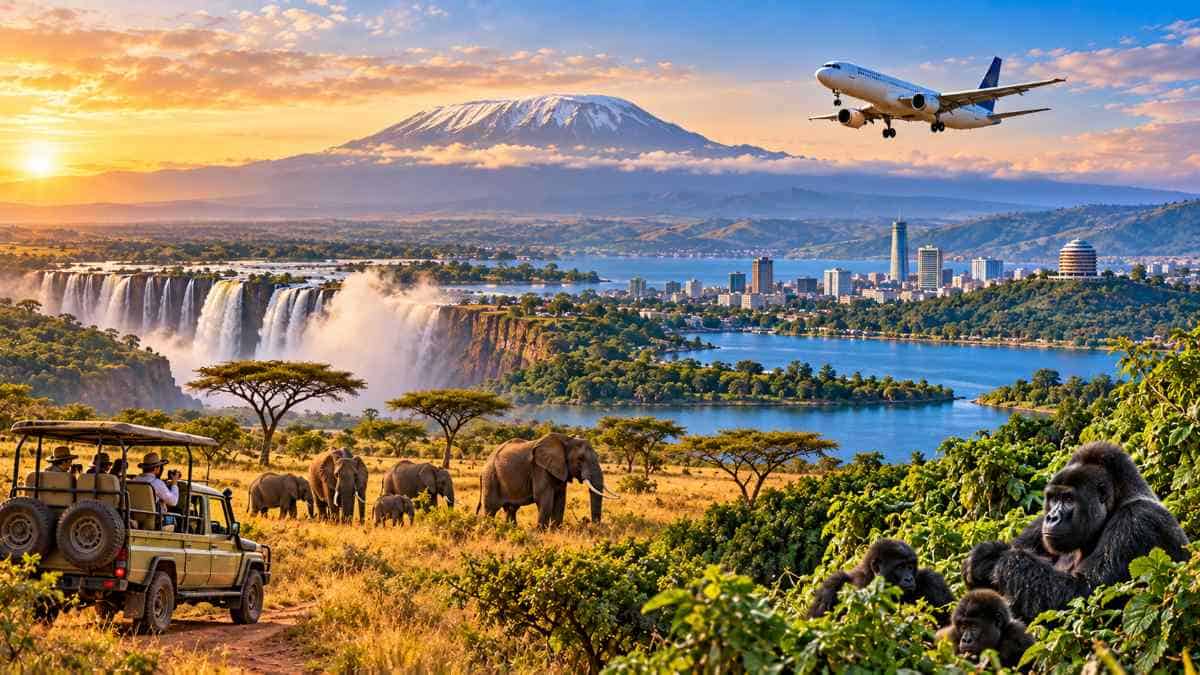
Kenya Aligns with Rwanda, Uganda and Others in Advancing a Unified Digital East Africa Tourist Visa. The nations of Kenya, Rwanda and Uganda plan to improve cross-border tourism through an improved digital East Africa Tourist Visa (EATV) system, including plans for biometric immigration coordination at their main international airports. The project, which involves the cities of Nairobi, Kigali and Kampala, will seek to make life simpler for tourists visiting the three nations, especially for individuals who intend to go on multiple destination safaris. The new system will be focused on digital immigration coordination, biometric coordination and elimination of repetitive paperwork for tourists who travel to multiple countries. The Jomo Kenyatta International Airport of Nairobi, Kigali International Airport and Entebbe International Airport are identified as the main ports of entry for the project. The improved system also includes wildlife conservation credits for joint efforts that will serve to encourage tourists to visit the national parks and protected areas in different countries. The effective date is 18 October 2026, but biometric coordination and conservation credit plans have not been independently verified yet. For foreign tourists, the whole idea is centred on easing the process of combining savannah safaris in Kenya, gorilla safaris in Rwanda and forest safaris in Uganda in one vacation.
East Africa Tourist Visa Forms the Foundation of Regional Travel
The East Africa Tourist Visa already provides a shared immigration arrangement for eligible visitors travelling to Kenya, Rwanda and Uganda. Introduced in 2014, the multiple-entry visa allows qualifying international tourists to visit all three participating countries under one travel document, subject to its conditions.
The visa is generally valid for 90 days and costs US$100. It does not permit employment, and travellers must comply with the immigration requirements established by the participating countries.
The proposed digital upgrade would build on this existing arrangement by improving the administrative processes involved in cross-border travel. Rather than requiring visitors to navigate repeated declarations and separate clearance procedures during multi-country itineraries, the planned system would use coordinated digital records to support immigration processing.
Advertisement
Advertisement
For safari operators, this could simplify the organisation of holidays involving several destinations, particularly when visitors cross national borders by road between wildlife reserves.
Kenya Strengthens Its Position as an East African Safari Gateway
Kenya remains one of Africa’s leading wildlife tourism destinations, attracting international visitors through its national parks, conservation areas and established safari infrastructure.
Advertisement
Advertisement
Nairobi serves as the country’s principal international aviation gateway, with Jomo Kenyatta International Airport handling international arrivals from major global markets. The capital also provides connections to domestic destinations and regional safari circuits.
The Maasai Mara National Reserve remains among Kenya’s most recognised attractions, particularly during the annual Great Migration, when large herds of wildebeest and zebra move between Tanzania’s Serengeti ecosystem and Kenya’s grasslands.
Advertisement
Advertisement
Other important destinations include Amboseli National Park, known for its elephant populations and views of Mount Kilimanjaro, and Tsavo National Parks, which offer extensive wildlife habitats.
Improved immigration coordination could make it easier for visitors to combine Kenyan safari experiences with onward journeys into Rwanda and Uganda.
Rwanda Brings Mountain Gorilla Tourism into the Regional Circuit
Rwanda offers a distinctive wildlife experience through its mountain gorilla conservation programme and highland landscapes. Kigali International Airport serves as the country’s principal international gateway, connecting visitors with the capital and major tourism destinations.
Volcanoes National Park, situated in north-western Rwanda, is one of the country’s most important attractions. The protected area forms part of the Virunga Mountains and provides opportunities for guided mountain gorilla trekking.
Advertisement
Advertisement
The experience attracts international visitors interested in wildlife conservation, guided forest expeditions and high-altitude nature tourism.
Rwanda also offers cultural and nature-based experiences beyond gorilla trekking. Nyungwe National Park is recognised for its rainforest biodiversity, chimpanzee tracking and canopy walkway, while Akagera National Park provides savannah wildlife experiences, including opportunities to see elephants, lions, giraffes and rhinoceroses.
More coordinated regional immigration procedures could support itineraries combining Rwanda’s mountain forests with Kenya’s open savannah landscapes.
Uganda Expands Multi-Country Wildlife Tourism Opportunities
Uganda adds another important dimension to the proposed East African tourism network through its combination of rainforest ecosystems, mountain landscapes and savannah reserves.
Entebbe International Airport, situated near Lake Victoria, serves as the country’s main international aviation gateway. Kampala provides access to the wider domestic transport network and tourism services.
Bwindi Impenetrable National Park is among Uganda’s most significant attractions, particularly for mountain gorilla trekking. The protected forest is home to a substantial population of mountain gorillas and attracts visitors seeking guided wildlife encounters.
Advertisement
Advertisement
Queen Elizabeth National Park offers a different experience through its savannah landscapes, Kazinga Channel boat excursions and diverse wildlife. Murchison Falls National Park is another major destination, combining river safaris, game drives and views of the Nile as it passes through a narrow gorge.
For international tourists, Uganda’s proximity to Rwanda and its wider regional connections create opportunities for extended wildlife itineraries.
Biometric Immigration Coordination Could Simplify Airport Arrivals
The proposed digital clearance engine identifies biometric database coordination as a central component of the upgraded East Africa Tourist Visa framework.
Under the described arrangement, immigration authorities would synchronise relevant passenger records across the three principal international airports. This could reduce repeated document submissions and improve the handling of travellers moving between participating countries.
The system would also require appropriate safeguards covering passenger consent, personal information, data retention and access to biometric records.
For airlines and airport operators, coordinated immigration procedures could improve passenger processing, particularly during periods of heavy international arrivals.
Advertisement
Advertisement
However, travellers should continue to follow the existing visa and entry requirements until the proposed changes are formally implemented and confirmed by immigration authorities.
Joint Conservation Credits Could Encourage Longer Safari Holidays
Kenya Aligns with Rwanda, Uganda and Others in Advancing a Unified Digital East Africa Tourist Visa. In addition, the multiple park wildlife conservation credits scheme creates an additional aspect of the regional tourism scheme. In such a case, there is the possibility for tourists to have the option of visiting wildlife conservation areas from different countries through dispersing tourism revenue among various conservancies, safari accommodations, local guides and the surrounding communities. The wildlife conservation areas include the Savannah conservation areas of Kenya, the mountain forest conservation areas of Rwanda and the rainforest and river conservation areas of Uganda. October 18, 2026, marks the projected implementation date, and this makes it clear that the regional initiative aims to put digital immigration and cross-border conservation tourism at the centre of Kenya, Rwanda and Uganda.
Advertisement
