
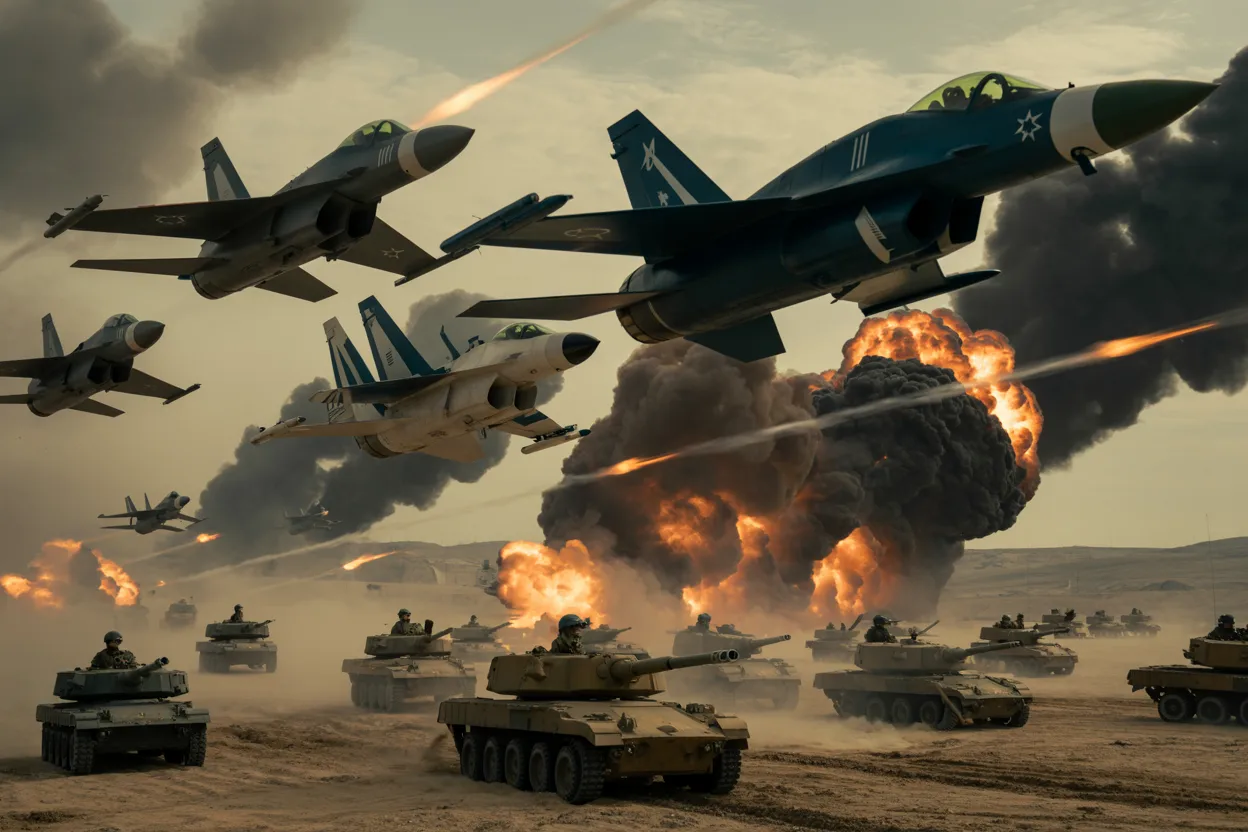
Image generated with Ai
The military conflict between the United States, Israel, and Iran is turning into a widespread regional crisis that is drastically altering the geopolitical landscape of the Eastern Mediterranean. It is noted that Greece and Cyprus have been compelled to transition from their customary positions as far-off observers into a high-stakes setting with front-line strategic risks. The Hellenic world’s national security procedures and economic stability have to be urgently reevaluated as a result of this escalation, which peaked in early 2026.
The territorial integrity of the region is currently being challenged by a significant increase in territorial security risks, with a particular focus on the island of Crete. Because the Souda Bay military facility serves as a vital hub for NATO and U.S. military assets, it is being identified as a primary target for retaliatory strikes. The vulnerability of such installations was underscored on March 2, 2026, when a drone strike was carried out against a British base in Cyprus, specifically RAF Akrotiri. This event has served as a grim confirmation that the conflict has successfully crossed into European territory, prompting the Hellenic Ministry of National Defence to place strategic locations on the highest level of alert.
Advertisement
Significant maritime and shipping threats are being faced by the extensive Greek merchant fleet, which remains the largest in the world by tonnage. Operations in the Strait of Hormuz are being subjected to extreme instability following warnings from the Islamic Revolutionary Guard Corps regarding the passage of commercial vessels. It is reported that war risk premiums and insurance costs have doubled, effectively turning the vital energy corridor into a restricted zone. Greek shipowners are being forced to choose between the risk of vessel seizures and the high costs of rerouting around the Cape of Good Hope, a maneuver that adds weeks to transit times and depletes operational capacity.
As an oil-importing nation, the Hellenic Republic is being severely impacted by energy market volatility. The disruption of crude oil and LNG flows through the Gulf is causing domestic fuel prices to gap violently upward. It is feared by economic analysts that this spike will trigger a fresh wave of inflation, undermining the fragile recovery of the national economy. The reliance on energy transit through the Suez Canal has further exposed the nation to supply chain shocks, as the security of the Red Sea remains compromised by ongoing hostilities.
Advertisement
Advertisement
The tourism sector vulnerability is emerging as a primary concern for the Greek government as the summer season approaches. The image of the country as a tranquil and safe destination is being challenged by its geographical proximity to the widening war. While Estonian travel agencies like Novatours and Go Travel have previously noted calm among some travelers, the recent drone attacks in Cyprus have led to thousands of flight cancellations at Larnaca and Paphos airports. It is estimated that regional instability could lead to a significant reduction in summer bookings if the narrative of a safe haven is replaced by the reality of a frontline state.
Severe trade and supply chain disruptions are being recorded at the Port of Piraeus, one of Europe’s most critical maritime hubs. Due to the continued avoidance of the Suez Canal, vessels are arriving in a disorganized manner, leading to massive port congestion and delays of up to ten days. The dual pressure of late arrivals and equipment shortages is increasing the cost of both imports and exports, placing an additional burden on Greek manufacturers and retailers. This logistical bottleneck is expected to persist through much of 2026, as shipping lines struggle to realign their global networks amidst the chaos.
Heightened migration pressures are being monitored by authorities who fear that the conflict will trigger renewed flows of refugees from the broader Middle East. It is observed that geopolitical leverage is being exerted by regional actors, including Turkey, who may utilize the movement of displaced persons as a tool in diplomatic negotiations. The Government Council for Foreign Affairs and Defense (KYSEA) is being convened frequently to address the dual challenge of border security and the humanitarian obligations mandated by international law.
Advertisement
Advertisement
Advertisement













Saturday, September 5, 2026

Friday, September 4, 2026

Saturday, September 5, 2026

Saturday, September 5, 2026

Thursday, September 3, 2026

Wednesday, September 2, 2026

Saturday, September 5, 2026

Saturday, September 5, 2026


