
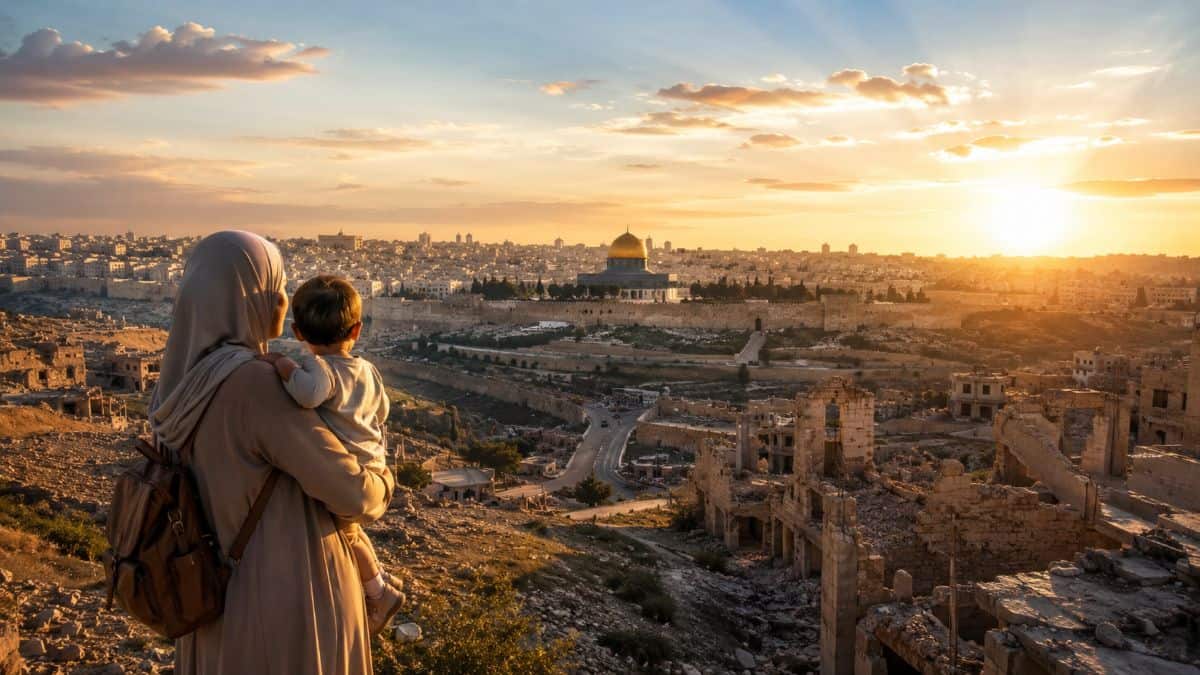
Image generated with Ai
The new Gaza peace framework has generated a positive response in the Middle East and beyond, including among governments, tourism stakeholders, and the airlines. However, most observers believe the peace framework is still insufficient. For example, US President Donald Trump announced the agreement as a breakthrough, while both Israeli and Hamas officials said there are still many barriers to a final deal.
The new framework has arrived after a long delay following the ceasefire agreement in Egypt, which has been in the news sporadically over the past months. Achieving stability in the region is important for a reliable tourism and air transport industry and long awaited foreign direct investment. The recent decrease in conflict in the region may help encourage travel in the area and support further growth in the economy of neighboring countries.
While the initial feedback to the framework has been positive, the implementation of the framework is what separates positive talk from positive action. The various views of the Israeli and Hamas officials demonstrate that the gap of diplomacy and constructive engagement is huge. In the near future, air transport providers and travel organizations in the main tourist destinations will continue to monitor the situation.
This new effort, after decades of stalled negotiations, attempts to bring more of the parties to a multi-Bay solution to the Gaza confict. As it was described in the statements issued after the announcement of the framework, part of the contention has been security, military action, and governance, and the framework aims to provide a solution for each of these.
Advertisement
Advertisement
International observers called this an important breakthrough for diplomacy. After all, regional peace has been shown to accelerate economic development and the resumption of travel. If there is peace across the Middle East, there is an expansion of airlines, a development of tourism, hospitality, and an increase in confidence to visit.
In the last few years, several states in the region have built a lot of the infrastructure for tourism. Continued fighting has created the kind of uncertainty that undermines all of the planned travel, business, and all of the long-term strategies and investments in tourism. This is all viewed politically, and especially economically, as a step toward long-term peace.
In the many statements the announcement generated, the sides differed mainly in the entry conditions they expressed, and the Israeli and Hamas statements were the most prominent.
From the statements and the many negotiations we can conclude that the previously stated commitments are of most importance. The focus of the talks has for a long time been military withdrawals, security guarantees, and disarmament and its verification.
Israeli security concerns will remain, and they will not agree to a drastic change of the current military posture without significant disarmament. Hamas has made ceasefire agreements conditional upon varying levels of compliance with previously stated obligations.
These positions show the ongoing divide between the parties, and help analysts understand why they are still more skeptical in light of the recent messaging around diplomacy.
The travel and tourism industries tend to modify their offerings according to shifts in the geopolitical environment, especially for the Middle East. Airlines, cruise companies, and businesses involved in hospitality adjust their operational plans according to their evaluations of risks and of stability in the region.
An ongoing process of settlement and peace may lead to positive impacts on tourism in multiple countries. Many countries in the region have been pursuing new strategies with the aim of attracting more international tourists, increasing investments, and improving air connections.
Travel industry leaders highlight regional perceptions of safety when planning trips. Improvements in security can lead airlines to add routes, increase travel, and bolster the confidence of tourists.
While no immediate positive impacts on tourism are expected due to the most recent announcement, industry leaders are considering the effects tourism may have in the future, if negotiations are successful.
Outside of tourism, potential settlements in Gaza may lead to impacts that are difficult to quantify. Stability in the Middle East can lead to positive impacts on trade, travel, investments, infrastructure, and the economy as a whole.
Improved relations in the Middle East can lead to greater stability, which encourages predictable business operations. This can help multiple countries in the region with transportation, trade, and peace-related projects.
Although stability may lead to investments in transportation and hospitality, analysts warn that long-term positive effects in the economy related to peace will rely on ongoing stability and peace, rather than verbal declarations.
The international community continues to promote active participation by all parties. Observers believe that, of all the tools available, only active dialogue can help bring the proposed framework into a working, long-term agreement.
Past attempts at a peace agreement were undermined by a lack of agreement on sequencing, a lack of agreement on how to implement the agreement, and a lack of trust. For this reason, the absence of a trust framework, and the absence of a commitment to verify and to engage, will continue to undermine any peace efforts.
The next few weeks will be critical as negotiators tackle the remaining issues. International stakeholders will focus on the process.
The latest developments provide some optimism, but the timing and end results remain uncertain. The negotiations are driven by the current political and security situations.
For the travel industry, the potential of greater security in the region is more important than these negotiations. For the travel industry to benefit, peace in the region must be sustained. Economic growth will only occur if peace is sustained.
During negotiations all stakeholders will be monitoring the situation to see if these latest negotiations can be the starting point for a longer peace process.
FAQ 1: What is the new Gaza peace deal?
This new framework systematizes negotiations to achieve peace in Gaza and initiates talks on security, military, and governance issues.
FAQ 2: Why did Donald Trump state that his deal was a breakthrough?
He stated that his deal was one of the first to help to finish the fighting and promote stability in the Middle East.
FAQ 3: Is the deal fully functional?
No. Israel and Hamas officials have stated that multiple negotiations and prerequisites remain unsatisfied.
FAQ 4: What are the major issues for the deal’s implementation?
Major military withdrawals, disarmament, security issues, and adherence to previous deals are among the issues.
FAQ 5: What type of impact will the deal have on tourism in the Middle East?
Once stability is achieved, tourism and airline travel are likely to increase.
FAQ 6: Why is the future of tourism so dependent on geopolitics?
Geopolitics causes changes in the demand for travel, the operation of airlines, and the construction of hotels.
FAQ 7: Will airlines benefit from a long-standing peace deal?
Yes. More stable conditions increase the need for more scheduled flights.
FAQ 8: What role does Egypt play in the peace process?
Having previously conducted negotiations, Egypt is still an essential diplomatic party in the regional peace process.
FAQ 9: How might regional economies benefit from stability?
More stability leads to more investment opportunities, trade, and an increased infrastructure and tourism focus.
FAQ 10: What happens next in the negotiations?
Negotiators are expected to continue discussions on the remaining security concerns and implementation and verification details.
Advertisement
Advertisement
Advertisement













Saturday, September 5, 2026

Friday, September 4, 2026
Saturday, September 5, 2026

Saturday, September 5, 2026

Thursday, September 3, 2026

Wednesday, September 2, 2026

Saturday, September 5, 2026

Saturday, September 5, 2026


