
Discovering Atlantic Puffins of Ireland: Where to Watch, Best Times, & Travel Tips

Published
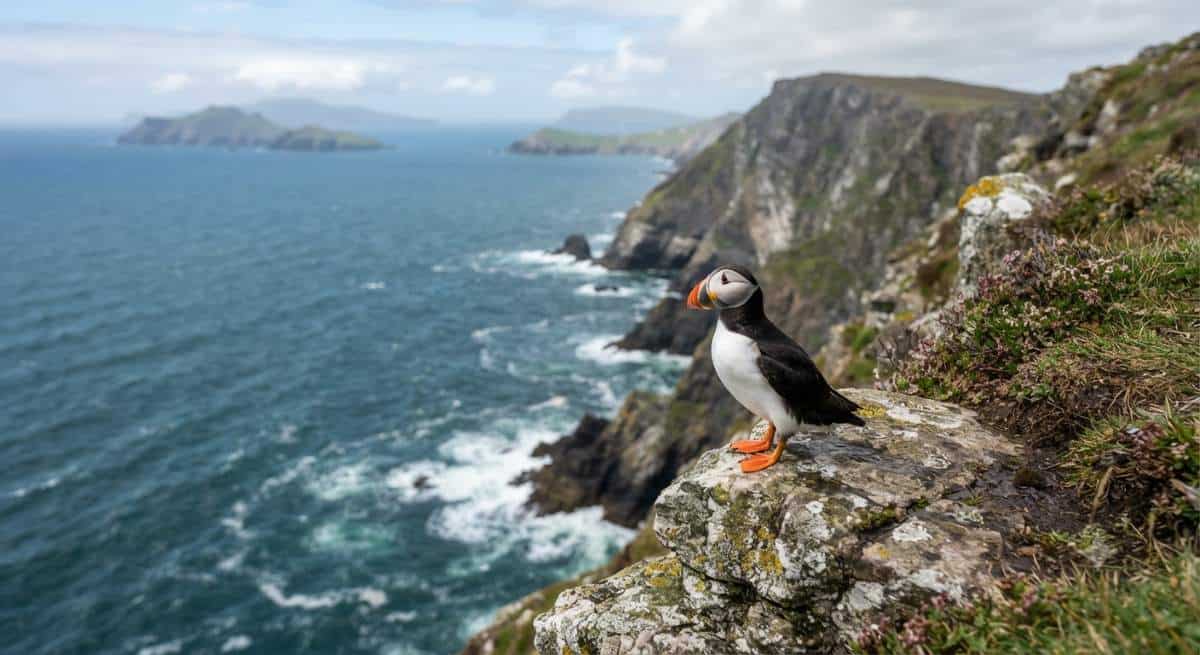
Ireland is recognized as a natural habitat for Atlantic Puffins, which are frequently described as some of the most distinctive and visually engaging seabirds found across the European continent. These remarkable creatures exhibit a physical appearance that is often likened to a combination of a penguin and a tropical parrot or toucan. Despite their toy-like aesthetic, puffins are exceptionally resilient seabirds that have evolved to endure harsh maritime environments, navigate vast distances across open waters, and excel as proficient fish hunters. Scientifically designated as part of the auk family, these birds possess robust adaptations for both flying and diving. Historically, the presence of puffin colonies along the craggy coasts and remote islands of Ireland has drawn ornithologists, nature enthusiasts, and curious travelers alike. Their life cycle is deeply tied to the marine ecosystem, spending the majority of their annual cycle drifting on the open ocean before migrating to land strictly for breeding purposes.
Impact on Travellers
The seasonal arrival of these seabirds significantly influences tourism patterns across various coastal communities and offshore islands in Ireland. Visitors seeking encounters with wildlife are drawn to rugged coastal regions, particularly along the western and northern seaboards, during the late spring and summer months. The opportunity to observe breeding colonies provides a major boost to localized marine tourism, encouraging boat excursions, guided nature walks, and island-hopping itineraries. Travelers are required to plan their journeys meticulously, as the optimal observation window typically falls between May and June. Because these colonies inhabit remote cliffs, rocky sea stacks, and isolated promontories, tourists must undertake boat journeys that are heavily dependent on weather conditions and unpredictable maritime forecasts. Furthermore, educational centers and wildlife sanctuaries situated near these nesting grounds enhance the visitor experience by offering structured interpretations of marine conservation and local biodiversity, thereby fostering a deeper appreciation for avian protection.
Industry Insights
Advertisement
Advertisement
Within the ecotourism and travel sectors, the presence of these marine colonies serves as a critical catalyst for specialized wildlife itineraries and sustainable tourism initiatives. Tour operators and regional marketing boards frequently incorporate wildlife-centric packages into their offerings, promoting destinations such as the Skellig Islands, Rathlin Island, and the Saltee Islands as prime locations for birdwatching. Conservation organizations, including the Royal Society for the Protection of Birds, collaborate closely with local transport providers and regulatory bodies to manage visitor numbers and safeguard delicate nesting environments. Industry reports indicate a steady demand for authentic, nature-based travel experiences that prioritize ecological preservation alongside leisure. Consequently, commercial operators face the ongoing challenge of balancing public access with strict environmental regulations to ensure that human presence does not disrupt natural breeding behaviors or degrade fragile coastal habitats.
Practical Information
Advertisement
Advertisement
Observing these seabirds requires adherence to specific guidelines regarding timing, location, and behavior. The breeding season generally commences in late March or early April and concludes by August, with May and June recognized as the most reliable months for sightings. Prominent observation sites include Skellig Michael in County Kerry, Rathlin Island along the Causeway Coast in Northern Ireland, the Saltee Islands off County Wexford, Inishbofin in Connemara, and Clare Island in County Mayo. Access to these destinations is typically facilitated via regional ferry services or chartered vessels operating from ports such as Portmagee, Ballycastle, Kilmore Quay, Cleggan Harbour, and Roonagh Quay. Visitors are advised that crossings can be subject to cancellation due to adverse weather. Strict protocols are enforced to protect the wildlife; tourists are strictly prohibited from approaching nesting burrows, attempting to handle the animals, or offering food, ensuring that the natural behaviors of the birds remain uninterrupted.
Comparison with Previous Policies or Developments
In comparison to historical management approaches that often lacked structured visitor controls, contemporary protocols governing these seabird habitats reflect a much stricter adherence to ecological preservation and conservation science. In earlier decades, remote island outposts experienced unregulated tourism, leading to potential disruptions of nesting grounds and local ecosystems. Modern policies implemented by wildlife authorities and regional conservation bodies have introduced formalized visitor management strategies, such as controlled landing permits, restricted operational hours for tour boats, and designated viewing corridors. Furthermore, the global recognition of certain filming locations—such as the digital adaptation of puffins into cinematic alien creatures inspired by local populations—has led to a surge in international media attention. This cultural shift has necessitated enhanced infrastructural support, including interpretive centers and educational signage, contrasting sharply with the previously unmonitored access points characteristic of early twentieth-century wildlife tourism in the region.
Advertisement
