
United Arab Emirates Culture Becomes Main Travel Magnet While Luxury Transforms Into Art Trip Destination

Published
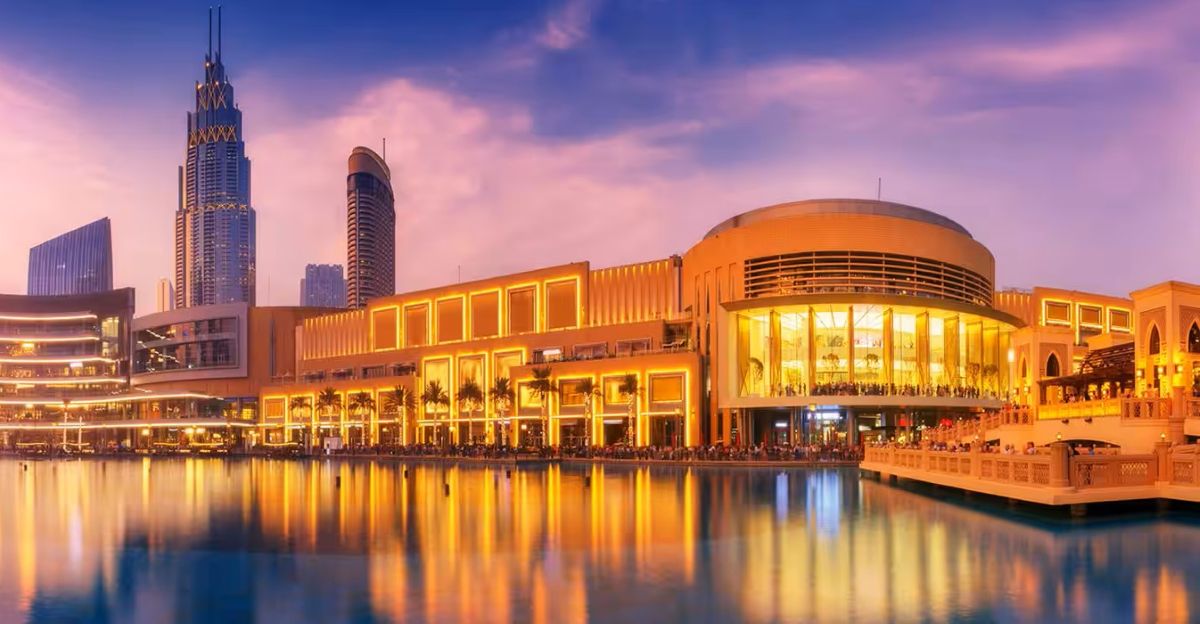
Can culture become a reason to travel to the UAE? Behind its glass skylines and golden dunes a quiet movement that moves the soul is growing. People are not just taking flights, for resorts anymore; they are looking for deep human connections. In Abu Dhabi, Dubai and Sharjah top museums and lively art areas are creating excitement. Walking under glowing museum domes or getting lost in gallery halls brings out emotions. Now people cross oceans specifically to feed their spirit and to be part of this amazing cultural change.
Can Culture Become a Genuine Reason to Travel to the UAE as the Nation Transforms Its Tourism Appeal?
Advertisement
Advertisement
Can culture become a genuine reason to travel to the UAE? Modern vacationers around the world are rethinking their trip choices. For decades, international travelers linked the UAE with shopping, beach resorts, luxury hotels, and corporate events. Today, a major transformation is taking place. Creative development is reshaping the nation into a global cultural destination. Art lovers and curious travelers now explore unique museums, artistic quarters, and world-class exhibitions. Therefore, visitors choose this country specifically for its vibrant arts scene!
Furthermore, this broad transition impacts the global travel industry in profound ways. Travel agencies and tour operators now craft dedicated cultural itineraries across Abu Dhabi, Dubai, and Sharjah. Instead of treating artistic venues as simple side visits, travelers make these destinations the primary focus of their journeys. Active planning choices are shifting toward immersive museum visits and major international art gatherings. This explanatory breakdown explores how the country’s cultural infrastructure creates fresh paradigms for worldwide tourism!
Advertisement
Advertisement
The Evolution of the UAE Cultural Scene as a Core Travel Magnet for International Vacationers
Over the past two decades, the UAE has methodically constructed a dense artistic ecosystem that commands attention across the international travel sector. Millions of globetrotters once viewed the Arabian Peninsula primarily as a stopover hub or a leisure retreat; however, the progressive establishment of foundations, art fairs, research institutions, and creative zones has permanently altered this perception. Consequently, travel advisors report a noticeable rise in requests from clients who prioritize heritage, contemporary art, and museum exploration over standard resort stays. This shift directly influences airline routes, hotel booking patterns, and specialized tour packages tailored for sophisticated art patrons.
Advertisement
Advertisement
As this creative network matures, its ability to generate independent tourist influxes grows significantly. The travel industry is observing longer stay durations, as tourists require additional days to navigate the diverse programming hosted across different cities. Global travelers no longer view the region’s cultural sites as brief afternoon activities. Instead, major exhibition debuts and international art fairs serve as the direct trigger for booking long-distance flights, creating a far-reaching economic ripple effect across international hospitality markets.
Abu Dhabi’s Saadiyat Cultural District and the Architectural Landmarks Reshaping Global Tourism Dynamics
Advertisement
Advertisement
Abu Dhabi stands at the very forefront of this destination revolution, embedding creative infrastructure directly into its long-term economic strategy. Official figures indicate that the capital welcomed 26.6 million visitors in 2025 and is actively working to achieve 39.3 million annual visitors by 2030. A major driver of this international footprint is Louvre Abu Dhabi, located on Saadiyat Island, which recorded 1.4 million visitors in 2024, with an incredible 84% of those attendees arriving from overseas. These statistics confirm that cultural landmarks in Abu Dhabi are actively drawing global audiences far beyond local resident populations.
The anticipation surrounding 11 December 2026 marks another momentous milestone for global travel networks, as Guggenheim Abu Dhabi prepares to open its doors in the Saadiyat Cultural District. Drawing comparisons to the transformative impact observed when the Guggenheim opened in Bilbao in 1997, industry experts anticipate a massive expansion in international cultural tourism. The museum does not stand alone; it joins a dense cluster of iconic landmarks, including Zayed National Museum | متحف زايد الوطني, Natural History Museum Abu Dhabi, and teamLab Phenomena Abu Dhabi. Complementing these institutions is Saadiyat Grove AD, an expansive district designed to blend dining, hospitality, retail, and wellness directly into the fabric of Saadiyat Island.
Multi-Emirate Cultural Offerings Creating a Cohesive Journey Across Dubai, Sharjah, and Beyond
The expansion of artistic destination appeal extends far beyond the capital city, forming a multi-centered travel route that benefits the entire nation. Dubai is rapidly expanding its creative economy through private-sector galleries, dedicated design districts, and its comprehensive Cultural Strategy 2033, spearheaded by the Dubai Culture & Arts Authority. At the same time, Sharjah offers deep historical and intellectual authority, drawing on decades of research-led museum exhibitions, international biennials, and regional programming led by the Sharjah Art Foundation.
Advertisement
Advertisement
For international travel planners, this multi-emirate synergy provides an extraordinary selling point. A single journey allows tourists to attend Frieze Abu Dhabi at Manarat Al Saadiyat, explore world-renowned architecture on Saadiyat Island, immerse themselves in contemporary art districts across Dubai, and examine historic collections in Sharjah. What was once an fragmented set of local attractions has consolidated into a cohesive, highly competitive travel offering that encourages multi-city road trips and extended stays.
The New UAE Travel Behavior and Its Far-Reaching Impact on the Global Hospitality Ecosystem
This rapid cultural expansion does not mean the nation is stepping away from its world-famous luxury hospitality, premier retail, or leisure attractions. Fine dining, luxury resorts, beach clubs, and major corporate conventions remain central pillars of the overall national tourism model. However, the key transformation lies in the primary motivation of the traveler. Culture is no longer an optional add-on to enrich a vacation; it is increasingly the main reason why global tourists initiate their travel bookings.
By late 2026, as major cultural infrastructure projects reach completion simultaneously, the nation is mirroring the established tourism dynamics of global cultural capitals like London, Paris, Venice, and Basel. Discerning travelers who routinely plan international trips around major biennales, trade fairs, or museum openings are now directing their attention toward Abu Dhabi, Dubai, and Sharjah. Ultimately, the travel industry must adapt to a new reality: the region is no longer just a luxury stopover, but a premier global destination chosen explicitly for its vibrant, world-class cultural landscape.
Macro-Economic Impact and Tourism GDP Growth Projections Across the Nation
The non-oil economic landscape across the region is undergoing a profound transformation driven directly by targeted investments in cultural infrastructure. Strategic initiatives have elevated artistic development into a central pillar of economic diversification. Official statistics highlight a massive expansion in visitor volume, with Abu Dhabi welcoming 26.6 million visitors in 2025 and targeting an incredible 39.3 million annual visitors by 2030. This rapid growth is backed by monumental capital expenditure, including a masterplan investment of AED 100 Billion ($27.2 Billion) dedicated to the broader Marsa Al Saadiyat infrastructure development, spanning an impressive 6.4 million square meters.
Advertisement
Advertisement
For analysts and stakeholders within the travel industry, these figures demonstrate that culture acts as a high-yield economic driver rather than a passive soft-power luxury. The economic impact extends directly to visitor engagement patterns, as tourists stay significantly longer in the region. While domestic visitors historically averaged stays of 2.3 days and international tourists averaged 3.3 days, travelers taking multi-emirate art tours are now extending their journeys to between 5 and 7 days. This prolonged length of stay directly boosts revenue across luxury hotels, culinary venues, regional transport networks, and local retail markets.
Architectural Footprints and Physical Capacity of Key Cultural Masterpieces
Beyond economic projections, the sheer architectural scale of landmark institutions is capturing global attention and generating dedicated spatial tourism. The physical footprint of these world-class buildings serves as a major draw for architecture enthusiasts, designers, and urban planners worldwide. For example, the Natural History Museum Abu Dhabi commands an expansive spatial footprint of 35,000 Square Meters (377,000 square feet), offering immense capacity for global science exhibitions and educational research facilities.
Similarly, immersive technology and performance arts are allocated monumental physical dimensions to accommodate massive visitor flows. The purpose-built, multi-sensory experiential space housing teamLab Phenomena Abu Dhabi covers 17,000 Square Meters, offering visitors unprecedented spatial engagement with digital art creations. Furthermore, performing arts and educational programs are bolstered by dedicated institutions like Berklee Abu Dhabi at Manarat Al Saadiyat, which operates out of a 42,000 Square Feet state-of-the-art performance and learning facility. These grand physical dimensions ensure that each landmark can host thousands of daily international tourists without compromising the visitor experience.
International Art Market Expansion and the WANASA Region Gallery Footprint
The commercial expansion of the regional art market is actively realigning global travel and trade routes for international collectors, art advisors, and high-net-worth individuals. A primary catalyst for this commercial shift is the inaugural launch of Frieze Abu Dhabi, scheduled to take place from 19 to 22 November 2026 at Manarat Al Saadiyat. The fair boasts an extraordinary participation scope, bringing together over 80 galleries from 64 cities across 36 countries and regions, representing the prestigious brand’s first official footprint in the WANASA (West Asia, North Africa, and South Asia) region.
Advertisement
Advertisement
This commercial ecosystem is further complemented by vast permanent museum collections that draw international researchers and art patrons year-round. The curated permanent collection of Guggenheim Abu Dhabi features more than 600 permanent artworks, offering a rich historical overview of modern and contemporary artistic creation from 1960 to the present across the WANASA territory. The presence of these world-class commercial and museum collections cements the nation’s standing as a major economic power in the global art market, driving luxury tourism and commercial travel.
Strategic Integration of Cultural Districts with Luxury Hospitality and Residential Real Estate
Cultural landmarks are not built in isolation; they are meticulously integrated into surrounding real estate, retail, and luxury lifestyle hubs. At the center of this urban integration is Saadiyat Grove AD, a premier lifestyle development covering 45,000 Square Meters that blends retail, fine dining, hospitality, wellness, and prime residences into the immediate vicinity of the cultural district. This deliberate urban design ensures that culture remains embedded in daily lifestyle experiences for both residents and high-spending tourists.
The financial synergy between real estate capital and artistic infrastructure is demonstrably strong. Property data indicates a impressive 27% valuation growth in property capital values across Saadiyat Island micro-markets between 2023 and 2025, driven directly by proximity to world-renowned museums. Furthermore, prime residential developments adjacent to the district have attracted intense global demand, with 86% of international buyers acquiring ultra-prime properties. This data proves that cultural districts create sustainable, high-value economic ecosystems that integrate real estate growth directly with international travel appeal.
Multi-Emirate Cultural Synergies: Aligning Strategic Frameworks in Dubai and Sharjah
A defining strength of the national tourism strategy is the seamless synergy between neighboring emirates, transforming individual city trips into a unified multi-destination journey. Dubai is aggressively building out its creative economy through private galleries, design quarters, and the long-term Dubai Cultural Strategy 2033, which aims to double the number of creative businesses and increase the creative sector’s direct GDP contribution. Simultaneously, Sharjah offers deep historical and intellectual authority, drawing on over 30 years of research-led programming, historic biennials, and regional exhibitions managed by the Sharjah Art Foundation.
Advertisement
Advertisement
Connecting these distinct cultural hubs is a highly efficient transportation network, highlighted by a seamless 120-Minute Cultural Corridor. This continuous highway connection enables international travelers to navigate effortlessly from the museum institutions on Saadiyat Island in Abu Dhabi to the contemporary design studios of Alserkal Avenue in Dubai, and onwards to the historic museums of Sharjah. This inter-emirate connectivity encourages travel agencies to market multi-day, cross-country itineraries rather than single-city stopovers.
Demographics and Visitor Profiling: Shift Towards High-Yield International Audiences
The demographic profile of tourists visiting the region is shifting fundamentally toward high-yielding, culturally engaged international audiences. Attendance figures from Louvre Abu Dhabi provide clear evidence of this global reach; in 2024, the museum recorded a landmark 1.4 million total visitors, with an overwhelming 84% of that total representing international tourists. This massive proportion of overseas attendees confirms that landmark institutions serve as direct drivers of incoming international flights rather than relying solely on domestic market participation.
Furthermore, cultural travelers represent a significantly higher spending demographic compared to standard leisure tourists. Tourism forecasts project a 25% to 30% growth in daily expenditure per cultural tourist, as these travelers spend more on premium accommodations, fine dining, guided gallery tours, and retail art purchases. For airlines, luxury hotel operators, and bespoke tour management companies, this demographic shift translates directly into higher yield per guest and increased overall profitability.
Historical Artifacts, Paleontology, and Scientific Tourism Capacity
The region’s cultural appeal extends well beyond visual and contemporary arts to embrace natural history, paleontology, and scientific research. The upcoming Natural History Museum Abu Dhabi expands the tourism model by offering rare, world-famous scientific artifacts that captivate educational travel groups, scientific researchers, and families alike. Among its primary exhibits is a incredible 67-Million-Year-Old Specimen of a Tyrannosaurus rex skeleton, serving as a globally renowned paleontological centerpiece.
Advertisement
Advertisement
Alongside ancient terrestrial fossils, the institution houses extraterrestrial research artifacts of immense scientific value. The museum proudly displays a 4.5-Billion-Year-Old Space Artifact, known as the authentic Murchison Meteorite specimen, providing visitors and researchers with a direct glimpse into the early formation of the solar system. By incorporating world-class paleontological and astronomical displays into its museum network, the country broadens its destination appeal to include scientific, academic, and family-oriented international travel.
Faith, Inclusivity, and Intercultural Dialogue as a Destination Pillar
At the core of the region’s cultural transformation is a strong commitment to fostering global harmony, inclusivity, and interfaith understanding. A physical manifestation of this vision is the Abrahamic Family House, situated prominently on Saadiyat Island. This groundbreaking site integrates 3 distinct places of worship a mosque, a church, and a synagogue together on a shared community footprint, symbolizing peaceful coexistence and mutual respect among diverse global faiths.
In addition to these individual houses of worship, the site features 1 shared cultural forum designed to host international summits, educational seminars, and community dialogues. This central forum provides a welcoming space where global travelers can gather to exchange ideas, participate in guided tours, and engage in meaningful cultural learning. By positioning intercultural and interfaith dialogue as a foundational pillar of its national identity, the region attracts conscious travelers seeking enriching, socially meaningful travel experiences.
The Final Horizon
I have learned that travel is about how a place makes you feel long after the suitcases are unpacked. The UAE is no longer about luxury stays or big buildings; it is creating spaces that provoke wonder spark reflection and touch the human soul. Walking through gallery halls in Dubai discovering deep roots in Sharjah or standing beneath the iconic dome, in Abu Dhabi travelers find something truly unforgettable. Culture has changed from a surprise into the very heart of the journey leaving an everlasting mark on each traveler who seeks meaning beyond the horizon.
Advertisement
