

Riyadh Air Aligns With Other Carriers To Scale Global Network And Expand Modern Widebody Fleets Fast

Updated
Published
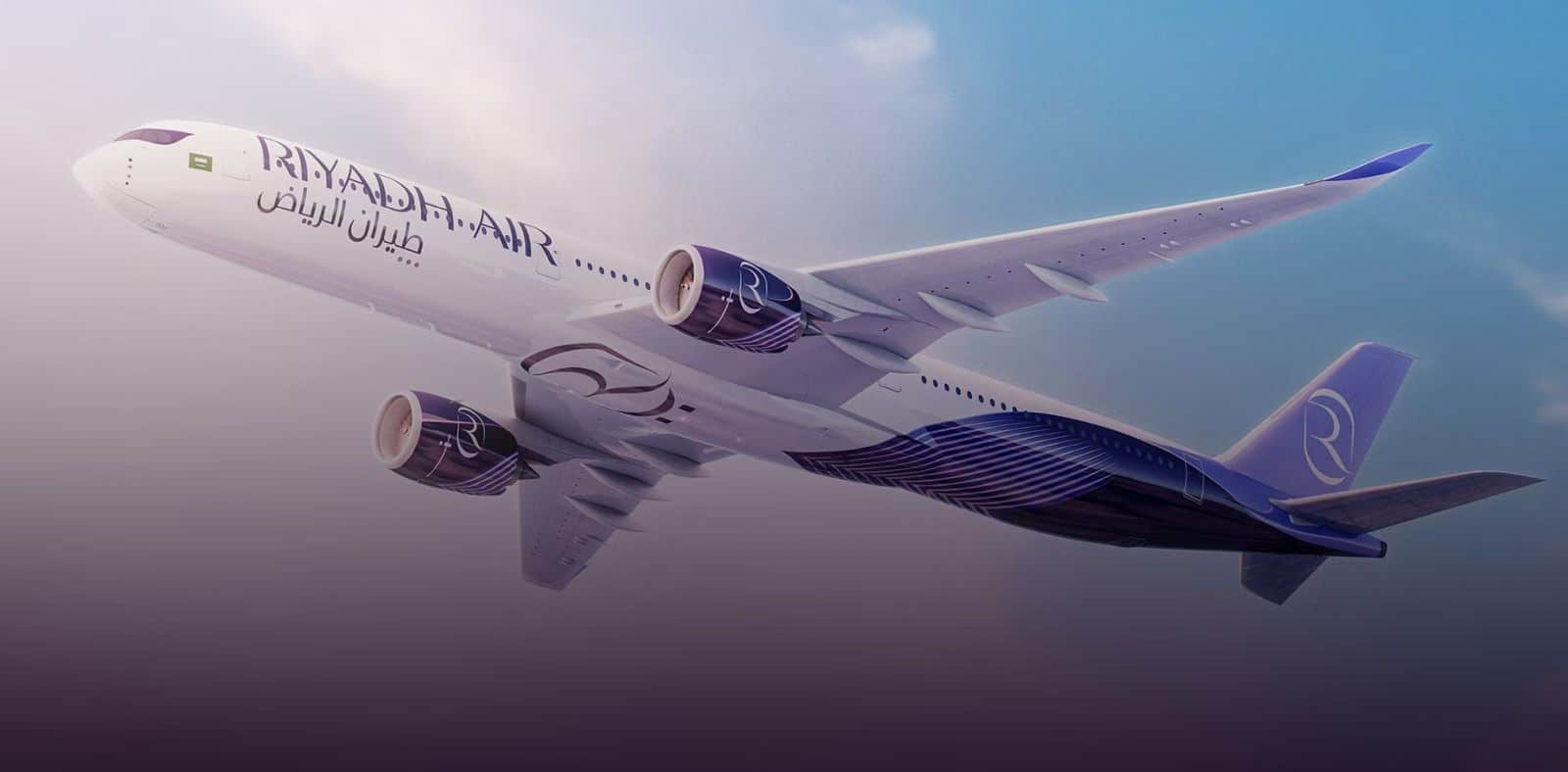
Global aviation is evolving at an unprecedented rate as Riyadh Air joins other global carriers in expanding its network and rapidly developing its modern widebody fleet to meet the rising demand for air travel. This airline connects with Turkish Airlines, IndiGo, Air India, and Emirates, positioning it as a new global player that sets the standard for modern partnerships. This way, Riyadh Air invests in strategic commercial relationships to meet its continuous need for upgrading and updating its fleet.
The airline is the preferred choice for Saudi Arabia as a digital-native global airline to help advance the country’s tourism objectives. In turn, Riyadh Air links travelers to destinations worldwide while quickly updating its fleet with billions of dollars in new aircraft. As a result, modern widebody aircraft open the door to luxury travel on multiple continents and fundamentally change the paradigm of digital transformation and connectivity in the airline industry.
Advertisement
Advertisement
Global commercial aviation is currently undergoing a historic transformation as major international carriers aggressively modernize their fleets and expand their long-haul route networks to meet surging post-pandemic travel demand. Alongside Turkish Airlines which is actively pursuing an ambitious multi-year strategy to double its fleet size to nearly 800 aircraft and scale its ultra-long-range global connectivity, four other premier airlines are dramatically reshaping international corridors. These carriers include Saudi Arabia’s upcoming flag carrier Riyadh Air, India’s dominant domestic and international low-cost giant IndiGo, the Tata Group-backed turnaround leader Air India, and Dubai’s undisputed super-hub powerhouse Emirates. Together these five operators account for a monumental share of global widebody and narrowbody aircraft order books setting the stage for a highly competitive and interconnected aviation landscape over the next decade.
Why Is Turkish Airlines Doubling Down On Mega Fleet Expansion?
Turkish Airlines stands as a primary catalyst for global network restructuring due to its strategic geographical positioning at Istanbul Airport, which serves as a massive intercontinental bridge between East and West. The national flag carrier is executing a comprehensive multi-year growth roadmap designed to double its operational fleet size to approximately 800 aircraft by the end of the decade. This aggressive fleet scaling supports the introduction of brand-new ultra-long-range nonstop destinations across the Americas, Asia-Pacific, and Africa, while simultaneously upgrading premium cabin experiences. The airline’s heavy capital investment into advanced fuel-efficient widebody aircraft, such as the Airbus A350 family and Boeing 787 Dreamliners, ensures long-term operational sustainability and lower carbon emissions. Consequently, these structural enhancements allow Turkish Airlines to maintain a formidable competitive edge against rival European hubs and expanding Middle Eastern carriers.
Advertisement
Advertisement
How Will Riyadh Air Transform Middle Eastern Aviation?
Riyadh Air is strategically engineered to operate as Saudi Arabia’s digitally-native global airline, serving as a cornerstone for the Kingdom’s ambitious Vision 2030 economic diversification and tourism development goals. The newly established carrier is currently preparing for its commercial launch out of King Khalid International Airport, aiming to connect travelers to over one hundred global destinations by the late 2020s. By leveraging cutting-edge digital infrastructure and hyper-connectivity, Riyadh Air intends to redefine the passenger experience through seamless onboard mobile integration and advanced cabin interiors. The airline has already committed billions of dollars toward multibillion-dollar widebody orders for state-of-the-art Boeing 787-9 Dreamliners to operate high-density transcontinental routes. Therefore, this market entry introduces a formidable new luxury competitor into a historically concentrated regional aviation corridor dominated by legacy network giants.
What Drives IndiGo To Scale Global International Routes?
IndiGo has famously evolved from India’s preeminent domestic low-cost carrier into a major international network player, systematically expanding its footprint across Southeast Asia, Central Asia, and the Middle East. The airline is bridging regional connectivity with broader long-haul ambitions by implementing strategic codeshare partnerships and widebody wet-leases to European destinations. This rapid international scaling is supported by one of the largest aircraft order books in civil aviation history, featuring hundreds of Airbus A320neo family jets alongside widebody Airbus A350-900s. These next-generation additions provide the necessary range and seat capacity required to operate high-frequency international routes without compromising its legendary low-cost operating model. Ultimately, this strategic pivot allows IndiGo to capture the explosive outbound travel demand originating from India’s rapidly expanding middle class.
Advertisement
Advertisement
How Is Air India Executing Its Vihaan.AI Transformation?
Air India is undergoing a monumental five-year transformation roadmap known as Vihaan.AI under the ownership of the Tata Group, focusing intensely on reclaiming its historical legacy as a premier global carrier. The airline is actively modernizing its entire operating framework, which includes a multi-million-dollar interior retrofit program for its legacy widebody fleet to introduce cutting-edge business and economy cabins. This operational renewal is fueled by a historic 470-plane mega-order split between Airbus and Boeing, incorporating advanced aircraft such as the Airbus A350, Boeing 777X, and Boeing 787 Dreamliners. These new assets enable Air India to launch lucrative non-stop long-haul routes connecting major Indian metropolitan hubs directly to North America, Europe, and the Asia-Pacific region. Consequently, the carrier is successfully positioning itself to compete head-to-head with top-tier international legacy airlines on global trunk routes.
“Riyadh Air’s strategic alignment with industry leaders signals a transformative shift in global aviation, as carriers race to expand modern widebody fleets and capture surging demand. By combining cutting-edge digital infrastructure with massive multi-billion-dollar aircraft investments, these dynamic airlines are successfully reshaping international corridors and setting new benchmarks for premium passenger experience worldwide. Consequently, this unprecedented era of fleet modernization and mega-hub optimization accelerates fierce competition across key global markets.”
— Anup Kumar Keshan, Founder and Editor-in-Chief, Travel And Tour World
What Makes Emirates Expand Its Dubai Mega Hub Model?
Emirates remains the undisputed champion of the super-hub network model, anchoring its global operations at Dubai International Airport while preparing for a future transition to the sprawling Al Maktoum International Airport. The airline is aggressively expanding its flight frequencies and introducing service to secondary cities across Europe, Africa, and the Americas to alleviate passenger congestion and capture emerging market segments. To maintain its renowned standard of luxury, Emirates has significantly scaled up its widebody commitments by adding substantial orders for Airbus A350s, Boeing 777Xs, and Boeing 787s to complement its iconic backbone fleet of Airbus A380s and Boeing 777s. These fleet additions ensure that the carrier can sustain high-capacity trunk routes while optimizing fuel consumption across its extensive intercontinental network. Therefore, Emirates continues to dictate the operational standards for long-haul international travel in the twenty-first century.
For comprehensive details on fleet modernisation, financial investments, and official regulatory frameworks governing global commercial aviation expansion, you can explore the Directorate General of Civil Aviation (DGCA) India Portal or review international aviation policy updates directly via the International Civil Aviation Organization (ICAO).
| Airline | Primary Hub | Growth Focus | Key Fleet Additions |
| Turkish Airlines | Istanbul (IST) | Doubling fleet size, ultra-long-haul expansion | Airbus A350 family, Boeing 787 Dreamliners |
| Riyadh Air | Riyadh (RUH) | New global network launcher, Vision 2030 hub | Boeing 787-9 Dreamliners |
| IndiGo | Delhi / Bengaluru (DEL/BLR) | International widebody scaling & regional reach | Airbus A320/321neo & Airbus A350 |
| Air India | Delhi / Mumbai (DEL/BOM) | Non-stop long-haul turnaround & retrofitting | Airbus A350, Boeing 777X, 787 Dreamliner |
| Emirates | Dubai (DXB) | Super-hub consolidation & frequency density | Airbus A350, Boeing 777X, Boeing 787 |
Turkish Airlines: Capitalising on Istanbul’s Intercontinental Bridge
Financial Investments
- Funding Mechanisms: Turkish Airlines relies on robust operational cash flows, supplemented by innovative cross-border asset-backed financing structures. This includes landmark Japanese Operating Leases with Call Options (JOLCO) and major foreign currency facilities arranged through international banking partners such as the Bank of China.
- Capital Allocation: The carrier has initiated multi-billion-dollar infrastructure and fleet investments—highlighted by a staggering TRY 100 billion domestic framework investment program—to expand maintenance hangars, ground logistics, and passenger facilities at Istanbul Airport.
Route Network Strategy
- Hub Consolidation: Operating out of Istanbul Airport (IST), Turkish Airlines serves more countries than any other carrier globally.
- Geographic Reach: The expansion strategy focuses on densifying frequencies into North America, Africa, and underserved secondary markets across Asia, leveraging ultra-long-range widebodies to capture high-yield connecting traffic between the Western Hemisphere and the East.
Riyadh Air: State-Backed Digital Acceleration
Financial Investments
- Sovereign Backing: Fully owned by Saudi Arabia’s Public Investment Fund (PIF), Riyadh Air represents a core multi-billion-dollar pillar of Vision 2030.
- Asset Commitments: The airline has deployed capital into massive order books covering up to 182 aircraft (including widebody Boeing 787-9 Dreamliners, Airbus A350-1000s, and single-aisle A321neos), alongside investments in a clean-sheet, cloud-native digital technology stack designed to eliminate legacy IT overhead.
Route Network Strategy
- Global Hub Design: Operating from King Khalid International Airport in Riyadh (and scaling alongside the future King Salman International Airport), the carrier aims to link the Saudi capital to over 100 global destinations.
- Market Targeting: The network is built to funnel international tourists and business travelers directly into Saudi Arabia, bypassing traditional regional connecting hubs like Dubai and Doha.
IndiGo: Low-Cost Scale And International Pivot
Financial Investments
- Asset-Light Balance Sheet: IndiGo maintains financial resilience through disciplined asset utilization, capitalizing heavily on sale-and-leaseback agreements with aircraft lessors to minimize upfront capital expenditures while rapidly scaling capacity.
- Record-Breaking Orders: Funded by healthy operational margins and robust cash reserves, the airline holds one of the largest order books in commercial aviation history for hundreds of Airbus narrowbodies and widebody A350s.
Route Network Strategy
- Domestic Moat to Global Reach: IndiGo utilizes unmatched domestic flight frequency density across India as a defensive cash-generating moat.
- International Expansion: The network strategy targets international expansion within a 7-hour radius across Southeast Asia, the Middle East, and Central Asia, while utilizing widebody wet-leases and upcoming Airbus A321XLR aircraft to open direct corridors into Europe.
Air India: Tata Group’s Multi-Billion-Dollar Turnaround
Financial Investments
- Corporate Backing: Backed by the immense financial strength of the Tata Group, Air India is executing a heavily funded 5-year transformation plan (Vihaan.AI) aimed at reclaiming premier market standing.
- Capital Deployment: The airline committed to a historic 470-aircraft mega-order valued in the tens of billions of dollars, alongside multi-million-dollar capital injections dedicated to retrofitting legacy widebody cabins, upgrading digital apps, and building South Asia’s largest aviation training academy.
Route Network Strategy
- Non-Stop Long-Haul Focus: Air India’s network strategy abandons the old single-hub bottlenecks by aggressively launching non-stop routes connecting Indian metros (Delhi, Mumbai, Bengaluru) directly to key global financial centers across North America, Europe, and the UK.
- Alliance Integration: Deepening codeshare partnerships and fully integrating group carriers allows Air India to feed domestic traffic smoothly into its expanding long-haul trunk lines.
Emirates: Super-Hub Optimization and Fleet Longevity
Financial Investments
- Self-Financed Growth: Emirates traditionally funds its massive fleet acquisitions and global operations through strong internal cash generation, backed by the Dubai government’s strategic commitment to maintaining aviation as a cornerstone of the emirate’s economy.
- Widebody Refurbishments: Beyond purchasing new Airbus A350s, Boeing 777Xs, and 787s, Emirates is executing one of the largest commercial aircraft retrofit programs in history, investing billions to completely overhaul cabin interiors across its existing fleet.
Route Network Strategy
- Hub-and-Spoke Dominance: Anchored at Dubai International Airport (DXB), Emirates maximizes passenger throughput by connecting eastern and western hemispheres through high-frequency super-hub operations.
- Secondary City Penetration: The network strategy increasingly incorporates specialized regional routes and frequencies to secondary and tertiary cities in Europe, Africa, and the Americas where direct long-haul options are limited.
Riyadh Air was established as a domestic airline to help promote tourism throughout Saudi Arabia. The company targets international markets to ensure passengers are well served in all parts of the world. The company invests billions of dollars in purchasing new planes and updating its current fleet. The company uses modern aircraft to offer luxury service to its customers in the highly competitive market. As a result, other companies are forced to adopt digital technologies to remain relevant in the digital age.
The airline industry spends millions of dollars on aircraft to expand their order books and open new long-haul routes. Turkish Airlines, IndiGo, Air India, and Emirates are some of the companies that have grown significantly over the years for their unique strategies. Their growth is expected to continue as they tap into new markets with high passenger demand. Airline manufacturers and suppliers spend a lot on fuel to make their planes more economical and cut costs in the process. Thus, the competition is intense as these companies continue to grow and operate in new markets globally.
Advertisement
