

Dominican Republic’s Arajet Posts 62% Passenger Growth in September 2026, Now Second-Busiest Airline Behind JetBlue

Updated
Published
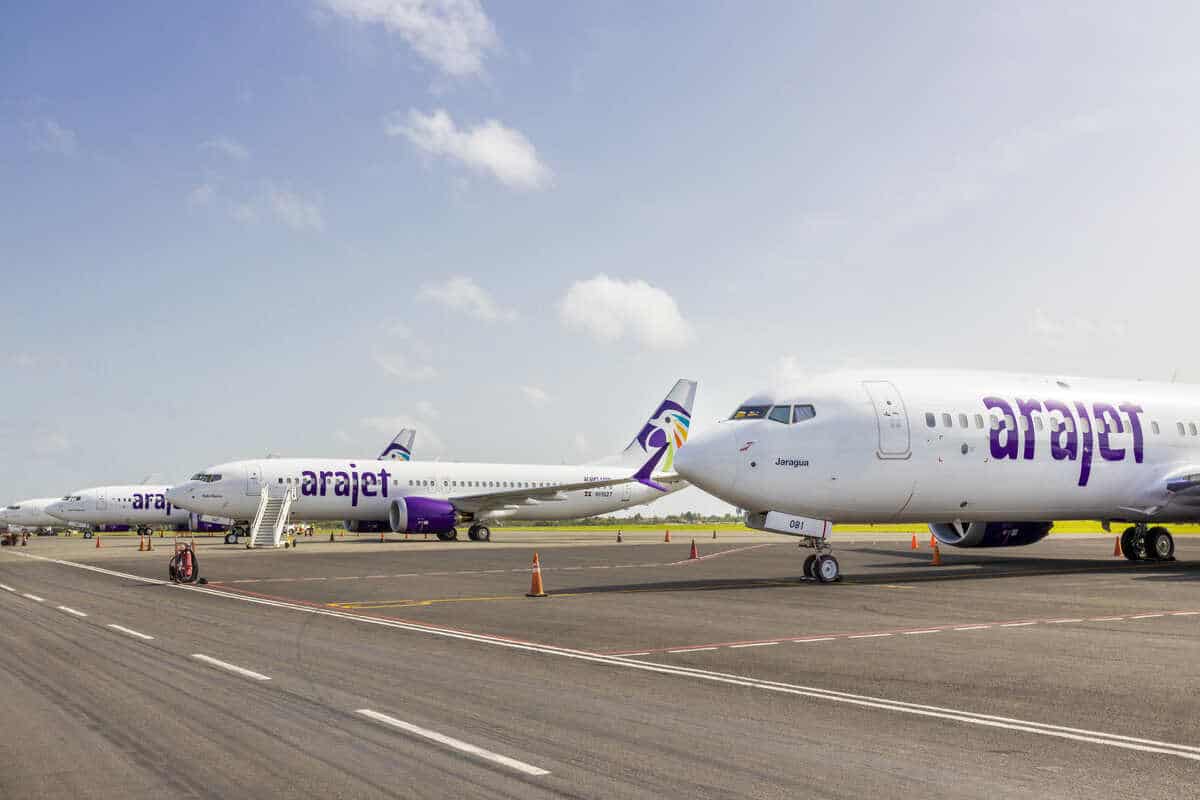
Arajet became the second largest airline in the Dominican Republic after JetBlue in September 2026 with 158,407 passengers, not counting transit passengers, with an impressive growth rate of 62% from the previous year. Demand in the United States, Colombia, and Argentina, as well as increased traffic to Bogota, Newark, and Buenos Aires, contributed to its strength in the international aviation industry of the Dominican Republic.
Arajet’s Remarkable Passenger Growth Reshapes the Dominican Republic’s Aviation Market
Arajet has strengthened its position in the Dominican Republic’s international aviation market following a sharp increase in passenger traffic during September 2026.
Advertisement
Advertisement
Figures attributed to the country’s Civil Aviation Board (JAC) show that the airline transported 158,407 passengers travelling directly to or from the Dominican Republic, compared with 97,797 during September 2025.
The year-on-year increase of approximately 62% represents 60,610 additional passengers within 12 months.
Advertisement
Advertisement
The latest performance reflects the airline’s expanding presence in international markets and its growing ability to attract passengers travelling between the Dominican Republic and destinations throughout North, Central and South America.
The result is particularly significant because Arajet began commercial operations in 2022 and has developed into one of the country’s largest carriers by monthly passenger volume.
Advertisement
Advertisement
Arajet Overtakes Major International Airlines to Secure Second Place
September’s passenger rankings reveal how the competitive landscape has changed in the Dominican Republic.
JetBlue remained the country’s busiest airline during the month, transporting 243,955 passengers. Arajet followed with 158,407, establishing a lead over several international carriers.
Advertisement
Advertisement
Copa Airlines ranked third with 122,220 passengers, followed by American Airlines with 115,406.
Delta Air Lines recorded 94,763 passengers, while United Airlines handled 94,288.
Arajet therefore carried 36,187 more passengers than Copa Airlines and 43,001 more than American Airlines during September.
Although JetBlue retained a substantial lead, Arajet’s second-place finish illustrates the increasing importance of Dominican-operated services within the country’s international air transport market.
Advertisement
Advertisement
The ranking applies specifically to passenger movements during September 2026 and should not be interpreted as an annual market-share ranking.
Connecting Passengers Push Arajet’s Total September Traffic Beyond 180,000
Arajet’s overall passenger volume was higher when travellers making connections through the Dominican Republic were included.
According to the airline’s internal figures, total traffic reached 180,841 passengers during September 2026.
This was 22,434 passengers above the point-to-point figure used in the reported airline rankings.
The distinction is important because connecting travellers represent a separate part of the airline’s business. These passengers may use the Dominican Republic as an intermediate stop while travelling between two international destinations.
Such journeys support the carrier’s ambition to develop a wider network linking different parts of the Americas.
Advertisement
Advertisement
They also illustrate why a carrier’s overall passenger totals may differ from the figures used to measure direct traffic to and from a country.
United States Emerges as Arajet’s Largest International Passenger Market
The United States remained Arajet’s leading international market in September, accounting for 43,021 passengers.
This represented approximately 27% of the airline’s reported point-to-point passenger traffic.
The result highlights the importance of connectivity between the Dominican Republic and major American cities.
Services linking the two countries provide travel options for holidaymakers, business visitors, residents and people travelling to see relatives.
The United States market also contributed more passengers than any other individual country served by the airline during September.
Advertisement
Advertisement
Its place within the Arajet network is noteworthy due to its competition against existing international airlines, which already have extensive operations in the region linking the United States and the Caribbean.
Continued demand from this market could play an important role in sustaining the airline’s international growth.
Colombia and Argentina Strengthen Arajet’s South American Network
South America accounted for another important share of Arajet’s passenger activity.
Colombia ranked as the airline’s second-largest market in September 2026, with 35,413 passengers.
Argentina followed in third place, contributing 21,164 passengers.
Together with the United States, these three markets generated 99,598 passengers, equivalent to approximately 63% of the airline’s reported point-to-point traffic for the month.
Advertisement
Advertisement
The strong figures from Colombia and Argentina demonstrate the significance of South American connections within Arajet’s developing network.
These services provide additional options for passengers travelling to the Dominican Republic and for those making onward journeys across the Americas.
The results also show that Arajet’s passenger base extends well beyond the traditional North American market, giving the carrier a more geographically diverse international network.
Mexico, Puerto Rico and Other Markets Add to Arajet’s International Reach
Beyond its three largest markets, Arajet recorded passenger activity across several other destinations in the Americas.
Mexico ranked fourth with 16,356 passengers during September.
Puerto Rico contributed 8,628 passengers, followed by Peru with 7,407 and Brazil with 7,117.
Advertisement
Advertisement
Canada accounted for another 5,609 passengers.
These figures demonstrate the importance of smaller markets alongside the airline’s busiest international connections.
The geographical spread creates opportunities for passengers to travel between the Caribbean, North America and South America using services operated by the Dominican carrier.
For Arajet, maintaining a broad international network can help reduce its dependence on a limited number of destinations while supporting its strategy of developing the Dominican Republic as a regional connecting point.
However, passenger totals alone do not establish the profitability or commercial performance of individual markets.
Bogotá Becomes Arajet’s Busiest Destination in September 2026
Bogotá emerged as Arajet’s highest-traffic individual destination during September, recording 18,413 passengers.
Advertisement
Advertisement
The Colombian capital’s leading position reflects the wider importance of Colombia within the airline’s international operations.
Newark, which serves the greater New York metropolitan area, followed with 16,952 passengers.
Buenos Aires ranked third, recording 16,025 passengers during the same period.
These three destinations highlight the diverse nature of Arajet’s passenger network.
Bogotá represents a major South American connection, Newark provides access to one of the largest metropolitan regions in the United States, and Buenos Aires links the airline with Argentina’s principal urban market.
Their performance suggests that Arajet’s busiest services are spread across multiple countries rather than concentrated in a single geographical region.
Advertisement
Advertisement
Miami and Medellín Record Strong Passenger Demand
Miami and Medellín were also among Arajet’s leading destinations in September 2026.
Miami ranked fourth with 15,654 passengers, narrowly ahead of Medellín, which recorded 15,569.
The difference between the two destinations was just 85 passengers, showing how closely their monthly traffic volumes compared.
Miami’s contribution reinforced the United States’ position as Arajet’s largest international market.
Meanwhile, Medellín’s performance further strengthened Colombia’s importance within the airline’s South American network.
Together with Bogotá, Medellín contributed 33,982 passengers, accounting for most of Arajet’s reported traffic in the Colombian market.
Advertisement
Advertisement
These figures provide a clearer picture of how individual destinations contribute to national market performance and why both the United States and Colombia remain central to the airline’s network.
Mexico City, San Juan, Lima and São Paulo Expand Regional Connectivity
Arajet’s passenger figures also reveal notable traffic on routes serving Mexico, Puerto Rico, Peru and Brazil.
Santa Lucía, serving the Mexico City metropolitan area through Felipe Ángeles International Airport, recorded 11,172 passengers.
San Juan in Puerto Rico accounted for 8,628 passengers, while Lima in Peru contributed 7,407.
São Paulo in Brazil registered 7,117 passengers.
These destinations provide links to important urban and commercial centres across the Americas.
Advertisement
Advertisement
The figures also demonstrate that Arajet’s network is not built entirely around its largest markets.
Instead, the airline serves a combination of high-volume destinations and smaller regional markets.
This structure may help improve travel options between cities that are separated by considerable distances, particularly where passengers choose to connect through the Dominican Republic.
Expanding Air Connectivity Creates Opportunities for Dominican Tourism
Arajet’s September performance has wider implications for the Dominican Republic’s tourism industry.
International air connectivity is an essential part of the country’s visitor economy because travellers arriving from overseas depend heavily on air transport.
An expanding airline network can make the country accessible from more cities and give passengers additional travel options.
Advertisement
Advertisement
Greater connectivity may also support hotels, restaurants, transport providers, tour operators and other businesses involved in tourism.
However, it is important to distinguish overall airline passenger traffic from international tourist arrivals.
The reported passenger totals include different categories of travellers and cannot be treated as a direct measure of tourism growth.
Nevertheless, Arajet’s increased activity indicates that the airline is handling substantially more international passenger movements than it did a year earlier.
Dominican Republic Strengthens Its Ambition to Become an Aviation Hub for the Americas
Arajet’s operating strategy centres on making the Dominican Republic an important connection point between markets throughout the Americas.
The airline aims to combine competitive fares with an international network that allows travellers to reach multiple destinations.
Advertisement
Advertisement
Its September figures provide evidence of the scale it has achieved since beginning operations in 2022.
The additional connecting passengers reported by Arajet are especially relevant to this strategy.
A successful connecting network can enable an airline to serve journeys that extend beyond travel to and from its home country.
For the Dominican Republic, this approach creates an opportunity to strengthen its position in regional aviation.
However, becoming a major international hub will also depend on operational reliability, airport capacity, transfer convenience, network development and sustained passenger demand.
Arajet’s September Performance Signals a New Stage of Aviation Competition
Arajet’s rise to second place in the Dominican Republic’s September passenger rankings illustrates the growing presence of a locally based airline in a market served by major international competitors.
Advertisement
Advertisement
Its 62% annual increase, combined with strong traffic from the United States, Colombia and Argentina, reflects significant growth in international passenger activity.
Bogotá, Newark and Buenos Aires were central to that performance, while other destinations throughout the Americas added further depth to its network.
The results suggest that Arajet is becoming an increasingly important participant in the country’s commercial aviation sector.
Sustaining this progress will require the airline to convert rising passenger volumes into stable long-term operations while continuing to compete across international markets.
For the Dominican Republic, the broader significance lies in the possibility of developing a stronger aviation network that supports international access, regional travel and future tourism opportunities.
Arajet became the Dominican Republic’s second-busiest airline behind JetBlue in September 2026, carrying 158,407 passengers, up 62% year-on-year, driven by strong travel demand from the United States, Colombia and Argentina.
The extraordinary 62% rise in passengers in September 2026 for Arajet is a great achievement for the aviation industry of the Dominican Republic. As it is now the second-largest airline of the country, next only to JetBlue, it has increased its strength in the competitive international airline market. The high demand from the US, Colombia, and Argentina reflects the increasing presence of Arajet in the Americas region. With the number of passengers reaching 158,407 in September 2026, the growth of the airline company might help improve air connectivity and tourism in the Dominican Republic.
Advertisement
