
Ukraine’s Tourism During Ongoing Conflict in 2026: Collapse, Adaptation and the Long Road to Recovery
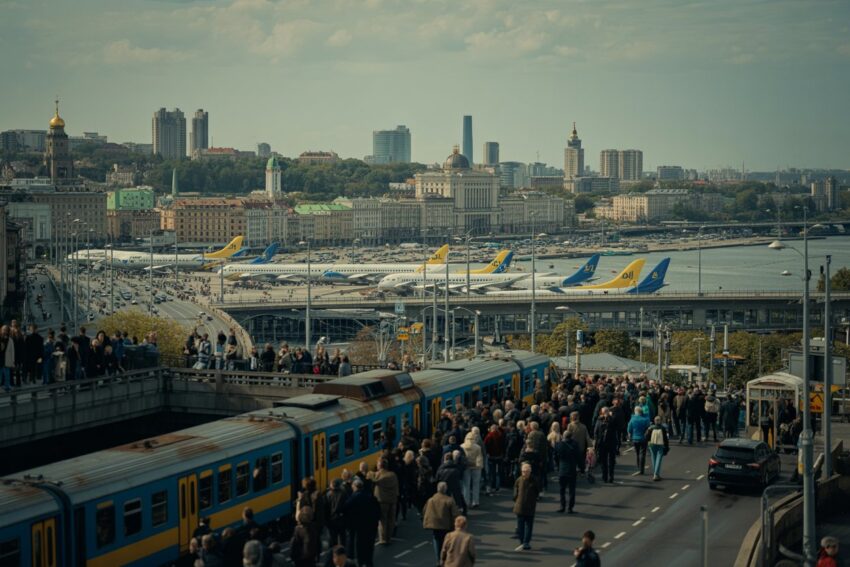 Image generated with Ai
The tourism sector in Ukraine remains one of the most severely impacted industries amid the ongoing war in 2026. Once an emerging Eastern European destination with growing city tourism, cultural travel, Black Sea leisure markets, and business conferences, Ukraine has experienced a near-total collapse of international tourism since the escalation of the conflict.
Airspace closures, infrastructure damage, safety risks, and travel advisories have fundamentally altered the country’s travel landscape. Yet amid devastation, limited forms of domestic movement, humanitarian travel, and resilience-driven local tourism continue to shape a complex and evolving picture.
Advertisement
Advertisement
This case study examines how war has reshaped Ukraine’s tourism sector, the economic and psychological consequences, and what recovery could realistically look like.
Pre-Conflict Momentum: A Growing Tourism Economy
Before full-scale escalation, Ukraine was gaining visibility on the European tourism map. Cities such as Kyiv and Lviv were attracting cultural travelers, digital nomads, and weekend city-break visitors from across Europe.
Advertisement
Advertisement
The Black Sea coast, including destinations like Odesa, offered summer leisure tourism, cruise calls, and regional beach travel. Affordable prices, strong heritage appeal, and growing aviation links helped position Ukraine as a competitive emerging destination.
Tourism revenues were increasing steadily, contributing to urban hospitality growth, hotel development, and event infrastructure expansion.
Advertisement
Advertisement
That trajectory halted abruptly.
Airspace Closure and International Isolation
One of the most immediate impacts of the war was the complete closure of Ukrainian airspace to civilian aviation.
Advertisement
Advertisement
With no commercial flights operating into or out of Ukraine, inbound tourism effectively collapsed overnight. Unlike destinations that experience partial disruptions, Ukraine’s aviation shutdown eliminated direct international access.
Travelers can only enter via land borders with neighboring EU countries such as Poland or Romania — a route unsuitable for conventional leisure tourism under wartime conditions.
This aviation suspension has resulted in:
- Near-zero inbound leisure travel
- Elimination of cruise operations in Black Sea ports
- Cancellation of conferences and international events
- Suspension of global hotel expansion projects
Air connectivity is the backbone of modern tourism. Without it, large-scale recovery cannot begin.
Advertisement
Advertisement
International Tourism Collapse
Since the escalation of the conflict, international visitor numbers have declined by more than 90%, effectively reaching negligible levels.
Western governments have issued strict “do not travel” advisories for Ukraine, making tourism insurance invalid and eliminating organized group travel.
Leisure tourism, pilgrimage travel, business conferences, and student exchange programs have been suspended indefinitely.
Even diaspora visits have been complicated by safety risks and logistical barriers.
The loss of foreign arrivals has had cascading effects on:
- International hotel brands
- Guided tour companies
- Cultural institutions are reliant on ticket sales
- Restaurants and nightlife sectors
- Transportation providers
For practical purposes, Ukraine is currently absent from global leisure tourism flows.
Advertisement
Advertisement
Hospitality Sector Contraction and Repurposing
Hotels in major cities have faced stark choices: closure, minimal operation, or repurposing.
In cities including Kyiv and Lviv, some properties have remained partially open, often serving:
- Journalists
- NGO personnel
- Diplomats
- Humanitarian workers
- Internally displaced persons
Luxury and boutique properties that once catered to international tourists have dramatically reduced staff or suspended operations.
In heavily affected eastern and southern regions, hotel infrastructure has suffered direct damage. Reconstruction needs will be extensive.
Tourism employment — once a stable urban job source — has been heavily disrupted, contributing to broader economic strain.
🚆 Domestic Mobility and Wartime Travel Patterns
While international tourism has collapsed, limited forms of domestic travel persist.
Advertisement
Advertisement
Rail transport remains a critical mobility channel, operated by Ukrainian Railways. Trains serve as evacuation corridors, essential travel routes, and limited civilian mobility options.
Domestic travel in 2026 is not tourism in the traditional sense. It is shaped by:
- Family reunification
- Relocation
- Administrative needs
- Essential business operations
In western regions of Ukraine, some degree of local hospitality activity continues, though primarily supporting internal mobility rather than leisure tourism.
This shift illustrates how tourism infrastructure can temporarily serve humanitarian and social functions during conflict.
Economic Impact on GDP and Employment
Tourism once contributed significantly to urban service economies in Ukraine. Its collapse has removed an important revenue stream at a time when public finances are already under extreme pressure.
The broader impacts include:
Advertisement
Advertisement
- Loss of foreign currency earnings
- Reduced tax revenues
- Business bankruptcies
- Increased unemployment
Secondary industries — agriculture supplying restaurants, local artisans, event services — have also been affected.
The tourism downturn compounds the macroeconomic shock caused by infrastructure destruction and industrial disruption.
Image, Perception, and Global Travel Sentiment
Tourism is fundamentally perception-driven. In Ukraine’s case, global media coverage of active conflict has cemented an image of high-risk instability.
Even if certain regions are geographically distant from active front lines, nationwide advisories treat the country uniformly.
Rebuilding tourism will require not only physical reconstruction but also long-term image rehabilitation. Destination branding campaigns cannot begin meaningfully until sustained peace and security are visible internationally.
Experience from other post-conflict destinations suggests that perception recovery often lags behind ceasefires by several years.
Advertisement
Advertisement
Infrastructure Damage and Future Reconstruction
In southern and eastern regions, tourism infrastructure has been damaged or destroyed.
Coastal facilities, cultural landmarks, transportation nodes, and accommodation properties face significant rebuilding costs.
Future recovery will require:
- Large-scale reconstruction investment
- International development support
- Restoration of aviation access
- De-mining and safety certification of tourist zones
- Insurance market normalization
However, post-conflict reconstruction can also create opportunities for modernization and sustainable planning.
New infrastructure may integrate updated environmental standards, digital tourism systems, and improved urban design.
Comparative Historical Lessons
Other countries have experienced severe tourism collapses during wartime, followed by gradual recovery once stability returned.
Advertisement
Advertisement
Common recovery phases typically include:
- Essential travel and diaspora return
- Humanitarian and NGO presence
- Business and investment travel
- Gradual leisure tourism revival
- Full destination branding relaunch
Ukraine’s timeline will depend heavily on the duration and outcome of the conflict.
Long-Term Recovery Outlook
A realistic tourism recovery scenario in Ukraine depends on several core conditions:
- Sustained ceasefire or peace agreement
- Reopening of national airspace
- Removal of high-level travel advisories
- Reconstruction of damaged infrastructure
- International marketing repositioning
Recovery is unlikely to be immediate. Even after hostilities cease, traveler confidence rebuilds gradually.
However, Ukraine possesses significant long-term tourism assets:
- Rich cultural heritage
- UNESCO-listed sites
- Historic city centers
- Culinary traditions
- Natural landscapes
With peace, these assets could re-emerge in the European travel market.
Advertisement
Advertisement
Tourism in Suspension
Ukraine’s tourism sector in 2026 remains largely suspended under the weight of the ongoing conflict. International arrivals have nearly vanished, aviation remains closed, and hospitality infrastructure has either contracted or shifted to wartime roles.
The economic and social costs are substantial, yet the country’s cultural and historical assets remain intact in many regions.
Tourism recovery will ultimately hinge on peace, security normalization, infrastructure rebuilding, and international confidence restoration. When those conditions are met, Ukraine may re-enter global tourism not merely as a recovering destination — but as a symbol of resilience and renewal.
Advertisement
