
United States, Canada, and Mexico Gear Up as FIFA World Cup 2026 Drives Uneven but Rising Global Tourism Demand: Everything You Need to Know

Published
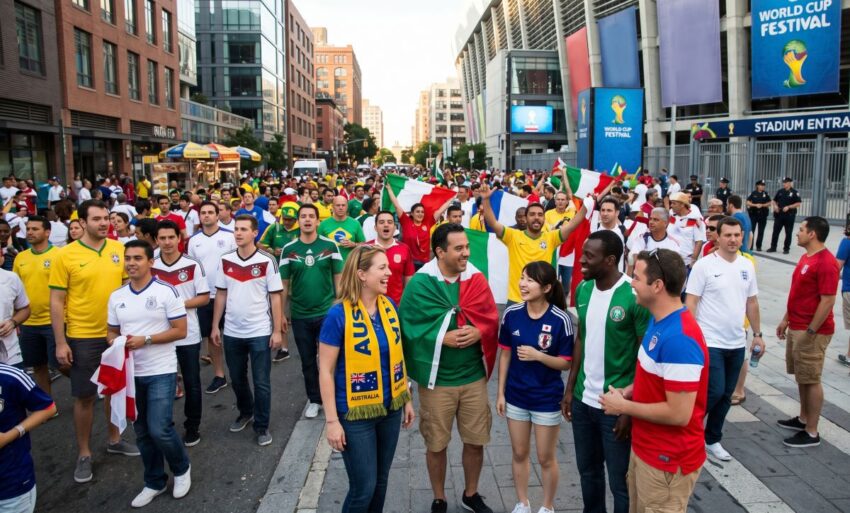 Image generated with Ai
The countdown to the FIFA World Cup 2026 has already begun reshaping global tourism demand, and the numbers tell a story that every host nation needs to pay close attention to. A new report examining flight searches, air connectivity, hotel pricing, and projected tourism spending across the three host countries and 16 host cities reveals that while traveler interest is climbing, the rate of growth is far from uniform — and the window to act is narrowing fast.
Tourism Demand Growing, But the Gap Between Nations Is Widening
Advertisement
Advertisement
Among the three host nations, Mexico has demonstrated the most consistent upward trend in international travel intentions, recording an average year-on-year increase in its global market share of approximately 0.11 percentage points since January 2026. The United States, by contrast, saw a sharper spike toward the end of the first quarter of 2026, with a notable jump of 0.31 percentage points recorded in March alone — signaling a late but powerful surge in traveler interest. Canada, meanwhile, has maintained a steady and more gradual pace of growth, without dramatic fluctuations in either direction.
At the city level, the picture becomes even more telling. Boston, Mexico City, and Vancouver registered some of the sharpest increases in travel intentions when compared with the same period in 2025. New York, already a well-established international travel hub, is further cementing its status as a focal point for the tournament, drawing visitors from across the globe.
Advertisement
Advertisement
Domestic Tourism Emerges as a Defining Force
One of the more striking findings is the role that domestic tourism is expected to play during the 2026 World Cup — particularly in the United States. Local travel intentions to US host cities for the tournament weeks have risen by an average of 3.82 percentage points year-on-year, a figure that underscores the immense appetite among American travelers to attend matches on home soil. This domestic surge is expected to place considerable pressure on accommodation, transport, and local services in key destinations.
Advertisement
Advertisement
Air Connectivity Becomes a Critical Factor
When it comes to drawing international visitors, air connectivity is emerging as a decisive differentiator. The United States holds a commanding advantage in this area, with direct flight connections serving travelers from 40 of the 48 participating nations. Canada follows with direct links to 32 participating teams, while Mexico trails considerably with connectivity to just 18 of the competing nations. This gap could have a real impact on how effectively Mexico’s host cities are able to attract foreign fans, particularly those traveling from long-haul international markets.
European nations are leading the charge from afar. The United Kingdom, France, Germany, Spain, and the Netherlands are among the top long-haul source markets, alongside a selection of fast-growing emerging markets that are tracking the tournament closely.
Hotel Prices Are Already Reflecting the Heat
The financial stakes of the World Cup 2026 are not merely theoretical. Hotel prices across all host cities are already on the rise, with the most dramatic increases concentrated around high-profile fixtures. In New York/New Jersey, where the World Cup Final is set to take place, room rates are ranging between $414 and $1,024 per night — a year-on-year increase of 10.8%. Miami, hosting the third-place match, is seeing even steeper growth, with rates between $261 and $744 representing a 25.5% year-on-year rise. The sharpest spike of all, however, belongs to Mexico City, where the opening match is driving accommodation prices up by a staggering 48.9% compared to the previous year, with rates currently ranging from $145 to $742 per night.
A $4.3 Billion Tourism Opportunity on the Line
Advertisement
Advertisement
The overall economic impact of the tournament’s tourism spending is estimated at approximately $4.3 billion, with more than 80% of that figure expected to be absorbed by the accommodation sector, followed by food and beverages. These projections represent a major opportunity — but also a major test — for destination managers, hoteliers, airlines, and city authorities across all three countries.
North America, the United States, Canada, and Mexico now stand at a critical juncture. The data makes clear that traveler interest is real and growing, but translating that interest into actual arrivals will require urgent action on connectivity, capacity planning, pricing strategy, and visitor experience management. As match schedules firm up and booking windows tighten, the destinations that move fastest and smartest will be the ones that capture the greatest share of the World Cup 2026 tourism boom.
Advertisement
