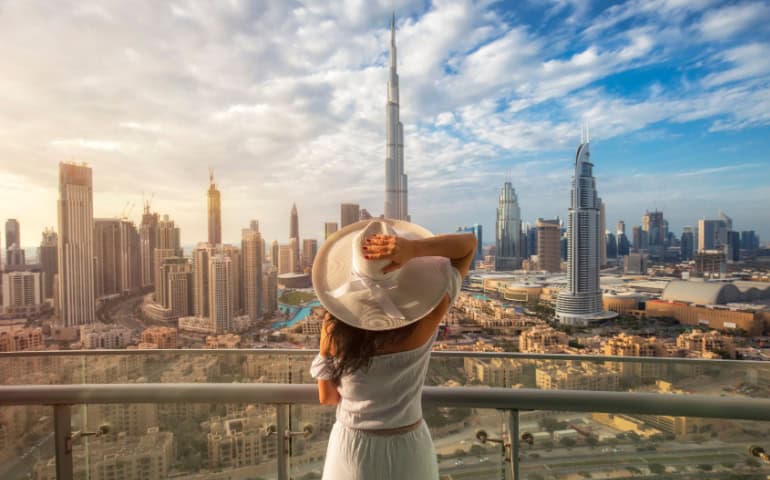
Image generated with Ai
The UAE is currently undergoing an unrivaled travel transformation. Dubai and Abu Dhabi have government-funded tourism campaigns targeting women, and they will debut in 2026. The campaigns are innovative, and many safety measures during the tourism campaign will provide women peace of mind when traveling by themselves. Women worldwide have more of an incentive to travel due to the surge in solo female travel. This paper will analyze statistics like economic impacts, innovative safety measures, and the policies that guarantee safety. This paper will analyze female travel solo in the modern metropolitan cities and why they stand as safe global travel destination.
The Middle Eastern travel landscape has undergone a profound metamorphosis over the past decade, shifting from a region primarily associated with corporate transit to a premier global destination for leisure and lifestyle. At the forefront of this transformation is the exponential rise in independent female travel. Historically, solo female adventurers gravitated towards European or Southeast Asian destinations due to established backpacking infrastructures and perceived safety nets. However, shifting global dynamics and enhanced governmental transparency have repositioned the United Arab Emirates as an unrivalled sanctuary for women. The Dubai and Abu Dhabi female tourism campaigns 2026 represent the pinnacle of this strategic pivot. Women from across the globe are no longer just transiting through the Gulf; they are actively choosing it for its unparalleled blend of opulence, heritage, and uncompromising security. This shift is not merely a passing trend but a structural evolution in global tourism demographics, driven by rising disposable incomes among professional women and a growing desire for experiential travel that does not compromise on personal safety or luxurious comfort.
The United Arab Emirates stands out in the region by proactively addressing the specific concerns of female travellers. Unlike many global destinations where safety is an afterthought left to the individual, the UAE has institutionalised security through progressive legislative reforms and smart city initiatives. The cultural fabric of the UAE, which heavily emphasises respect, hospitality, and honour, aligns seamlessly with modern law enforcement technologies. This harmonious blend of traditional Emirati values and futuristic governance creates a unique environment where women can walk freely at night, dine alone without harassment, and explore vast cultural landscapes without apprehension. Consequently, solo female travel UAE is booming, reflecting a broader societal commitment to gender equality and inclusive economic growth. The national leadership recognises that establishing a reputation as a female-friendly destination is a powerful catalyst for sustainable tourism and international goodwill.
In response to the growing influx of independent female travellers, the Dubai Department of Economy and Tourism (DET) has rigorously updated its strategic framework for 2026. Recognising that female tourists contribute significantly to extended stays and higher retail spending, the DET has rolled out targeted global marketing campaigns. These campaigns vividly highlight Dubai’s seamless blend of high-end wellness retreats, secure boutique accommodations, and heavily monitored public spaces. Official strategies now emphasise experiential offerings—from safe desert safaris guided by certified professionals to curated art and cultural tours. By consistently collaborating with international travel influencers and hospitality stakeholders, Dubai ensures that its messaging resonates with women seeking both adventure and tranquility. The DET’s holistic approach ensures that every touchpoint of a woman’s journey, from visa application to airport departure, is meticulously designed to eliminate friction and elevate the overall travel experience.
Advertisement
Parallel to Dubai’s efforts, the Department of Culture and Tourism (DCT) Abu Dhabi has solidified its position by formally pledging to maintain and enhance its safety infrastructure. Abu Dhabi’s strategy focuses heavily on cultural immersion without the logistical anxieties typically associated with solo travel. The DCT actively promotes destinations like the majestic Sheikh Zayed Grand Mosque, the Louvre Abu Dhabi, and the UNESCO World Heritage site Al Ain Oasis, ensuring these landmarks are highly accessible and stringently secured. Their latest campaigns explicitly target the solo female demographic by highlighting robust public transport connectivity, certified ride-hailing applications like Uber and Careem, and an abundance of female-only wellness sanctuaries. The message is clear: Abu Dhabi is not just inviting women to visit; it is actively constructing an ecosystem where they can thrive, relax, and explore with absolute confidence.
A critical, often overlooked pillar supporting the Dubai and Abu Dhabi female tourism campaigns 2026 is the comprehensive UAE Gender Balance Council Strategy 2026. Established to enhance the UAE’s ranking in global competitiveness reports on gender equality, this strategy has profound implications for tourism. By striving to achieve gender balance in decision-making positions and reducing the gender gap across all government sectors, the UAE projects a powerful international image of progression and female empowerment. When tourists observe Emirati women leading in business, government, and the hospitality sector, it reinforces the narrative of a safe, equitable society. The council works closely with the Organisation for Economic Co-operation and Development (OECD) to implement best practices, ensuring non-discrimination against women. This domestic empowerment directly translates into a more respectful, welcoming, and secure environment for international female visitors.
Government visa reforms have drastically simplified the entry process, serving as a massive catalyst for the solo female travel market. The introduction of the Golden Visa, five-year multi-entry tourist visas, and remote working visas has allowed women to view the UAE not just as a fleeting holiday destination, but as a potential long-term base. Digital nomads and freelance professionals can now easily relocate, bringing a steady stream of long-term solo female visitors. Furthermore, seamless connectivity initiatives at the federal level guarantee that moving between emirates is safe, heavily regulated, and affordable. Whether taking an intercity luxury coach or a licensed taxi, female travellers are guaranteed price transparency, GPS tracking, and immediate access to emergency services, completely eradicating the logistical vulnerabilities that plague solo travellers in other parts of the world.
The statistical evidence backing the success of these tourism campaigns is nothing short of phenomenal. According to official data published by the Dubai Department of Economy and Tourism (DET), the city achieved a record-breaking year in 2025, welcoming 19.59 million international overnight visitors. This marked a solid 5% year-on-year increase compared to 2024’s 18.72 million arrivals. The city even ended the year by welcoming over 2 million visitors in the single calendar month of December, building massive momentum heading into 2026. Average hotel occupancy surged to 80.7%, and Revenue Per Available Room (RevPAR) rose by 11% to AED 467. This economic vitality is heavily supported by the influx of female tourists who are capitalising on the city’s robust safety record. Dubai International Airport (DXB) also retained its position as the world’s busiest airport for international passengers for the 11th consecutive year, highlighting the sheer scale of the region’s connectivity.
Advertisement
Advertisement
Abu Dhabi’s appeal to solo female travellers is anchored in hard, verifiable data. For an astonishing ninth consecutive year since 2017, Abu Dhabi ranked first on the Numbeo Safety Index as the world’s safest city in 2025. This remarkable consistency is the bedrock of the Abu Dhabi safety ranking prestige and its targeted female tourism campaigns. For a solo female traveller, this statistic is not merely a marketing slogan; it translates to the tangible reality of extremely low crime rates, respectful public conduct, and an absence of street harassment. Women can confidently stroll the Corniche at sunset or navigate vibrant souks with absolute peace of mind. This unprecedented safety record provides the UAE capital with a unique competitive advantage in the global tourism market, effectively eliminating the primary barrier to entry for women travelling independently.
The undisputed success of the Dubai and Abu Dhabi female tourism campaigns 2026 has sent ripples across the entire Middle Eastern region. Neighbouring countries are acutely observing the direct correlation between stringent safety policies and explosive tourism revenue. By setting the gold standard for female safety, the UAE is effectively forcing a regional paradigm shift. Other Gulf nations are now compelled to rapidly modernise their own tourism infrastructures, ease restrictive social policies, and implement transparent safety measures to remain competitive. The UAE has proven that progressive values and female empowerment do not dilute cultural heritage; rather, they enhance it on the global stage. This policy ripple effect is actively transforming the Middle East from a region previously deemed challenging for solo women into a highly competitive, modernised tourism hub where safety is the baseline expectation.
The foundation of this exceptional safety record lies in the UAE’s uncompromising legal framework and advanced law enforcement capabilities. The government enforces a strict zero-tolerance policy towards any form of harassment, theft, or public disturbance. Law enforcement agencies are highly trained, incredibly visible, and deeply integrated with smart city surveillance technologies. Artificial intelligence-powered CCTV networks monitor public spaces, ensuring rapid response times to any anomalies. Furthermore, female police officers are prominently deployed across major tourist hubs, providing an approachable and reassuring presence for female visitors. The legal system ensures swift, severe consequences for offenders, which acts as an unparalleled deterrent. For the solo female traveller, this means that the burden of vigilance is lifted from her shoulders and placed firmly in the hands of a highly competent state apparatus.
The hospitality sector has aggressively adapted to capitalise on the influx of solo female travellers. Recognising that women prioritise wellness, privacy, and curated experiences, luxury hotels across Dubai and Abu Dhabi have introduced dedicated women-only floors, staffed entirely by female concierge and housekeeping teams. Beyond accommodation, there has been a massive surge in women-only spa sanctuaries, holistic wellness resorts, and yoga retreats nestled in the desert dunes or along pristine coastlines. These establishments offer a serene escape for women to unwind, recharge, and reconnect with themselves without any privacy concerns. The industry’s pivot towards hyper-personalised, secure wellness tourism demonstrates a deep understanding of the modern female consumer’s desires, cementing the UAE as a leading destination for restorative travel.
The aviation sector plays a critical role in facilitating this demographic shift. Dubai International (DXB) and the state-of-the-art Zayed International Airport in Abu Dhabi have heavily invested in creating seamless, stress-free transit experiences for women. From brightly lit, heavily secured transit lounges to dedicated family and female-only rest zones, airport authorities ensure safety begins the moment a traveller steps off the plane. Airlines based in the UAE, such as Emirates and Etihad, are globally renowned for their exceptional in-flight service, rigorous safety protocols, and premium amenities. This end-to-end commitment to passenger wellbeing reassures female travellers before they even reach their destination. The robust flight connectivity provided by these aviation giants means that women from Europe, Asia, and the Americas can reach the UAE directly, bypassing potentially stressful layovers in less secure regions.
The economic ramifications of targeting female travellers are vast and deeply intertwined with the broader macroeconomic goals of the UAE. The Dubai Economic Agenda D33 aims to double the size of the emirate’s economy and reinforce its status as one of the world’s top three cities for tourism and business. Female tourists are statistically proven to have higher average daily spending rates, particularly in sectors such as luxury retail, fine dining, cultural excursions, and premium wellness. By actively courting this demographic through the Dubai Tourism 2026 initiatives, the government is securing a highly lucrative revenue stream that directly supports the D33 objectives. The tourism sector remains a key driver of economic diversification, moving the nation away from hydrocarbon dependency and towards a sustainable, service-driven knowledge economy.
This strategic focus has consequently triggered a surge in foreign direct investment (FDI) within the hospitality and leisure sectors. International hotel chains and private equity firms are heavily investing in boutique properties, high-end retail spaces, and wellness brands across Dubai and Abu Dhabi, knowing the female travel market provides a stable, high-yield return. The sheer volume of visitors—approaching 20 million annually in Dubai alone—guarantees robust footfall. Furthermore, the global perception of the UAE as a secure, forward-thinking investment hub is bolstered by its progressive stance on female travel and gender balance. Investors are confident that the government’s long-term commitment to safety and infrastructure will ensure continued growth, making the UAE one of the most attractive markets for global tourism capital.
The influx of international female travellers has cultivated a thriving ecosystem for local female entrepreneurs. Emirati women and female expatriates are increasingly launching boutique travel agencies, specialised tour guide services, artisanal craft businesses, and culinary ventures catering specifically to the nuanced preferences of women visiting the UAE. This aligns perfectly with the national agenda to promote gender balance and female workforce participation. When solo female travellers choose to spend their money on female-led local enterprises, it creates a powerful cycle of economic empowerment. It allows tourists to experience authentic Emirati culture—such as traditional henna art, local culinary masterclasses, or historical tours of Qasr Al Hosn—while directly supporting the financial independence of local women.
The residential and short-term rental markets have equally felt the impact of this demographic shift. While luxury resorts remain highly popular, there is a rapidly growing demand for secure, budget-friendly, and authentic accommodation options. The licensed Airbnb market has exploded, with solo travellers opting for stylish apartments in heavily monitored, family-friendly neighbourhoods like Dubai Marina or Abu Dhabi’s Saadiyat Island. The government strictly regulates these short-term rentals, ensuring that hosts meet rigorous safety and hygiene standards. This regulatory oversight gives female travellers the confidence to utilise peer-to-peer accommodation networks safely. Consequently, real estate investors are increasingly purchasing and outfitting properties specifically designed to appeal to the aesthetic and security requirements of the independent female holidaymaker.
The meticulous execution of these tourism strategies has garnered widespread acclaim from international bodies. Organisations such as Airports Council International (ACI) continually validate the operational excellence of UAE airports. Global tourism experts frequently cite the UAE as a textbook example of how state-led infrastructure development, combined with uncompromising security, can completely transform a destination’s demographic appeal. Industry analysts project that the women-friendly travel Middle East sector will continue to see double-digit growth, largely propelled by the standards set in Dubai and Abu Dhabi. These independent endorsements serve as powerful trust signals to potential travellers, corroborating the claims made in government marketing campaigns and solidifying the UAE’s reputation as a peerless travel destination.
The success of these initiatives is driven from the very top levels of government. Leaders continually emphasise that the expansion of tourism must run parallel to the preservation of cultural integrity and absolute public safety. His Highness Sheikh Hamdan bin Mohammed bin Rashid Al Maktoum recently highlighted that Dubai’s strong tourism growth is driven by the leadership’s commitment to building a city that connects the world while offering distinctive, enriching, and safe experiences. Official statements consistently reiterate that welcoming millions of diverse global travellers does not require compromising on the strict security standards that define the nation. This top-down mandate ensures that every government department, from immigration to municipal policing, operates with the unified goal of protecting and enriching the visitor experience.
Looking beyond the Dubai and Abu Dhabi female tourism campaigns 2026, the strategic focus is rapidly expanding to incorporate sustainability and smart city integration. Female travellers are increasingly prioritising eco-friendly destinations that align with their ethical values. In response, the UAE is heavily investing in green hospitality, sustainable desert conservation projects, and carbon-neutral public transport solutions. Smart technologies will further personalise the travel experience, allowing visitors to seamlessly navigate cultural landmarks, book wellness retreats, and access emergency services via unified, government-backed mobile applications. The fusion of absolute safety, luxurious wellness, and environmental consciousness will define the next decade of UAE tourism, ensuring it remains the most highly sought-after destination for the discerning female traveller.
As visitor numbers continue to shatter historical records, the UAE is proactively scaling its infrastructure to comfortably accommodate future growth without sacrificing the quality of the visitor experience. Ambitious projects outlined for the run-up to 2030 include the massive expansion of public rail networks, the development of entirely new cultural districts, and the continuous enhancement of aviation capacity. For the solo female traveller, this means the UAE will only become easier, safer, and more fascinating to explore. By remaining relentlessly forward-looking, Dubai and Abu Dhabi guarantee that their current status as the world’s premier safe havens for women is not just a temporary achievement, but a permanent, evolving reality.
Conclusion
Ultimately, the tremendous success behind the robust Dubai and Abu Dhabi female tourism campaigns 2026 stems from unwavering government commitment to uncompromising safety. By seamlessly blending modern infrastructure with stringent law enforcement, the United Arab Emirates has rightfully earned its dominant position globally. Solo female travellers can now explore confidently, knowing their wellbeing remains an absolute national priority. As these metropolises consistently break international visitor records, their proactive tourism strategies set an exemplary gold standard worldwide. Looking forward, this phenomenal momentum ensures that both remarkable cities will undoubtedly remain premier, secure, and empowering destinations for generations to arrive safely tomorrow.
Advertisement
Advertisement
Advertisement












Tuesday, September 1, 2026
Tuesday, September 1, 2026

Tuesday, September 1, 2026

Tuesday, September 1, 2026

Tuesday, September 1, 2026
Tuesday, September 1, 2026

Tuesday, September 1, 2026
Tuesday, September 1, 2026



