
Rome Matches Lisbon and Paris Drive Europe’s Day Trip Boom as Travelers Look Beyond Crowded City Centers

Published
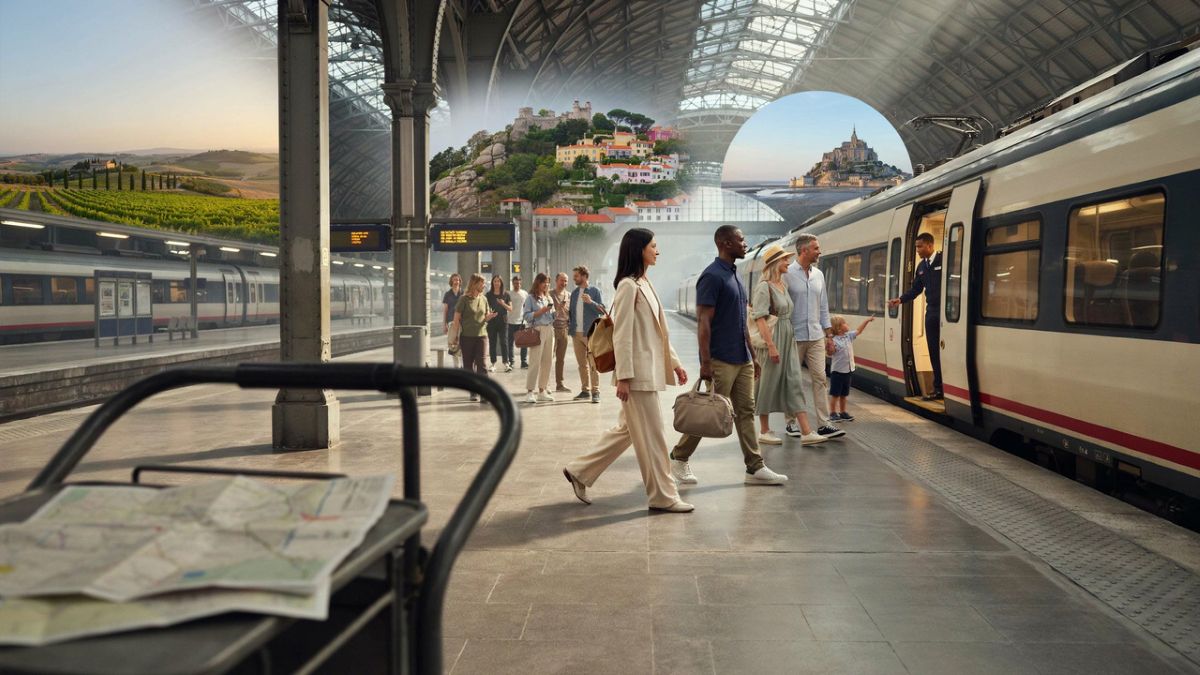
Image generated with Ai
Rome, Lisbon and Paris are becoming more than places to stay as travelers increasingly use Europe’s major cities as launchpads for countryside escapes, historic landmarks, coastal towns and immersive experiences that can be completed within a single day.
For many visitors, a European holiday once meant spending several days inside one famous city. That pattern is changing. New research from tour operator and destination marketplace The Tour Guy suggests that travelers are increasingly adding excursions outside major urban centers, creating stronger demand for day trips across some of Europe’s most recognizable tourism corridors.
Advertisement
Advertisement
Day Trip Bookings Rise Sharply in 2026
The Tour Guy reported that bookings for its guided day trips increased 110.7% year over year in 2026, based on bookings between January 1 and September 15 compared with the same period in 2025. Its September survey of travelers who had visited Europe during the previous 12 months also found that 85.4% had opted for a day trip while traveling.
The figures come from one company’s survey and booking platform, so they should not be interpreted as a measurement of global day-trip growth. However, other tourism data indicates that short-duration tourism is already a substantial part of travel activity.
Advertisement
Advertisement
Official British tourism statistics, for example, recorded 1.06 billion tourism day trips across Great Britain in 2025, generating approximately £56 billion in spending. Day-trip volume increased 3% from 2024, while expenditure increased 2%.
Travelers Want to See What Lies Beyond the City
The motivation behind the European day-trip surge appears to go beyond simply escaping busy streets.
Advertisement
Advertisement
According to The Tour Guy survey, 64.9% of respondents said they enjoy day trips because they want to see countryside, coastlines and natural landscapes beyond cities. Another 53.4% already had a particular attraction outside the city that they wanted to visit. Only 8.5% primarily viewed a day trip as a break from urban sightseeing.
That points toward a broader change in how travelers construct itineraries. Instead of choosing between a city vacation and a countryside vacation, visitors can combine both by maintaining one hotel base and making selected excursions.
Advertisement
Advertisement
Lisbon Turns Into a Gateway for Sintra
Lisbon is a clear example of this changing travel pattern.
Visitors staying in Portugal’s capital can reach Sintra for a completely different experience, moving from Lisbon’s urban streets toward palaces, forests and historic estates. The Tour Guy identified the Lisbon-Sintra route among its fastest-growing day-trip products, with bookings recording quadruple-digit growth on its platform.
The appeal is particularly relevant for travelers who want variety without repeatedly changing accommodation. Lisbon becomes the base, while Sintra becomes an additional experience within the same itinerary.
Rome Connects Travelers With Tuscany and Pompeii
Rome is following a similar model. The Italian capital can serve as a starting point for excursions toward Tuscany and other destinations outside the city’s historic core.
Advertisement
Advertisement
The Tour Guy has also seen growing interest in more specialized experiences rather than simply adding another famous attraction to an itinerary. One example is a Pompeii experience that combines archaeology with the geology of Mount Vesuvius, creating a more focused interpretation of a destination that many international visitors already know.
The development reflects a wider travel preference for experiences that provide context and storytelling instead of simply checking landmarks off a list.
Paris Expands Its Tourism Footprint
Paris is another major beneficiary of the trend.
Travelers based in the French capital can venture toward destinations such as Mont-Saint-Michel, while shorter excursions can connect visitors with attractions outside central Paris. The Tour Guy reported that its Mont-Saint-Michel from Paris experience was among its fastest-growing day-trip products.
This model can also broaden where tourism spending takes place. Rather than concentrating visitor expenditure entirely within Paris, excursions can direct spending toward transport providers, guides, restaurants, attractions and businesses in surrounding regions.
Day Tourism Already Has a Major Economic Role
The British experience demonstrates why destinations are paying attention to day visitors.
Advertisement
Advertisement
VisitBritain’s 2025 data shows that tourism day visits in England reached 927.5 million, generating approximately £48.8 billion in expenditure. Day-visit spending in England increased 1% year over year, even as the volume of overnight trips declined.
That distinction matters for destinations. Tourism growth does not always have to come from additional hotel nights. Attractions, restaurants, transport operators, cultural sites and local businesses can benefit from visitors who arrive in the morning and leave later the same day.
The Rise of the “Extreme Day Trip”
The shift toward shorter travel experiences is also appearing in air travel.
Expedia’s 2026 Air Hacks research found that 20% of travelers surveyed had already taken a round-trip flight within 24 hours, describing the behavior as the “extreme day trip.” Among British travelers, Dublin, Amsterdam and Paris were identified as popular destinations for this type of journey.
This is a different phenomenon from the traditional guided day trip, but both demonstrate how travelers are becoming more willing to separate the idea of visiting somewhere from the need to spend a night there.
A New Opportunity for Regional Tourism
For smaller destinations, the trend could create an important opportunity. A town does not necessarily need to compete with Rome, Paris or Lisbon for overnight visitors to benefit from international tourism.
Advertisement
Advertisement
Instead, it can become part of the itinerary surrounding a major city.
For travelers, that means more variety within a limited vacation period. For regional tourism businesses, it creates another channel through which visitors can discover local food, heritage, nature and culture.
Yet the growth also needs careful management. Moving visitors away from one crowded attraction does not automatically eliminate overtourism if the same pressure simply appears at another landmark. Transport capacity, visitor management and protection of sensitive cultural and natural sites will remain important as day-trip demand develops.
Europe’s City Break Is Getting Bigger
The biggest change may be psychological. A city is increasingly becoming the starting point of a trip rather than the entire trip itself.
The evidence from The Tour Guy, Britain’s official tourism statistics and Expedia points to growing interest in shorter, more flexible forms of exploration.
For a traveler standing in Rome, Lisbon or Paris, the next memorable experience may no longer be another landmark inside the city. It could be a vineyard in Tuscany, a palace in Sintra or a dramatic coastal landscape beyond the capital.
And that may be the real story behind Europe’s day-trip boom: travelers are not necessarily trying to see less. They are finding ways to see more without constantly packing their bags and moving on.
Advertisement
