

Riyadh Airport Disruption Shocks Saudi Arabia as 12 Die, 309 Are Injured and Flights Face Diversions

Published
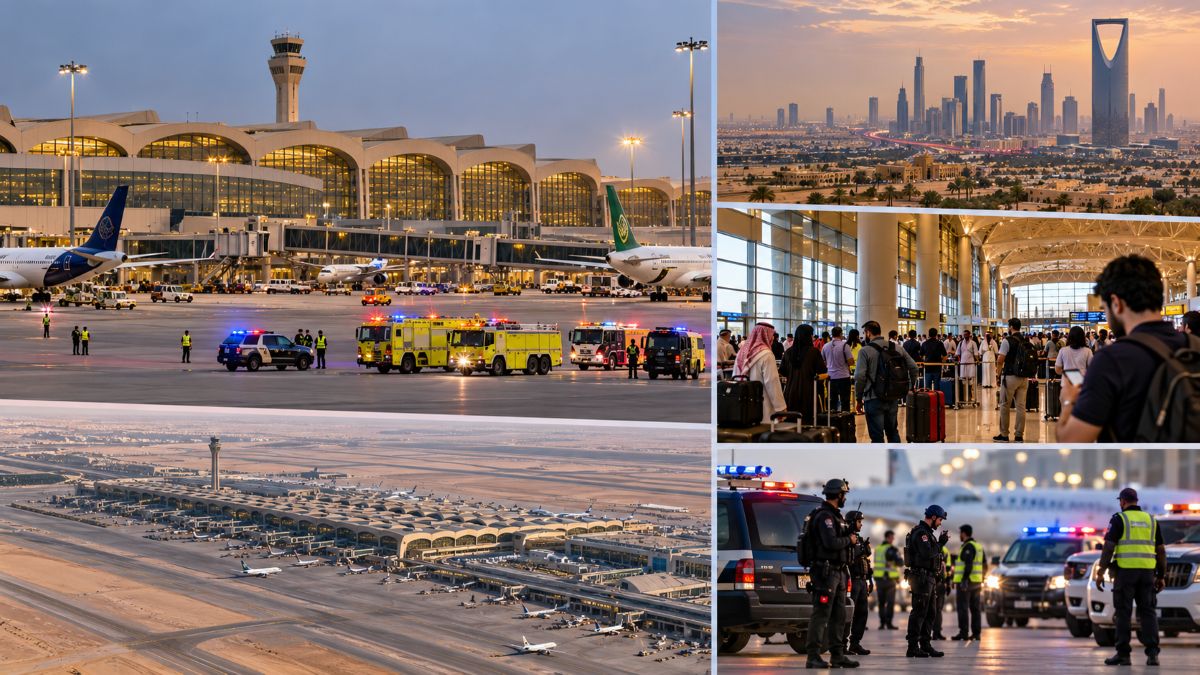
Riyadh airport disruption has intensified after a reported missile strike at King Khalid International Airport killed 12 people and injured 309 others on Saturday, 10 October, according to Saudi Arabia’s General Authority of Civil Aviation (GACA). The incident prompted a temporary suspension of airport operations, emergency responses and diversions affecting passengers travelling through the Saudi capital. British and US authorities advised their citizens to avoid the airport, while Kuwait Airways announced flight cancellations following the closure. Authorities are assessing damage to airport facilities, and some injured passengers remain in critical condition. The incident raises immediate concerns for international connections, airline schedules, passenger safety and travel planning across the Gulf.
Airport Closure Disrupts Riyadh Travel Plans
King Khalid International Airport, Riyadh’s principal aviation gateway, faced a serious operational emergency on Saturday after the reported strike struck airport facilities. Saudi aviation authorities confirmed 12 fatalities and 309 injuries in an update published early Sunday, 11 October. The victims included four Saudi nationals and eight foreign nationals, highlighting the international dimension of the incident.
Advertisement
Advertisement
The fatalities comprised two Bangladeshi nationals and one citizen each from the United States, Egypt, Jordan, Syria, Palestine and Sudan. Emergency teams transported injured people to hospitals, where medical staff continued treatment, including for patients in critical condition. Authorities also confirmed property damage and said assessments remained under way.
The immediate priority for travellers is to establish whether their flight remains scheduled, has been diverted or requires rebooking. Passengers should not assume that an airport reopening automatically means every service has returned to its original timetable.
Advertisement
Advertisement
Airport operations were temporarily suspended to allow emergency teams to respond and officials to assess the safety of affected facilities. Flight-tracking information indicated that aircraft bound for Riyadh were diverted, while Kuwait Airways cancelled services after the airport closed. The full effect on individual routes and subsequent departures may vary as airlines review their schedules.
What Travellers Need to Know Now
The reported incident has created several immediate concerns for passengers, particularly those with connecting flights, hotel reservations or onward ground transport. Travellers should rely on direct airline notifications and official airport updates rather than assuming that published departure times remain valid.
Advertisement
Advertisement
Flight status and cancellations
Check the airline’s booking portal and the airport’s live departure and arrival information before leaving for the terminal. A scheduled flight may change even after an initial confirmation.
Airport access and safety
Follow official instructions to avoid the airport while relevant restrictions or safety advisories remain in force. Do not travel to the terminal merely to seek information in person.
Connections and accommodation
Contact the airline about missed connections, alternative itineraries and overnight arrangements. Notify hotels and ground transport providers if delays affect arrival times.
Advertisement
Advertisement
Refunds and travel insurance
Keep cancellation notices, receipts and booking confirmations. Check the applicable ticket conditions and insurance policy before paying for replacement arrangements.
The British embassy in Riyadh issued advice warning UK nationals about a serious incident, while the US embassy also advised citizens to stay away from the airport. These warnings make official safety guidance especially important for international visitors, transit passengers and residents travelling abroad.
Flight Operations Face Uncertain Recovery
The immediate operational challenge extends beyond the period when airport facilities remain closed. Airlines must establish whether runways, terminals, aircraft stands, passenger-processing systems and supporting services can safely accommodate normal operations. They must also coordinate aircraft movements and crew availability following diversions or extended ground delays.
A disruption at a major airport can affect several subsequent flights, even when those services do not directly serve the affected terminal. Aircraft may arrive late, crews may reach duty-time limits, and connecting passengers may miss onward departures. Consequently, restoring airport access does not necessarily restore the entire schedule at once.
The following table summarises the confirmed developments and the information passengers should monitor.
Advertisement
Advertisement
| Travel indicator | Reported position as of 11 October 2026 | Passenger implication |
|---|---|---|
| Fatalities | 12 people killed | A major civilian emergency has affected the airport |
| Injuries | 309 people injured | Emergency and medical responses remain significant |
| Airport operations | Temporarily suspended following the incident | Passengers should verify current operating arrangements |
| Flight movements | Flights diverted from Riyadh | Arrival times and aircraft rotations may change |
| Airline response | Kuwait Airways reported cancellations | Passengers should check directly with their carrier |
| UK travel advice | British embassy advised nationals to avoid the airport | Follow current official safety instructions |
| US travel advice | US embassy also advised citizens to stay away | Check official embassy communications |
| Damage assessment | Authorities reported material damage | The extent of operational restrictions requires confirmation |
These figures reflect the aviation authority’s reported casualty toll, not the number of passengers affected by cancellations or diversions. Authorities and airlines had not provided a comprehensive passenger-disruption total in the information available for this report.
Why Riyadh Matters to International Aviation
Riyadh serves as a gateway for business travel, tourism, government visits and onward journeys across Saudi Arabia. Disruption at its principal airport can therefore affect travellers whose final destinations lie beyond the capital, particularly when their itineraries depend on connecting flights or tightly scheduled transfers.
The airport’s official website provides flight-status information, passenger guidance and airport services. Travellers should use these facilities to verify operational updates, while recognising that live information can change quickly during an emergency.
The incident also demonstrates how quickly an airport emergency can spread into the wider travel economy. Airlines must manage disrupted aircraft rotations, hotels may receive late arrivals, and tour operators may need to rearrange transfers or excursions. Corporate travel managers face additional work when employees have connecting journeys, meetings or time-sensitive appointments.
The International Civil Aviation Organization (ICAO) recognises that aviation disruptions can generate consequences across tourism, trade and other interconnected industries. Its emergency-planning guidance emphasises coordinated responses, contingency arrangements and business continuity. These principles are particularly relevant when an airport must balance emergency access with the safe restoration of commercial services.
How Airlines Manage Sudden Disruptions
Airlines generally respond to airport closures by reviewing flight plans, identifying suitable diversion airports and communicating revised arrangements to passengers. They must also consider aircraft positioning, available crews, airport capacity and the operational requirements of subsequent services. However, the options available depend on each airline’s network and the restrictions applicable at the time.
Advertisement
Advertisement
For passengers, the distinction between a cancellation and a diversion matters. A cancellation removes the scheduled service, while a diversion may take an aircraft to a different airport without completing its original journey. Both can lead to missed connections, additional accommodation costs and longer travel times.
| Disruption type | Possible operational consequence | What travellers should confirm |
|---|---|---|
| Airport closure | Departures and arrivals may stop temporarily | Whether the airport has reopened and their flight is operating |
| Flight diversion | Aircraft lands somewhere other than its intended airport | Where the aircraft will land and how onward travel will work |
| Flight cancellation | The scheduled service does not operate | Rebooking, refund eligibility and alternative routes |
| Aircraft rotation delay | A late aircraft affects later scheduled services | The revised departure time and any new connection arrangements |
| Missed connection | A passenger cannot board the next flight as planned | Whether the airline will rebook the complete itinerary |
| Extended overnight disruption | Travellers may need additional accommodation | What the airline or insurer will cover under the applicable terms |
These are general operational scenarios, not confirmation that every disruption has occurred at Riyadh. Their relevance depends on the status of each flight and the arrangements offered by the operating airline.
How This Differs From Earlier Disruptions
Saudi aviation authorities reported two earlier incidents involving King Khalid International Airport on Thursday, 8 October. Those incidents affected airport facilities and a Saudia aircraft, killed three Saudi citizens and injured several other people. Officials subsequently reported that airport operations had resumed and air traffic had returned to normal.
The subsequent incident on Saturday produced a substantially higher reported casualty toll and another temporary suspension of operations. This sequence is important for travellers because an earlier reopening cannot guarantee uninterrupted service after a new emergency.
| Development | Reported outcome | Significance for travellers |
|---|---|---|
| 8 October incidents | Three Saudi citizens killed; other people injured | Airport and airline operations faced an earlier emergency |
| Following the earlier incidents | Authorities reported that operations resumed | Services returned after initial assessments |
| 10 October incident | 12 people killed and 309 injured | A further emergency prompted another operational suspension |
| 11 October update | Damage assessment and passenger safety remained central concerns | Travellers need fresh confirmation rather than relying on earlier schedules |
The key distinction is the recurrence of disruption within a short period. Travellers with bookings over several days should therefore monitor updates throughout their journey, rather than checking flight information only once.
Where to Find Official Travel Updates
For reliable information, travellers should prioritise official airport notices, airline communications and government travel advisories. Social media reports and flight-tracking platforms can provide useful indications, but they should not replace direct confirmation from the operating carrier.
Advertisement
Advertisement
The airport’s passenger information service is particularly useful for checking arrivals, departures and travel arrangements. Travellers should also monitor embassy guidance if they are visiting Riyadh or transiting through the airport during the current disruption.
What the Disruption Means for Tourism
The incident presents an immediate challenge for Saudi Arabia’s visitor economy because dependable air connectivity underpins international tourism, business travel and major events. Disrupted arrivals can affect hotel check-ins, pre-booked transfers, tour schedules and meetings, even when those services operate normally at the destination.
Nevertheless, the eventual effect on visitor numbers, hotel occupancy and tourism revenue cannot yet be quantified from the available information. Those outcomes will depend on how long restrictions continue, how quickly airlines restore schedules and whether passengers postpone or reroute their journeys.
For travel companies, the immediate priority is operational flexibility. Tour operators should review arrival manifests, hotels should prepare for late check-ins, and corporate travel teams should maintain alternative itineraries where possible. Any changes must follow official safety instructions and confirmed airline arrangements.
Reliable Information Matters Most
The reported incident at King Khalid International Airport has created an urgent safety concern and significant uncertainty for air travellers. Saudi aviation authorities confirmed 12 deaths and 309 injuries, while airlines and diplomatic missions issued responses to the disruption. However, passengers should distinguish confirmed developments from speculation about reopening times, route availability or the wider impact on tourism. Checking official flight information before travelling remains essential, particularly for those with connecting journeys or time-sensitive bookings. Until authorities and airlines confirm normal operations, travellers should remain flexible, preserve their booking records and follow current safety instructions.
Advertisement
