
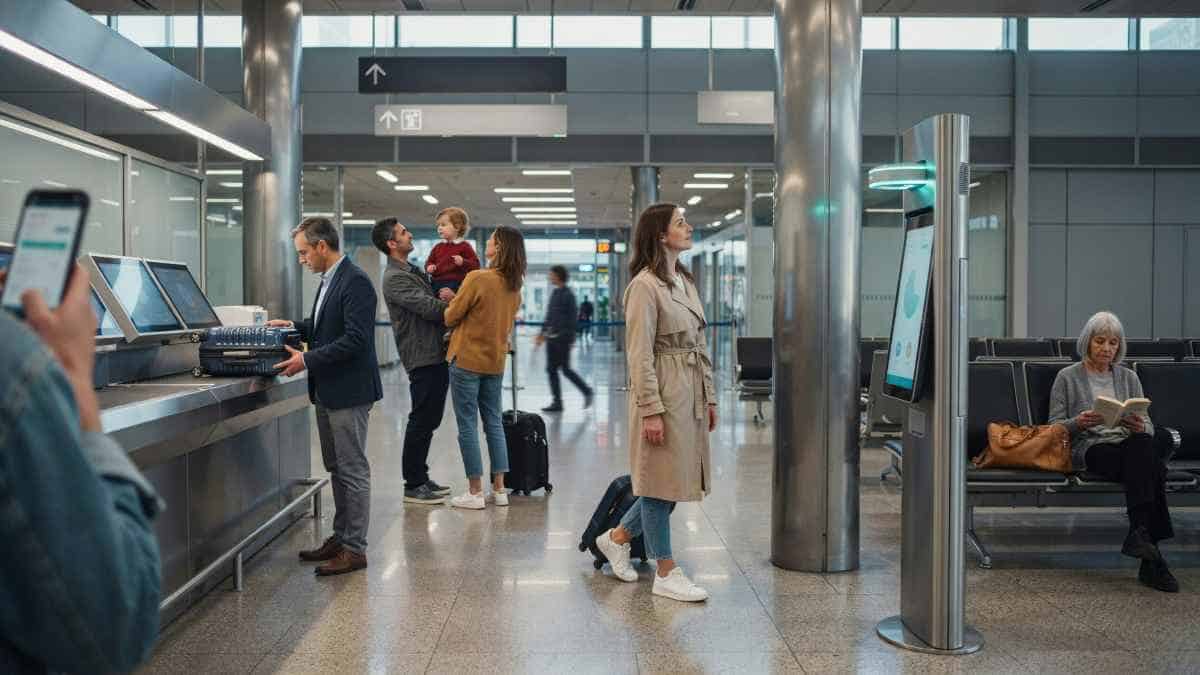
Image generated with Ai
USA travel is about to head into the autumn peak season as airlines, airports, and aviation authorities speed up efforts to improve passenger-processing technology. More gate turnarounds, more biometric screening, and more advanced bag tracking are all becoming increasingly essential as airports gear up for periods when there will be increased passenger volumes. The improvements are geared towards reducing processing times, making gates more efficient and helping passengers keep track of their bags. There is also an expansion of biometric technology as part of existing security screening programs at participating airports, while bag-tracking technology is being used to add another layer of tracking to passenger bags. Travellers are set to benefit from the new developments through improvements in many aspects of air travel such as security, boarding and gate departures, and bag handling.
Gate turnaround efficiency is becoming an important operational focus for US carriers and airports ahead of busier autumn travel periods.
Advertisement
Aircraft must complete several processes between arrival and departure, including passenger disembarkation, cabin servicing, catering, baggage handling, boarding and final departure preparations.
Technology designed to coordinate these processes can help airport and airline teams monitor turnaround activities and identify delays before they affect departure schedules.
Advertisement
Advertisement
Faster gate operations are particularly important at busy airports where aircraft movements are tightly scheduled throughout the day.
For passengers, more efficient turnarounds can contribute to improved departure reliability and reduce the potential for delays caused by operational bottlenecks at gates.
US carriers are increasingly using digital systems to coordinate airport activities and improve operational visibility.
Gate-management technology can provide information about aircraft readiness, boarding progress, baggage loading and other turnaround stages.
The objective is to create better coordination between airlines, ground handlers and airport operations teams.
This is particularly relevant during autumn periods when business travel and leisure demand can increase passenger volumes across major US aviation hubs.
Improved coordination can help airlines manage busy schedules while ensuring that aircraft are prepared for their next flights within planned turnaround windows.
Biometric screening and identity-verification technology are also becoming more prominent within the US passenger journey.
TSA PreCheck continues to provide an expedited security-screening option for eligible, enrolled travellers, while participating airports and programmes are incorporating identity technologies designed to streamline passenger processing.
Biometric systems can use facial comparison and other digital identity methods to verify travellers at selected points.
For eligible passengers, these technologies can reduce the number of manual identity checks required during parts of the airport process.
The availability and implementation of biometric services vary by airport, airline and programme, meaning travellers should check whether their particular journey supports the relevant technology.
TSA PreCheck is a significant part of the US expedited security ecosystem for eligible travellers.
The programme allows approved passengers to use dedicated screening lanes at participating airports and generally provides a more streamlined security process than standard screening.
As airports prepare for higher autumn passenger volumes, expedited screening programmes can help distribute travellers across different processing channels.
For frequent business travellers, the ability to use expedited security facilities can be particularly relevant when travelling regularly through major US airports.
Travellers should ensure that their programme status and travel information are correctly associated with their reservation where required.
Modern baggage tracking systems are another major area of development across the US aviation network.
Digital tracking technologies can provide airlines and airports with greater visibility over checked luggage as it moves through check-in, sorting, aircraft loading, transfer and arrival processes.
Improved tracking can help identify where bags are located if they are delayed or misrouted.
For passengers, greater visibility can make the baggage journey easier to monitor and can support faster intervention when luggage does not arrive as expected.
The systems are particularly valuable at major connecting airports where bags may move between multiple aircraft during a single journey.
The autumn travel period brings a mixture of business and leisure demand across the United States.
Major cities can experience increased weekday business traffic, while leisure destinations continue to receive domestic and international visitors.
Airports must therefore manage different passenger patterns while maintaining efficient security, boarding and baggage operations.
Technology can provide additional operational capacity without requiring every improvement to come from physical expansion.
Digital systems can help airports and airlines monitor passenger flows and aircraft movements while supporting more coordinated ground operations.
Business travellers often place a high value on predictable airport journeys because schedules can involve tightly timed meetings and connecting flights.
Faster gate operations, expedited security and improved baggage tracking can reduce friction at different stages of travel.
For travellers making frequent domestic connections, even small improvements in processing times can have a significant effect across multiple journeys.
The combination of operational and passenger-facing technologies is therefore particularly relevant to the US business travel market.
Leisure passengers can also benefit from the technology upgrades.
Families and holiday travellers often carry more luggage and may have complex itineraries involving connecting flights.
Improved baggage tracking can provide greater information about checked bags, while faster airport processes can make connections easier to manage.
Biometric identity systems can also simplify selected stages of the journey for eligible passengers at participating locations.
However, travellers should check individual airport and airline arrangements because not every technology is available on every route.
Large US aviation hubs are central to the deployment of new passenger and operational technologies.
Airports handling high volumes of connecting passengers have particularly strong incentives to improve gate management, security processing and baggage handling.
Technology can help these facilities manage complex aircraft schedules and large passenger flows while maintaining operational efficiency.
The benefits can extend beyond individual airports because improved baggage and flight coordination can influence connecting journeys across the wider national aviation network.
The latest airport developments reflect a broader shift towards a more technology-driven passenger experience in the United States.
Gate-turnaround systems focus on aircraft operations, biometric screening supports identity verification and expedited processing, while baggage tracking provides greater visibility over checked luggage.
These technologies address different parts of the travel journey but share a common objective of improving efficiency and reducing operational friction.
As autumn business and leisure travel demand increases, airports and airlines are preparing to handle passenger volumes through a combination of operational technology and digital services.
Technology which is aimed at enhancing passenger and flight processing before the upcoming autumn season is being developed by American airlines and aviation agencies. The development of technology that ensures rapid gate-turnaround will allow efficient use of planes, while biometric scanning and TSA PreCheck will facilitate faster security procedures for qualified passengers. Modern baggage tracking technology also improves the control of luggage on its way through airports. All of these innovations influence various aspects of the airport experience for both business and leisure travellers. Although the technology usage varies from one airline to another and from one programme to another, digital systems have become widespread in American aviation during the approaching autumn season.
Advertisement
Tags: airport technology USA, baggage tracking USA, biometric airport screening, Chicago, gate turnaround technology
Advertisement
Advertisement













Saturday, September 5, 2026

Friday, September 4, 2026

Saturday, September 5, 2026

Friday, September 4, 2026

Thursday, September 3, 2026

Wednesday, September 2, 2026

Friday, September 4, 2026