
Vietnam Revolutionizes National Transportation and Road Safety with Cutting-Edge AI by Applying AI in Traffic Management Across Cities and Highways – New Update

Published
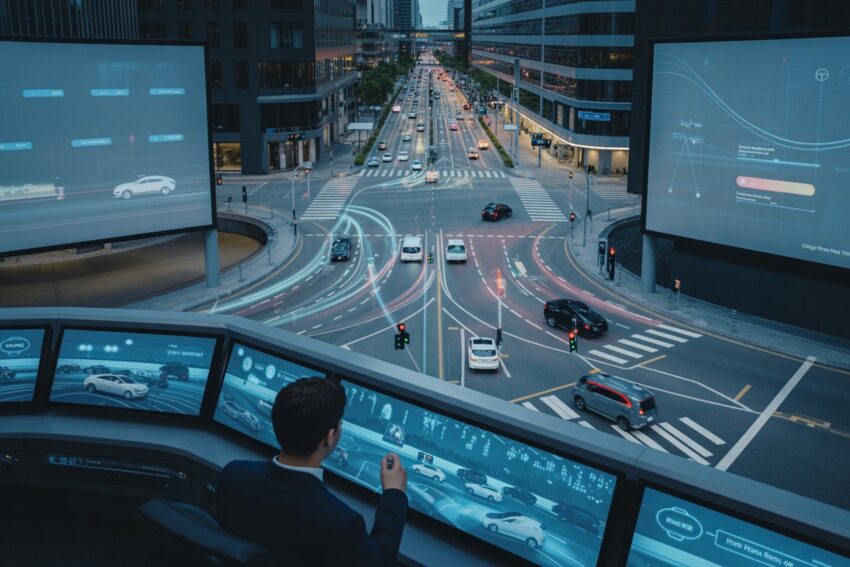
Image generated with Ai
Vietnam is taking a major step toward modernizing its transportation network by applying AI in traffic management. The government’s plan aims to make travel safer, smoother, and more efficient, leveraging artificial intelligence, real-time data, and advanced digital platforms. Citizens and businesses will benefit from better services, while roads, railways, and waterways will operate with greater reliability.
Expanding Surveillance Networks Nationwide
The first focus of this ambitious project is installing traffic surveillance cameras across key transportation routes. The goal is not only to monitor traffic but also to improve public safety and streamline enforcement. Highlights include:
Advertisement
Advertisement
- Gradually extending coverage to railways and inland waterways
- Detecting and managing traffic violations in real-time
- Covering urban roads, national highways, provincial roads, and expressways
By creating a solid network of monitoring points, the government is setting the stage for a smarter, data-driven traffic management system.
Smart Platforms for Real-Time Traffic Control
The backbone of this transformation is a digital platform that uses AI to oversee traffic operations nationwide. This system will:
Advertisement
Advertisement
- Coordinate traffic flow across regions for smoother movement
- Forecast congestion and prevent potential hazards
- Offer digital transportation services to citizens, providing route updates, travel information, and access to essential public services
Through these platforms, people and businesses gain tools that make everyday travel safer and more predictable, while authorities gain a centralized hub for traffic oversight.
A Long-Term Vision: The 2050 Goal
Looking ahead, Vietnam plans to have a fully operational national traffic management system by 2050. This system will integrate all modes of transport—road, rail, and inland waterways—while harnessing the power of AI and big data in traffic. Key objectives include:
Advertisement
Advertisement
- Upgrading Level 1 and Level 2 traffic centres with cutting-edge automation
- Enhancing predictive capabilities to anticipate traffic risks
- Improving transportation safety by reducing accidents and congestion
The focus is on proactive management, where authorities can act before problems arise, instead of merely reacting to incidents.
Three Phases of Implementation
The nationwide rollout will take place in three strategic phases between 2026 and 2050:
Advertisement
Advertisement
- Phase 1 (2026–2030):
- Launch the core data centre to manage and monitor traffic violations
- Start implementing AI for forecasting and traffic analysis
- Introduce digital transportation services to provide real-time updates
- Phase 2:
- Expand AI and automation capabilities across regional centres
- Integrate services to improve coordination between central and local traffic authorities
- Enhance traffic surveillance cameras to cover more routes
- Phase 3 (by 2050):
- Complete the fully connected national traffic management system
- Apply big data in traffic to anticipate congestion and accidents
- Achieve a seamless, nationwide network with predictive, AI-driven oversight
This step-by-step approach ensures that each phase builds on the previous one, gradually increasing the system’s capabilities while providing measurable public benefits.
Two-Tiered Structure for Efficiency
The government plans a two-level approach to traffic management to balance central oversight with local responsiveness:
- Central Tier: Directs national traffic operations, monitors compliance, and manages violations
- Local Tier: Responds to regional needs, handling area-specific traffic conditions and emergencies
This model creates a flexible yet cohesive system, allowing authorities to act locally while staying aligned with nationwide objectives.
How AI and Big Data Will Transform Travel
AI will fundamentally change the way traffic is managed, moving the system from reactive monitoring to proactive forecasting. Benefits include:
Advertisement
Advertisement
- Predicting high-risk areas and preventing accidents before they happen
- Identifying traffic congestion early and adjusting traffic flows
- Improving transportation safety through data-driven decisions
- Supporting daily planning for commuters and logistics operators
By using big data in traffic, authorities can analyze trends, traffic density, and historical patterns to make informed, real-time decisions. This ensures safer roads and more reliable travel for everyone.
Enhancing Public Services
The project is not only about enforcement and monitoring—it also prioritizes convenience for the public:
- Mobile-accessible digital transportation services will give updates on traffic conditions and suggested routes
- Businesses can plan logistics more efficiently, reducing delays
- Daily commuters benefit from better-informed travel, safer roads, and less congestion
These services demonstrate how technology can directly improve the everyday experience of citizens and the efficiency of the transportation sector.
Building a Future-Ready Network
The Vietnamese government is also focused on long-term adaptability. Using AI and big data in traffic, authorities can adjust to:
- Growing urban populations and changing travel patterns
- Expansion of transportation infrastructure
- New challenges in transportation safety
By integrating predictive systems, automation, and user-friendly platforms, Vietnam is setting an example for how a modern transportation network can be smart, safe, and citizen-focused.
Conclusion: A Safer, Smarter Future
Applying AI in traffic management is more than a technological upgrade—it’s a transformation in how Vietnam approaches transportation. By combining traffic surveillance cameras, AI-driven analysis, and digital transportation services, the government is creating a proactive, interconnected system. With phased implementation leading to a fully operational national traffic management system by 2050, this initiative promises safer roads, smoother travel, and a modernized network that benefits everyone across the country.
Advertisement
