
United Kingdom’s Scottish Screen Tourism Echoes New Zealand and Others as Travel Trends Go Hyper-Local

Published
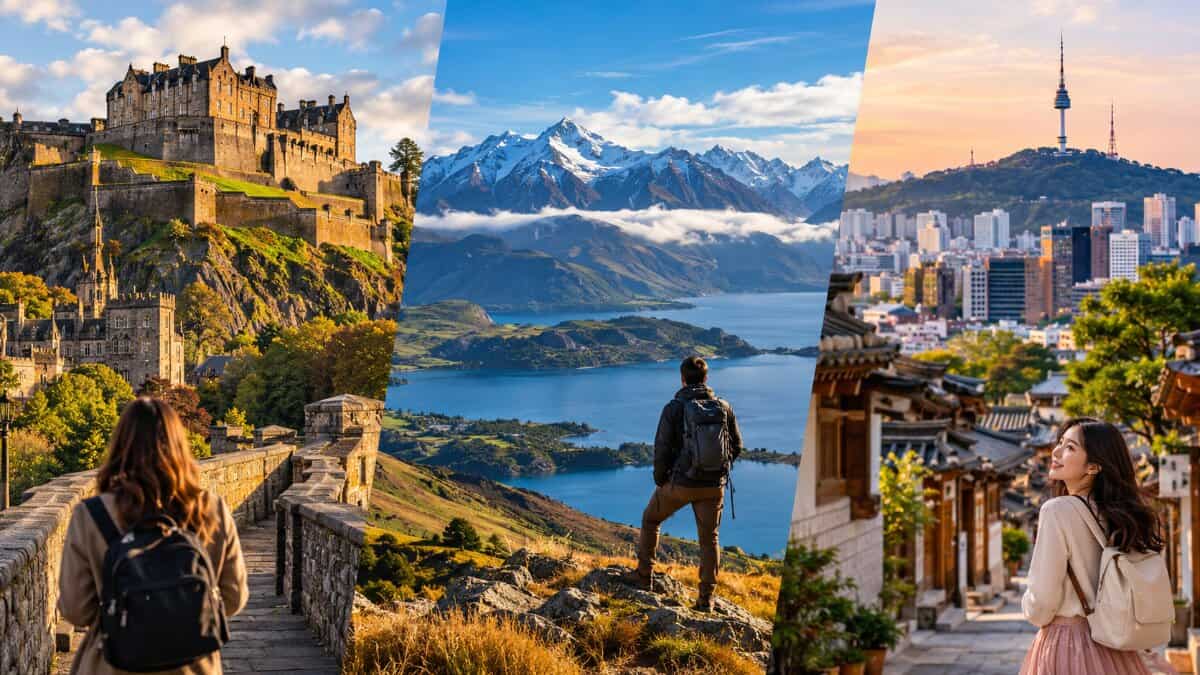
Hyper-local set-jetting is creating new tourism opportunities across the United Kingdom, New Zealand, and South Korea as international travellers explore filming locations, cultural heritage, and neighbourhood attractions associated with popular entertainment. According to VisitScotland’s official screen tourism research, Scotland recorded 1.14 million overnight screen tourists in 2023. Meanwhile, Tourism New Zealand reports that 71% of its global target audience actively considers visiting the country within the next 12 months, with roughly one in three international visitors specifying film sets and locations as a key motivator for their trip. Finally, the Seoul Metropolitan Government recorded approximately 8.2 million international visitors during the first half of 2026, strengthening opportunities for experience-led urban tourism.
Hyper-Local Set-Jetting Becomes an Important International Tourism Trend in 2026
International tourism is increasingly connecting popular entertainment with authentic destination experiences. Rather than limiting holidays to famous filming locations, travellers can incorporate historic buildings, cultural attractions, natural landscapes and neighbourhood businesses into their itineraries.
Advertisement
Advertisement
The United Kingdom, New Zealand and South Korea demonstrate three distinct approaches to this development.
Scotland combines historical dramas with centuries-old castles and Highland landscapes. New Zealand connects cinematic destinations with nature-based tourism and Māori cultural experiences. South Korea links television entertainment with urban neighbourhood exploration, particularly in Seoul’s Seongsu-dong district.
Advertisement
Advertisement
The commercial significance extends beyond individual attractions. Accommodation providers, travel agents, tour operators and local businesses can create itineraries that distribute visitor expenditure across wider destinations.
However, the three countries have not announced a joint set-jetting programme. Their commonality lies in independently documented developments within screen-inspired tourism and experiential travel.
Advertisement
Advertisement
Official Tourism Statistics Establish the Scale of Screen-Inspired Travel Opportunities
Official research provides evidence of screen tourism’s economic importance, consumer interest and connection with destination development.
| Destination | Official tourism evidence | Period | Industry relevance |
|---|---|---|---|
| United Kingdom – Scotland | 1.14 million overnight screen tourists and £161.4 million in screen-tourism activity expenditure | 2023 | Demonstrates measurable economic contribution |
| Scotland – Visitor motivation | 19% of leisure visitors influenced by film, television or literature; 37% among long-haul visitors | 2023 | Shows entertainment’s role in destination inspiration |
| New Zealand | 71% of prospective visitors interested in visiting film sets and locations | Published September 2026 | Indicates potential demand for screen-related experiences |
| New Zealand – International tourism | 3.67 million international visitors | Year ending June 2026 | Establishes wider market conditions |
| South Korea – Seoul | Approximately 8.2 million estimated international visitors and KRW 5.617 trillion in visitor card spending | January–June 2026 | Demonstrates expanding tourism expenditure |
| South Korea – Seoul Forest and Seongsu | Average daily foreign visitor footfall of 3,701, representing 10.1% year-on-year growth | 2025 | Reveals increasing interest in neighbourhood attractions |
The Scottish figures come from VisitScotland and Screen Scotland. New Zealand’s visitor totals were published by the Ministry of Business, Innovation and Employment. Seoul’s statistics originate from its international visitor spending report and Seoul AI Foundation tourism analysis.
These statistics measure different activities and periods. They should not be treated as directly comparable screen-tourism revenue or evidence that entertainment alone caused changes in visitor numbers.
United Kingdom Strengthens Film Tourism Through Scottish Heritage and Historic Filming Locations
The United Kingdom has an established connection between entertainment productions and destination tourism.
Scotland remains particularly relevant because its historic architecture, landscapes and cultural heritage feature prominently in internationally recognised productions.
In its 2026 travel trends report, VisitScotland identified Set-Jetting Plus as an enduring trend. The concept reflects travel experiences connected not only with actual filming locations but also with the history and cultural character represented in productions.
Advertisement
Advertisement
The final season of Outlander premiered in March 2026, maintaining Scotland’s relevance among international screen-tourism audiences.
According to VisitScotland’s official announcement, the production has generated substantial interest in Scotland among North American visitors and European markets, particularly France and Germany.
Historic Castles Provide Opportunities for Screen-Inspired Heritage Tourism
Historic Environment Scotland’s official filming-location guide identifies Doune Castle, Blackness Castle, Linlithgow Palace, Aberdour Castle and Craigmillar Castle among sites featured in Outlander.
Doune Castle became internationally recognised through its portrayal of Castle Leoch. Blackness Castle also played an important role in the production.
The Outlander: Blood of My Blood prequel introduces further opportunities for location-focused tourism.
According to Historic Environment Scotland, Balvaird Castle in Perthshire portrays Castle Leather, while Doune Castle and Blackness Castle also feature in the prequel.
Advertisement
Advertisement
Balvaird’s exterior remains viewable throughout the year, although visitors should confirm applicable access arrangements.
These attractions allow tourism operators to connect screen recognition with guided historical interpretation, regional accommodation and culturally significant visitor experiences.
Scottish Highlands Offer Wider Cinematic and Cultural Travel Experiences
Scotland’s Highland landscapes provide an additional opportunity to connect cinematic recognition with nature-based tourism.
VisitScotland’s official James Bond filming-location guide identifies Glen Coe and Glen Etive as landscapes associated with Skyfall.
Meanwhile, Highland locations such as Urquhart Castle and Clava Cairns have literary or thematic connections with Outlander, although they should not automatically be described as television filming sites.
This distinction is essential for accurate travel planning.
Advertisement
Advertisement
By combining confirmed filming locations with related heritage attractions, tour operators can develop broader itineraries without misrepresenting production geography.
New Zealand Connects Middle-earth Film Tourism with Māori Heritage and Sustainable Travel
New Zealand demonstrates how film tourism can support geographically diverse travel experiences.
Its landscapes became internationally recognisable through The Lord of the Rings trilogy, filmed across more than 150 locations between October 1999 and December 2000.
According to Tourism New Zealand’s September 2026 travel-trade guidance, the franchise continues to influence international travel interest ahead of the first film’s 25th anniversary in December 2026.
The country’s screen-tourism opportunities extend beyond Hobbiton into Wellington, Canterbury, the central North Island and other regions.
This geographical diversity creates potential for multi-destination holidays incorporating cultural activities, outdoor recreation and local hospitality.
Advertisement
Advertisement
Wellington Combines Cinematic Locations with Māori Cultural Activities
Wellington offers one of New Zealand’s most accessible examples of screen-inspired travel.
Mount Victoria’s forested walking paths served as filming locations for The Fellowship of the Ring. The city also provides opportunities to explore the screen-production industry through Wētā Workshop experiences.
Tourism New Zealand recommends incorporating a guided waka experience with Te Wharewaka o Pōneke into a wider Wellington itinerary.
The experience introduces visitors to Māori cultural heritage and the history of Wellington Harbour.
Importantly, this activity should be presented as a complementary cultural experience rather than inaccurately labelled as a film-production location.
Such itinerary combinations can create commercial opportunities for culturally focused operators while encouraging visitors to engage with the destination beyond its cinematic associations.
Advertisement
Advertisement
Conservation Rules Influence Responsible Film-Location Tourism
In Canterbury, Mount Sunday served as Edoras in The Two Towers.
According to the New Zealand Department of Conservation, the Mount Sunday Track extends approximately 1.5 kilometres and takes around 30 minutes each way.
The site provides a practical connection between screen tourism and accessible outdoor recreation.
Tongariro National Park presents an important cultural consideration.
Mount Ngāuruhoe was visually adapted to represent Mount Doom. However, Tourism New Zealand explains that scenes were not filmed on the mountain itself. The mountain holds sacred significance for local Māori communities, and visitors are requested to avoid climbing it.
Responsible tourism operators must therefore integrate cultural protocols, environmental restrictions and accurate destination information into their travel products.
Advertisement
Advertisement
South Korea Expands K-Drama Tourism Through Seoul’s Seongsu-dong Cultural Neighbourhood
South Korea offers a distinctly urban interpretation of hyper-local set-jetting.
International audiences familiar with Korean entertainment can explore neighbourhoods associated with television productions while discovering local businesses, creative spaces and cultural attractions.
Seoul’s Seongsu-dong district illustrates this model.
The Korea Tourism Organisation’s official guide identifies Grandpa Factory Café as a filming location associated with Vincenzo.
Meanwhile, the Seoul Tourism Organisation identifies Seongsu Naknak as a location featured in Our Unwritten Seoul.
These documented connections provide a foundation for carefully designed K-drama walking itineraries.
Advertisement
Advertisement
Seongsu-dong Brings Industrial Heritage and K-Drama Experiences Together
Seongsu-dong has developed from an industrial neighbourhood into a destination associated with cafés, galleries, fashion and contemporary culture.
According to the Korea Tourism Organisation’s Seongsu-dong guide, former factories and warehouses have been transformed into cultural and commercial spaces while retaining elements of the district’s industrial identity.
The organisation also promotes a walking itinerary connecting Seoul Forest, Daelim Changgo Gallery, Seongsu-dong Café Street and the handmade-shoe district.
This combination allows screen-inspired travellers to explore authentic neighbourhood experiences without relying exclusively on individual production locations.
Seoul’s July 2026 tourism analysis recorded a 79.9% positive sentiment rate for Seoul Forest, alongside increasing international visitor activity in the surrounding area.
Korean Entertainment Creates Opportunities for Cultural Tourism Growth
The broader international appeal of Korean entertainment provides additional context.
Advertisement
Advertisement
According to the South Korean Ministry of Culture, Sports and Tourism’s 2026 Overseas Hallyu Survey, 69.7% of surveyed consumers who had experienced Korean cultural content expressed favourable views towards it.
The survey covered 27,400 respondents across 30 overseas markets.
These results demonstrate international cultural interest, although they do not directly measure tourism bookings.
For travel businesses, the opportunity involves connecting verified filming locations with accessible urban experiences, local commerce and culturally relevant itinerary development.
Independent Tourism Analysis Reveals the Commercial Value of Hyper-Local Experiences
The three destinations illustrate different stages in the relationship between entertainment exposure and tourism expenditure.
Scotland provides evidence of measurable screen-tourism activity. New Zealand demonstrates potential travel demand linked to recognised filming environments. Seoul reveals increasing visitor expenditure and interest in neighbourhood experiences.
Advertisement
Advertisement
However, converting entertainment popularity into sustainable tourism revenue requires more than promoting a filming location.
Destination marketing organisations should assess whether screen-inspired visitors book additional accommodation, participate in guided activities or spend money in surrounding communities.
Regional visitor distribution is particularly important.
In Scotland, businesses could measure heritage attraction admissions and overnight stays outside major cities. New Zealand operators could evaluate cultural-tour participation and visitor compliance with conservation requirements. Seoul businesses could monitor neighbourhood spending and demand for guided cultural walks.
These measures would provide more meaningful performance indicators than global entertainment popularity alone.
The wider strategic opportunity is to transform short-lived audience interest into lasting destination value through relevant experiences, local partnerships and accurate visitor information.
Advertisement
Advertisement
Tourism Infrastructure and Operational Planning Determine Market Readiness
Hyper-local set-jetting depends on accessible transport, reliable visitor information and appropriate destination management.
The three markets operate under different geographical and commercial conditions.
| Country | Tourism infrastructure | Potential visitor experience | Key operational consideration |
|---|---|---|---|
| United Kingdom | Historic attractions, regional roads and established visitor services | Castle tours, Highland landscapes and historical interpretation | Heritage access, travel distances and seasonal operating schedules |
| New Zealand | Regional road networks, domestic air connections and conservation tracks | Cinematic landscapes, Māori cultural experiences and nature tourism | Environmental restrictions, private-land permissions and remote access |
| South Korea | Seoul’s extensive public transport and pedestrian-focused commercial districts | K-drama walks, café visits, creative districts and cultural experiences | Pedestrian congestion, business opening hours and filming-location accuracy |
These differences create opportunities for specialised travel products rather than identical itineraries across all markets.
Seoul may support shorter urban experiences, while Scotland and New Zealand provide opportunities for longer regional journeys.
There is no verified joint airline expansion or shared transport infrastructure programme involving these three destinations specifically for screen tourism.
Critical Operational Takeaways for Travel Agents and Tour Operators
- Verify filming locations: Confirm whether a site appeared in a production or has only a literary or thematic connection.
- Respect cultural protocols: Work with appropriately authorised local providers and recognise Māori cultural values.
- Confirm access conditions: Check conservation rules, attraction schedules, permissions and transport availability.
- Support neighbourhood businesses: Incorporate independently operated cultural attractions and local services where appropriate.
- Manage visitor risks: Assess crowding, weather, accessibility and changing business operations.
- Measure tourism performance: Track bookings, visitor expenditure, satisfaction and regional distribution rather than relying on entertainment popularity alone.
Hyper-Local Set-Jetting Could Reshape Global Tourism Product Development Beyond 2026
The United Kingdom, New Zealand and South Korea demonstrate how screen-inspired tourism can connect internationally recognised entertainment with locally distinctive visitor experiences.
Advertisement
Advertisement
Scotland offers historic attractions and established screen-tourism demand. New Zealand combines cinematic landscapes with Indigenous heritage and conservation considerations. South Korea connects K-drama interest with neighbourhood regeneration and urban cultural tourism.
Future opportunities will depend on how effectively destinations translate audience recognition into commercially sustainable experiences.
Tourism businesses that combine accurate filming-location information, cultural authenticity and responsible visitor management may be better positioned to create lasting value.
The significance of hyper-local set-jetting therefore extends beyond individual productions. It provides a framework for connecting entertainment, destination development and local economic participation.
FAQs
1. What is hyper-local set-jetting tourism?
Hyper-local set-jetting involves visiting real filming locations while exploring surrounding communities, cultural attractions and local businesses. It extends traditional screen tourism into more comprehensive destination experiences.
2. Why are the United Kingdom, New Zealand and South Korea connected through this trend?
All three offer recognised screen-tourism experiences. Scotland provides historical drama locations, New Zealand offers cinematic landscapes, and South Korea connects popular television productions with urban cultural districts.
Advertisement
Advertisement
3. Which destinations in Scotland are associated with screen tourism?
Doune Castle, Blackness Castle, Linlithgow Palace, Aberdour Castle and Craigmillar Castle are established Outlander filming sites. Glen Coe and Glen Etive also have confirmed connections with Skyfall.
4. How can travellers experience New Zealand’s filming locations responsibly?
Travellers should follow Department of Conservation guidance, respect Māori cultural protocols, use authorised routes and verify access arrangements. Film-location visits can also be combined with separately operated cultural activities.
5. How does South Korea’s K-drama tourism benefit local businesses?
K-drama tourism can direct visitor interest towards cafés, galleries, shops and guided neighbourhood experiences. Districts such as Seongsu-dong provide opportunities to connect entertainment-related travel with local cultural and commercial activities.
Advertisement
