
Dubai Golden Visa for Teachers Gains Momentum in 2026 as Hundreds of Educators Seek Long-Term UAE Residency

Published
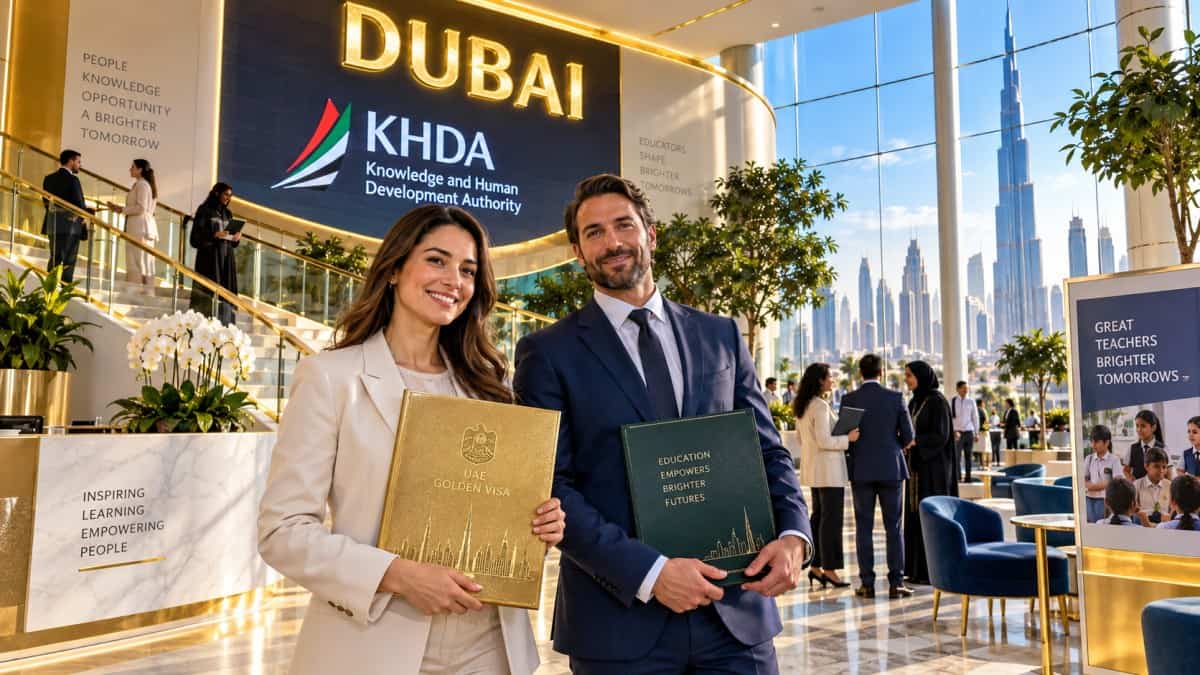
Dubai is continuing its Golden Visa initiative for outstanding private-sector educators, with more than 835 applications reported since the programme began on 5 October 2024. The initiative, highlighted again on World Teachers’ Day on 5 October 2026, recognises exceptional teachers, early-childhood educators and higher-education professionals who contribute to student achievement and educational quality. Introduced under the direction of Dubai’s leadership and administered through the Knowledge and Human Development Authority (KHDA), the scheme supports long-term residency for qualifying educators and forms part of the emirate’s Education 33 strategy to attract and retain teaching talent.
Dubai’s Golden Visa Programme Recognises Outstanding Teachers Across Private Education
Dubai’s education sector is receiving renewed attention through a Golden Visa programme designed to recognise professionals whose work has made a measurable difference to teaching and learning.
Advertisement
Advertisement
The initiative applies to eligible educators employed by private educational institutions regulated by Dubai’s Knowledge and Human Development Authority.
It covers private early-childhood centres, schools and higher-education institutions, reflecting the emirate’s intention to recognise achievement across different stages of education.
Advertisement
Advertisement
Unlike a general employment visa, the Golden Visa offers qualifying applicants a longer-term residency pathway. This can give successful educators greater continuity when planning their professional and personal lives in the UAE.
The initiative was launched on World Teachers’ Day in October 2024 and has remained part of Dubai’s broader effort to strengthen its education workforce.
Advertisement
Advertisement
By October 2026, more than 835 applications had reportedly been received. This figure represents applications, not necessarily approved visas or educators already granted residency.
The distinction is important because applicants must pass a professional assessment before receiving the relevant recommendation and completing immigration procedures.
Advertisement
Advertisement
For international teachers considering careers in Dubai, the programme demonstrates the emirate’s interest in recognising sustained professional achievement rather than relying exclusively on conventional employment arrangements.
What Is Dubai’s Golden Visa for Teachers and Educators?
Dubai’s education-focused Golden Visa is a long-term UAE residence pathway available to eligible professionals who demonstrate exceptional contributions to private education.
The programme operates within the UAE’s wider Golden Residence framework, which provides qualifying residents with extended residence rights under specified categories.
Dubai’s education initiative is administered through KHDA, which evaluates applicants and makes recommendations under the relevant procedures.
Advertisement
Advertisement
The scheme is not a separate nationality programme and does not grant UAE citizenship.
It is also not an automatic benefit for every teacher employed in Dubai.
Applicants must demonstrate that their professional record meets the programme’s standards and provide the necessary evidence.
Key Details of the Education Golden Visa Initiative
| Feature | Programme details |
|---|---|
| Location | Dubai, United Arab Emirates |
| Original launch | 5 October 2024 |
| Latest reported update | 5 October 2026 |
| Responsible education authority | Knowledge and Human Development Authority |
| Target applicants | Outstanding private-sector educators |
| Eligible institutions | Private early-childhood centres, schools and higher-education institutions |
| Reported applications | More than 835 since launch |
| Main assessment areas | Qualifications, achievements, educational impact and community contributions |
| Strategic framework | Dubai Education 33 |
| Residency benefit | Long-term residence, subject to approval |
The programme is intended to reward educational excellence while supporting Dubai’s wider ambition to build a strong and internationally competitive learning environment.
Who Is Eligible for Dubai’s Golden Visa for Educators?
The scheme focuses on educators working within Dubai’s private education system.
KHDA’s published programme guidance identifies several categories of education professionals who may be considered, depending on their roles and institutional circumstances.
Advertisement
Advertisement
These include school principals, teachers, early-childhood centre leaders and educators, as well as eligible academic leaders and faculty members in higher-education institutions.
The emphasis is on exceptional performance and a demonstrated contribution to educational improvement.
Main Eligibility Considerations
Applicants are expected to demonstrate relevant evidence of:
- Strong academic qualifications and professional credentials.
- Outstanding achievements or innovative contributions to education.
- A proven record of improving teaching quality.
- Positive effects on student learning and development.
- Contributions to academic progress and recognised qualifications.
- Professional recognition and wider educational involvement.
- Positive feedback from students, parents or the education community.
- Contributions to the development of their institution or the wider sector.
Meeting one criterion does not automatically guarantee selection.
The assessment considers the overall professional record and the evidence supporting the applicant’s achievements.
Educators should also confirm that their institution and job role fall within the relevant KHDA-regulated categories.
Advertisement
Advertisement
How Does Dubai Assess Teachers for Golden Visa Eligibility?
The selection process is designed to identify educators whose work demonstrates a sustained positive effect on learning.
Academic qualifications are important, but the programme does not rely solely on degrees or years of employment.
Candidates may also be assessed on professional achievements, educational innovation, leadership and contributions to student development.
For example, evidence of improved student outcomes can help demonstrate an educator’s impact.
However, student performance must be considered in its educational context. The programme should not be understood as a simple ranking based on examination results.
Feedback from parents, pupils and students may also contribute to the assessment.
Advertisement
Advertisement
Such feedback can help establish whether an educator has strengthened the learning environment and supported students beyond routine classroom responsibilities.
Professional contributions to the wider education community are another relevant consideration.
The overall purpose is to recognise educators whose achievements extend beyond meeting the minimum requirements of their employment.
Dubai’s First Golden Visa Awards Provide Evidence of the Programme’s Progress
Official results from the first selection round show that Dubai’s initiative has already produced confirmed residency awards.
On 4 October 2025, KHDA announced that 223 educators had been selected from 435 applications. This represented approximately 51 per cent of the first-round applicants.
The successful candidates worked across schools, universities and early-childhood centres.
Advertisement
Advertisement
Official First-Round Results
| Category | Confirmed 2025 figure |
|---|---|
| Applications received | 435 |
| Golden Visa recipients | 223 |
| First-round selection rate | 51% |
| School educators and staff selected | 157 |
| University educators and staff selected | 60 |
| Early-childhood educators selected | 6 |
These figures are historical results from 2025, not projections or confirmed totals for 2026.
The reported figure of more than 835 applications since the programme began suggests that interest has continued beyond the first selection round. However, the precise 2026 cumulative application total has not been independently confirmed in an official KHDA publication located during this research.
It would therefore be inaccurate to describe all 835 applicants as successful Golden Visa recipients.
The 2025 results also demonstrate that the programme is selective. Approximately half of the first-round applicants were approved, meaning an institutional nomination does not guarantee a positive outcome.
How Can Teachers Apply for Dubai’s Golden Visa?
The application begins with a nomination from the educator’s institution, rather than an unrestricted individual application.
KHDA’s official guidance explains that educators should first approach the head of their school, early-childhood centre or higher-education institution.
Advertisement
Advertisement
The institution then reviews the candidate’s qualifications, achievements and supporting evidence before submitting an eligible nomination.
Application Process
- Institutional nomination: The educator expresses interest and obtains support from their institution.
- Internal assessment: An institutional committee reviews the candidate against the programme’s criteria.
- KHDA submission: The institution submits the nomination through KHDA’s electronic services.
- Professional evaluation: KHDA examines the application and supporting documentation.
- Approval coordination: Successful nominations proceed through the relevant authorities.
- Residency formalities: Approved applicants complete the required procedures with Dubai’s General Directorate of Residency and Foreigners Affairs.
KHDA’s published guidance states that processing typically takes around 45 working days once all required documentation has been submitted and approved. This is an indicative timeframe, not a guarantee.
The most recently verified application window in the official material was 15 October to 15 December 2025. Applicants should not assume those dates automatically apply to the 2026 selection round.
What Documents and Achievements Should Applicants Prepare?
A successful application depends on evidence demonstrating why the educator deserves recognition.
For teachers, KHDA’s policy identifies professional nominations, student performance records and positive feedback as relevant evidence.
For higher-education faculty, the assessment may include research publications, academic collaborations, grants and other scholarly contributions.
Advertisement
Advertisement
Education leaders may need to demonstrate measurable institutional improvements.
Evidence That May Support a Nomination
- Recognised academic and professional qualifications.
- Institutional nomination and required endorsements.
- Evidence of improved student achievement.
- Positive feedback from students, parents and school leadership.
- Research publications or academic contributions, where relevant.
- Professional awards and recognised achievements.
- Evidence of successful educational innovation.
- Contributions to supporting Emirati students and students of determination.
The requirements vary by applicant category. For example, the published policy identifies advanced qualifications and research achievements for relevant higher-education roles, while school leadership applicants may be assessed against school inspection outcomes.
KHDA also considers evidence of support for students of determination and improvements in learning outcomes.
Candidates should present verifiable achievements rather than general statements about professional dedication.
How Long Is Dubai’s Golden Visa Valid for Educators?
KHDA’s official guidance specifies that the educator Golden Visa is valid for 10 years, with renewal possible where the relevant eligibility conditions continue to be met.
This represents a substantial difference from conventional employment-linked residence arrangements.
Advertisement
Advertisement
A Golden Visa holder does not need the same form of employer sponsorship for their residence status. However, employment remains subject to applicable professional licensing and work permit requirements.
The UAE government also identifies several benefits associated with Golden Residence, including the ability to sponsor qualifying family members and greater flexibility when spending extended periods outside the country.
Main Residency Benefits
| Benefit | What it means |
|---|---|
| Residency duration | 10 years for eligible educators |
| Renewal | Possible subject to applicable requirements |
| Employer sponsorship | Not required for Golden Residence itself |
| Family sponsorship | Eligible spouses and children may obtain residence permits |
| Overseas travel | Greater flexibility for extended periods outside the UAE |
| Employment | Appropriate professional permissions remain necessary |
These benefits can support long-term personal planning, but a Golden Visa does not provide UAE citizenship or unrestricted permission to undertake every form of employment.
Can Educators Bring Their Families to Dubai?
Yes. Successful Golden Visa holders may apply to sponsor qualifying family members under the applicable UAE residence rules.
KHDA’s educator-specific guidance confirms that approved applicants can seek residence permits for spouses and children.
This benefit may be particularly relevant to internationally recruited teachers who are considering whether to establish long-term family lives in Dubai.
Advertisement
Advertisement
It can support planning around children’s education, accommodation and family residence.
However, family members must still complete the applicable immigration procedures.
The Golden Visa does not automatically issue residence permits to dependants without applications or required documentation.
KHDA also states that applicants normally bear the cost of their Golden Visa unless their educational institution has agreed to cover the fees.
How Does the Golden Visa Support Dubai’s Education 33 Strategy?
The programme is closely connected to Dubai’s Education 33 strategy, commonly known as E33.
The strategy aims to strengthen the emirate’s education system, improve learning outcomes and make Dubai an attractive destination for outstanding educators.
Advertisement
Advertisement
Recognising exceptional teaching is one part of that ambition.
The programme acknowledges that education quality depends not only on buildings, technology and curricula but also on the knowledge, commitment and professional abilities of educators.
By offering long-term residence to selected professionals, Dubai is seeking to create stronger incentives for high-performing teachers and academic leaders to remain in the emirate.
The initiative also supports Dubai’s wider Social Agenda 33, which identifies education and human development as important foundations for the city’s future.
Official Dubai government statements have connected the Golden Visa initiative with the goal of positioning Dubai among the world’s leading education destinations.
This is a stated strategic ambition, not proof that the visa programme has already achieved a particular international ranking.
Advertisement
Advertisement
Why This Matters
Dubai’s Golden Visa programme for educators has implications beyond immigration administration.
For teachers, it offers a pathway towards greater residency stability and recognition of professional achievement.
For private schools and universities, the initiative provides another way to recognise outstanding employees and encourage long-term professional commitment.
For international recruitment, the availability of a 10-year residence visa may make Dubai more attractive to experienced teachers and academic specialists considering overseas careers.
The programme also places emphasis on educational outcomes, including academic improvement, innovation and community contributions.
That approach distinguishes the initiative from residence pathways based primarily on financial investment.
Advertisement
Advertisement
Nevertheless, its broader effects on teacher retention, international recruitment and student achievement have not yet been quantified in the official results reviewed.
What Travellers Should Know
International educators interested in Dubai’s Golden Visa should understand that it is a selective residency programme, not an automatic benefit attached to accepting a teaching position.
Applicants must satisfy KHDA’s requirements and obtain the necessary institutional support.
Before Applying or Relocating
- Confirm that the employing institution is regulated by KHDA.
- Check whether the applicant’s professional role is eligible.
- Discuss nomination arrangements with the institution’s leadership.
- Prepare evidence of professional excellence and educational achievements.
- Confirm the latest application window directly with KHDA.
- Review applicable residency fees and processing requirements.
- Maintain valid existing immigration status while an application is being assessed.
- Check employment licensing requirements separately from residency eligibility.
- Verify the conditions for sponsoring accompanying family members.
KHDA advises educators whose current residence permits are approaching expiry to maintain lawful residency rather than assuming that a pending Golden Visa application will be approved before their existing permission expires.
This is particularly important for international professionals planning employment changes or family relocation.
Frequently Asked Questions
Who Can Apply for Dubai’s Golden Visa for Teachers?
Eligible applicants include outstanding educators and education leaders working in KHDA-regulated private early-childhood centres, schools and higher-education institutions. Applicants must meet the relevant professional excellence criteria.
Advertisement
Advertisement
How Long Does the Golden Visa Last?
The educator Golden Visa is valid for 10 years and may be renewed if the applicable eligibility requirements continue to be satisfied.
How Many Educators Have Received Golden Visas?
Official KHDA figures confirm that 223 educators were selected in the first round announced in October 2025. The supplied October 2026 report states that more than 835 applications have been received since launch, but this is an application figure, not a confirmed total of approved visas.
Can Teachers Apply Directly Without Their School’s Support?
The published process begins with institutional nomination. Educators should approach their school or institution, which reviews the application before submitting an eligible nomination through KHDA.
Can Golden Visa Holders Sponsor Their Families?
Yes. Approved Golden Visa holders can apply for residence permits for qualifying spouses and children, subject to UAE immigration requirements.
Dubai’s Education Golden Visa Programme Continues to Recognise Teaching Excellence
Dubai’s Golden Visa initiative reflects the emirate’s commitment to recognising exceptional educators and supporting the development of its private education sector.
Since its launch in October 2024, the programme has established a structured selection process covering early-childhood education, schools and higher education.
Advertisement
Advertisement
The confirmed first-round results demonstrate that the initiative has already awarded long-term residency to educators with recognised achievements.
The reported growth in applications during 2026 suggests continuing interest, although updated official approval figures are needed to assess the programme’s full progress.
For teachers considering long-term careers in Dubai, the most important factors remain professional eligibility, institutional nomination, documented achievements and compliance with residency requirements.
Advertisement
