
Miami Walks Alongside Fort Lauderdale and More Cities in Florida Witnessing a Slump in Tourist Arrivals From The Bahamas to the US Through June 2026

Published
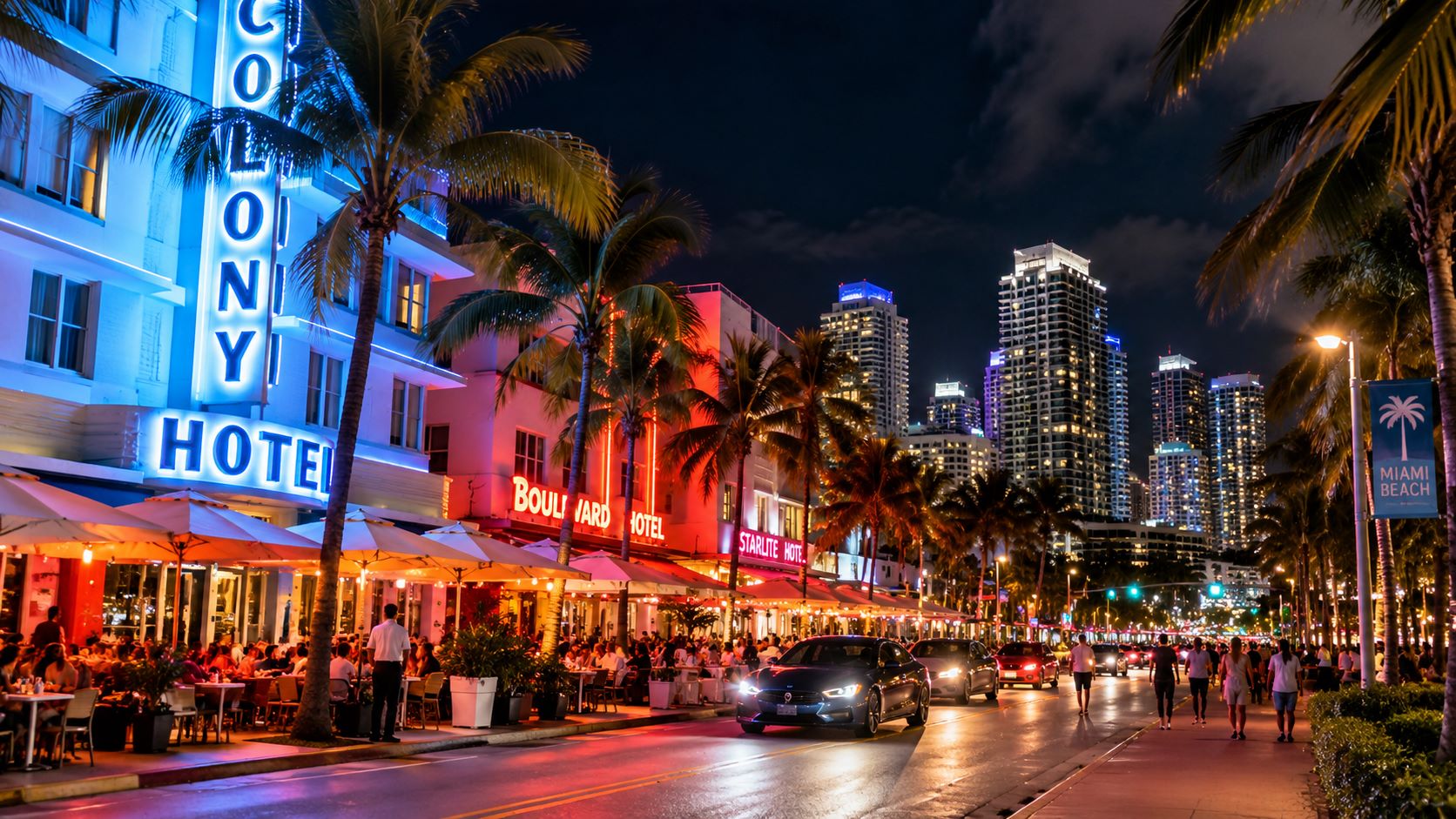
Image generated with Ai
Florida remains the dominant US gateway for travellers arriving from The Bahamas, but the first half of 2026 reveals a noticeable softening across several of South Florida’s traditional entry points. Miami, Fort Lauderdale, West Palm Beach and Port Everglades all received fewer Bahamian visitors between January and June 2026 than during the same six months of 2025.
The five Florida gateways shown in the supplied US visitor-arrivals data collectively handled 95,593 Bahamian arrivals during January–June 2026, compared with 97,350 in January–June 2025. That represents 1,757 fewer visitors and a year-on-year decline of approximately 1.8%.
The overall decline is modest, but the geography behind it makes the story more significant. Fort Lauderdale and Miami, by far the two largest gateways in the dataset, both moved backwards. West Palm Beach also declined, while Port Everglades remained almost flat.
Orlando was the major exception. Bahamian arrivals there increased almost 8%, suggesting Florida is not experiencing a uniform loss of demand from The Bahamas. Instead, the first-half figures point towards a more complicated shift in where Bahamian visitors are entering the state.
Advertisement
Advertisement
Miami Loses More Than 1,000 Bahamian Visitors in First Half of 2026
Miami remained one of the most important Florida gateways for Bahamian travellers during the first six months of 2026, but arrivals moved in the wrong direction. The city recorded 31,961 Bahamian visitor arrivals between January and June 2026, down from 33,037 during January–June 2025. That represents a loss of 1,076 visitors and a 3.3% year-on-year decline.
The decline matters because Miami and The Bahamas form one of the closest international travel corridors in the Caribbean. Short flying times, strong aviation connections, shopping, entertainment, business links, family travel and onward US connections have traditionally made Miami a natural destination and gateway for Bahamian travellers.
Advertisement
Advertisement
A 3.3% decline does not suggest that relationship is disappearing. However, it does indicate softer traffic during the first half of 2026.
The more interesting question is whether some Bahamian demand is moving towards other Florida gateways. Orlando’s strong growth provides evidence that the statewide picture is more complicated than a simple fall in travel interest.
| Miami Bahamas Arrivals | Jan–Jun 2025 | Jan–Jun 2026 | Change | YoY |
|---|---|---|---|---|
| Visitor Arrivals | 33,037 | 31,961 | -1,076 | -3.3% |
Fort Lauderdale Remains the Biggest Bahamas Gateway Despite a 3.2 Percent Decline
Fort Lauderdale continues to dominate Bahamian arrivals into Florida, but it also experienced a weaker first half.
The gateway handled 46,607 Bahamian visitors between January and June 2026, compared with 48,127 during the same period in 2025. This represents 1,520 fewer arrivals and a decline of approximately 3.2%.
In absolute terms, Fort Lauderdale suffered the largest decline among the five Florida gateways analysed.
Yet its dominance remains extraordinary. Fort Lauderdale alone accounted for almost 49% of all Bahamian arrivals through the five Florida gateways shown.
Advertisement
Advertisement
Its importance reflects the unique geography of Bahamas-Florida travel. South Florida sits exceptionally close to the islands, while aviation and maritime links make the region a convenient entry point for Bahamian residents travelling to the United States.
The decline therefore needs context. Fort Lauderdale is not suddenly losing its position as the main gateway. Instead, a mature and exceptionally large travel corridor has experienced a moderate reduction in traffic.
Because Fort Lauderdale handles such a large share of Bahamian arrivals, even a relatively small percentage decline has a powerful effect on Florida’s overall result.
| Fort Lauderdale Bahamas Arrivals | Jan–Jun 2025 | Jan–Jun 2026 | Change | YoY |
|---|---|---|---|---|
| Visitor Arrivals | 48,127 | 46,607 | -1,520 | -3.2% |
West Palm Beach Records the Steepest Percentage Decline Among Florida Gateways
West Palm Beach received much smaller visitor volumes than Miami or Fort Lauderdale, but it recorded the steepest percentage decline among the Florida gateways shown.
Bahamian arrivals fell from 1,365 during January–June 2025 to 1,310 during the same period of 2026. That represents 55 fewer visitors and a 4.0% decline.
The absolute loss is small, so it should not be treated as having the same tourism significance as Fort Lauderdale’s decline of more than 1,500 visitors.
Advertisement
Advertisement
However, West Palm Beach strengthens the wider South Florida pattern.
Three major South Florida airport gateways in the supplied data — Fort Lauderdale, Miami and West Palm Beach — all recorded fewer Bahamian arrivals during the first half of 2026.
That is noteworthy because South Florida enjoys an enormous geographical advantage in the Bahamas market. Few international travel corridors combine such short distances with extensive commercial, family, leisure and transport relationships.
The 2026 numbers show that even this deeply established travel market is capable of softening.
| West Palm Beach Bahamas Arrivals | Jan–Jun 2025 | Jan–Jun 2026 | Change | YoY |
|---|---|---|---|---|
| Visitor Arrivals | 1,365 | 1,310 | -55 | -4.0% |
Port Everglades Remains Almost Flat as Bahamas Sea Travel Holds Steady
Port Everglades recorded a much smaller movement.
Arrivals declined from 2,958 during January–June 2025 to 2,931 in the first half of 2026. That represents just 27 fewer visitors and a year-on-year decrease of approximately 0.9%.
Advertisement
Advertisement
Compared with Miami and Fort Lauderdale, this is effectively a stable performance.
Port Everglades also adds an important dimension to the Bahamas-Florida travel relationship because the connection between the two markets is not exclusively based on aviation.
Their geographical closeness makes maritime travel commercially relevant in a way that distinguishes The Bahamas from many other Caribbean source markets.
Port Everglades should also be treated as a port of entry rather than as a separate Florida city. Its data nevertheless provides useful evidence about the maritime side of the South Florida-Bahamas travel corridor.
Its near-flat performance suggests sea-related visitor flows through this gateway were considerably more resilient than the declines recorded at several airports during the first six months of 2026.
| Port Everglades Bahamas Arrivals | Jan–Jun 2025 | Jan–Jun 2026 | Change | YoY |
|---|---|---|---|---|
| Visitor Arrivals | 2,958 | 2,931 | -27 | -0.9% |
Orlando Defies South Florida Slump With Nearly Eight Percent Growth
Orlando completely changes the direction of the story.
Advertisement
Advertisement
While the four South Florida gateways shown all recorded fewer Bahamian visitors, Orlando increased from 11,863 arrivals during January–June 2025 to 12,784 during the same six months of 2026.
That represents 921 additional visitors and strong year-on-year growth of approximately 7.8%.
Orlando’s performance is important because it demonstrates that Bahamian travel to Florida is not declining everywhere.
The city offers a fundamentally different tourism product from Miami and Fort Lauderdale. Orlando is built around theme parks, family holidays, shopping, entertainment and major visitor attractions. That can create a different reason for travelling from The Bahamas.
The contrast raises an important possibility: rather than Bahamian travellers simply losing interest in Florida, some demand may be spreading beyond the traditional South Florida corridor.
More destination and traveller-purpose data would be needed to prove such a shift. But the gateway numbers clearly show Orlando moving against the broader pattern.
Advertisement
Advertisement
| Orlando Bahamas Arrivals | Jan–Jun 2025 | Jan–Jun 2026 | Change | YoY |
|---|---|---|---|---|
| Visitor Arrivals | 11,863 | 12,784 | +921 | +7.8% |
South Florida Loses More Than 2,600 Bahamian Arrivals
The strongest evidence of weakness appears when the four South Florida gateways are combined.
Fort Lauderdale, Miami, Port Everglades and West Palm Beach collectively handled 82,809 Bahamian arrivals during January–June 2026, compared with 85,487 during the first half of 2025.
That means South Florida lost 2,678 arrivals, or approximately 3.1% year on year.
This is more revealing than Florida’s overall 1.8% decline because Orlando’s growth offsets part of the South Florida contraction.
| South Florida Gateways | Jan–Jun 2025 | Jan–Jun 2026 | Change | YoY |
|---|---|---|---|---|
| Fort Lauderdale | 48,127 | 46,607 | -1,520 | -3.2% |
| Miami | 33,037 | 31,961 | -1,076 | -3.3% |
| Port Everglades | 2,958 | 2,931 | -27 | -0.9% |
| West Palm Beach | 1,365 | 1,310 | -55 | -4.0% |
| Combined | 85,487 | 82,809 | -2,678 | -3.1% |
The geographical pattern is therefore clear. The decline is concentrated in South Florida rather than spread evenly across the state.
Miami and Fort Lauderdale Still Dominate Bahamas Travel to Florida
Despite their declines, Miami and Fort Lauderdale remain overwhelmingly dominant.
Advertisement
Advertisement
Together, the two gateways received 78,568 Bahamian visitors during January–June 2026.
That represents approximately 82.2% of all Bahamian arrivals through the five Florida gateways included in the dataset.
Fort Lauderdale alone accounted for approximately 48.8%, while Miami represented another 33.4%.
This concentration explains why declines at these two gateways have such a strong effect on Florida’s overall performance.
Orlando can grow much faster in percentage terms, but because its starting visitor volume is considerably smaller, that growth cannot fully compensate for simultaneous losses at Miami and Fort Lauderdale.
First Half of 2026 Reveals an Uneven Florida Tourism Map
The complete figures reveal why the first-half story should not simply be described as Bahamian tourists abandoning Florida.
Advertisement
Advertisement
| Florida Gateway | Jan–Jun 2025 | Jan–Jun 2026 | Change | YoY |
|---|---|---|---|---|
| Fort Lauderdale | 48,127 | 46,607 | -1,520 | -3.2% |
| Miami | 33,037 | 31,961 | -1,076 | -3.3% |
| Orlando | 11,863 | 12,784 | +921 | +7.8% |
| Port Everglades | 2,958 | 2,931 | -27 | -0.9% |
| West Palm Beach | 1,365 | 1,310 | -55 | -4.0% |
| Total | 97,350 | 95,593 | -1,757 | -1.8% |
Four of the five gateways moved backwards, but the largest Central Florida gateway moved strongly forward.
The result is an increasingly uneven travel map.
South Florida remains dominant but softer. Orlando remains smaller but is gaining momentum.
That distinction could become increasingly important to airlines, airports, attractions and tourism businesses targeting travellers from The Bahamas.
Bahamas Travel Remains Crucial to Floridas Caribbean Connections
The Bahamas occupies a special position in Florida’s international travel market.
The two destinations are separated by a relatively small stretch of ocean, creating one of the closest US-Caribbean tourism relationships.
Advertisement
Advertisement
That geography supports short flights, maritime travel, shopping trips, holidays, family visits, business travel and onward connections across the United States.
The first-half decline therefore does not mean those underlying ties are disappearing.
Instead, it shows how traveller behaviour can shift even within an extremely mature cross-border market.
Florida remains exceptionally well positioned to attract Bahamian travellers. What may be changing is which Florida gateway captures that demand.
Second Half of 2026 Will Show Whether the Decline Is Temporary
Six months of data provide a meaningful signal, but they do not determine the full-year outcome. The performance during July–December 2026 will be crucial. If Miami and Fort Lauderdale recover, the first-half decline may ultimately prove to be a temporary slowdown. If both continue losing arrivals while Orlando maintains strong growth, the numbers could point towards a more durable redistribution of Bahamian traffic within Florida.
That would be a much more significant tourism development. For now, the first-half figures reveal a clear divide. Miami walks alongside Fort Lauderdale and more cities in Florida witnessing a slump in tourist arrivals from The Bahamas to the US through June 2026, as South Florida gateways collectively record fewer Bahamian visitors year on year. Florida therefore has two Bahamas travel stories unfolding simultaneously: a 3.1% contraction across the four South Florida gateways shown and a 7.8% expansion in Orlando.
Advertisement
Advertisement
The overall five-gateway market remains remarkably concentrated in Miami and Fort Lauderdale, meaning their performance will continue to determine whether Florida ultimately finishes 2026 with growth or decline in this important Caribbean visitor market.
Miami walks alongside Fort Lauderdale and more cities in Florida witnessing a slump in tourist arrivals from The Bahamas to the US through June 2026, as key South Florida gateways record fewer Bahamian visitors.
In conclusion, Miami walks alongside Fort Lauderdale and more cities in Florida witnessing a slump in tourist arrivals from The Bahamas to the US through June 2026, as several South Florida gateways record year-on-year declines. Fort Lauderdale, Miami, West Palm Beach and Port Everglades all received fewer Bahamian visitors, pulling the combined five-gateway total lower despite Orlando’s strong growth. The figures show that Florida is not losing Bahamian demand evenly. Instead, the weakness is concentrated across South Florida, while Orlando gains momentum, creating a more divided and shifting travel pattern within this important Bahamas-US tourism corridor.
Advertisement
