
Nusa Dua Joins Canggu, Uluwatu, Ubud and Seminyak in Indonesia’s Bali in a Stunning Sports Tourism Revolution as the Island Attracts Global Travellers Through Rapid Expansion of Fitness Clubs, Community Sports and Luxury Wellness Experiences

Published
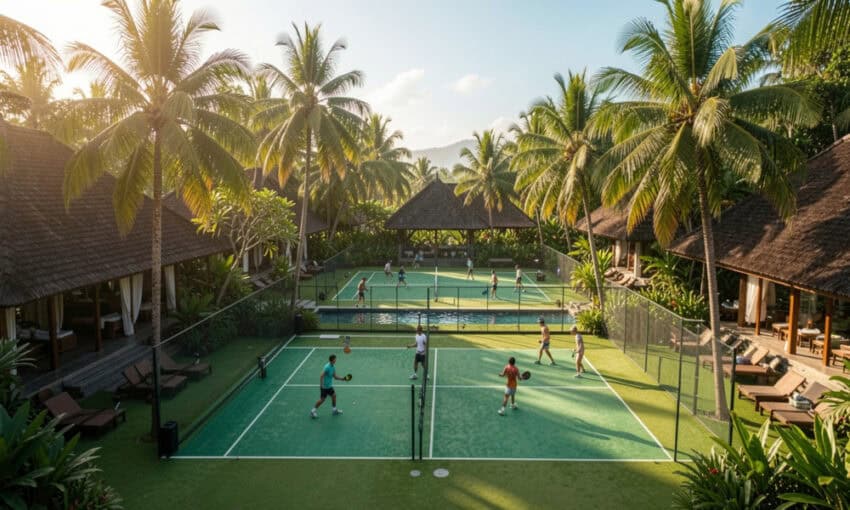
Image generated with Ai
Indonesia’s Bali is rapidly emerging as a leading global sports tourism destination as Nusa Dua joins Canggu, Uluwatu, Ubud and Seminyak in driving a powerful shift toward active lifestyle travel. The island is witnessing strong growth in fitness clubs, racket sports such as tennis and padel, and community-based wellness experiences, supported by rising demand from international travellers and long-stay visitors. This transformation is being fuelled by major investment in modern sports infrastructure and integrated wellness facilities, positioning Bali as more than a leisure escape and turning it into a high-energy hub where tourism, sport, and lifestyle converge seamlessly.
Bali Emerges as Asia’s Fast-Growing Sports Tourism Powerhouse as Racket Sports, Fitness Culture and Community Clubs Transform the Island
Bali is rapidly evolving into one of Asia’s most dynamic sports tourism destinations, driven by a sharp rise in fitness-focused travel and active lifestyle communities. The island, long known for beaches and cultural tourism, is now experiencing a structural shift toward wellness and multi-sport engagement. Activities such as tennis, padel, yoga, surfing, soccer, open-water swimming, and organised run clubs are no longer niche experiences but mainstream attractions shaping visitor behaviour.
This transformation is also triggering significant investment in modern sports infrastructure across key tourism hubs. Developers and sports operators are expanding facilities to match growing demand from both international travellers and long-stay residents. As a result, Bali is positioning itself not only as a leisure destination but also as a training and performance-oriented sports ecosystem.
The rise of structured community sports, professional coaching programmes, and event-based tourism reflects a broader trend: travellers increasingly seek destinations that combine recreation, wellness, and social engagement in a single experience.
Advertisement
Advertisement
Rapid Expansion of Racket Sports Infrastructure Driven by Surging Demand
Racket sports have become one of the fastest-growing segments in Bali’s active tourism economy, with tennis and padel leading the surge. The popularity of padel, in particular, has accelerated dramatically, creating strong demand for high-quality courts, coaching systems, and social play environments.
To meet this demand, new sports facilities are being developed across emerging tourism zones, including southern coastal regions. One of the most recent expansions has taken place in Uluwatu, a rapidly developing destination that is attracting both tourism and residential investment. The area is becoming a focal point for modern sports infrastructure as populations shift from traditional hubs.
Advertisement
Advertisement
The expansion reflects a broader redistribution of tourism activity across the island. Areas such as Canggu and Seminyak continue to attract visitors, but Uluwatu is increasingly emerging as a premium lifestyle and sports district. This shift is shaping where new recreational ecosystems are built.
Uluwatu Facility Designed as a Multi-Layer Community Sports Hub
The newly launched sports venue in Uluwatu represents a modern approach to sports tourism development. It is designed not simply as a facility for competitive play, but as a structured community hub supporting multiple user groups.
The centre includes tennis courts and padel courts alongside dedicated spaces for social interaction, recreation, and training. A members’ lounge, on-site café, and pro-shop form part of the integrated experience, while a recovery suite with wellness facilities such as sauna and ice bath is scheduled to open soon.
The design reflects a growing demand for hybrid sports environments where performance, leisure, and recovery coexist. This approach is now gaining traction in major sports destinations worldwide, as travellers look beyond basic facilities and increasingly demand complete lifestyle environments that combine sport, wellness, social spaces, and immersive experiences in one integrated setting.
The facility also introduces tiered programmes tailored to different skill levels. These range from beginner coaching sessions to advanced performance training, enabling structured progression for players of all ages. This approach supports long-term engagement rather than short-term participation.
Community-Centred Sports Model Driving Long-Term Growth Strategy
The expansion strategy behind Bali’s sports infrastructure is strongly rooted in community development. The focus is shifting away from purely commercial usage toward long-term engagement through organised clubs, youth training systems, and family-oriented programmes.
Advertisement
Advertisement
Sports operators are increasingly building layered communities that include adult recreational players, competitive athletes, families, and youth development groups. This structure allows sports facilities to function as social ecosystems rather than standalone venues.
A key priority in this model is inclusivity. Special attention is being directed toward expanding participation among women and children, ensuring broader community integration. The long-term objective is to develop sustainable participation pipelines that grow from grassroots engagement into structured athletic development.
This approach is also reshaping how sports businesses measure success. Instead of focusing solely on facility utilisation rates, emphasis is being placed on membership growth, community retention, and multi-generational participation.
Island-Wide Sports Network Expands Across Key Tourism Destinations
Bali’s sports transformation is not limited to a single location. A growing network of tennis and padel facilities now spans multiple tourism zones, including Sanur, Umalas, Seminyak, and Nusa Dua. Each location contributes to a wider ecosystem of interconnected sports communities.
Additional expansion has extended beyond Bali to other Indonesian destinations, including Sumba, where boutique sports facilities are integrated into luxury tourism environments. This geographic diversification reflects increasing demand for active lifestyle experiences across the region.
Membership-based models are also gaining traction, with large-scale community participation supporting long-term growth. The expansion strategy aims to develop dozens of interconnected clubs over the coming decade, reinforcing Bali’s position as a regional hub for sports tourism innovation.
Advertisement
Advertisement
Rising Sports Events Strengthen Bali’s Global Tourism Positioning
Alongside infrastructure growth, Bali is witnessing a sharp increase in international and community-based sporting events. The island has recently hosted high-profile global competitions alongside grassroots recreational activities, creating a balanced sports calendar that appeals to multiple audience segments.
International events such as extreme sports competitions have elevated Bali’s visibility as a global sporting destination. At the same time, local community events, including fun runs and cultural races, are strengthening grassroots participation and encouraging active lifestyles among residents and visitors.
Upcoming events such as organised 5km runs and cultural marathons are expected to further boost participation. These events are designed to integrate sport with tourism, culture, and community engagement, reinforcing Bali’s identity as a multi-dimensional destination.
Conclusion: Bali’s Transition into a Lifestyle-Driven Sports Tourism Capital
Bali’s tourism landscape is undergoing a fundamental transformation. The island is no longer defined solely by traditional leisure tourism but is rapidly becoming a centre for sports, wellness, and active lifestyle travel. The expansion of racket sports infrastructure, combined with community-focused programming and international sporting events, is reshaping visitor expectations.
As investment continues across multiple regions and sports disciplines, Bali is positioning itself as a leading example of how destinations can evolve beyond sightseeing into immersive, health-oriented ecosystems. The growth of integrated sports communities, modern facilities, and event-driven tourism signals a long-term shift in how the island competes within the global tourism market.
Advertisement
