
Maldives Storms with Seychelles and Others as Malé and Victoria Unlock Over 7% Tourism GDP Boom with Iconic Attractions and Luxury Escapes

Published
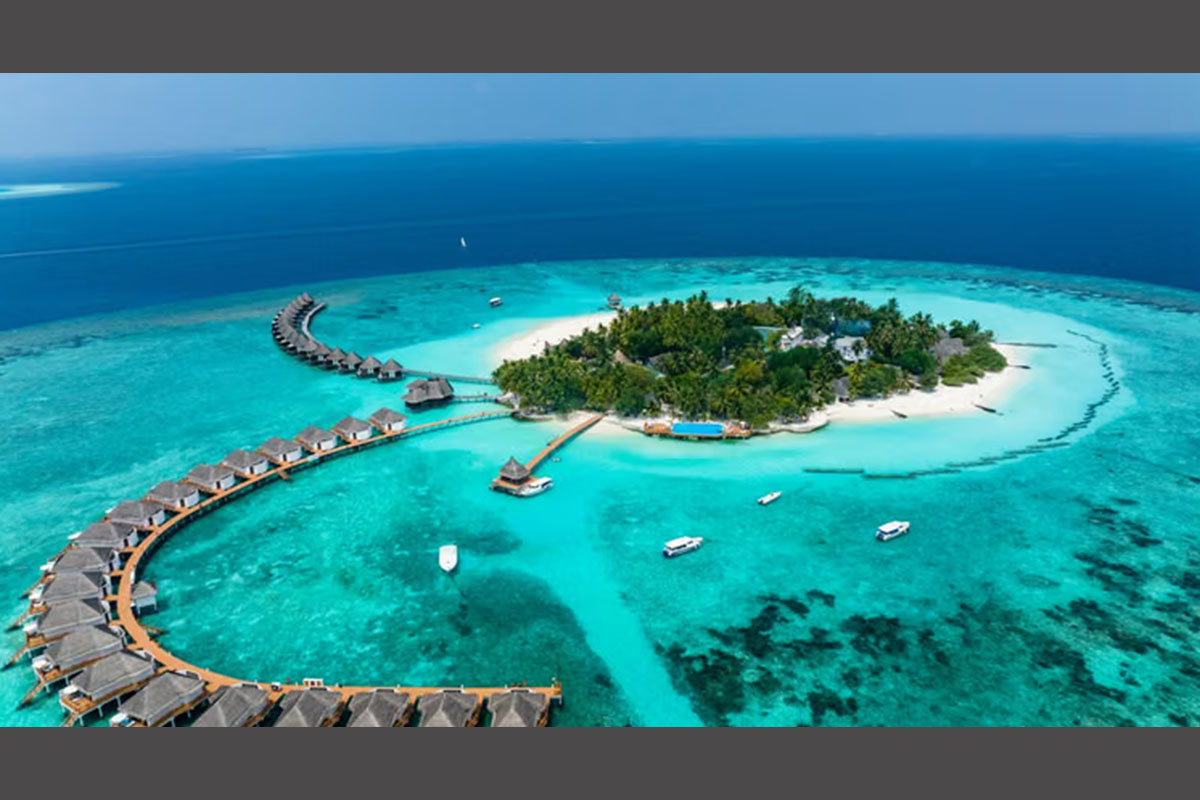
Image generated with Ai
The global travel landscape in October 2026 presents a fascinating economic narrative, particularly concerning island nations. As international travel patterns stabilise, authorities are closely monitoring a targeted Tourism GDP Boom across premier luxury destinations. Recent official statistics from the Maldives and Seychelles reveal resilient sectoral performances despite overarching global macroeconomic headwinds. By leveraging iconic attractions and high-end luxury escapes, both Malé and Victoria have aimed to unlock significant sectoral contributions. This comprehensive analysis evaluates verified 2026 government data, IMF projections, and tourism ministry reports to unpack how these idyllic archipelagos are navigating economic complexities while maintaining their elite global status.
Comprehensive Background: The 2026 Global Travel Landscape
As the global economy advances through the final quarter of 2026, the international tourism sector finds itself at a critical juncture. Following a period of robust post-pandemic recovery, premier luxury destinations are now navigating a complex array of macroeconomic headwinds, geopolitical tensions, and shifting consumer behaviours. Central to this narrative are the idyllic archipelagos of the Maldives and the Seychelles, alongside significant contributions from global economic hubs bearing the name Victoria. A targeted Tourism GDP Boom has historically defined these regions, cementing their status as indispensable pillars of international leisure and high-net-worth travel. By capitalising on their iconic attractions and unparalleled luxury escapes, these destinations have historically generated massive economic yields.
Advertisement
Advertisement
However, verified reporting from the International Monetary Fund (IMF) and the World Bank throughout 2026 paints a nuanced picture of this economic landscape. The World Bank explicitly noted that the real Gross Domestic Product (GDP) of the Maldives grew by an estimated 6.3 percent in 2025, a surge primarily driven by strong tourist arrivals and a secondary recovery in the fisheries sector. This extraordinary baseline set sky-high expectations for Malé and the broader Maldivian economy entering 2026. Conversely, the realities of 2026 have introduced significant friction. The IMF concluded its Article IV Mission to the Maldives in mid-2026, formally projecting that weaker global tourism activity, compounded by persistently high global energy prices, would likely slow the nation’s real GDP growth to approximately 1 percent for the year.
Similarly, the Seychelles faces an identical macroeconomic deceleration. The IMF has projected that the Seychellois economic growth will slow sharply to 1 percent in 2026, representing a stark contraction from the 5.8 percent growth recorded a year earlier. Financial analysts explicitly link this deceleration to the ongoing war in the Middle East, which has disrupted global aviation corridors and subsequently weakened European tourist arrivals to the Indian Ocean. Consequently, while the overarching national economic indicators reflect a cooling period, the internal sectoral dynamics within the tourism industry itself continue to exhibit remarkable resilience, proving that the underlying appetite for a Tourism GDP Boom remains entirely viable when executed through adaptive strategic policies.
Advertisement
Advertisement
Maldives Tourism Dynamics: Targeting 2.5 Million Arrivals
Despite the IMF’s conservative real GDP growth forecasts, the Maldivian Ministry of Tourism and affiliated agencies have doubled down on aggressive sectoral expansion. Operating out of the capital city of Malé, tourism authorities have officially set an ambitious target of welcoming 2.5 million tourist arrivals by the end of 2026. This target underscores a profound confidence in the resilience of the nation’s core industry. The early months of 2026 provided substantial justification for this optimism. According to verified industry data, the Maldives recorded some of the strongest early-year tourism figures in its history. During the first week of January 2026 alone, the archipelago welcomed over 49,625 visitors. This represented a commanding 13 percent year-on-year increase compared to the 43,903 arrivals recorded during the identical period in 2025.
This momentum carried through the first quarter, with the official Public Service Media (PSM) News, citing the Ministry of Tourism and Environment, reporting that the Maldives successfully surpassed the 500,000 tourist arrival milestone by 7th March 2026. Achieving a half-million arrivals within merely nine weeks is a monumental logistical feat, particularly given that the government achieved this despite various international flight disruptions. To mitigate these logistical challenges, government agencies actively worked to restore suspended routes while simultaneously courting new aviation partners to introduce flights from alternative global destinations.
Advertisement
Advertisement
Source Market Diversification and Demographic Shifts
The demographic composition of the Maldives’ visitor base in early 2026 reveals critical shifts in global wealth mobility. Data from January 2026 highlights that the Russian Federation firmly positioned itself as the leading source market, contributing 10,548 tourists, which equated to a massive 21.3 percent of total national arrivals. Italy followed in second place, securing 15.1 percent of the market with 7,510 tourists. The United Kingdom (6.8 percent), Germany (6 percent), and the United States (3.3 percent) rounded out the top five western markets, while Asian powerhouse China contributed 3 percent.
This heavy reliance on the Russian and European markets highlights the delicate geopolitical balancing act Malé must perform. As the IMF noted, global energy prices and conflicts have the potential to destabilise European outbound travel. Yet, the enduring appeal of Maldivian luxury escapes appears to insulate the sector from total collapse, as high-net-worth demographics from these leading nations continue to prioritise elite leisure travel regardless of moderate domestic economic pressures.
Atoll-Level Performance and Accommodation Infrastructure
To truly comprehend the mechanics of the Maldivian Tourism GDP Boom, one must analyse the spatial distribution of these arrivals. Velana International Airport (MLE) remains the undisputed gateway to the nation, handling a staggering 98.5 percent of all tourist traffic (48,919 arrivals in the first week of January). From this central node, tourists disperse across a highly developed accommodation network. As of early 2026, the Maldives boasted a total operational capacity of 68,731 beds spread comprehensively across 1,344 distinct establishments.
The luxury resort model continues to dominate the landscape. A total of 186 private island resorts account for 45,893 of these beds, successfully capturing 68.8 percent of all visitor stays. However, the local guesthouse sector, which promotes a more culturally integrated and slightly more accessible price point, has grown formidably, now comprising 974 properties with 16,846 beds and capturing 26 percent of the market share. Geographically, Kaafu Atoll serves as the epicentre of this economic engine. Featuring 58 resorts and over 15,500 beds, Kaafu Atoll alone absorbed 42.5 percent of all national arrivals early in the year. Astoundingly, the national operational rate for tourist beds stood at 99.8 percent during the peak January window, indicating that current infrastructure is operating at absolute maximum efficiency.
Seychelles Economic Adjustments: Managing the 2026 Transition
Parallel to the Maldivian experience, the Republic of Seychelles has spent 2026 navigating its own distinct economic hurdles while fighting to sustain its proprietary Tourism GDP Boom. Operating from the capital city of Victoria, the National Bureau of Statistics (NBS) provides highly granular data regarding the nation’s ongoing performance. The official year-to-date figures as of Week 39 (ending late September 2026) revealed that 261,270 visitors had disembarked in the Seychelles. When compared directly to the 281,522 visitors recorded over the exact same period in 2025, this represents a tangible 7.2 percent contraction in raw arrival numbers.
This contraction perfectly aligns with the IMF’s September 2026 warnings regarding the devastating impact of the Middle East conflict on global flight routing and consumer confidence. The first quarter of 2026 saw the Seychellois GDP genuinely contract by 0.10 percent year-on-year, reflecting the immediate shockwaves of these external factors.
Advertisement
Advertisement
The August Rebound: A Testament to Sectoral Resilience
Despite the sobering year-to-date deficit, the inherent strength of the Seychelles’ iconic attractions triggered a phenomenal mid-year recovery. According to the Seychelles News Agency and official data releases, the archipelago recorded its absolute strongest August for visitor arrivals in at least four years. The tourism sector rebounded by a staggering 14.1 percent during this specific month, providing a desperately needed injection of capital into the national economy after several months of sluggish performance.
This August surge is highly indicative of the cyclical, resilient nature of high-end global travel. It proves that while aggregate annual growth may be suppressed to 1 percent, specific seasonal windows continue to generate massive, concentrated bursts of economic activity. For local businesses operating within Victoria and across the islands of Mahé, Praslin, and La Digue, these concentrated bursts are critical for sustaining payrolls, servicing corporate debt, and maintaining the pristine environmental standards expected of world-class luxury escapes.
The Dual “Victoria” Effect: Capitalising on Regional Booms
While Victoria in the Seychelles represents an island nation’s fight to maintain global market share, the broader global discussion surrounding 2026 tourism economics must undeniably acknowledge the staggering performance of the State of Victoria in Australia. Examining this concurrent data highlights how different jurisdictions leverage iconic attractions to unlock unprecedented economic value. In late July 2026, the Victorian Department of Jobs, Skills, Industry and Regions released official figures confirming that the state’s tourism industry had made a record-breaking $40 billion contribution to the state economy (Gross State Product) for the 2024-25 reporting period.
This phenomenal growth drastically outpaced the national Australian average. Crucially, the data revealed that tourism in regional Victoria was worth an astonishing $12.6 billion, officially making up 7.4 percent of the entire regional economy. This statistical milestone—firmly establishing an over 7 percent sectoral economic baseline—demonstrates the sheer transformative power of a properly managed Tourism GDP Boom. The visitor economy in Victoria generated record spending of $48.6 billion, representing a 6.5 percent increase.
The international demographic spending profiles in Victoria further highlight this global wealth transfer. Chinese visitors contributed over $3.6 billion in spending (an increase of 23.5 percent), whilst spending from the United Kingdom surged by 37 percent to $575 million, and United States visitors increased their spending by 33.8 percent to $430 million. Furthermore, the Victorian tourism sector now directly supports 322,100 jobs—an increase of 3.5 percent from the previous year—meaning tourism now contributes more to employment in Victoria than major traditional sectors such as agriculture, mining, and financial services. Whether discussing the capital of the Seychelles or the powerhouse Australian state, the economic data from 2026 universally confirms that destinations investing heavily in premium visitor experiences continue to reap vast macroeconomic dividends.
Navigating the WTTC Economic Impact Research
To accurately contextualise the scale of this global industry, policymakers consistently refer to the meticulous data compiled by the World Travel & Tourism Council (WTTC). In July 2026, the WTTC officially released its updated Travel & Tourism Economic Impact Research for both the Maldives and the Seychelles. These exhaustive reports detail the absolute and relative contributions of the sector to overall GDP, employment, and domestic versus international spending.
Advertisement
Advertisement
For the Maldives, the WTTC data provides granular tables spanning historical performance from 2020 through 2025, alongside verified forecasts for 2026 and forward-looking projections stretching to 2036. While the immediate IMF forecast of 1 percent national real GDP growth for 2026 dictates short-term fiscal policy, the WTTC framework emphasises the underlying structural dominance of tourism. In the Maldives, tourism is not merely a sector; it is the fundamental bedrock of the national economy.
Similarly, the WTTC’s July 2026 report on the Seychelles breaks down the socio-economic footprint of the industry. It is important to acknowledge that both nations are grappling with the realities of environmental sustainability. The WTTC incorporates 2024 data regarding the Environmental & Social Footprint into their 2026 models, specifically tracking the share of Greenhouse Gas (GHG) emissions and GHG intensity. For vulnerable island archipelagos reliant upon pristine marine ecosystems, tracking and mitigating these emissions is no longer a peripheral public relations exercise; it is a core mechanism for ensuring the long-term survival of their primary economic engine.
Policy Implications and Government Responses
The juxtaposition of surging arrival numbers in specific months against a backdrop of constrained national GDP growth demands sophisticated policy responses from respective government ministries. In Malé, the strategy is inherently expansionist. By targeting 2.5 million arrivals in 2026, the Maldivian government is effectively attempting to out-scale the macroeconomic headwinds. If individual visitor spend decreases due to global inflation or energy costs, the Maldivian response is to increase the absolute volume of visitors. The sheer dominance of Velana International Airport, handling 98.5 percent of traffic, dictates that infrastructural investment must be heavily concentrated on aviation capacity, runway expansions, and seamless transit networks to the outer atolls.
Furthermore, the diversification of Maldivian accommodation—with guesthouses now capturing 26 percent of visitors—represents a vital policy shift towards democratising tourism revenue. By encouraging tourists to inhabit locally populated islands rather than exclusively isolating themselves on private resort islands, the government ensures that a larger percentage of foreign currency directly enters the local commercial ecosystem, supporting community-level enterprises.
In Victoria, Seychelles, the policy response must be inherently more adaptive. Facing a 7.2 percent year-to-date decline by late September, the Seychellois government cannot rely purely on volume expansion. Instead, the focus must shift toward high-yield, low-impact tourism. The spectacular 14.1 percent rebound in August suggests that strategic destination marketing, targeted airline partnerships, and the unwavering appeal of their pristine natural environment can successfully counteract external geopolitical shocks.
Both nations must also confront the realities outlined by the World Bank. The World Bank explicitly noted that the Maldivian recovery in 2025 was supported by both tourism and fisheries. Protecting marine biodiversity is therefore a dual mandate; it sustains the lucrative scuba diving and luxury excursion markets while simultaneously protecting the domestic fisheries supply chain.
Advertisement
Advertisement
Economic Implications and Industry Impact
The broader economic implications of the 2026 data are profound for the global hospitality industry. Major multinational hotel conglomerates and private equity firms heavily invested in luxury escapes across the Indian Ocean are being forced to recalibrate their revenue projections. A 99.8 percent operational bed rate in the Maldives during peak January is a double-edged sword. While it indicates maximal revenue generation, it also signals a hard capacity ceiling. Without significant new construction—which inherently threatens the fragile atoll ecosystems—future growth must come from increasing the average daily rate (ADR) rather than simply accommodating more bodies.
This capacity constraint plays directly into the ethos of a curated Tourism GDP Boom. By focusing on ultra-luxury clientele—evident in the high volume of visitors from Russia, Italy, and the UK—the Maldives can incrementally raise prices, extracting greater economic value per capita.
For the Seychelles, the economic impact of the 2026 transition serves as a stark reminder of supply chain vulnerabilities. As a remote island nation, the Seychelles relies entirely on imported goods to service its luxury sector. The same high global energy prices that the IMF cites as suppressing GDP growth also dramatically increase the operational costs for resorts. When the cost of importing aviation fuel, premium food and beverage supplies, and construction materials spikes, the profit margins of the tourism sector are heavily compressed, even if absolute arrival numbers eventually stabilise.
Environmental and Public Impact Perspectives
The intersection of tourism and environmental stewardship has never been more heavily scrutinised than in 2026. Official authorities are increasingly leveraging data from organisations like the WTTC to implement stringent sustainability protocols. For the public residing in Malé and Victoria, the tourism industry represents a complex paradox. It is undeniably the primary source of employment, foreign exchange, and infrastructural development. Yet, it also brings challenges regarding waste management, freshwater depletion, and coral reef degradation.
The integration of guesthouses in the Maldives is a critical step in mitigating public disconnect. By allowing local communities to directly participate in the hospitality economy, the public becomes heavily invested in maintaining environmental standards. Conversely, if tourism is entirely isolated to expatriate-managed private resorts, public resentment can easily manifest. The meticulous tracking of GHG intensity by the WTTC provides a verified empirical baseline for governments to introduce eco-taxes, conservation levies, and strict developmental zoning laws moving forward.
Future Outlook: Structuring Resilience into 2030
Looking beyond the immediate statistical anomalies of 2026, the future outlook for both the Maldives and the Seychelles relies fundamentally on strategic resilience. The overarching goal is not merely to perpetually chase higher arrival volumes, but to construct an economic framework capable of withstanding the inevitable shocks of the 21st century. The IMF’s 1 percent growth projection for 2026 must be viewed not as a permanent failure, but as a temporary recalibration in an otherwise upward trajectory.
Advertisement
Advertisement
The global demand for pristine, exclusive, and culturally rich travel experiences remains entirely robust. As evidenced by the massive $40 billion tourism contribution in Victoria, Australia, and the targeted rebounds in the Indian Ocean, capital continues to flow toward premium destinations. Moving toward 2030, the true measure of success will be the ability of these governments to integrate technological advancements in sustainable energy, diversify their international source markets beyond traditional European strongholds, and rigorously protect the natural assets that ultimately define their intrinsic global value. By maintaining a steadfast commitment to high-yield luxury and sustainable infrastructure, both the Maldives and the Seychelles remain perfectly positioned to dominate the global leisure economy for decades to come.
Advertisement
