
Poland Steps Up With India To Expand Defence Exports, Ignite Tourism Growth And Unlock Powerful Trade Opportunities

Published
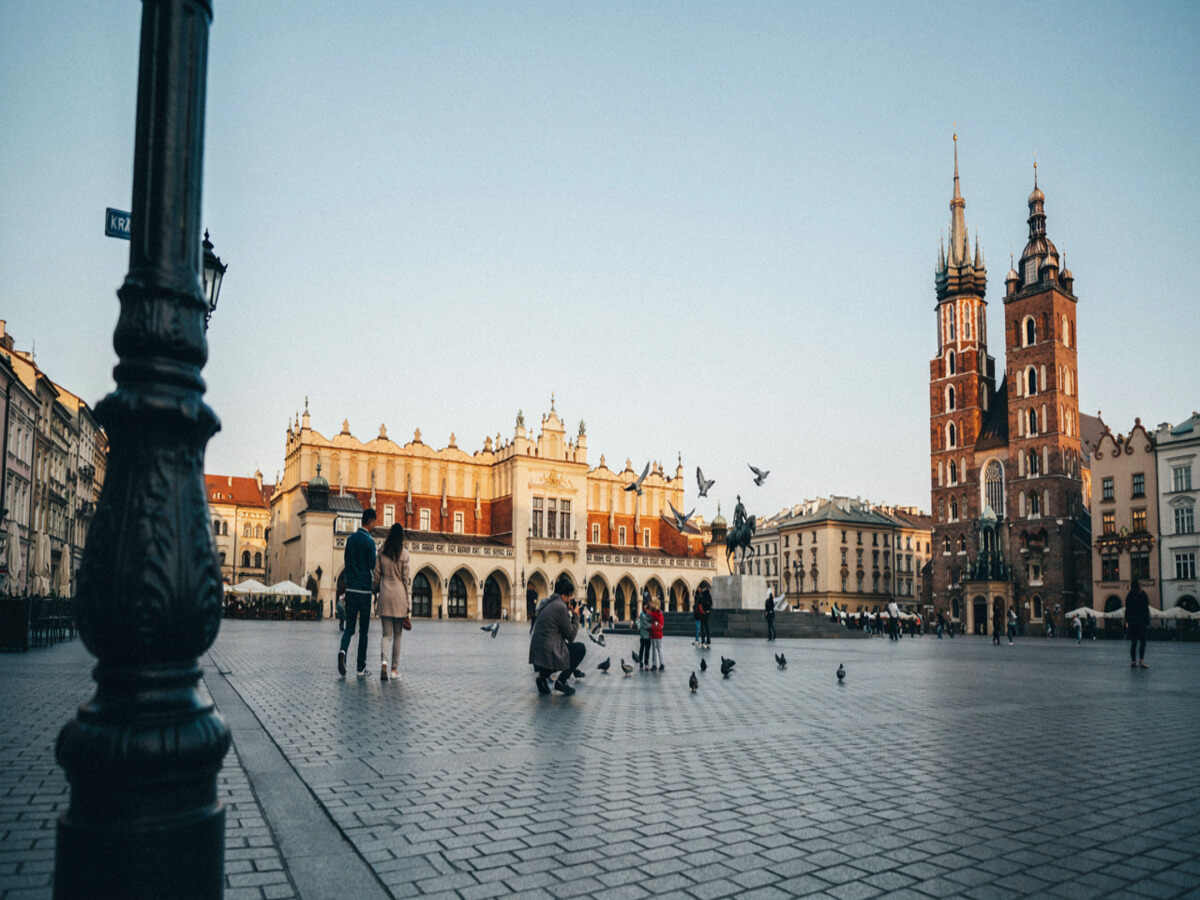
Image generated with Ai
Tourism development becomes another chance due to Poland and India’s strengthening defense and trade cooperation. Poland is increasing its cooperation with India, because defense, trade, technology and tourism are becoming increasingly integrated into an overall strategy. The scheduled visit of the Polish Prime Minister, Donald Tusk in October 2026 with a Polish business delegation might bring a new boost to the cooperation. While Poland needs increased defense exports, businesses expect the enormous market in India. However, closer business cooperation will lead to not only the conclusion of deals and investments, but also to increased travel.
Donald Tusk’s India Mission Opens a Bigger Economic Chapter
The planned visit represents much more than a diplomatic meeting. Tusk is expected to travel with close to 100 Polish companies, creating a major platform for business-to-business and government engagement.
The economic mission is centred on New Delhi and Bengaluru, connecting Poland with India’s political capital and one of its most important technology and innovation centres.
The programme brings together sectors including defence and dual-use technologies, IT and ICT, space, pharmaceuticals, healthcare, agriculture, food processing, mining, critical raw materials and wider industrial cooperation.
Advertisement
Advertisement
That breadth makes the mission particularly important. Poland is not approaching India with a single-sector strategy. It wants a deeper economic relationship capable of generating investment, exports, technological partnerships and sustained movement between the two countries.
Defence Exports Move Towards the Centre of Poland-India Relations
Defence has emerged as one of the most significant elements of this expanding partnership.
Advertisement
Advertisement
Polish Finance and Economy Minister Andrzej Domański has said Poland wants to increase exports of its defence products to India. Defence companies are expected to be represented within the Polish business mission.
The groundwork is already being laid.
On 27–28 August 2026, Polish deputy ministers visited New Delhi and met representatives of India’s National Security Council Secretariat and Department of Defence Production. They also interacted with the Society of Indian Defence Manufacturers and discussed opportunities for deeper cooperation. Gov.pl
The discussions indicate that Warsaw is exploring a relationship extending beyond straightforward product sales. Manufacturing cooperation, technology, modernisation, servicing and industrial partnerships could all become relevant as bilateral engagement develops.
However, no specific weapons contracts linked to Tusk’s October mission have yet been officially confirmed.
Poland Brings a Growing Defence Industry to the Table
Poland has strong reasons for seeking new overseas markets.
Advertisement
Advertisement
Its defence industry has become increasingly important as Warsaw expands military spending and industrial capacity. Polish defence businesses operate across ammunition, military vehicles, aviation equipment, electronics, unmanned platforms and counter-drone technologies.
India presents an important potential partner because it is simultaneously expanding domestic defence production.
That creates an interesting commercial equation. Polish companies can explore Indian demand, but cooperation could increasingly involve local manufacturing, technology partnerships and industrial collaboration rather than simply shipping finished equipment from Europe.
Such cooperation would fit India’s emphasis on strengthening domestic defence manufacturing while allowing Polish businesses to establish a stronger presence in one of the world’s major defence markets.
€5.6 Billion Trade Relationship Creates Room for Expansion
Defence sits within a much larger commercial relationship.
India-Poland merchandise trade reached approximately €5.6 billion in 2025, according to Polish government figures discussed earlier. Poland exported roughly €1.37 billion of goods to India while importing around €4.32 billion.
Advertisement
Advertisement
Machinery, equipment, chemicals, pharmaceuticals, metals, mineral products and manufactured goods already form important parts of this relationship.
The October mission could help diversify that commercial base.
Critical raw materials are particularly notable because they sit at the intersection of advanced manufacturing, technology, energy and defence supply chains.
Agriculture and food processing provide another avenue. Pharmaceuticals and healthcare create further opportunities, while Bengaluru offers Poland a gateway into India’s technology and space ecosystem.
Bengaluru Could Unlock a New Technology Corridor
The decision to include Bengaluru gives the visit another dimension.
Poland has ambitions in space technology, digital industries and advanced manufacturing, while Bengaluru has one of India’s strongest concentrations of technology, aerospace and innovation businesses.
Advertisement
Advertisement
Polish space and technology companies are consequently expected to have opportunities to build relationships with Indian counterparts.
Such commercial links can have consequences beyond investment figures.
Engineers, executives, researchers and specialists need to travel. Companies need meetings, training programmes and site visits. International partnerships require conferences and repeated face-to-face engagement.
That creates demand for airlines, hotels, meeting venues, restaurants, ground transportation and other tourism services.
Tourism Could Become an Unexpected Winner
Tourism is therefore one of the less obvious beneficiaries of the expanding partnership.
India and Poland already agreed under their 2024–2028 Strategic Partnership Action Plan to encourage greater tourist flows in both directions.
Advertisement
Advertisement
The framework envisages tourism missions, industry engagement, participation in travel fairs, familiarisation activities and roadshows.
Tusk’s business mission could add commercial momentum to those tourism ambitions.
Nearly 100 companies travelling with a prime minister creates immediate business movement. More importantly, successful deals can generate repeat journeys involving executives, technical specialists, investors and consultants.
Business travellers can also become leisure visitors. Some extend work trips, bring family members or return later for holidays.
This creates an opportunity for both countries to convert economic engagement into broader visitor demand.
Business and MICE Travel Could Gain First
The most immediate tourism impact could emerge from business and MICE travel.
Advertisement
Advertisement
Defence partnerships require negotiations. Technology cooperation requires technical meetings. Investment projects demand site inspections. Trade relationships generate exhibitions, conferences and supplier meetings.
New Delhi and Bengaluru could consequently receive more Polish corporate travellers as cooperation expands.
Warsaw and other Polish business centres could similarly attract Indian executives, investors and technical delegations.
These visitors support higher-value segments of the visitor economy, including premium hotels, conference venues, business-class aviation, restaurants and private transport.
The effect would not necessarily produce a sudden tourism surge. Instead, it could gradually establish a more resilient year-round travel corridor.
Air Connectivity Could Become the Critical Tourism Multiplier
Aviation will determine how far that opportunity can develop.
Advertisement
Advertisement
India and Poland already have direct aviation links, and both governments have previously supported stronger connectivity and additional destinations.
Growing corporate travel can strengthen the commercial foundation for greater capacity. Leisure tourism, students and visiting-friends-and-relatives traffic can reinforce that demand.
Any future expansion in direct connectivity could make Poland easier to combine with wider European holidays for Indian visitors.
For Polish travellers, better connectivity could similarly improve access to India’s heritage destinations, beaches, wellness centres, cultural attractions and major cities.
No additional flights should be assumed from the October mission itself. Nevertheless, stronger economic traffic can improve the conditions under which airlines evaluate future capacity.
Poland Has an Opportunity to Capture More Indian Travellers
India represents an increasingly important outbound tourism market, while Poland has room to strengthen its visibility among Indian holidaymakers.
Advertisement
Advertisement
Warsaw offers history, culture and urban tourism. Kraków provides another major heritage gateway. Poland can additionally compete through castles, historic towns, nature, gastronomy and winter experiences.
Its position within the Schengen Area also allows Poland to feature in broader European itineraries for appropriately documented Indian visitors.
More tourism promotion in India could therefore position Poland as an additional Central European destination rather than merely a business market.
The planned bilateral roadshows, tourism missions and travel-industry engagement could become important tools for achieving that.
Historic Connections Give Tourism a Human Story
India and Poland also share historical links that can support cultural tourism.
During the Second World War, thousands of Polish women and children found refuge in India. The story of the Jam Sahib of Nawanagar and Polish children sheltered in India remains a particularly distinctive chapter in bilateral relations.
Advertisement
Advertisement
Cultural exchanges, educational programmes and academic cooperation provide additional foundations.
Students create travel demand of their own. Families visit them. Academic staff travel for conferences and exchanges. Friends and relatives move between countries.
Film and audiovisual cooperation could eventually add another layer by giving destinations greater exposure to overseas audiences.
Trade, Defence and Tourism Begin to Converge
The bigger story surrounding Tusk’s mission is consequently not limited to defence exports.
Poland is seeking deeper access to India across defence, space, technology, pharmaceuticals, agriculture, food processing, mining and critical materials. India, meanwhile, offers Polish businesses a vast market and an increasingly important industrial ecosystem.
Every successful partnership can create further movement between the countries.
Advertisement
Advertisement
That means more business delegations. More conferences. More executives. More students and specialists. More cultural exchanges. And potentially more leisure travellers.
Tourism will not grow simply because defence exports increase. Its opportunity comes from the wider ecosystem of connectivity, investment and people-to-people engagement surrounding the strategic partnership.
As Tusk prepares to bring a major Polish corporate delegation to India, Warsaw and New Delhi have an opportunity to turn stronger political and commercial relations into a broader travel bridge. If business activity expands and aviation connectivity follows demand, defence and trade could ultimately help unlock a considerably stronger India-Poland tourism corridor.
Advertisement
