
Aveiro Follows Viana do Castelo and More as Underrated Destinations Come Alive for an Unforgettable Atlantic Escapes of Portugal

Published
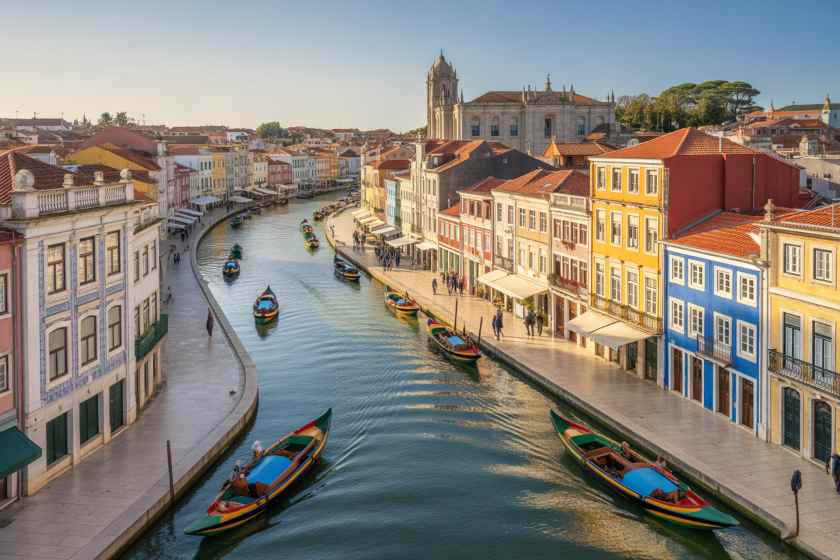
Image generated with Ai
Aveiro follows Viana do Castelo and more underrated destinations as Portugal’s Atlantic escapes come alive for travellers seeking something different. From Aveiro’s charming canals to Viana do Castelo’s coastal heritage, these underrated destinations offer memorable Atlantic experiences across Portugal. Moreover, travellers can discover scenic shores, local flavours, historic streets and peaceful landscapes beyond the country’s busiest hotspots. As these destinations come alive, Portugal continues to offer fresh opportunities for unforgettable Atlantic escapes. Travel And Tour World urges global travellers to read the entire story and discover why Aveiro, Viana do Castelo and more underrated destinations deserve a place on Portugal’s travel itinerary.
Portugal Coastal Travel Guide: Six Underrated Destinations to Add Beyond the Algarve and Lisbon
Portugal’s Atlantic identity extends far beyond its best-known beach resorts and major cities. Official tourism statistics show that Portugal recorded 82 million overnight stays and 32.5 million guests in 2025, with tourism receipts reaching €29.1 billion. Non-residents generated almost seven in every ten overnight stays.
Advertisement
Advertisement
That national picture also reveals why travellers can look beyond Lisbon, Porto and the Algarve. Around half of Portugal’s overnight stays in 2025 were concentrated in Greater Lisbon and the Algarve, leaving substantial tourism activity distributed across other regions.
For travellers seeking a different Portugal, six municipalities stand out for their combination of heritage, nature, food, coastline or countryside: Aveiro, Viana do Castelo, Guimarães, Viseu, Bragança and Tavira.
Advertisement
Advertisement
The destinations below are not presented as an official ranking. They are practical alternatives for tourists who want to diversify a Portugal itinerary.
Portugal Tourism by the Numbers: The National Picture
| Indicator | 2024 | 2025 | Change |
|---|---|---|---|
| Tourist guests | 31.6 million | 32.5 million | +2.8% |
| Overnight stays | 80.4 million | 82.0 million | +2.1% |
| Tourism receipts | €27.7 billion | €29.1 billion | +5.0% |
| Non-resident share of overnight stays | About 70% | 69.0%+ | — |
| European share of non-resident overnight stays | 70.2% | 73.5% | Higher concentration |
| Airport passenger arrivals | 34.4 million | 36.0 million | +4.7% |
| Hotel share of overnight stays | About 60% | About 60% | Broadly stable |
| Local accommodation share | 15.0% | 15.0% | Stable |
Source: Statistics Portugal/INE and Turismo de Portugal.
Advertisement
Advertisement
Portugal’s five largest source markets by overnight stays in 2025 were the United Kingdom, Germany, United States, Spain and France. The United Kingdom accounted for 17.7%, followed by Germany at 11.3%, the United States at 9.6%, Spain at 9.1% and France at 7.4%.
The figures are important for international travellers because they demonstrate the scale of Portugal’s visitor economy. They also show why choosing smaller destinations can help visitors experience a different side of the country.
Advertisement
Advertisement
Portugal Tourism Recovery: Five-Year National Comparison
The pandemic created an exceptional disruption in 2020 and 2021, so the five-year comparison needs to be read in context.
| Year | Guests | Overnight stays | Key travel context |
|---|---|---|---|
| 2021 | Pandemic recovery year | — | International travel remained constrained |
| 2022 | Strong reopening | — | International demand returned rapidly |
| 2023 | 30.0 million+ | 77.2 million approx. | Tourism moved beyond the recovery phase |
| 2024 | 31.6 million | 80.4 million | New historical records |
| 2025 | 32.5 million | 82.0 million | Further records and €29.1bn receipts |
Turismo de Portugal describes 2024 and 2025 as record years across the main tourism indicators.
The municipal figures below should be interpreted differently from international-arrival statistics. Overnight stays are not unique visitor counts. One traveller staying four nights contributes four overnight stays. Turismo de Portugal defines an overnight stay as an individual stay extending from midday on one day to midday on the following day.
Six Underrated Portugal Destinations for Travellers
1. Aveiro: Canals, Lagoon Landscapes and Atlantic Day Trips
Aveiro is a strong choice for travellers who want a compact destination combining waterways, architecture, food and easy access to Atlantic beaches. The city is closely associated with the Ria de Aveiro lagoon and traditional moliceiro boats. Official Portuguese tourism material highlights the city’s canals, historic areas and Costa Nova, whose colourful striped houses provide one of the region’s recognisable coastal scenes.
Advertisement
Advertisement
Tourists can begin with a walk around the central canals before taking a moliceiro trip. The accessible official city itinerary includes the Cathedral, Museu de Santa Joana, Praça da República, Rossio Garden, Art Nouveau Museum, Praça do Peixe and São Gonçalinho Chapel.
Costa Nova works well as a second stop. Travellers can combine the colourful waterfront architecture with a coastal walk and fresh seafood. The nearby lagoon also makes the area useful for visitors interested in birdlife and wetland landscapes.
Aveiro’s tourism numbers have changed significantly since the pandemic. Municipal data show 179,028 overnight stays in 2020, followed by 258,371 in 2021, 404,905 in 2022, 446,972 in 2023 and 452,699 in 2024.
That means overnight stays more than doubled between 2020 and 2024. Pordata records 453,431 overnight stays in 2024, with the small difference reflecting statistical updates or methodology. It also reports 2,553 available beds in 2024, compared with 2,194 in 2019.
| Aveiro indicator | Data |
|---|---|
| 2020 overnight stays | 179,028 |
| 2021 | 258,371 |
| 2022 | 404,905 |
| 2023 | 446,972 |
| 2024 | 452,699–453,431 |
| 2019–2024 change | +21.7% |
| 2024 available beds | 2,553 |
| Hotel share of 2024 stays | 71.8% |
| Local accommodation share | 28.2% |
For food, travellers should look for ovos moles, regional seafood and dishes based on fish from the lagoon and Atlantic coast. For accommodation, staying near the central canals is practical for walking. Travellers wanting a seaside atmosphere can instead stay toward Costa Nova or nearby coastal communities.
Suggested two-day plan: arrive in Aveiro, explore the canals and historic centre, have lunch around the central area, and spend the afternoon around Costa Nova. On day two, take a lagoon experience, visit museums and finish with regional cuisine.
Advertisement
Advertisement
2. Viana do Castelo: Atlantic Heritage at Portugal’s Northern Edge
Viana do Castelo provides a different coastal experience from the Algarve. The northern city combines Atlantic scenery, religious heritage, traditional architecture and access to the Lima River landscape.
Travellers can explore the historic centre before visiting the hilltop Santa Luzia Sanctuary, one of the city’s most recognisable landmarks. The city is also useful as a base for exploring northern Portugal’s coastal landscapes and nearby villages.
The municipality recorded a substantial post-pandemic recovery. Official municipal data show 293,750 overnight stays in 2022, 334,951 in 2023 and 349,228 in 2024, while Pordata’s updated series records 356,111 overnight stays in 2024.
The municipality reported that foreign overnight stays reached 195,431 in 2024, up 14% from 2023. Spain was the largest foreign market with 50,835 overnight stays. Germany generated 28,031, France 16,191, the United Kingdom 14,595 and the United States 12,905.
| Viana do Castelo indicator | 2022 | 2023 | 2024 |
|---|---|---|---|
| Total overnight stays | 293,750 | 334,951 | 349,228* |
| Foreign overnight stays | 149,654 | 175,847 | 195,431 |
| Spain | 41,057 | 49,411 | 50,835 |
| Germany | 23,309 | 25,106 | 28,031 |
| France | 16,098 | 16,340 | 16,191 |
| UK | 12,198 | 11,593 | 14,595 |
| USA | 8,466 | 8,757 | 12,905 |
*Pordata’s updated 2024 municipal series gives 356,111.
For food, try regional seafood, bacalhau, traditional northern meat dishes and Vinho Verde from the wider Minho area. Travellers can stay in the historic centre for walkability or choose accommodation closer to the coast.
Advertisement
Advertisement
Suggested three-day plan: spend day one in the historic centre and Santa Luzia. Use day two for the coast and river landscape. Reserve day three for nearby northern villages and a regional food experience.
3. Guimarães: Medieval Streets, Green Spaces and Portuguese Heritage
Guimarães is especially suitable for travellers who want heritage without making Lisbon or Porto the centre of their itinerary. Official tourism information identifies it as the city traditionally associated with the origins of Portugal. Its historic centre is UNESCO-listed, while the Castle and Palace of the Dukes provide major heritage attractions.
The destination also offers a modern sustainability angle. Guimarães has been designated European Green Capital 2026, according to Portugal’s official tourism portal.
Tourists can walk through the medieval centre, explore the castle complex and continue toward the Palace of the Dukes. The city’s green spaces provide an alternative when visitors want a break from monuments.
Tourism demand has expanded but remains different from the country’s largest urban centres. Pordata records 384,984 overnight stays in 2024, 4.2% above 2019. The municipality had 2,664 available beds in 2024, an increase of 200 from 2019.
A 2022 tourism study recorded 320,866 overnight stays in Guimarães.
Advertisement
Advertisement
| Guimarães indicator | Data |
|---|---|
| 2022 overnight stays | 320,866 |
| 2024 overnight stays | 384,984 |
| 2019–2024 change | +4.2% |
| 2024 available beds | 2,664 |
| Increase in beds since 2019 | +200 |
| Hotel share of 2024 stays | 82.2% |
| Local accommodation | 14.1% |
| Rural tourism | 3.7% |
Food is part of the experience. Travellers can seek traditional Minho dishes, local pastries and regional wines. A practical base is the historic centre, allowing visitors to reach many attractions on foot.
Suggested two-day plan: explore the historic centre and castle on day one. Use day two for the Palace of the Dukes, green spaces and Citânia de Briteiros in the surrounding area.
4. Viseu: An Inland Alternative for Wine, Heritage and Slow Travel
Viseu offers a markedly different experience from Portugal’s coastal resorts. Located inland, the city works well for travellers interested in history, food, wine and a slower pace.
The city can serve as a base for exploring the Dão wine region. Visitors can combine heritage walks with winery visits and regional dining. The historic centre provides an accessible introduction to Viseu’s cultural identity, while the surrounding countryside creates opportunities for day trips.
Pordata reports 273,508 overnight stays in Viseu in 2024, representing an increase of 11.6% over 2019. The municipality had 1,981 available beds in 2024, up by 123 from 2019.
Hotels accounted for 87.3% of overnight stays, while local accommodation represented 11.1% and rural tourism 1.6%.
Advertisement
Advertisement
| Viseu indicator | Data |
|---|---|
| 2024 overnight stays | 273,508 |
| 2019–2024 change | +11.6% |
| Average daily overnight stays in 2024 | 749 |
| 2024 available beds | 1,981 |
| Bed increase since 2019 | +123 |
| Hotel share | 87.3% |
| Local accommodation | 11.1% |
| Rural tourism | 1.6% |
The destination suits food-focused travellers. A visit can include regional cheeses, cured meats, traditional Portuguese cooking and Dão wines.
Accommodation in the central area makes sightseeing easier. Visitors seeking a countryside experience can look toward rural properties outside the urban centre.
Suggested three-day plan: explore Viseu’s historic centre on day one. Dedicate day two to Dão wine and food experiences. Use day three for a countryside excursion or nearby historic village.
5. Bragança: A Remote Northern Escape for History and Nature
Bragança is particularly interesting for travellers who want to move away from Portugal’s busiest tourism corridors. Located in the far northeast, the city combines a medieval citadel with access to Montesinho Natural Park.
Official Visit Portugal information highlights the city’s historic castle, medieval urban core, Domus Municipalis and military museum. The same source points travellers toward Montesinho’s marked walking and cycling routes.
The villages of Rio de Onor and Guadramil provide additional reasons to extend a visit outside the city. Rio de Onor is especially unusual because the Portugal-Spain border passes through the village.
Advertisement
Advertisement
Bragança’s tourism profile is smaller than the major Portuguese destinations. Research based on INE data identified the municipality as a leading tourism destination within the Terras de Trás-os-Montes subregion, accounting for 46% of its subregional guests and overnight stays in 2019.
Because reliable annual municipal figures for every year of the pandemic period are not consistently exposed in the accessible official webpages, a precise 2020–2024 sequence should not be reconstructed from secondary estimates. Turismo de Portugal specifically notes that municipal datasets can be affected by confidentiality and statistical-quality rules.
| Bragança travel indicator | Available evidence |
|---|---|
| 2019 position | 46% of subregional guests and overnight stays |
| Main heritage attraction | Bragança Castle |
| Nature destination | Montesinho Natural Park |
| Border village | Rio de Onor |
| Historic village | Guadramil |
| Official walking recommendation | Marked Montesinho routes |
| Food identity | Trás-os-Montes regional cuisine |
Travellers should try regional cured meats, smoked products and hearty northern dishes. The municipality is also known for local gastronomic traditions connected with Trás-os-Montes.
Suggested three-day plan: explore the citadel and museums on day one. Spend day two in Montesinho Natural Park. Use day three for Rio de Onor, Guadramil and regional food experiences.
6. Tavira: A Quieter Algarve Alternative with Ria Formosa Landscapes
Tavira provides an alternative way to experience the Algarve without making the region’s largest resort areas the centre of the trip. Its location near the eastern Algarve makes it useful for visitors interested in historic streets, islands, wetlands and traditional food.
The municipality has a strong tourism economy but experienced a dramatic pandemic interruption. Official regional tourism planning data show 126,431 overnight stays in 2020, 425,087 in 2021 and 621,435 in 2022. The 2022 figure was still 14.5% below 2019, demonstrating how quickly demand recovered while remaining below the pre-pandemic benchmark at that stage.
Advertisement
Advertisement
A municipal climate plan records 425,987 overnight stays and 109,275 guests in 2021, with 37 tourist accommodation establishments and 6,155 beds.
For 2023, Algarve tourism planning material reports Tavira among the region’s strongest municipalities for rural tourism, with 58,909 rural-tourism overnight stays.
| Tavira indicator | 2020 | 2021 | 2022 | 2023 |
|---|---|---|---|---|
| Total overnight stays | 126,431 | 425,087* | 621,435 | Data should be verified from final municipal series |
| Comparison with 2019 | – | -41.3% | -14.5% | — |
| 2021 guests | — | 109,275 | — | — |
| 2021 accommodation establishments | — | 37 | — | — |
| 2021 accommodation capacity | — | 6,155 beds | — | — |
*The municipal climate plan reports 425,987, while the cited TravelBI-based dashboard reports 425,087. The discrepancy should be resolved against the final INE series before publication.
Tavira works especially well for travellers interested in the Ria Formosa, island beaches and traditional Algarve food. Visitors can explore the historic centre, cross toward the island beaches and build a slower itinerary around seafood.
Local menus can include grilled fish, clams, octopus, cataplana and other Algarve dishes. Accommodation in the historic centre is convenient for walking, while coastal stays provide easier access to beach areas.
Suggested three-day plan: explore Tavira’s historic centre on day one. Spend day two around the island and Ria Formosa. Reserve day three for eastern Algarve villages and a long seafood lunch.
Advertisement
Advertisement
Five-Year Tourism Comparison: The Six Destinations
A crucial point for travellers and editors is that a uniform five-year municipal comparison is not always available from one current official interface. Turismo de Portugal states that historical municipal overnight-stay and guest series are available for 2016–2024, but some municipal indicators may be restricted by statistical confidentiality or quality rules.
Where official municipal documents provide individual annual figures, those are reproduced below. Where they do not, the table deliberately avoids inventing numbers.
| Destination | 2020 | 2021 | 2022 | 2023 | 2024 | Confirmed trend |
|---|---|---|---|---|---|---|
| Aveiro | 179,028 | 258,371 | 404,905 | 446,972 | 452,699 | Strong post-pandemic recovery |
| Viana do Castelo | — | — | 293,750 | 334,951 | 349,228* | Continued recovery |
| Guimarães | — | — | 320,866 | — | 384,984 | Higher than 2019 |
| Viseu | — | — | — | — | 273,508 | +11.6% vs 2019 |
| Bragança | — | — | — | — | — | Municipal annual series requires direct TravelBI extraction |
| Tavira | 126,431 | 425,087 | 621,435 | — | — | Strong recovery |
*Pordata’s updated series gives 356,111 for 2024.
This table is intentionally conservative. Publishing fabricated annual figures would make the article appear more complete while reducing its factual reliability.
Portugal’s Wider Coastal Tourism Numbers
The Algarve remains one of Portugal’s biggest tourism engines. In 2025, the region recorded 20.8 million overnight stays, including approximately 16 million generated by international tourists, or 76.8% of the regional total.
The Algarve’s international demand peaked at 2.09 million overnight stays in July, while domestic overnight stays reached their highest level in August at approximately 1.17 million.
Advertisement
Advertisement
The region’s seasonality indicator improved from 44.0% in 2022 to 40.8% in 2025. Accommodation RevPAR increased from €64.10 in 2022 to €78.50 in 2025, a reported increase of 22.5%.
| Algarve tourism indicator | 2025 figure |
|---|---|
| Total overnight stays | 20.8 million |
| International overnight stays | 16 million |
| International share | 76.8% |
| July international peak | 2.09 million |
| August domestic peak | 1.17 million |
| Seasonality indicator | 40.8% |
| Seasonality in 2022 | 44.0% |
| RevPAR | €78.50 |
| RevPAR in 2022 | €64.10 |
| RevPAR change | +22.5% |
| Tourism employment, 2024 | 74,300 |
The Algarve also illustrates why travellers should consider shoulder seasons. The official observatory reports that tourism demand is becoming more evenly distributed across the year, although July and August remain particularly important.
A Seven-Day Portugal Alternative Travel Plan
Days 1–2: Aveiro
Start in Aveiro and explore the canals, historic centre and Art Nouveau heritage. Add a moliceiro trip and continue to Costa Nova.
Spend the evening sampling regional seafood and ovos moles.
Day 3: Viseu
Travel inland toward Viseu. Explore the historic centre and arrange a Dão wine experience.
Choose a traditional restaurant for dinner and stay overnight in the city.
Advertisement
Advertisement
Day 4: Guimarães
Continue north toward Guimarães. Walk through the UNESCO-listed historic centre and visit the castle and Palace of the Dukes.
Stay within or near the historic centre.
Day 5: Viana do Castelo
Head toward the Atlantic and explore Viana do Castelo. Visit Santa Luzia and spend time in the historic centre.
Finish the day with northern Portuguese seafood.
Day 6: Bragança
For travellers comfortable with a longer road journey, continue east toward Bragança. Explore the medieval citadel before visiting Montesinho Natural Park.
Stay overnight rather than attempting the region as a rushed day trip.
Advertisement
Advertisement
Day 7: Choose Tavira or Extend the Northern Route
Tavira works better as a separate Algarve-based itinerary because of the distance from northern Portugal. Travellers should therefore choose between a Northern Portugal route and an Algarve route rather than attempting to connect all six destinations in one week.
Where to Eat and What to Taste
| Destination | Food focus | Suggested experience |
|---|---|---|
| Aveiro | Ovos moles, seafood, lagoon fish | Historic-centre restaurant |
| Viana do Castelo | Seafood, cod, Minho cuisine | Traditional northern restaurant |
| Guimarães | Minho dishes, regional pastries | Historic-centre dining |
| Viseu | Dão wines, cheeses, cured meats | Winery and regional meal |
| Bragança | Smoked meats, sausages, Trás-os-Montes dishes | Local traditional restaurant |
| Tavira | Fish, clams, octopus, cataplana | Seafood restaurant near historic centre |
Where to Stay: Traveller Planning Guide
| Destination | Best base for first-time visitors | Best for |
|---|---|---|
| Aveiro | Central canals | Walking and short city breaks |
| Viana do Castelo | Historic centre | Heritage and Atlantic access |
| Guimarães | UNESCO historic centre | Culture and architecture |
| Viseu | Central Viseu | Wine and inland touring |
| Bragança | Historic centre | Heritage and nature |
| Tavira | Historic centre | Algarve culture and beaches |
Travellers should book accommodation according to transport plans rather than simply choosing the highest-rated property. This is particularly important in smaller destinations where public transport can be less frequent than in Lisbon or Porto.
How Travellers Can Choose Between the Six Destinations
| Traveller interest | Destination to investigate |
|---|---|
| Canals and lagoon landscapes | Aveiro |
| Atlantic scenery and northern heritage | Viana do Castelo |
| Medieval history | Guimarães |
| Wine and slow travel | Viseu |
| Wilderness and remote landscapes | Bragança |
| Algarve beaches and Ria Formosa | Tavira |
These destinations should not be viewed as substitutes for one another. Each offers a different travel experience.
For a first Portugal trip, travellers can combine one major gateway with one smaller destination. Visitors arriving through Porto might add Guimarães or Viana do Castelo. Those using Lisbon can consider Aveiro as part of a longer northbound route. Algarve visitors can use Tavira as a slower eastern base.
Practical Travel Guidance for Global Tourists
Portugal’s tourism infrastructure is broad, but travel times between regions can be significant. A seven-day itinerary should therefore focus on one geographical area rather than attempting to cover the entire country.
The North works well for Guimarães, Viana do Castelo and Bragança.
Advertisement
Advertisement
The Centre provides a practical route toward Aveiro and Viseu.
The Algarve can be explored separately, with Tavira offering a different experience from the larger resort centres.
Tourists should also consider the season. Summer brings strong demand along the coast. Spring and autumn can provide different conditions for walking, cultural sightseeing and countryside exploration.
Responsible Travel Matters
Portugal is increasingly measuring tourism through sustainability indicators. The Algarve’s sustainable tourism observatory reports that 65.9% of accommodation establishments implemented energy-optimisation measures in 2025, while 74.5% had water-efficiency measures. Sustainability certification among accommodation establishments increased from 29% to 39%.
The Azores have also received international sustainable-destination certification, while the Madeira autonomous region and municipalities including Baião and Melgaço have obtained silver certification.
For travellers, responsible tourism can be simple. Use marked trails, respect protected landscapes, reduce water waste and support locally owned restaurants and businesses.
Advertisement
Advertisement
Final Traveller Takeaway
Portugal’s tourism story is no longer limited to the country’s biggest gateways and famous beaches. National tourism reached 82 million overnight stays in 2025, but the distribution of demand provides plenty of opportunities to explore different parts of the country.
Aveiro offers lagoon landscapes and colourful coastal culture. Viana do Castelo adds Atlantic heritage. Guimarães delivers medieval history and green-city experiences. Viseu introduces wine-country travel. Bragança opens the door to remote northeastern Portugal. Tavira combines historic Algarve character with beaches and Ria Formosa landscapes.
For global travellers, the practical lesson is simple: Portugal can be experienced through several smaller bases rather than one conventional itinerary. Choosing destinations according to interests, season and transport connections can create a more varied journey while spreading visitor activity beyond the country’s most concentrated tourism zones.
Conclusion
Aveiro follows Viana do Castelo and more underrated destinations as Portugal reveals a refreshing side of its Atlantic escapes. Together, these destinations offer travellers coastal scenery, heritage, local cuisine and memorable experiences away from the busiest tourist routes. From Aveiro’s canals to Viana do Castelo’s Atlantic charm, each destination brings a distinct reason to explore Portugal differently. Moreover, these underrated destinations make it easier for global travellers to discover authentic communities and scenic landscapes. Travel And Tour World encourages travellers to look beyond familiar hotspots and explore these unforgettable Atlantic escapes while planning their next Portugal journey.
Advertisement
