
SouthWest Airlines Flight SWA463, a Boeing 737-8H4 from Cincinnati to Orlando Makes a Diversion at Tampa International Airport: The Reason for the Mid-Air US Route Alteration

Published
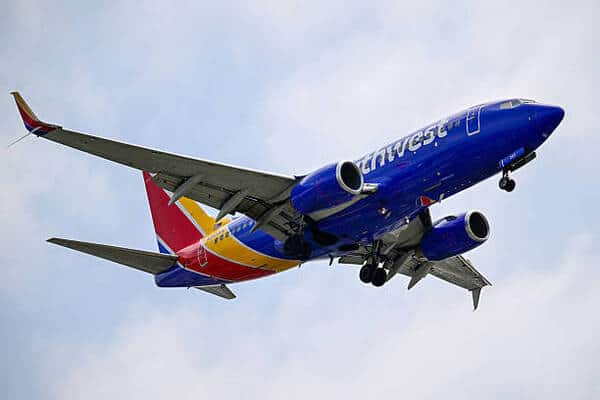
SouthWest Airlines Flight SWA463, a Boeing 737-8H4 from Cincinnati to Orlando Makes a Diversion at Tampa International Airport: The Reason for the Mid-Air US Route Alteration left hundreds of holidaymakers stunned yesterday. Passengers braced themselves as the massive jet suddenly broke away from its path. Why did the captain change direction? Unpredictable, violent summer storm cells forced this dramatic shift. Because of the danger, pilots executed a swift, textbook tactical manoeuvre. The crew prioritised safety over schedules. This shocking mid-air twist highlights how swiftly tropical weather can completely derail an ordinary domestic journey.
Why Did Southwest Airlines Flight SWA463 Divert to Tampa International Airport?
A routine summer journey turned into an exercise in tactical aviation safety when Southwest Airlines Flight SWA463 encountered major meteorological disruptions. Departing Cincinnati, Ohio, the Boeing 737-8H4 was scheduled for a smooth descent into central Florida, but localized weather patterns rapidly deteriorated near the coast. Aggressive storm cells developed directly over the airspace of the destination airport, making a standard approach highly hazardous for the passenger jet.
Facing intense wind shear risks and dense cloud cover, the flight crew closely coordinated with regional air traffic control teams to evaluate their immediate routing options. Rather than burning critical fuel reserves while circling indefinitely in a volatile holding pattern, the captain elected to utilize a standard safety protocol by steering toward a clear alternate runway. The diversion of Southwest Airlines Flight SWA463 to nearby Tampa International Airport ensured that all passengers and crew members remained completely out of harm’s way during the peak of the system.
What Happened Mid-Air During the Journey of Southwest Airlines Flight SWA463?
The initial phases of the trip proceeded completely as planned, with Southwest Airlines Flight SWA463 cruising comfortably at its assigned high altitude across the eastern United States. However, as the Boeing 737-8H4 crossed into the southern skies, onboard weather radar systems began picking up major convective activity flashing directly along their flight path. The pilots immediately noted that the convective cells were gaining vertical velocity and producing significant turbulence across the entire local arrival corridor.
Advertisement
Advertisement
As the aircraft drew closer to its planned destination, the regional control tower updated the cockpit regarding a temporary ground stop being enforced due to lightning strikes. Realising that an immediate touchdown was impossible, the flight crew deftly executed a sharp right turn to realign Southwest Airlines Flight SWA463 toward the west coast of the peninsula. Passengers experienced a smooth transition in flight altitude as the pilots managed the diversion with absolute professionalism, keeping everyone informed of the minor route alteration.
How Did the Boeing 737-8H4 Aircraft Handle the Sudden Diversion?
The twin-engine Boeing 737-8H4 workhorse performed flawlessly under the sudden operational changes required by the unexpected route shift. Designed specifically for reliable short-to-medium haul domestic sectors, this specific Southwest Airlines Flight SWA463 airframe possessed the advanced navigation suites necessary to recalculate arrival coordinates instantly. The flight management computer allowed the flight crew to seamlessly map out a new descent profile into Tampa without any loss of situational awareness.
Advertisement
Advertisement
As the aircraft descended through the lower cloud layers surrounding the alternate airfield, its robust aerodynamic structure easily mitigated the residual choppy air caused by the peripheral storm bands. The successful landing of Southwest Airlines Flight SWA463 in Tampa stands as a testament to both the mechanical integrity of the aircraft and the rigorous training protocols followed by domestic carriers. Ground crews at the diversion airport were prepared well in advance, guiding the aircraft safely to an available gate for immediate technical servicing.
What Is the Next Step for Passengers Aboard Southwest Airlines Flight SWA463?
Once the aircraft taxied safely onto the tarmac, the immediate focus shifted toward managing customer care and coordinating the final leg of the interrupted journey. Passengers on Southwest Airlines Flight SWA463 remained on board initially while operations personnel evaluated how quickly the severe weather front would clear out of the area. Because the distance between the two coastal transport hubs is relatively short, airlines frequently choose to wait for a temporary clearing before completing the trip.
After the ground teams refuelled the Boeing 737-8H4 and verified the updated weather patterns, plans were solidified to fly the passengers to their final destination later that evening. The airline provided continuous updates regarding the revised schedule, ensuring that connecting travellers could alter their subsequent travel arrangements with minimal stress. Although the diversion caused an unavoidable delay in their holiday schedules, passengers expressed immense gratitude for the proactive safety measures taken by the crew.
How Common Are Weather Diversions for Flights Like Southwest Airlines Flight SWA463?
Ultimately, the sudden route deviation of SouthWest Airlines Flight SWA463, a Boeing 737-8H4 from Cincinnati to Orlando, which resulted in a surprise diversion at Tampa International Airport, was driven entirely by an extreme weather emergency. Violent convective thunderstorms and severe wind shear risks blocked the approach into Orlando, rendering an immediate touchdown impossible. Because the safety of the passengers was paramount, the captain made a rapid, calculated decision to reroute the Boeing 737-8H4 to an alternate runway. Tampa International Airport offered clear skies and a secure landing zone away from the dangerous system. Following a routine refueling stop on the tarmac, the commercial aircraft safely completed its journey once the local storm cells dissipated. This operational shift perfectly demonstrates how advanced meteorological tracking tools and rigorous pilot training work together to mitigate flight hazards and ensure a safe arrival.
Advertisement
