
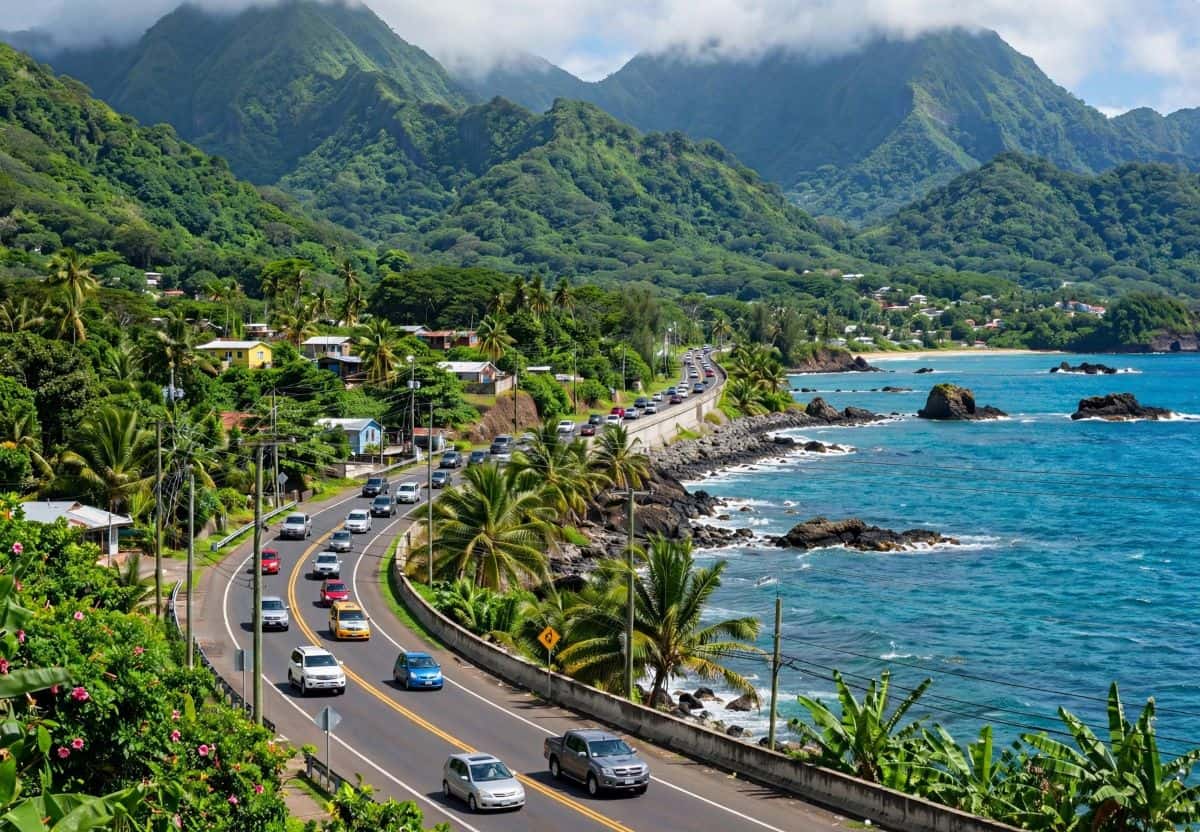
Image generated with Ai
From April to June 2026, sensationalist news will likely hyperbolate travel scares in Dominica, but fears of the industry ‘crashing’ are unfounded. Exuberant news reporting with the pop culture penchant for doomsday predictions has done little to wake the sleeping beauty, Dominica. You don’t have to look very far for proof of that: from the docks in Roseau or hikers on Soufrière, ‘panic’ will be nowhere to be seen. Dominica is resting, not dying. So-called ‘disasters’ supposedly threatening Dominica are merely natural phenomena and the rhythms of the Island. After a moderately successful 2026 winter season with a 10% estimated increase over stayover numbers and over 400,000 cruise ships passing through Cabrits and Roseau Harbors, a mid-year travel lull can be expected. While Grenada and Curaçao’s all-inclusive beaches attracted the sun seekers, Dominica defended her unspoiled rainforests and rivers. There is not a last chance to see a forgotten destination. Rather, this is a new beginning to the nature island of the Caribbean.
Is Dominica Really Experiencing A Devastating Travel Demand Collapse Between April And July 2026 Or Is It Just A Normal Seasonal Transition?
Sensational claims suggesting a travel demand collapse across Dominica between April and July 2026 completely misinterpret standard Caribbean tourism cycles. Rather than a market failure, official metrics confirm a natural shoulder-season transition following record-breaking stayover expansion and historic cruise ship arrivals.
Exaggerated media reports surrounding a travel demand collapse in Dominica fail to account for the annual climatic shifts that dictate regional tourism movement every single year. While high-volume winter sun-seekers depart as spring turns into summer, this predictable slowdown across April, May, June, and July marks the standard transition into the Atlantic hurricane season and regional shoulder period. Far from representing a structural collapse, overall stayover numbers across the island remain built upon a formidable baseline established throughout 2025 when Dominica welcomed 99,846 stayover tourists in a monumental 19% year-on-year surge.
Advertisement
Advertisement
As temperatures rise across North America and Europe, international long-haul leisure travel shifts toward northern hemisphere destinations, naturally reducing overall arrivals across the Caribbean basin. Tourism operators in Roseau and Soufrière actively utilize this quieter window between April and July to perform essential hotel refurbishments and train eco-tour guides for the upcoming autumn peak. This healthy seasonal pattern allows local ecosystems across Morne Trois Pitons National Park to rejuvenate while maintaining high economic stability across the island.
What Do Official Discover Dominica Authority And Caribbean Tourism Organization Numbers Reveal About Cruising In Roseau?
Data released by the Discover Dominica Authority (DDA) and the Caribbean Tourism Organization (CTO) paints a picture of booming visitor engagement rather than market failure. During the first quarter of 2026, Dominica recorded an impressive 10% increase in stayover arrivals compared to the same period in 2025, proving that traveler interest in the Nature Island remains at an all-time high. Furthermore, regional industry assessments published by the CTO project an overall regional growth rate between 3.0% and 4.0% for the entire 2026 calendar year.
The maritime sector delivered even more extraordinary performance metrics during the 2025–2026 cruise season, bringing hundreds of thousands of sea-based travelers to the historic docks of Roseau Harbour and Cabrit’s Cruise Ship Berth. Official statistics confirm that passenger arrivals soared to between 395,950 and 409,761 visitors across 244 scheduled port calls, representing a staggering 23% to 42% year-on-year increase. These numbers confirm that international cruise lines continue to view Discover Dominica Authority initiatives as a premier highlight within their Southern Caribbean itineraries.
Advertisement
Advertisement
How Are Neighbouring Islands Like St. Vincent and the Grenadines, Curaçao, and Grenada Capitalising On Summer Caribbean Tourism Shifts?
While Dominica maintains its strategic focus on sustainable, low-impact eco-tourism, neighboring regional destinations have captured higher Q2 stayover market shares by expanding mass-market infrastructure. Islands such as St. Vincent and the Grenadines, Curaçao, and Grenada recorded significant surges in tourist arrivals between April and July 2026 due to aggressive airlift expansion and new deep-water port facilities. This competitive shift reflects dynamic market choices rather than a decline in the intrinsic appeal of Dominica.
Travelers seeking all-inclusive beach resorts naturally gravitate toward the newly constructed hotel complexes in Grenada or the sheltered bays of Curaçao during the late spring months. Meanwhile, St. Vincent and the Grenadines has benefited immensely from freshly added direct flights connecting North American hubs directly to the Grenadines archipelago. Consequently, Dominica continues to cultivate a distinct market niche, attracting discerning wilderness enthusiasts, diving aficionados, and wellness seekers who prefer tranquil rainforest retreats over crowded beach resorts.
What Critical Role Does Intra-Regional Air Connectivity Play Across The Eastern Caribbean Currency Union During The Shoulder Season?
A central factor influencing summer visitor traffic across Dominica involves the ongoing operational constraints within intra-regional aviation networks. According to the Eastern Caribbean Central Bank (ECCB), member states across the Eastern Caribbean Currency Union (ECCU) face persistent flight capacity bottlenecks that complicate multi-island travel itineraries. Although the ECCB projects a healthy 3.3% economic growth rate across the region for 2026, limited seating capacity between island hubs temporarily tempers summer leisure travel.
Transit connections through regional stepping stones such as Antigua, Barbados, and Guadeloupe frequently experience reduced seasonal scheduling during May and June. For travelers attempting to reach Douglas-Charles Airport in northern Dominica, fewer connecting flights naturally cap the total volume of spontaneous mid-year arrivals. Aviation authorities and regional carriers continue to work jointly toward restoring seamless inter-island flight frequency to support year-round mobility across the Lesser Antilles.
What Is The Real Socio-Economic Impact Of Travel And Tourism On Local Communities In Dominica?
The direct impact of travel and tourism across Dominica extends far beyond simple arrival numbers, acting as the primary catalyst for sustainable community development and heritage preservation. Revenue generated from stayover guests directly supports independent tour operators, rainforest guides, and local culinary establishments in scenic hubs like Calibishie and Scott’s Head. Moreover, entrance fees collected at iconic locations such as Trafalgar Falls, Emerald Pool, and the arduous Waitukubuli National Trail directly fund ongoing conservation projects.
By prioritizing high-value, eco-conscious travel over mass-market density, Dominica ensures that tourism revenue directly benefits local residents without compromising fragile natural resources. Small-scale boutique eco-lodges situated around Pointe Michel and Marigot employ local builders, farmers, and artisans, keeping financial benefits firmly within rural communities. This sustainable economic model guarantees long-term economic resilience while safeguarding the island’s pristine biodiversity for future generations of international explorers.
How Will The World’s Longest Cable Car Project At Boiling Lake Transform Eco-Tourism Accessibility In The Roseau Valley By Late 2026?
The development of the world’s longest mono-cable car system stretching a remarkable 6.6 kilometres across the UNESCO-listed Morne Trois Pitons National Park is poised to fundamentally reshape the destination’s eco-tourism model. By establishing a direct aerial route connecting the lush Roseau Valley with the volcanic cauldron of Boiling Lake, this ambitious engineering initiative converts an arduous, highly demanding six-hour mountain trek into a seamless 20-minute journey above the verdant rainforest canopy and scenic Trafalgar Falls. The state-of-the-art infrastructure incorporates advanced environmental safeguards designed to eliminate ground-level trail erosion while providing passengers with unparalleled panoramic vistas of the island’s interior topography.
This dramatic leap in transport accessibility solves a long-standing operational challenge for short-stay visitors and excursion operators managing tight itineraries. Cruise line passengers docking at the historic port of Roseau were historically unable to experience the thermal wonders of the interior due to the sheer physical strain and duration of the wilderness hike. The cable car project is projected to double shore excursion participation, directing crucial tourist expenditure deeper into inland rural communities and generating dozens of permanent technical and hospitality jobs for local residents across the region.
What Impact Does The Creation Of The World’s First Dedicated Sperm Whale Reserve Along Dominica’s Leeward Coast Have On Marine Conservation Tourism?
Establishing a 788-square-kilometre dedicated marine sanctuary off the sheltered western coast between Roseau and Scott’s Head cements the island’s position as an international leader in marine conservation and ethical wildlife encounters. The designated sanctuary protects a resident population of sperm whales through cutting-edge hydrophone noise-monitoring networks, strict vessel speed regulations, and tightly restricted operator permits. This managed “Blue Economy” framework balances critical environmental protection with high-end, low-impact tourist engagement, ensuring that marine mammals are shielded from acoustic pollution and commercial over-tourism.
By prioritizing scientific preservation over mass commercialization, the reserve naturally attracts high-value niche markets, including marine researchers, conservationists, and professional underwater photographers. These discerning travellers typically generate higher average daily expenditure and longer stayover durations than standard holidaymakers, providing direct financial support to eco-lodges, boutique dive shops, and local seafood establishments situated around Soufrière Bay. Consequently, the sanctuary creates a resilient, high-margin revenue model that operates independently of mass cruise shipping cycles.
How Does The World Creole Music Festival In Roseau Power A Massive Autumn Visitor Surge That Reverses The Mid-Year Shoulder Slowdown?
While regional tourist arrivals naturally experience a calm transition during the mid-year shoulder months, the annual World Creole Music Festival (WCMF) acts as a powerful economic catalyst every October. Staged over three dynamic nights at Windsor Park Stadium in downtown Roseau, this renowned cultural showcase draws thousands of international visitors, regional music enthusiasts from Guadeloupe, Martinique, and Saint Lucia, and returning diaspora members. The event serves as a vibrant celebration of authentic Creole heritage, featuring world-class musical performances, indigenous gastronomy, and traditional performing arts.
The economic impact of the festival extends far beyond the capital, driving island-wide lodging occupancy to peak capacity and injecting vital liquidity into local businesses. Accommodation providers, vehicle rental agencies, and family-run dining venues from Pointe Michel up to coastal Calibishie report record revenues during this autumn window. This surge demonstrates how strategic, high-value cultural events can successfully generate a second annual tourism peak, mitigating the financial impact of seasonal lulls observed earlier in the year.
Why Is The Roseau Valley Geothermal Initiative Establishing The Island As A Model For Carbon-Neutral Eco-Resort Hospitality?
The construction of the multi-megawatt geothermal power plant in Laudat, nestled within the geothermal heartland of the Roseau Valley, represents a pivotal step toward achieving total domestic energy independence. By harnessing the island’s immense subterranean volcanic heat, the facility aims to transition the national electricity grid to 100% clean, renewable energy generation. Beyond dramatically reducing carbon emissions, this green infrastructure protects the local hospitality sector from the extreme price volatility associated with imported fossil fuels, lowering baseline operational expenses for eco-lodges in Portsmouth and wellness retreats in Wotten Waven.
This transition to carbon-neutral energy infrastructure provides a significant competitive advantage in attracting the modern, eco-conscious global traveller. Discerning international tourists increasingly avoid carbon-intensive resort destinations in favour of certified green sanctuaries that actively uphold strict environmental standards. By powering boutique eco-resorts with continuous clean energy, the nation solidifies its global brand identity as a pristine wilderness sanctuary, offering an authentic, sustainable alternative to traditional resource-heavy Caribbean beach resorts.
How Does Authentic Community Immersion In The Kalinago Territory Offer A Unique Alternative To Standard All-Inclusive Caribbean Resorts?
Spanning 3,700 acres along the rugged windward eastern coast, the Kalinago Territory centered around the vibrant settlement of Salybia provides visitors with an irreplaceable opportunity to engage directly with the indigenous heritage of the Eastern Caribbean. At the Kalinago Barana Aute cultural village, community members lead immersive educational experiences detailing ancient gommier canoe carving, traditional herbal pharmacology, and authentic cassava bread preparation. These interactive encounters offer travellers deep insight into centuries of living heritage preserved within the island’s native community.
This community-led tourism model ensures that economic benefits remain directly within the indigenous district, empowering local artisans, heritage guides, and family-owned guesthouses. By emphasizing meaningful cultural exchange over artificial, enclosed luxury, the destination delivers a deeply enriching alternative to the standardized resort experiences found in regional markets such as Curaçao or Grenada. This focus on heritage preservation safeguards indigenous traditions while providing visitors with an unmanufactured, transformative travel experience.
The Nature Island’s Wild Soul Will Always Prevail
For a place with a wild soul, you won’t find one like Dominica. You can’t measure a country’s soul with a dip in cruise numbers. Dominica is choosing to keep its natural beauty, unlike its neighboring countries that have ugly big resort developments. By the numbers, my argument is right. Winter stayovers hit record numbers, new marine sanctuaries and green energy initiatives got started, and Dominica is starting to build a future that is more sustainable. Once the summer quietness is over and the Roseau Valley is rejuvenated with autumn, the true adventurers will head to the emerald peaks. Dominica isn’t in a bad economic state, it’s waiting to be discovered by people who truly appreciate what it has to offer.
Frequently Asked Questions
No. Official data from the Discover Dominica Authority (DDA) confirms stayover arrivals grew by +10% in Q1 2026, while cruise passenger arrivals reached record levels between 395,950 and 409,761 visitors.
The dip between April and July represents a standard seasonal transition into the Caribbean shoulder period and Atlantic hurricane season, during which cruise ships reposition away from the Southern Caribbean.
Destinations including St. Vincent and the Grenadines, Curaçao, and Grenada experienced arrival surges due to newly added direct international flights and expanded port infrastructure.
Advertisement
Tags: caribbean, Dominica, tourism updates, Travel News
Advertisement
Advertisement













Saturday, September 5, 2026

Friday, September 4, 2026
Saturday, September 5, 2026

Saturday, September 5, 2026

Thursday, September 3, 2026

Wednesday, September 2, 2026

Saturday, September 5, 2026

Saturday, September 5, 2026


