
Bangkok Joins Phuket, Pattaya, and Chiang Mai in Supercharging Asia’s Multi-Million-Dollar Queer Economy as Historic Marriage Equality Anniversaries Ignite Massive June Pride Surges: What You Need to Know

Published
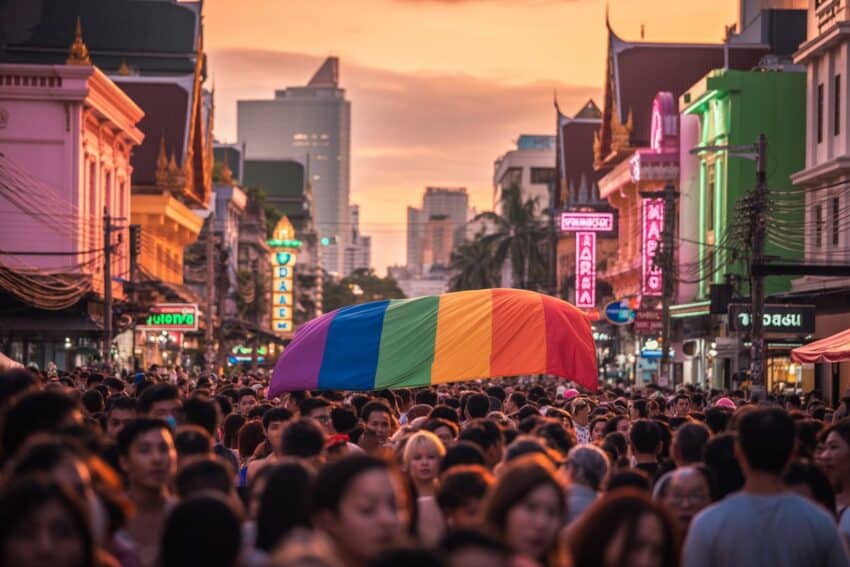
Bangkok, Phuket, Pattaya, and Chiang Mai are joining forces to supercharge Asia’s queer economy as June Pride celebrations surge across Thailand, driven by historic marriage equality milestones and booming tourism demand. Across these four major destinations, large-scale Pride festivals are being organised throughout June, transforming cities into global hubs of LGBTQ+ travel, culture, and entertainment. The surge is happening as Thailand leverages landmark global marriage equality anniversaries—particularly the June 26 Supreme Court rulings in the United States—as inspiration to promote inclusive tourism policies and attract international visitors. The events are being rolled out through coordinated city-wide festivals, combining parades, cultural showcases, and entertainment programmes in Bangkok, Phuket’s island venues, Pattaya’s beach districts, and Chiang Mai’s heritage spaces. This strategic rollout is designed to maximise tourism revenue, strengthen Thailand’s global image, and position Pride as a powerful driver of economic growth, soft power, and inclusive development.

Historic Anniversaries and the Rise of a Queer Economy
The anniversary of landmark marriage equality rulings in the United States has been commemorated every June 26. These rulings—United States v. Windsor and Hollingsworth v. Perry in 2013 and Obergefell v. Hodges in 2015—affirmed that adults should be free to marry the person they love and catalysed global shifts toward equality. A decade later, the date has become a symbolic rallying point for movements around the world. The Respect for Marriage Act, enacted years later, reinforced these protections and signalled how democratic societies can enshrine dignity in law. When these anniversaries approach, planners across Asia draw inspiration from the courage and persistence that brought about such change, reminding citizens that equality is not only a legal issue but also a cultural and economic opportunity.
Advertisement
Advertisement
Those legal milestones coincide with compelling economic insights. The U.S. Department of Treasury has noted that around 11.2 percent of U.S. adults identified as members of the LGBTQI+ community in 2023. More than 20 percent of Generation Z identify as LGBTQI+, highlighting demographic momentum. States with higher LGBTQI+ representation experienced faster economic growth between 2010 and 2019. One study highlighted by the Treasury found that businesses owned by individuals who openly identify as LGBTQI+ contributed US$1.7 trillion to the U.S. economy and created more than 33 thousand jobs. Firms adopting LGBTQI+ friendly policies were found to perform better and receive higher credit ratings. The Treasury further observed that closing disparities for LGBTQI+ people could boost the national economy by nearly three percent. These figures underscore that inclusivity is not merely a social good; it is a powerful driver of growth.
Tourism officials have also recognised the spending power of LGBTQ travellers. New York’s tourism agency noted that travel by the LGBTQ community accounts for roughly US$70 billion in annual tourism spending in the United States. That state responded by launching an I LOVE NEW YORK initiative that targets this niche and leverages Pride events to draw visitors. Television and social media campaigns associated with the programme reached millions of viewers. These numbers, released by a state development agency, highlight how dedicated marketing and inclusive branding can turn tolerance into tangible revenue. They also serve as a template for Asian destinations seeking to tap into the global LGBTQ travel market. A commitment to equality, combined with creative marketing, positions cities to benefit from a multi‑million‑dollar queer economy.
Advertisement
Advertisement

Bangkok: A Beacon of Soft Power and Pride
Thailand’s capital has been repositioned as a beacon of equality and soft power. The Bangkok Pride Festival 2025 was announced as a month‑long celebration that would elevate Thailand’s soft power on the global stage. With the theme “The Celebration: Right to Love 2025,” the festival honoured the nation’s status as the first Southeast Asian country to pass marriage equality. Venues across the Siam district—including Siam Paragon, Siam Center and Siam Discovery—were prepared to host art exhibitions, public talks, performances by local and international LGBTQIAN+ artists, fashion shows and culture markets. The goal was to position Bangkok as a model city for human rights and gender equality while attracting tourists seeking safe and inclusive experiences.
The 2025 festival culminated with the Bangkok Pride Parade on 1 June, where thousands were invited to march from Suphachalasai Stadium to the Ratchaprasong intersection along a four‑kilometre route. Described as a spectacular drag parade, it encouraged participants to affirm identity and equality. The parade was scheduled for late afternoon, inviting revellers to march through the commercial heart of the city and celebrate diversity.
Advertisement
Advertisement
Looking ahead, the Bangkok Pride Festival 2026 was designed as an even more ambitious event under the slogan “Patch the World with Peace • People • Pride.” Held from 28 May to 1 June 2026, the festival was intended to merge peace, community and pride. An awards ceremony at NEX Hall, Siam Paragon planned to honour individuals and organisations championing equality across business, media, culture, society, activism and politics. Forums at the Bangkok Art and Culture Centre, NEXTOPIA and other venues were set to explore six pillars—economy and business, medicine and well‑being, technology, environment and sustainability, human rights and education. On 31 May, a parade would travel from Silom Road to the National Stadium with segments representing harmony, unity, identity, dignity, love and spirituality, turning the streets into a living manifesto for rights and inclusion.
These festivals fit into Thailand’s broader tourism strategy. As of 2 June 2026, the Tourism Authority of Thailand reported that the country had welcomed more than 14 million international visitors and generated about 679 billion Baht in revenue. With a quality‑led approach dubbed “Value over Volume,” the authority aims to achieve 2.65 trillion Baht in tourism revenue and 33 million international arrivals in 2026. Events such as InterPride 2026 and Pride Show Bangkok 2026 are presented as drivers of year‑round value. When legal reforms and soft power campaigns are combined with a robust events calendar, Bangkok becomes an example of how Pride can be leveraged to boost economic resilience and cultural influence.

Phuket: Island Celebrations Drive Tourism and Wellness
On Thailand’s southern coast, Phuket has embraced June Pride as an opportunity to showcase island hospitality and wellness. The Pride Month calendar lists a series of events that transform the island into a rainbow resort. From 29 to 31 May 2026, the Phuket Pride Festival is scheduled to take place in the field next to the Patong Beach police box. Additional events include a 4 June gala at Simon Cabaret, a 5 June celebration at Jungceylon Shopping Mall, and a 7 June gathering on Patong Beach. Each venue is known for welcoming international visitors; with these dates spanning a week, hotels can offer packages that encourage extended stays and deeper engagement. The island’s authorities plan beachside parades, cabaret performances and family‑friendly activities, ensuring that Pride is integrated into the existing tourist experience.
The timing of Phuket’s celebrations aligns with the broader strategy described by the Tourism Authority of Thailand. In the 2026 update presented at the Thailand Travel Mart Plus in Pattaya, the authority highlighted that Thailand’s wellness economy reached US$42.7 billion in 2024. The global wellness market is projected to approach US$7.9 trillion by 2026. With its beaches, spas and reputation for hospitality, Phuket has been positioned as a destination where wellness meets equality. Under the “Healing is the New Luxury” direction, travel experiences are designed to support balance, restoration and peace of mind. By combining wellness retreats with Pride festivals, the island creates a niche for travellers seeking both celebration and self‑care.
Events and festivals drive year‑round value, encouraging spending on accommodations, dining, spa treatments and entertainment and signalling that Phuket welcomes diversity, conferences and wellness summits. By positioning its beaches as safe spaces for rainbow tourism and its spas as sanctuaries for all identities, the island leverages Pride to capture a share of Asia’s queer economy.

Pattaya and the Eastern Surge: International Festivals Amplify the Economy
Along the eastern seaboard, Pattaya has earned a reputation for vibrant nightlife and international festivals. The Pride Month schedule reveals that the Pattaya International Pride Festival 2026 is set for 26 to 28 June on Pattaya Beach Road. A week earlier, from 19 to 21 June, the coastal city will host Circuit Festival Asia at the Zign Hotel. These events are expected to draw thousands of visitors from across Asia, Europe and the Americas. By clustering multiple festivals within weeks, Pattaya encourages longer stays and repeated spending. Beachfront stages, drag shows, music performances and parades have been planned to transform the city into an open‑air celebration of identity. Rainbow flags are expected to line the promenade, while bars and clubs curate theme nights catering to diverse preferences.
Advertisement
Advertisement
The economic strategy goes beyond celebrations. According to the Tourism Authority of Thailand, major music festivals such as Tomorrowland Thailand and Wonderfruit illustrate how events elevate a destination’s brand and diversify the calendar. By hosting both LGBTQ‑focused and mainstream events, Pattaya demonstrates that inclusivity and mass tourism can co‑exist; the resulting improvements in infrastructure and public transportation leave lasting benefits for residents and visitors alike.
Pattaya’s Pride surge also carries soft power. By hosting Circuit Festival Asia, the city becomes an international hub for partygoers and advocates. Attendees experience Thai hospitality at safe, inclusive celebrations, and this message of acceptance enhances Thailand’s image while building loyalty among visitors. Businesses benefit through higher occupancy and extended operating hours, proving that publicly celebrating legal progress yields financial as well as cultural returns.

Chiang Mai and Northern Revival: Culture, Spirituality and Pride
While coastal cities capture headlines, northern Thailand’s cultural capital Chiang Mai has embraced Pride in ways that honour its heritage. The Chiang Mai Pride Festival 2026 is scheduled for 22 May at the MAYA Lifestyle Shopping Centre. Two days later, on 24 May, a procession will move from the Buddhist Centre in Chiang Mai to the historic Tha Phae Gate. These venues symbolise the city’s fusion of modernity and tradition. The festival is expected to feature art exhibitions, cultural performances, seminars on human rights and markets featuring local crafts. Monks and community elders have been invited to join the parade, offering blessings and affirming that spirituality and diversity can harmonise.
Chiang Mai’s approach aligns with Thailand’s creative economy initiatives. The Creative Economy Agency’s city‑branding project highlights how provinces can leverage local identity and heritage to attract tourists and investors. The programme encourages cities to focus on their cultural DNA and develop experiences that are “livable, investable and visitable”. In Chiang Mai, this translates into emphasising Lanna history, slow‑living charm, textile traditions and festivals. Incorporating Pride into these themes allows the city to present LGBTQ inclusion as part of its authentic self rather than a foreign import. Visitors can walk from sacred temples to glittering stages, experiencing both reverence and revelry.
The economic impact is tangible. By hosting Pride events at commercial centres and public spaces, the city drives foot traffic to shops, restaurants and hotels. Attracting visitors before the monsoon season, Chiang Mai combines cultural depth with progressive messaging and enhances its image as a tolerant, culturally rich destination that contributes to Asia’s broader queer economy.
From Soft Power to Hard Revenue: The Economic Impact of Inclusive Travel
The confluence of legal reform, cultural celebration and targeted marketing has transformed Pride from a protest into a pillar of economic strategy. Thailand’s tourism leaders note that over 14 million international visitors generated 679 billion Baht in revenue during the first half of 2026. To reach the goal of 33 million arrivals and 2.65 trillion Baht in revenue, the country is leaning on events, festivals and wellness experiences. Pride celebrations fit neatly into this framework. They draw travellers during low seasons, diversify the visitor base, and encourage repeat visits. When combined with wellness tourism—worth US$42.7 billion nationally in 2024—Pride becomes part of a holistic experience. Travellers can attend a parade, meditate at a temple, enjoy a spa and sample local cuisine, all within an inclusive environment.
Advertisement
Advertisement
International evidence shows that inclusive policies unlock substantial revenue. In the United States, closing economic disparities for LGBTQI+ individuals could expand the economy by nearly three percent, and businesses owned by LGBTQ people already contribute trillions of dollars and tens of thousands of jobs. Inclusive firms outperform peers, and the success of New York’s US$70 billion LGBTQ travel market demonstrates that similar strategies can attract socially conscious travellers to Asia.
Marriage equality anniversaries serve as catalysts for these developments. As the White House noted, the courage of couples and advocates who fought for marriage rights laid the foundation for progress. When cities commemorate these anniversaries with large‑scale festivals, they send a message that equality is celebrated and profitable. In Bangkok, Phuket, Pattaya and Chiang Mai, June has been repurposed from a period of low tourism into a series of profitable events. The synergy between legal milestones, creative city branding and tourism policies demonstrates that the economic case for inclusion is compelling. By nurturing spaces where diversity is celebrated, cities across Asia are not only honouring human rights but also securing a stake in a multi‑million‑dollar queer economy.
Category‑wise Summary of Major Pride Events in 2025–2026
| City | Dates and year | Key events | Highlights |
| Bangkok | 30 May – 1 Jun 2025 (Forum); 1 Jun 2025 (Parade); 28 May – 1 Jun 2026 (Festival) | Bangkok Pride Forum with six pillars; Pride Parade on a 4 km route; “Patch the World with Peace • People • Pride” festival with awards, forums and themed parades | Themes focused on equality, soft power and peace; venues include Siam Paragon, BACC and Silom Road |
| Phuket | 29–31 May 2026; 4 Jun 2026; 5 Jun 2026; 7 Jun 2026 | Phuket Pride Festival at Patong; Simon Cabaret gala; Jungceylon mall celebration; Patong Beach gathering | Island events blend beach parties, cabaret shows and shopping centre festivities |
| Pattaya | 19–21 Jun 2026; 26–28 Jun 2026 | Circuit Festival Asia; Pattaya International Pride Festival on Beach Road | International music and dance festivals alongside beach parades attract visitors and support local businesses |
| Chiang Mai | 22 May 2026; 24 May 2026 | Chiang Mai Pride Festival at MAYA Centre; parade from Buddhist Centre to Tha Phae Gate | Cultural performances, spiritual blessings and heritage‑rich routes connect modern venues with historic sites |
| Additional provincial events | Multiple dates in Jun 2026 | Phayao Pride Festival (26–27 Jun); Loei Pride Month (6 Jun); Trang Pride (13 Jun); Krabi Pride (20 Jun); Hat Yai Pride (27–28 Jun) | These provincial festivals expand Pride beyond major cities, bringing rainbow celebrations to lakes, parks and shopping centres |
Major Cities: Provincial Pride and Local Economies
While the table summarises headline events, smaller towns and provinces also embrace Pride as a tool for development and inclusion. Across Thailand, destinations such as Phayao, Loei, Trang, Krabi and Hat Yai hold festivals at lakes, parks and coastal promenades. These gatherings provide safe spaces for local LGBTQ residents, foster community cohesion and showcase regional cultures. Vendors selling crafts, food and souvenirs benefit from the surge in visitors. Local authorities use the celebrations to promote tourism and creative industries, aligning with the Creative Economy Agency’s goal of making cities “livable, investable and visitable”. By integrating Pride into community traditions, provincial organisers demonstrate that the queer economy can flourish beyond metropolitan hubs when inclusion and cultural identity are embraced. This decentralisation expands the geographic reach of rainbow tourism and ensures that economic benefits are shared across diverse regions.
The New Tourism Paradigm of Inclusive Growth
By weaving together historic anniversaries, inclusive laws and targeted marketing, Thailand has positioned Bangkok, Phuket, Pattaya and Chiang Mai as engines of a burgeoning queer economy. The June surges in Pride festivities are not spontaneous; they are the result of deliberate planning that honours marriage equality milestones while tapping into the spending power of LGBTQ travellers. Government‑verified data show that inclusive policies drive tourism revenue, wellness growth and broader economic gains. When drag parades march past ancient temples and beach parties light up the night, they signal that equality can coexist with tradition and commerce. The expansion of Pride into provincial towns underscores how inclusive policies can uplift local economies and strengthen social cohesion. As wellness tourism and creative city branding continue to converge with rainbow celebrations, Thailand is setting a precedent for Asia and beyond. As Asia looks forward to future anniversaries and ever‑bigger festivals, these cities offer a model where celebration and profit reinforce each other. The rainbow flags flying over Thailand’s streets reflect not only personal joy but also a strategic embrace of diversity that pays dividends.
Advertisement
