
Aurora Expeditions Elevates Arctic Travel Experience With Multi-Region Northern Lights Expedition Itineraries : Know More

Published
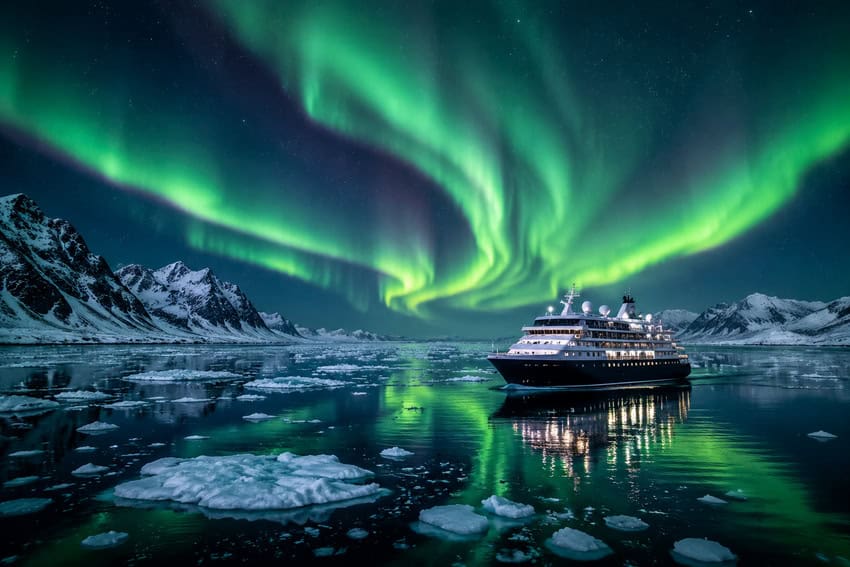
Aurora Expeditions is elevating Arctic travel by expanding its Northern Lights expedition programme across Iceland, Norway, Svalbard and Greenland, creating a more advanced multi-region journey structure focused on high-probability Aurora viewing. This expansion is driven by rising demand for immersive polar experiences and improved access to remote Arctic corridors during peak seasonal darkness. By combining flexible expedition routing, expert-led navigation and carefully timed voyages, the company is directly upgrading the scale, reach and effectiveness of its Northern Lights itineraries, turning standard Arctic cruises into coordinated multi-region exploration experiences.
Alongside this expanded programme, selected Arctic sailings for 2026 and 2027 are being offered with discounts of up to 30 percent. The pricing strategy is aimed at encouraging early bookings for voyages that operate within limited seasonal windows when darkness levels and solar activity align for optimal Aurora visibility.
High-Arctic routing built around natural Aurora conditions
The expedition design focuses on geographic regions located within or near the Arctic Circle, where geomagnetic conditions increase the frequency of Northern Lights displays during late summer and autumn transitions. Iceland, Norway’s northern coast, Svalbard archipelago and East Greenland form the core operational zones of the programme.
Unlike conventional cruise schedules, these itineraries are not fixed to rigid routes. Instead, navigation is continuously adjusted based on environmental intelligence gathered during the voyage. Weather systems, ice drift patterns, cloud coverage and real-time sky clarity are analysed to guide vessel positioning. This adaptive routing increases the probability of remaining within active Aurora belts while still enabling exploration of remote polar coastlines.
Advertisement
Advertisement
Real-time expedition strategy in unstable polar environments
Each sailing operates under a flexible expedition framework led by specialist polar teams with expertise in Arctic navigation and environmental monitoring. These teams interpret meteorological data, ice charts and solar activity forecasts to determine daily positioning strategies.
This method is critical in Arctic regions, where conditions can shift rapidly within hours. Ice movement can block access routes, while cloud layers can temporarily obscure sky visibility. By continuously recalibrating navigation decisions, expedition teams aim to maintain access to open skies and dark-sky zones that improve Northern Lights observation potential.
Advertisement
Advertisement
The same operational model also supports land-based exploration when conditions allow. Remote shore landings provide access to glaciers, volcanic formations and untouched Arctic ecosystems, adding a terrestrial dimension to the voyage experience.
Arctic Golden Autumn voyage connects Iceland, Jan Mayen, Svalbard and Norway
One of the flagship itineraries is the “Arctic Golden Autumn & Northern Lights” voyage, scheduled from 18 August to 3 September 2026. This 17-day expedition begins in Reykjavik and concludes in Tromsø, passing through Iceland, Jan Mayen, Svalbard and northern Norway.
The route is strategically positioned at the transition into the darker Arctic season, when night hours begin to lengthen significantly. This shift increases opportunities for Aurora visibility, particularly in regions located closer to the geomagnetic pole.
The voyage combines volcanic Icelandic terrain, isolated North Atlantic waters and the icy landscapes of Svalbard. These contrasting environments create a dynamic expedition corridor where geological extremes and polar atmospheres merge into a single navigation experience focused on natural observation.
Northern Lights Explorer follows Arctic coastal belt across three regions
The “Northern Lights Explorer” itinerary operates in two seasonal departures: 2 to 19 September 2026 and 25 August to 9 September 2027. This 18-day route connects Tromsø and Reykjavik while navigating along coastal corridors of Norway, Iceland and Greenland.
This Arctic belt is known for its fjord systems, mountainous coastlines and minimal human settlement density. These factors reduce artificial light interference, creating clearer skies for Aurora observation during peak night periods.
Advertisement
Advertisement
The timing of the voyage aligns with early autumn conditions, when Arctic daylight hours reduce quickly and night skies deepen across northern latitudes. This transition period is widely regarded as one of the most reliable windows for sustained Northern Lights activity due to improved darkness duration and atmospheric stability.
East Greenland and Iceland voyage explores extreme polar contrast
Another key itinerary, “Iceland & East Greenland – Under the Northern Lights,” operates as an 11-day round-trip voyage from Reykjavik in September 2027. This expedition focuses on some of the most isolated maritime regions in the Arctic.
East Greenland offers deep fjords, towering ice walls and near-total absence of artificial lighting, creating strong conditions for uninterrupted sky visibility. The region’s geographical isolation makes it one of the most consistent environments for observing Aurora activity when atmospheric conditions align.
Iceland provides a contrasting landscape, shaped by volcanic systems, geothermal activity and rugged coastal formations. Together, the two regions create a dual-environment experience where fire and ice landscapes frame the Northern Lights display.
Rising demand reshapes Arctic expedition cruise sector
The expansion of Arctic itineraries reflects a broader shift in global travel demand toward remote, experience-led tourism. Northern Lights voyages have become a major focus within expedition cruising due to their combination of natural rarity, scientific interest and seasonal exclusivity.
Unlike mainstream cruise routes, Arctic expeditions depend heavily on environmental timing and limited operational windows. This scarcity has increased demand among travellers seeking high-impact natural experiences in low-density environments.
Advertisement
Advertisement
Industry trends indicate continued growth in polar tourism, particularly as travellers prioritise destinations offering immersive nature-based experiences over traditional leisure cruising formats.
Aurora Expeditions is elevating Arctic travel by expanding its multi-region Northern Lights itineraries across Iceland, Norway, Svalbard and Greenland, improving access to high-probability Aurora zones. This expansion enhances route flexibility and increases the chances of Northern Lights sightings through optimized Arctic navigation.
Aurora Expeditions’ Arctic programme for 2026 and 2027 presents a highly targeted approach to Northern Lights travel, combining flexible navigation, real-time environmental monitoring and access to some of the most active Aurora regions on Earth. By linking Iceland, Norway, Svalbard and Greenland into carefully structured itineraries, the programme strengthens its position within the specialised expedition travel market focused on extreme environments and rare natural phenomena.
Advertisement
